What Year Jean Mill Made the First Bengal Cat Cross
Have you ever looked at a Bengal cat with their stunning wild rosettes and wondered, "How on earth did this incredible creature come to be?" Many aspiring Bengal owners or just curious cat lovers find themselves tracing the breed's lineage back to its roots, specifically to the pioneering woman who first envisioned such a magnificent companion. It's a journey that began with a very specific, deliberate act of hybridization, and understanding the exact year that first step was taken helps us appreciate the careful dedication that went into creating this unique breed. This guide will walk you through the pivotal moment Jean Mill made her first Bengal cat cross, setting the stage for the beloved breed we know today.
The Dawn of a Dynasty: Pinpointing Jean Mill's First Bengal Cross
The story of the Bengal cat is inextricably linked with the vision and determination of Jean Mill. While she isn't the only person involved in the breed's early development, she is widely recognized as the primary architect, the one who truly saw the potential in bridging the gap between a wild feline and a domestic companion. Her journey began not with the sole intent of creating a new breed, but with a deeper fascination for the Asian Leopard Cat (ALC) and a desire to understand and protect them.
A Serendipitous Beginning: The Initial Spark
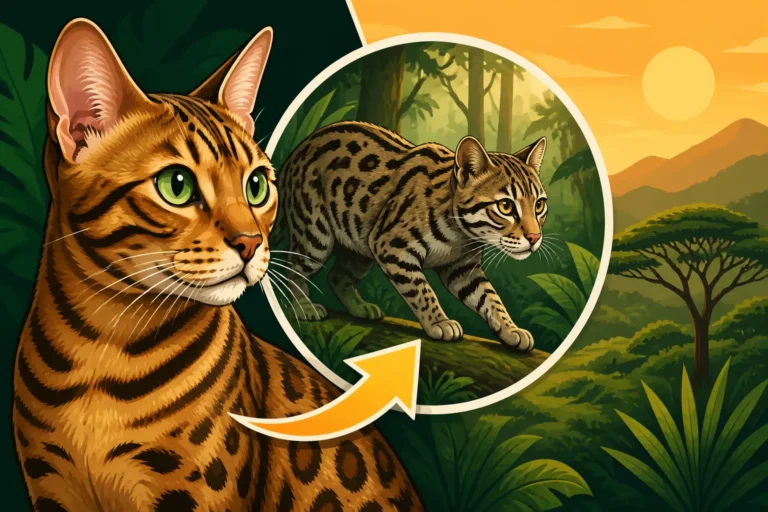
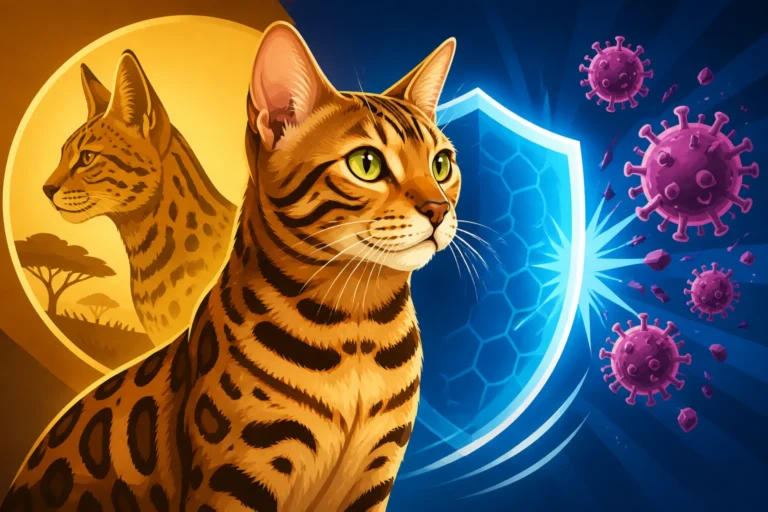
It’s a tale that often gets romanticized, but at its heart, Jean Mill's first cross was born out of a slightly different motivation than pure breed creation. In the early 1960s, she acquired an Asian Leopard Cat, a magnificent small wild cat from Asia, to keep her pet domestic cat company. Her initial aim wasn't to establish a new breed with distinct patterning, but rather, she was concerned about the ALCs becoming endangered due to poaching for their beautiful pelts. She hoped that if people could own a domestic cat that looked like a leopard, the demand for wild pelts might decrease. She also noted the ALC's natural resistance to Feline Leukemia, a devastating disease in domestic cats at the time, and wondered if this immunity could be passed on.
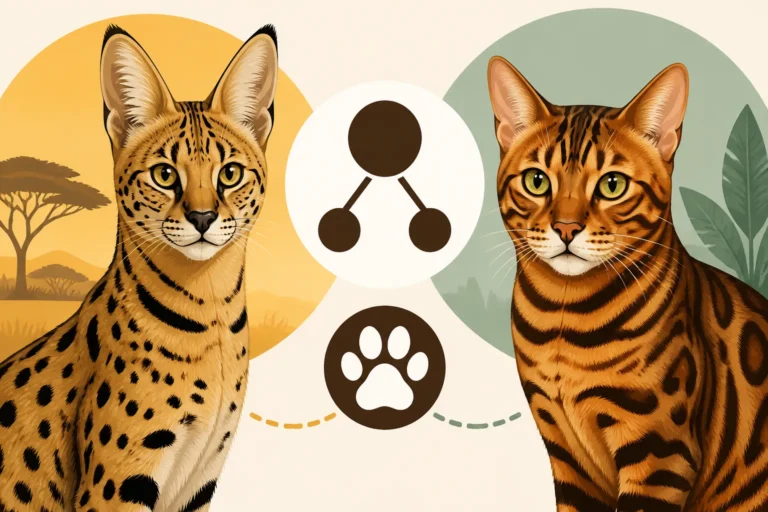
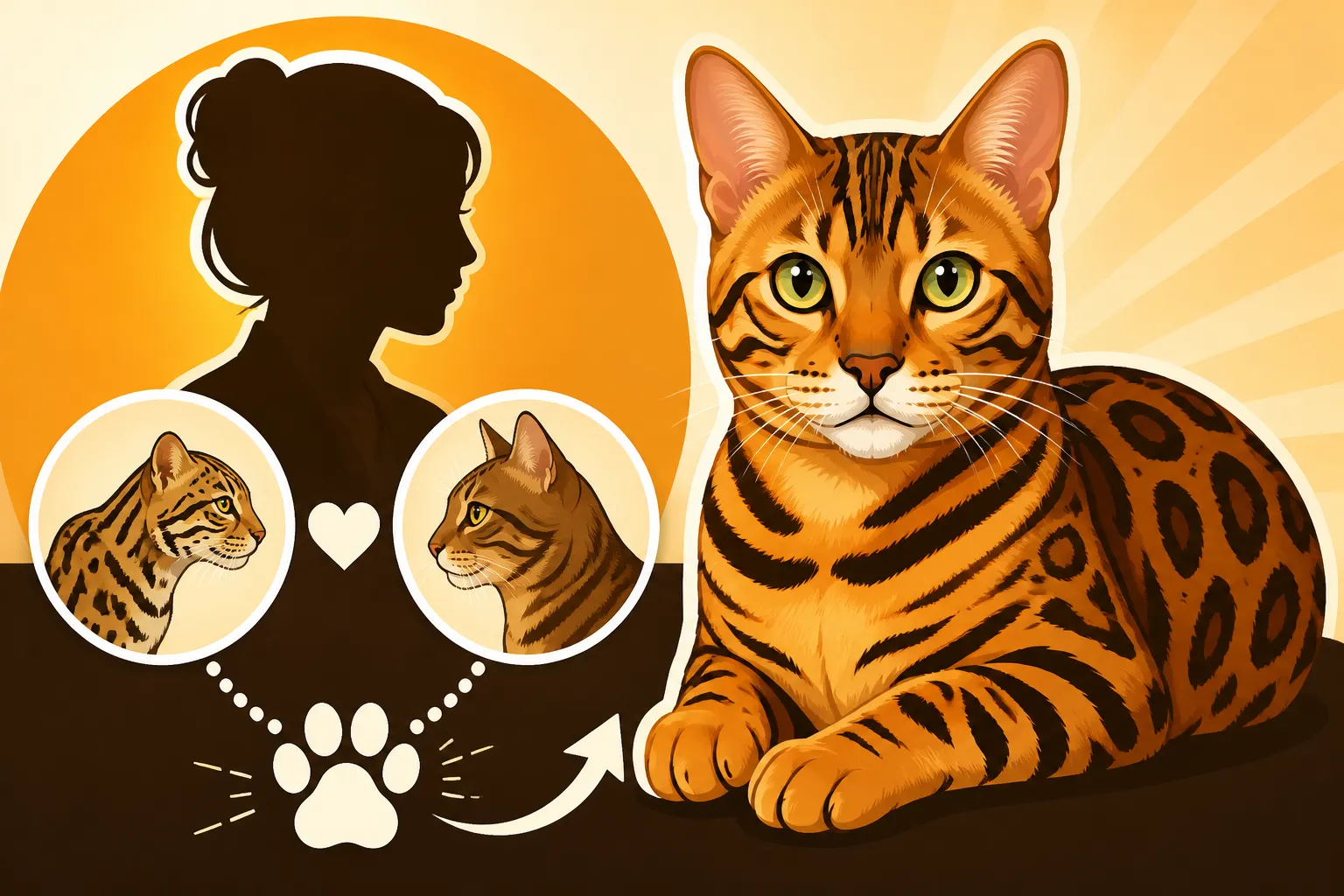
So, in 1963, Jean Mill made her first documented cross. She bred her male domestic black cat with an Asian Leopard Cat. This pairing resulted in the birth of the very first filial (F1) generation of what would eventually become the Bengal cat. This initial litter was the genetic blueprint, the groundbreaking moment where the wild grace of the ALC first mingled with the gentle nature of the domestic cat. The kittens from this pairing, while often more "wild" in temperament, possessed that striking, unmistakable spotted coat. It was a clear demonstration that interspecies breeding was possible and that the desired wild look could be achieved in a hybrid. This initial success provided the impetus for what would become a lifelong dedication to the breed.
More Than Just Spots: The Asian Leopard Cat's Enduring Influence
The decision to breed with an Asian Leopard Cat wasn't just about aesthetics; it was deeply rooted in the ALC's inherent characteristics. Jean Mill observed that the Asian Leopard Cat possessed a certain robust health and a disease resistance that was intriguing. She wondered if these qualities, particularly the natural immunity to certain feline diseases, could be introduced into the domestic gene pool, thereby creating hardier companion animals. This foresight was remarkable and highlights the scientific curiosity that underpinned her work.
Beyond health, the physical attributes of the ALC were, of course, a huge draw. The ALC's short, sleek pelt, their striking rosetted or spotted patterns, and their distinctive body structure—long and muscular with a relatively small head—were all qualities that Jean Mill admired. These traits, first introduced in that 1963 cross, became the very foundation upon which the Bengal Cat is the Most Active Cat You Can Own and the A Bengal Cat's Coat Is a Pelt, Not Fur were built. The aim was to create a domestic cat that retained the visual grandeur of its wild ancestor but possessed the loving and trainable temperament suitable for a family home. It was a grand ambition, and it all began with that single, intentional pairing in the early sixties.
Unraveling the Threads of Time: Pre-Loma Linda and Beyond
It's easy to assume the Bengal cat breed sprang fully formed from a single event, but the reality is a much more complex tapestry woven over decades. Jean Mill's work was pioneering, but it also involved phases and collaborations that enriched the genetic diversity and accelerated the breed's development. Her initial cross in 1963 was a solitary experiment that proved a concept, but it was far from the final step.
Jean Mill's Independent Vision: Prior to Scientific Collaboration
While the 1963 cross marked the genesis, Jean Mill continued her breeding experiments independently for several years. She worked with various domestic shorthair cats to breed back to her F1 hybrids, carefully selecting for temperament and further refining the desired wild appearance. This period of independent experimentation was crucial because it allowed her to understand the genetics involved, the challenges of hybridizing, and how to stabilize the desired traits across generations. She was essentially laying the groundwork for what would become the breed standard. She was learning What Jean Mill's First Bengal Cat Cross Produced and how to refine it.
It's important to differentiate this early work from a later, more widely known phase. The common narrative often brings in the connection to Loma Linda University's feline leukemia research project. However, Jean Mill's first cross in 1963 predates her involvement with this project. Her early efforts were driven by her personal passion and observations, not by an academic research initiative. She was exploring the possibilities of what A Leopard Cat and a Housecat Made the First Bengal Cat could truly become, well before any formal scientific collaboration entered the picture.
The Pivotal 1980s: From Accidental Cross to Dedicated Breed Program
After her initial successful crosses in the 1960s, Jean Mill actually paused her breeding program for some time due to personal circumstances. However, her passion never truly waned, and the idea of the domestic cat with the heart of a leopard continued to captivate her. She restarted her breeding efforts in the late 1970s and early 1980s. This renewed effort marked a significant turning point, transforming her individual experiments into a dedicated and serious breed development program.
A crucial development during this later period was her acquisition of several F2 and F3 generation Asian Leopard Cat hybrids from a scientific study at Loma Linda University. This was a separate research project led by Dr. Willard Centerwall, which aimed to study the ALC's natural immunity to feline leukemia. When The Leukemia Research Colony That Founded the Bengal Cat project concluded, Centerwall needed to rehome his valuable hybrids. Jean Mill recognized the immense genetic potential in these cats, as they offered a broader genetic pool and helped introduce crucial diversity into her lines. These cats, combined with her existing breeding stock and her renewed dedication, truly allowed her to accelerate the development of the Bengal breed.
So, while her first cross was in 1963, the real momentum and consistency in her breeding program, leading to the establishment of the breed we recognize today, gained significant traction in the early 1980s, largely due to her tireless efforts and the infusion of these research cats. This period was vital for developing the generations that would eventually be recognized by registries like TICA, ensuring the future of the breed.
Here's a quick look at the key milestones in the early days of the Bengal cat:
| Year | Event | Significance |
|---|---|---|
| 1963 | Jean Mill's first ALC x Domestic cat cross | Birth of the first F1 hybrid; proved concept of hybridizing for wild look. |
| Late 1960s | Early independent breeding | Experimentation with F1s and domestic cats; initial genetic observations. |
| Late 1970s | Jean Mill restarts breeding program | Renewed, dedicated effort to develop the breed. |
| Early 1980s | Acquisition of Loma Linda hybrids | Influx of F2/F3 genetics; accelerated breed development and diversity. |
| 1986 | TICA accepts the Bengal cat for registration | First major recognition of the Bengal as a distinct, evolving breed. |
The Enduring Legacy of an Origin: Why That First Year Matters
The year 1963 isn't just a date on a calendar; it represents the genesis of an extraordinary feline journey. It’s the point where a human vision, driven by both aesthetic appreciation and scientific curiosity, dared to blend the wild and the domestic. Understanding this beginning helps us appreciate the complexity and dedication involved in bringing the Bengal cat to life.
Shaping the Standard: The Vision Born from Early Hybrids
The characteristics observed in those very first F1 hybrids from 1963 and the subsequent generations directly informed what the Bengal breed would become. Jean Mill spent years meticulously selecting for specific traits: the vibrant, contrasted patterns, the short, luxurious coat, the muscular physique, and crucially, a temperament that, while active and intelligent, was suitable for a domestic environment. It was about retaining the "wild" look without the challenging aspects of a true wild animal. The vision of Why Jean Mill Wanted the Bengal Cat to Look Wild was put into practice through selective breeding over many generations.
The goal was always to achieve a "Stud Book Tradition" (SBT) Bengal – a cat that is at least four generations removed from its wild ancestor, ensuring a fully domestic temperament. This intricate process of selective breeding, starting from that initial cross, shaped the entire breed standard that registries like The International Cat Association (TICA) would eventually adopt when TICA Accepted the Bengal Cat in 1986. Every point on the standard, from ear shape to tail length, is a testament to the careful observation and breeding choices made in those foundational years. The genetics established in that first generation continue to echo through every Bengal cat born today.
Impact on the Bengal Cat Community: A Continual Reverence
Today, Jean Mill is revered within the Bengal cat community as the true founder. Her foresight in 1963, and her persistent work through the decades, gave the world a breed that is unlike any other. Breeders continue to work within the genetic framework she established, focusing on health, temperament, and maintaining that signature wild look. Understanding the origins helps current owners and breeders appreciate the unique history that sets Bengal cats apart.
The story of the first cross also serves as a reminder of the responsibilities that come with owning such a specialized breed. Bengal cats are active, intelligent, and require significant enrichment, traits that stem directly from their Asian Leopard Cat ancestry. Knowing their origin encourages owners to provide the best possible care, recognizing the historical blend of wild and domestic that makes their companion so special. It's a living legacy, walking on four paws, chirping its demands, and constantly reminding us of that pivotal year, 1963, when the first step was taken to create What an Asian Leopard Cat Is Behind Every Bengal Cat in our homes.
Disclaimer
This article is for general informational purposes only and does not constitute professional advice. Laws, prices and regulations vary by location and change over time. Consult a qualified professional for guidance on your specific situation.