Where Jean Mill Was Living When She Bred Bengal Cats
It's quite natural to wonder about the origins of the Bengal cat, and for many, that curiosity extends to the visionary woman who truly made the breed what it is today: Jean Mill. When we talk about a breed as distinctive and energetic as the Bengal, understanding where its journey began – quite literally, where its founder lived and worked – gives us a much richer picture of the passion and dedication that shaped these amazing felines. This guide delves into Jean Mill's life, her influential cattery, and how her environment profoundly impacted the development of the Bengal cat breed.
The Roots of a Legend: Jean Mill's Early Life and Vision
Jean Mill wasn't just any cat breeder; she was a pioneer, a geneticist, and a woman driven by a unique vision. Her journey with felines began long before the world knew the Bengal cat. Understanding where she came from and what motivated her helps us appreciate the scale of her achievement. She wasn't simply mixing two cats; she was embarking on a scientific and creative endeavor that would change the cat world forever.
Before she even started her groundbreaking work with Bengal cats, Jean Mill had a deep-seated love for felines and a keen interest in genetics. She earned a degree in psychology from Pomona College, but her true passion lay in animals, particularly cats. This academic background, combined with a sharp, inquisitive mind, gave her a unique approach to breeding. She wasn't content with just traditional pedigree cats; she saw potential for something truly extraordinary. Her early involvement with other cat breeds and her understanding of feline health and genetics laid a strong foundation for the complex task she would undertake with the Asian Leopard Cat hybrid.
From California Dreamin' to Cat Breeding Pioneer
Jean Mill's life was rooted in California. She was a native of the Golden State, born and raised there, and it was primarily in California that her pioneering work with the Bengal cat would unfold. This geographical context is more than just a trivial detail; California's diverse landscape, its spirit of innovation, and its generally more open-minded approach to various endeavors provided a fertile ground for someone looking to create a new breed. While she had an international outlook and corresponded with geneticists and breeders globally, her operations were firmly established in her Californian home. This meant access to certain resources and a climate that, while not identical to the Asian Leopard Cat's native habitat, allowed for outdoor enclosures and space for these active, early-generation hybrids.
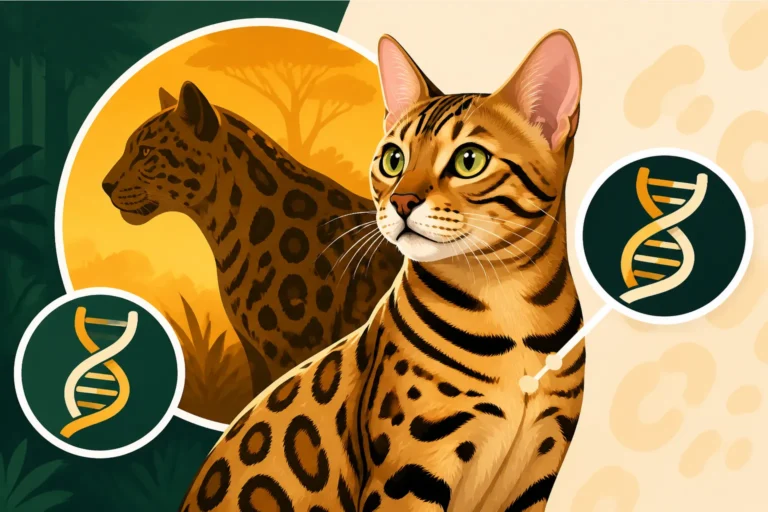
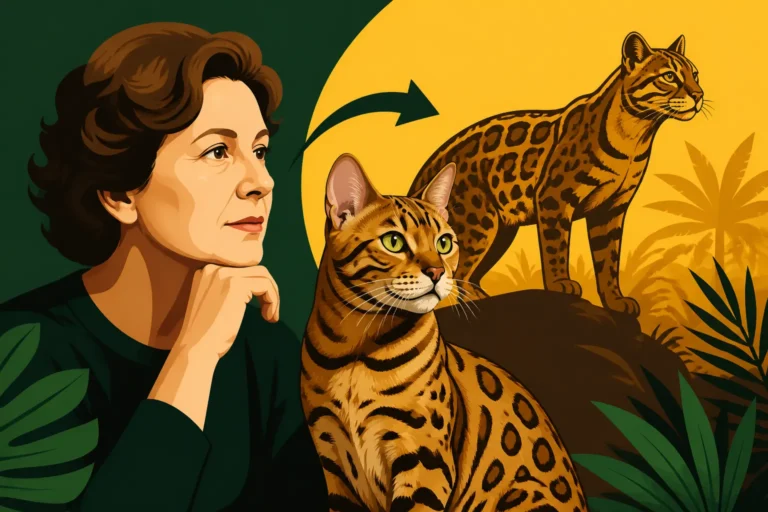
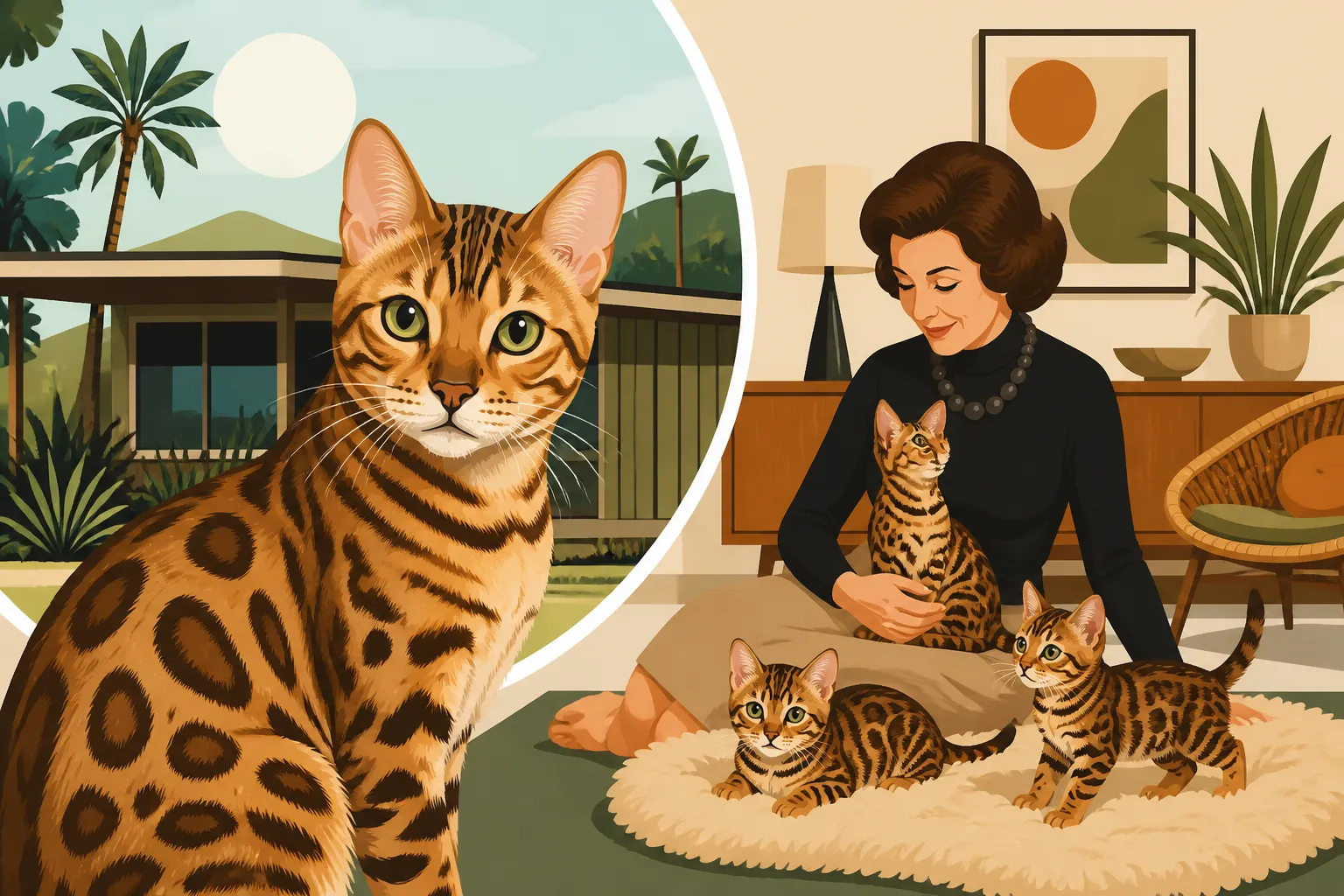
It was in the 1960s that Jean Mill made her first experimental crosses between domestic cats and the wild Asian Leopard Cat (ALC). This wasn't a casual hobby; it was a deliberate scientific pursuit. The initial spark for these crosses often gets attributed to a university study by Dr. Willard Centerwall, where ALCs were being studied for their natural immunity to feline leukemia. Jean Mill acquired some of these ALC hybrids when the project concluded. Her "Millwood" cattery would become synonymous with the Bengal cat, and its location in California would be her base of operations for decades, a hub for feline genetic exploration. She envisioned a domestic cat with the striking beauty of a wild leopard but the gentle temperament of a house cat, a goal that many thought impossible. A Leopard Cat and a Housecat Made the First Bengal Cat is a testament to this incredible beginning.
How Her Environment Shaped Her Passion for Bengals
Jean Mill's Californian environment played a significant, if often unstated, role in her ability to pursue such an ambitious breeding project. The sheer space available in many parts of California, particularly outside of dense urban centers, allowed her to create suitable living conditions for early-generation Bengal cats, which retained a good deal of their wild ancestry. These F1 and F2 cats, direct descendants of the Asian Leopard Cat, needed more than a typical housecat setup. They often required secure outdoor enclosures, plenty of climbing opportunities, and a more stimulating environment than an apartment could provide. Imagine trying to manage a small wild cat in a cramped city dwelling – it would be a recipe for disaster.
Moreover, California, particularly in the mid to late 20th century, was a place where innovation and individual passion projects could thrive. There was less immediate scrutiny or legal restriction on exotic animal breeding experiments compared to some other regions, allowing Mill the freedom to pursue her work. The climate itself, often mild and conducive to indoor-outdoor living, probably eased the transition for the ALC hybrids who were accustomed to varied climates in their wild range. Her ability to keep these unique animals, provide them with the necessary space and care, and dedicate herself to their selective breeding over many generations was deeply intertwined with her Californian home base. This dedication was key to slowly taming the wild traits and selecting for the desired domestic temperament, eventually leading to the beautiful, intelligent, and affectionate Bengal cats we know today.
The Famous Millwood Cattery: A Home for Innovation
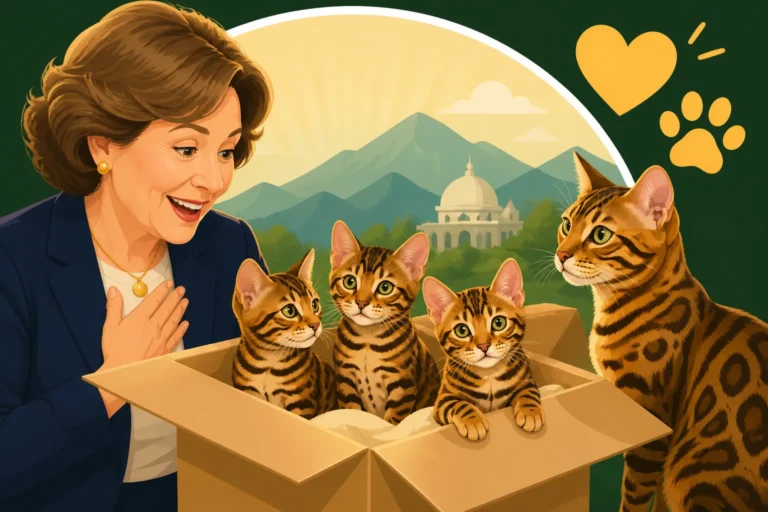
The name Millwood Cattery is etched into the history of the Bengal cat. It was here, within the confines of Jean Mill's Californian property, that the foundational work of stabilizing the breed's characteristics, temperament, and health was performed. This was not just a backyard operation; it was a carefully managed breeding program that required immense foresight, scientific rigor, and an understanding of both wild and domestic feline behavior. The environment of Millwood itself became a crucible for the future of the Bengal cat.
The Specific Location of Her Groundbreaking Work
Jean Mill's Millwood Cattery was primarily located in Covina, California, a city in Los Angeles County. Later, she moved her operations to the desert community of Bonsall in San Diego County, continuing her work there. This shift highlights her need for space and a suitable environment as her breeding program evolved. Both locations offered the kind of expansive properties where large, secure enclosures could be built, crucial for housing the high-energy and often wary early-generation Bengal cats. These areas, while residential, typically provided more acreage than denser urban settings, allowing for the necessary separation and enrichment that hybrid cats required.
The specific geography of these Californian sites meant Jean Mill could design a cattery that prioritized the physical and mental well-being of her cats, especially the F1 and F2 generations. She understood that these animals needed more than just food and shelter; they required an environment that catered to their innate instincts for climbing, exploring, and privacy. The sunny climate also allowed for extensive outdoor access, which is invaluable for any cat, but particularly for a breed with wild ancestry. This careful attention to environment was a huge factor in the successful integration of the wild bloodlines into a domestic setting.
The Practicalities of Breeding Early Generations
Breeding early-generation Bengal cats (F1, F2, F3) came with a unique set of challenges that Jean Mill had to navigate within her home cattery. These cats were not your typical housecats. F1s, being a direct cross from an Asian Leopard Cat and a domestic cat, often displayed wilder traits – they could be shy, reserved, less tolerant of handling, and possessed incredible agility and strength. This meant that Millwood Cattery couldn't be a simple array of indoor cages. It required thoughtful design and constant adaptation. How an Early Generation Bengal Cat Behaves Differently delves into these behavioral nuances.
| Feature | Requirement for Early Generations (F1-F3) | How Millwood Cattery Likely Addressed It |
|---|---|---|
| Space | Large, secure enclosures with ample vertical space. | Expansive Californian properties in Covina and Bonsall allowed for substantial outdoor catios and runs. |
| Security | Escape-proof barriers; strong caging to prevent damage and escapes. | Custom-built, durable enclosures designed to contain agile and powerful cats. |
| Enrichment | Climbing structures, hiding spots, water features, varied textures. | Integration of natural elements, robust cat trees, water sources for play and drinking. |
| Socialization | Careful, patient, and consistent human interaction, often one-on-one. | Jean Mill's personal dedication and hands-on approach to each cat's development. |
| Environmental Control | Protection from extreme weather while allowing outdoor access. | Climate-appropriate structures, shaded areas, and sheltered indoor access points. |
| Veterinary Access | Need for specialized veterinary care familiar with exotic genetics. | Access to veterinary professionals in Southern California who could support a unique breeding program. |
Managing the breeding process itself was another practical hurdle. Early-generation males, particularly F1 to F3, are often sterile. This meant Jean Mill relied heavily on F1 females and later fertile F4 and SBT males. The timing of breeding, the meticulous record-keeping, and the careful selection of breeding pairs all took place within her home environment. She needed space for individual queens, for litters, and for separating cats when necessary. Her home was not just a residence; it was a fully functional, pioneering research and breeding facility, requiring considerable logistical management. She meticulously documented bloodlines and temperaments, ensuring that desired traits were passed down and wild tendencies were gradually softened through successive generations. The patience and observation required for this undertaking were immense, underscoring the vital role of her stable and dedicated home environment.
Jean Mill's Legacy Beyond Location: A Global Impact
While Jean Mill's physical cattery was rooted in California, her influence on the Bengal cat breed, and indeed on the wider world of feline fancy, stretched far beyond the state's borders. Her meticulous breeding records, her pioneering spirit, and her unwavering dedication to establishing the Bengal as a legitimate and beloved breed created a legacy that continues to resonate globally. The principles she established at Millwood Cattery, refined over decades, became the blueprint for countless other breeders worldwide.
Her work wasn't just about creating beautiful cats; it was about demonstrating that hybrid cats could be successfully integrated into domestic life, provided they were bred responsibly and with careful consideration for temperament and health. This challenged conventional notions within the cat community and paved the way for other hybrid breeds to gain acceptance.
Spreading the Bengal Cat Around the World from Her Home Base
From her Californian home, Jean Mill became the central figure in the global dissemination of the Bengal cat. As the breed gained recognition, first informally and then officially with organizations like The International Cat Association (TICA) in 1986, demand for her cats grew exponentially. She corresponded with breeders across the United States and internationally, sharing her knowledge, her experiences, and her precious breeding stock. Many of the foundational Bengal cats in catteries around the world trace their lineage back to Millwood. This meant coordinating shipments, navigating different regulations, and maintaining relationships with breeders who shared her vision for the breed. When TICA Accepted the Bengal Cat marked a significant turning point, giving the breed official legitimacy and accelerating its global spread.
The reputation of Millwood Cattery, built on Jean Mill's integrity and the consistent quality of her cats, served as a beacon for aspiring Bengal breeders everywhere. She didn't just sell cats; she imparted wisdom and guidance, fostering a community dedicated to the ethical development of the breed. Her home thus became an administrative and communication hub, processing pedigrees, answering inquiries, and ensuring that the "Millwood line" of Bengals, known for its distinctive patterns and robust health, continued to influence breeders far and wide. This global outreach, managed from a residential setting, speaks volumes about her organizational skills and her unwavering commitment. Even today, breeders talk about the "Millwood look" and the importance of healthy bloodlines that originated from her efforts.
The Lasting Influence of the Millwood Cattery Approach
The "Millwood approach" to breeding, cultivated within the confines of Jean Mill's California cattery, laid down many of the core tenets that define responsible Bengal cat breeding even today. This approach emphasized not only the stunning appearance of the Asian Leopard Cat but also crucial factors like health, temperament, and genetic diversity. Mill understood that to create a viable and thriving breed, one could not simply focus on looks. A truly successful breed needed to be sound in body and mind. She meticulously tracked health issues, studied genetics, and worked tirelessly to ensure her breeding cats were free from known hereditary conditions. This foresight was critical, especially given the Bengal's unique genetic makeup.
Her dedication to temperament was equally important. She actively selected for friendly, outgoing cats that could thrive in a domestic environment, gradually breeding away from the shyness and wild instincts of the Asian Leopard Cat. This meant careful handling of kittens from birth and constant observation of adult cats. Furthermore, her focus on documentation and transparency, often sharing her knowledge freely with other breeders, fostered a culture of ethical breeding. Today, when breeders discuss the importance of DNA health panels, regular cardiac screenings, and responsible socialization, they are echoing the very principles that Jean Mill pioneered at Millwood. Her Californian home may have been her private domain, but the ripple effects of her work have been felt across the entire Bengal cat world, shaping how these magnificent felines are bred, cared for, and appreciated by owners globally, often inspiring new owners to seek out high-quality food and enrichment from places like Chewy to ensure their own Bengals thrive.
Disclaimer
This article is for general informational purposes only and does not constitute professional advice. Laws, prices and regulations vary by location and change over time. Consult a qualified professional for guidance on your specific situation.