Why Jean Mill Wanted the Bengal Cat to Look Wild
Many aspiring Bengal cat owners are captivated by their striking, exotic appearance, often wondering how such a magnificent "mini-leopard" came to be. It’s no accident; the wild look of the Bengal cat was a deliberate vision, carefully cultivated from the very beginning. This guide dives deep into the fascinating story of Jean Mill and her unwavering commitment to creating a domestic cat that retained the stunning aesthetic of its wild ancestor, the Asian Leopard Cat, explaining her motivations and the meticulous process behind this unique breed.
Jean Mill's Vision: The Genesis of the Wild Look
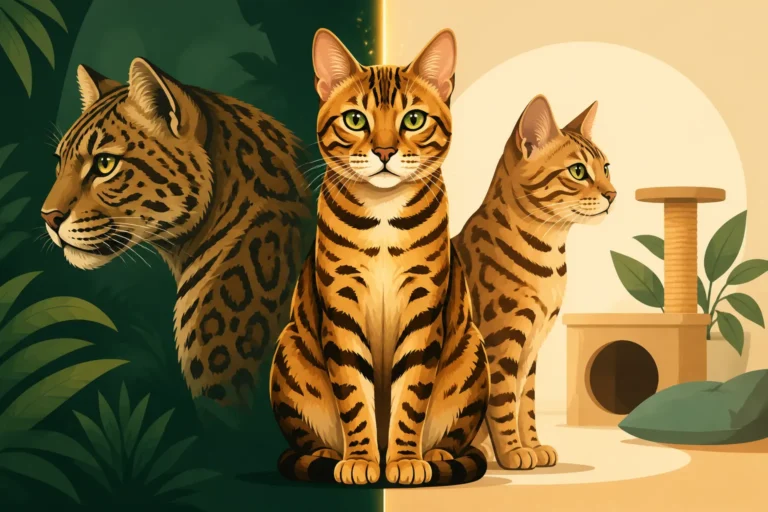
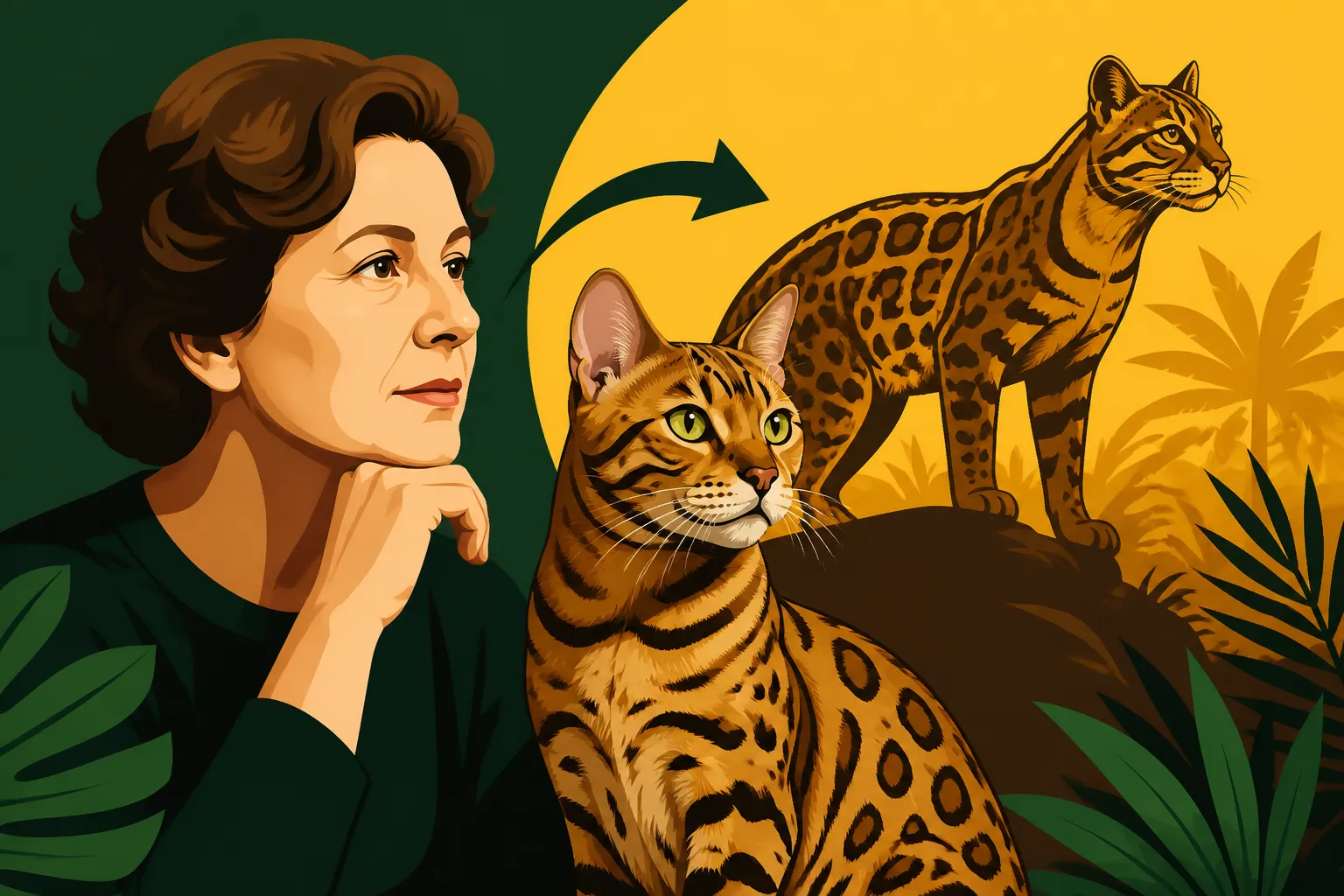
The story of the Bengal cat truly begins with Jean Mill, a pioneering breeder who wasn't content with the typical domestic feline. She harbored a profound desire to create something extraordinary – a companion animal that possessed the breathtaking beauty and athleticism of the jungle, but with the gentle, affectionate nature of a housecat. Her vision was clear: to bring the wild into our homes, not as a tamed exotic animal, but as a genuinely domestic breed born from careful, intentional crosses.
Beyond the Domestic Housecat: A Desire for Distinction
For many years, domestic cats, while beloved, largely shared similar body types and patterns. Jean Mill saw an opportunity to introduce a new kind of beauty, one that would stand out dramatically. She wasn't just looking for spots; she wanted the entire package – the powerful build, the expressive eyes, the unique head shape, and the incredible confidence that radiated from a wild feline. This wasn't about making a cat look wild in a superficial way, but rather imbuing it with an inherent wildness of spirit and appearance that was both authentic and manageable in a home environment. Imagine walking into a room and seeing a creature that could have just stepped out of a rainforest, yet approaches you with a purr and a head-butt. That was the magic Mill was chasing.
This ambition stemmed from a deep appreciation for the aesthetic of true wild felids. Mill wanted to create a cat that carried itself with the grace and strength of its wild cousins, a cat whose presence commanded attention. It was a groundbreaking idea at a time when most cat breeders focused on refining established domestic lines. Her desire was to craft a cat that was undeniably domestic in temperament but visually spectacular, a true living work of art.
The Influence of the Asian Leopard Cat's Appearance
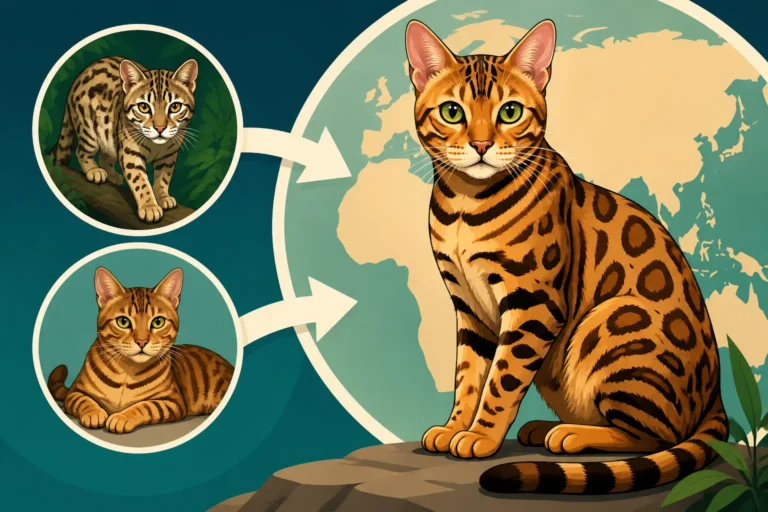
The primary inspiration, of course, was the Asian Leopard Cat (ALC), a small wild cat native to Southeast Asia. The ALC's coat is a marvel of nature, adorned with striking spots and rosettes that provide perfect camouflage in its natural habitat. Jean Mill was captivated by these intricate patterns, the short, sleek pelt, and the muscular, agile physique of the ALC. She saw in this wild cat all the physical traits she wanted to preserve and transfer into a domestic breed. The ALC wasn't just a starting point; it was the blueprint.
Every characteristic, from the prominent eye markings to the powerful hindquarters, contributed to the ALC's iconic wild appearance. Mill painstakingly studied these features, understanding that replicating them would require selective breeding over many generations. It was a long-term project, demanding patience and a keen eye for genetics. She wasn't just breeding; she was sculpting a living breed standard, working to ensure that the unique visual language of the Asian Leopard Cat would echo in every Bengal cat.
A Practical Purpose: Feline Leukemia Resistance
While aesthetics were paramount, Jean Mill’s initial involvement with the Asian Leopard Cat also had a significant scientific motivation. The early crosses between ALCs and domestic cats were part of a research program at Loma Linda University, led by Dr. Willard Centerwall. The primary goal of this program was to study the ALC's natural immunity to Feline Leukemia Virus (FeLV). It was hoped that by crossing ALCs with domestic cats, this resistance could be passed on to create a healthier domestic breed. You can learn more about this foundational work in The Leukemia Research Colony That Founded the Bengal Cat and What Centerwall Was Trying to Learn From Bengal Cat Hybrids.
Jean Mill acquired some of these early hybrid kittens from the research program when they were no longer needed. This gave her a unique opportunity to continue the breeding on her own terms, combining the scientific purpose with her aesthetic vision. She understood that if she could retain the ALC's stunning look and potentially its robust health, she would be creating an unparalleled domestic cat. This dual purpose – beauty and resilience – became a driving force behind the Bengal breed's development.
The Asian Leopard Cat: The Blueprint for Wild Beauty
To truly appreciate Jean Mill's vision, one must understand the source of her inspiration: the Asian Leopard Cat (ALC). This small, elusive wild cat is the genetic foundation for the Bengal's exotic charm, providing the specific visual cues that Mill sought to reproduce in a domestic companion.
Spotting the Original Inspiration: Rosettes and Contrast
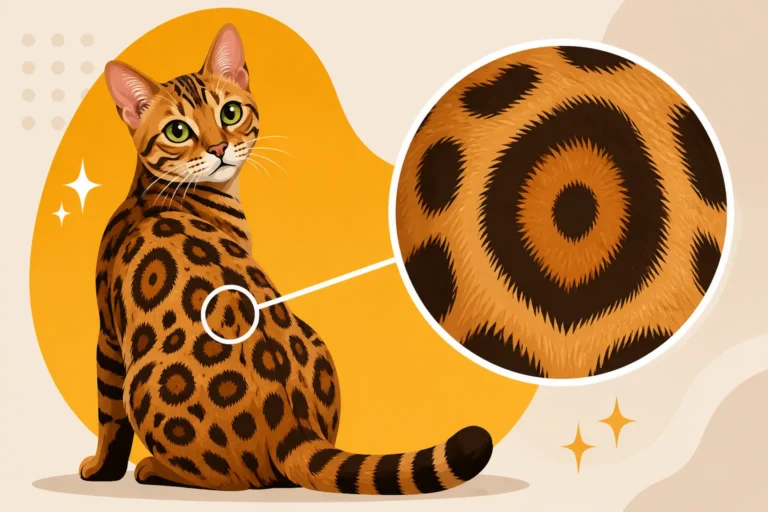
The most iconic feature of the Asian Leopard Cat is its coat, which is adorned with distinct spots, often forming rosettes. These aren't just simple dots; they are complex patterns where the center of the spot is lighter than its outline, creating a three-dimensional effect. This intricate patterning, combined with a stark contrast between the markings and the background color, is what gives the ALC its breathtaking camouflage in its natural environment. Jean Mill was absolutely determined to carry these specific patterns over into the Bengal breed.
She knew that simply having "spots" wasn't enough; it had to be the right kind of spots, with the right definition and color separation. The horizontal flow of these patterns along the body, the dark mascara lines around the eyes, and the ocelli (spots) on the back of the ears – all these minute details contributed to the authentic wild appearance. Achieving this required generations of careful selection, ensuring that kittens displaying these desirable ALC traits were chosen for future breeding.
The Primal Elegance of the ALC's Build
Beyond the coat, the Asian Leopard Cat possesses a distinctive physical build that exudes athleticism and grace. They are sleek, muscular, and surprisingly powerful for their size, with longer hind legs that give them a characteristic gait. Their head is relatively small in proportion to their body, with prominent, expressive eyes and a strong, defined muzzle. This primal elegance and muscularity were equally important to Mill's vision. She didn't want a dainty domestic cat; she wanted one that looked ready to pounce and explore.
Recreating this athletic physique meant selecting for specific bone structures, muscle mass, and overall body condition. It’s why you often see Bengal cats with a confident, almost slinky walk and an incredible ability to jump and climb. This physical prowess, directly inherited from the ALC, is a huge part of the Bengal's wild appeal. Imagine a cat that moves with the fluidity of a jungle predator, even if it's just leaping onto your kitchen counter.
Capturing the Essence, Not Just the Pattern
Jean Mill's goal was never merely to create a spotted cat; it was to capture the very essence of the Asian Leopard Cat in a domestic package. This meant observing and selecting for a combination of physical traits that, when put together, evoked the wild. It wasn't just the rosettes, but the short, dense "pelt" that feels unlike ordinary cat fur, the distinctive head shape, the small, rounded ears, and even the "whited tummy" – a lighter underside often seen in wild felines. This comprehensive approach ensured that the resulting Bengal cat didn't just have a wild pattern, but a wild presence.
Mill understood that the overall impression was key. A true Bengal should make you do a double-take, momentarily thinking you've seen something extraordinary, something untamed. This holistic vision is what sets the Bengal apart and ensures that even today, breeders continue to strive for these specific characteristics, guided by a breed standard that reflects Mill’s initial aspirations.
Early Challenges and Intentional Breeding
Creating a new breed, especially one that combines wild aesthetics with domestic temperament, is no easy feat. Jean Mill faced numerous challenges, from the genetic complexities of hybridization to the careful selection process required to stabilize desired traits. Her persistence and intentional breeding strategies were crucial to the Bengal's success.
Selecting for the Wild Phenotype
One of the biggest hurdles was consistently reproducing the desired "wild" phenotype across generations. Early crosses (F1, F2, F3 generations) were often a mixed bag, with some kittens exhibiting strong ALC traits and others leaning more towards their domestic ancestry. Mill had to be incredibly selective, meticulously evaluating each kitten for the specific features she sought: the rosetted pattern, the powerful body, the small ears, and the particular head shape. This was a long game, requiring an understanding of how genes express themselves and how to encourage the traits that made the cat look distinctly wild.
It wasn't just about what she saw, but what she envisioned for the future of the breed. Each breeding decision was a step towards refining the look, moving closer to the ideal "mini-leopard." She had to identify which domestic cats would best complement the ALC genes, contributing desirable traits like a friendly disposition while not diluting the wild beauty. This often meant painstaking record-keeping and a deep knowledge of pedigrees.
Navigating Temperament While Prioritizing Looks
While the wild look was paramount, temperament was an equally critical consideration for a domestic pet. Asian Leopard Cats are wild animals; they are not inherently cuddly or accustomed to human interaction. Early generation Bengals (F1, F2, F3) could sometimes exhibit more reserved or wilder behaviors. Jean Mill and subsequent breeders had the challenging task of selecting for friendliness and trainability alongside the physical traits. The goal was always a domestic companion, not a wild animal in a house.
This delicate balance meant sometimes passing over a physically stunning cat if its temperament wasn't suitable for future generations of pets. It required early socialization of kittens, careful handling, and a keen understanding of feline behavior. The vision was a cat that could confidently stalk a toy mouse one minute and then curl up purring in your lap the next, embodying both wild grace and domestic affection. This dedication to both form and function is why today's SBT Bengal cat (Stud Book Traditional, usually F4 and beyond) is renowned for being a wonderful, if energetic, family pet.
The Role of Diverse Domestic Crosses
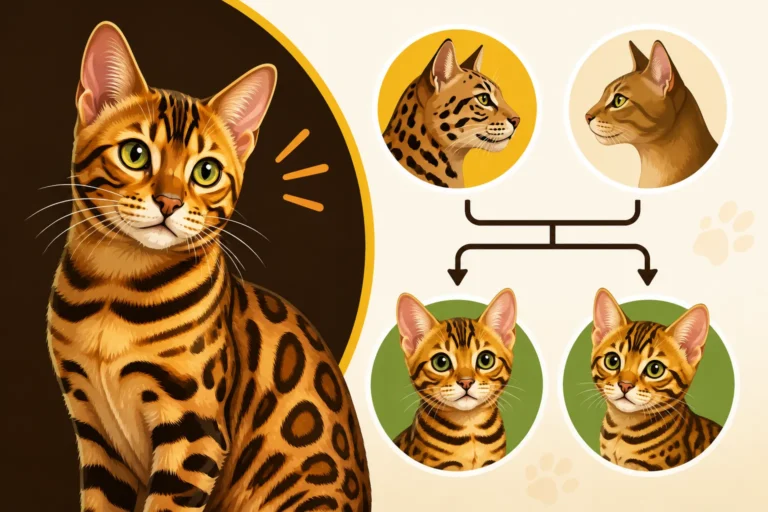
To achieve the desired look and temperament, Jean Mill didn't just stick to one type of domestic cat. She initially used various domestic shorthairs, and eventually integrated breeds like the Egyptian Mau, Abyssinian, and American Shorthair into her breeding program. Each domestic breed brought different genetic contributions – some for pattern clarity, some for desirable conformation, and others for a solid, friendly temperament. This diversity in the foundation stock was crucial for broadening the gene pool and ensuring genetic health while simultaneously working towards the ideal wild appearance. You can explore this further in Which Domestic Breeds Went Into the Bengal Cat.
This strategic outcrossing allowed her to selectively pick and choose the best traits from various sources, guiding the evolution of the Bengal cat. For instance, an Egyptian Mau might have contributed to a clearer, contrasting spot pattern, while an Abyssinian could have helped refine the head shape or enrich the coat color. It was a complex genetic puzzle, and Mill was determined to solve it, piece by carefully chosen piece.
Preserving the Wild Aesthetic Through Generations
Once the initial crosses were made, the real work of consistently reproducing and refining the wild look began. This multi-generational effort involved strict adherence to a developing breed standard and a deep understanding of feline genetics to ensure the ALC's striking features were not lost.
Generational Progress: From F1 to SBT
The journey from an F1 (first generation, direct ALC cross) Bengal to an SBT (Stud Book Traditional, typically fourth generation and beyond) Bengal is all about stabilizing and refining traits. In the early generations, there was a lot of variability. F1s often closely resembled their ALC parent, both in looks and sometimes in temperament, though female F1s are fertile while F1 to F3 males are sterile. As breeding progressed to F2, F3, and then to SBT generations, breeders could select for specific wild characteristics while enhancing domesticity. This careful progression is what truly allowed Mill’s vision to solidify. For a deeper dive into this, check out F1 to SBT: How a Bengal Cat's Generation Is Counted and What SBT Means in a Bengal Cat.
The goal was to get to a point where the "wild look" wasn't a gamble but a consistent, inherent trait of the breed. This required intense focus on line breeding and outcrossing only when necessary to bring in new desirable genes or enhance genetic diversity. The dedication of breeders to this multi-generational process is why Bengal cats today reliably display the exotic beauty that was initially envisioned.
Breeding for Specific "Wild" Traits
To ensure the wild look persisted, breeders actively selected for a myriad of specific traits. This wasn't just about "spots" but included things like the short, muscular body, the medium-sized head with strong chin, high cheekbones, and slightly almond-shaped eyes that could be gold, green, or even blue in some snow varieties. The ears had to be relatively small and rounded, set wide apart, sometimes with the distinctive ocelli marking. The tail needed to be thick, medium-length, and tapered to a rounded tip. Each of these features, individually and collectively, contributes to the overall "wild" silhouette.
For example, when evaluating a kitten, a breeder would look for clear, contrasting rosettes, not just random spots. They would assess the bone structure for robustness and athleticism, rather than daintiness. They'd examine the profile of the head, seeking the slight curve from forehead to nose, a characteristic often seen in ALCs. This meticulous attention to detail at every stage of the breeding process was critical in embedding the wild aesthetic deeply within the Bengal breed's genetic code.
The "Glitter" and "Pelt" That Enhance the Look
Two remarkable traits that significantly enhance the Bengal's wild appearance are its unique "glitter" and "pelted" coat. "Glitter" refers to individual hair shafts that are hollow and translucent, catching the light and creating a shimmering, iridescent effect. This is something truly special and adds to the exotic allure, making the coat appear dusted with gold or silver. The "pelted" feel refers to the incredibly soft, dense, and close-lying coat that has minimal undercoat, giving it a smooth, luxurious texture, almost like satin or a wild animal's fur.
These traits were not explicitly from the ALC initially but emerged through selective breeding. The combination of the sleek pelt and the dazzling glitter effect elevates the Bengal's wild look to another level, making it even more captivating. Imagine a Bengal cat moving through sunlight, its coat literally sparkling. It's truly a sight to behold and was something Jean Mill and subsequent breeders cherished and worked to preserve. You can read more about these features in The Glitter Gene and What It Does to a Bengal Cat's Coat and A Bengal Cat's Coat Is a Pelt, Not Fur.
Here's a quick look at some key traits that contribute to the Bengal's wild appearance:
| Trait Category | Asian Leopard Cat Feature | Desired Bengal Cat Feature | How it Enhances "Wild Look" |
|---|---|---|---|
| Coat Pattern | Distinct rosettes, high contrast spots | Rosettes (donut, paw print, arrowhead), vivid contrast | Mimics jungle camouflage, striking visual |
| Coat Texture | Short, sleek, dense fur | Short, dense, "pelted" coat, often with "glitter" | Feels luxurious and exotic, like wild fur, shimmers in light |
| Body Type | Muscular, athletic, longer hind legs | Long, muscular body, powerful hindquarters | Agile, strong, gives a predator's silhouette |
| Head Shape | Small, distinctive profile, strong chin | Broad modified wedge, small rounded ears, strong chin | Proportional to wild ancestor, alert expression |
| Facial Markings | Mascara lines, ocelli on ears | Prominent mascara lines, wild-looking eyes, ocelli | Accentuates eyes, adds to "big cat" illusion |
| Tail | Medium length, thick, tapered | Thick, medium length, rounded tip | Balanced, robust tail enhances athleticism |
The Enduring Legacy of the Wild Look
Jean Mill's vision didn't end with a few successful litters; it laid the foundation for an entire breed. The enduring popularity and distinctiveness of the Bengal cat today are direct testaments to her dedication to preserving and perfecting that wild aesthetic.
The Breed Standard's Emphasis on Wild Appearance
The breed standard for the Bengal cat, established by registries like The International Cat Association (TICA), heavily emphasizes the wild appearance. Every aspect, from the specific rosette patterns to the muscular physique and the unique head shape, is meticulously detailed. This standard acts as a guide for breeders worldwide, ensuring that the breed continues to embody Jean Mill's original vision. Breeders are judged not just on the overall health and temperament of their cats, but specifically on how closely they adhere to these "wild" characteristics.
This means a strong, athletic body, a head that is broad but not overly large, and eyes that are large, oval, and set wide apart. The patterns must be clear and well-defined, and the overall impression should be one of a small, agile wild cat. It’s this rigorous standard that prevents the breed from drifting too far from its roots and ensures that the Bengal cat maintains its iconic exotic beauty. If you're interested in the specifics, check out What a Bengal Cat Looks Like by the Standard.
The Cultural Impact of the Bengal's Wild Appeal
The Bengal cat's wild appeal has resonated deeply with cat lovers and the general public alike. They stand out in a crowd of domestic cats, drawing admiration and curiosity wherever they go. This unique aesthetic has contributed to their rise in popularity, making them one of the most recognizable and sought-after breeds in the world. People are drawn to the idea of having a "miniature leopard" in their home, and the Bengal delivers on that visual promise while offering a loving, if energetic, companionship.
This fascination has also led to the breed being featured in media, from documentaries to social media trends, further cementing their status as an exotic yet domestic pet. The very nature of their appearance makes them conversation starters, allowing owners to share the fascinating history and unique traits of this remarkable breed.
Maintaining the Vision for Future Generations
Maintaining Jean Mill's vision for the Bengal cat is an ongoing commitment for breeders and enthusiasts. It involves not only careful genetic selection but also providing the right environment and nutrition to allow these magnificent cats to thrive. High-quality, species-appropriate diets, often rich in protein, help maintain their muscular physique and vibrant coats. Pet supply retailers like Chewy offer a wide range of options for Bengal owners seeking to meet these specific dietary needs, from premium dry kibble to various wet food formulations that support their health and energy levels.
Enrichment is also key. A Bengal cat's wild ancestry translates into an incredibly active and intelligent companion. Owners often invest in tall cat trees, cat wheels, and puzzle toys – many readily available on Chewy – to satisfy their innate desire to climb, run, and hunt. This holistic approach ensures that not only do Bengal cats look wild, but their needs as an active, intelligent, and engaging breed are also fully met, allowing them to live rich, fulfilling lives as cherished members of the family, exactly as Jean Mill envisioned.
Disclaimer
This article is for general informational purposes only and does not constitute professional advice. Laws, prices and regulations vary by location and change over time. Consult a qualified professional for guidance on your specific situation.