What a Seal Mink Bengal Cat Is
A seal mink Bengal can look pale cream in one photo and richly marked brown in another, which makes the color easy to confuse with other “snow” Bengals. The difference is more than coat shade: seal mink is tied to a particular combination of color genes and is usually associated with aqua or blue-green eyes. Here’s how to recognize it, understand its inheritance, and tell it apart from similar colors.
What seal mink means in a Bengal cat
Seal mink is one of the Bengal snow colors
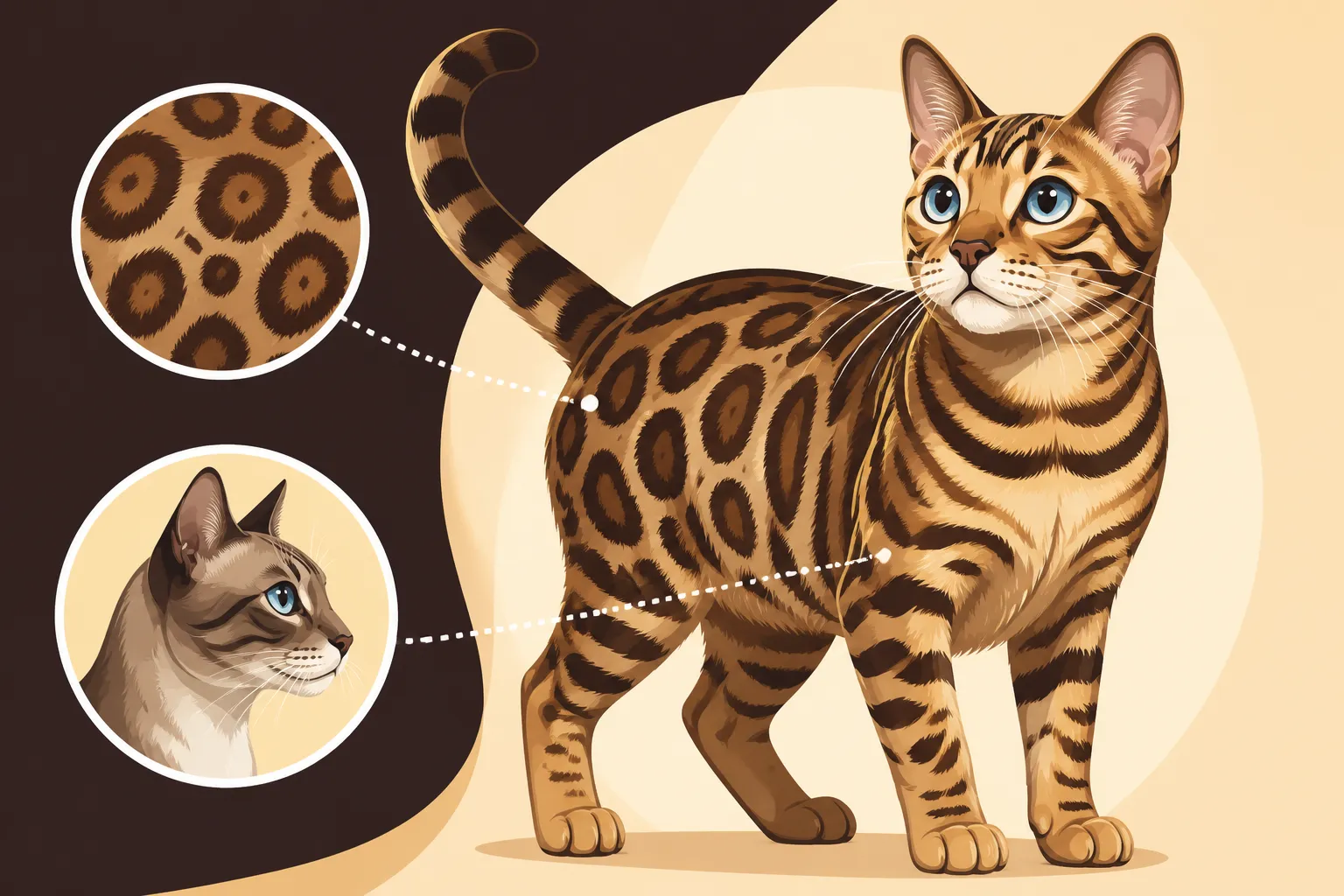
“Seal mink” is a color variety of the Bengal, often grouped with the breed’s snow colors. The word seal refers to the darker pigment in the markings, while mink describes the genetic color pattern behind the coat. A seal mink Bengal may have a warm ivory, cream, or pale tan background with darker brown markings, though the exact shades vary from cat to cat.
The word snow can be misleading. A seal mink Bengal is not necessarily white, and two cats with the same color label may look noticeably different. One may have a light background and soft contrast; another may have richer, more defined rosettes. Lighting, coat development, and individual genetics all affect what you see.
Seal mink is one of three commonly discussed Bengal snow colors, alongside seal lynx point and seal sepia. Those labels describe different color genetics, not a ranking of quality or personality. For an overview of the wider range of accepted shades, see Which Colors a Bengal Cat Comes In.
The genetics behind seal mink
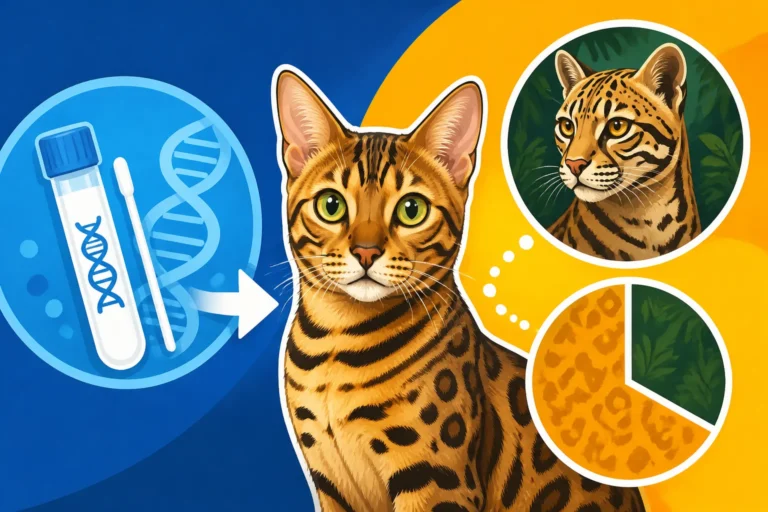
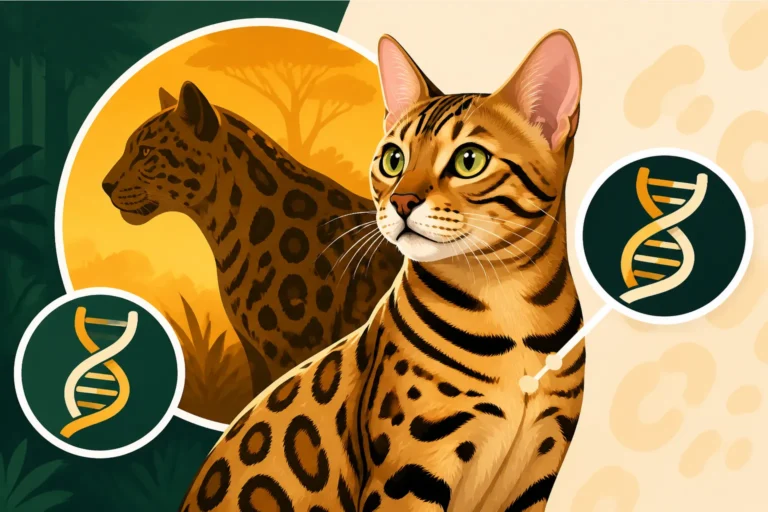
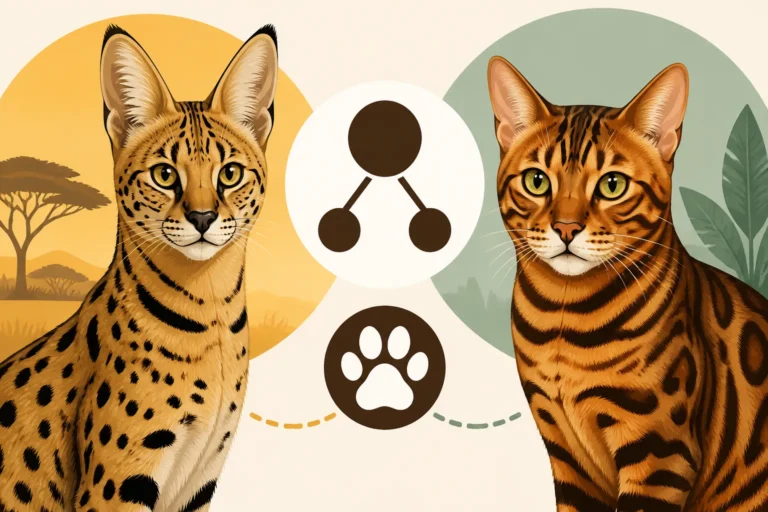
In simplified terms, seal mink Bengals inherit a Siamese colorpoint allele and a Burmese color allele. These are often written as cs and cb. A seal mink cat typically has one of each, written as cs/cb. The combination produces a coat that is generally more pigmented than a seal lynx point but often lighter than a seal sepia.
That shorthand is useful, but it is not a complete description of every gene that influences a cat’s appearance. Bengal coat color and pattern involve multiple genetic factors, and the visible result can vary. A label such as “seal mink” describes a recognized color type; it does not promise that every kitten will have identical background color, eye shade, or pattern contrast.
A kitten’s appearance alone cannot reliably confirm its genetic color category. If the distinction matters for a breeding or pedigree question, ask the breeder what the parents’ color genetics are and whether the kitten’s status is supported by appropriate documentation. A photograph or a casual description is not a substitute for that information.
Coat, markings, and eyes at a glance
Seal mink Bengals often have a pale cream-to-tan ground color, with brown markings that may appear as spots, rosettes, or marbling. The markings are part of the Bengal’s pattern, not a separate feature caused by the mink color itself. To understand how those patterns differ, see Rosetted Against Marbled: The Two Bengal Cat Patterns.
Eye color is a useful clue, but not a stand-alone test. Seal mink Bengals commonly have aqua, blue-green, or greenish-blue eyes. The exact shade can be hard to judge in photographs, especially when a camera’s white balance or indoor lighting shifts the colors.
| Feature | Seal mink Bengal |
|---|---|
| Common background shades | Ivory, cream, pale tan, or warm beige |
| Common marking shades | Brown, from softer to deeper tones |
| Typical eye appearance | Aqua or blue-green, with individual variation |
| Genetic shorthand often used | One Siamese colorpoint allele and one Burmese allele |
| Related snow colors | Seal lynx point and seal sepia |
How seal mink differs from other snow Bengals
Seal mink versus seal lynx point
Seal lynx point Bengals typically inherit two Siamese colorpoint alleles. Their coats are often lighter, and their markings may have less contrast, particularly when they are young. Blue eyes are a characteristic feature of this color type. Seal mink cats, by comparison, have a mixed colorpoint combination and often show more visible pigment in the coat.
The difference may be less obvious in a young kitten or a poorly lit photo. A pale seal mink kitten might look much like a seal lynx point at first glance, especially before the coat pattern becomes more distinct. Eye color can help, but it is still only one clue; kitten eye shades may change as they mature, and photos can distort color.
For a closer look at the point-colored variety, read What a Seal Lynx Point Bengal Cat Is. Comparing the coat, eyes, and known parent genetics is more reliable than choosing a color label based on a single snapshot.
Seal mink versus seal sepia
Seal sepia Bengals typically inherit two Burmese color alleles. They often have stronger overall pigmentation than seal mink cats, with darker markings and a warmer or deeper background. Their eyes are commonly green, gold, or another shade within that general range, rather than the more blue-toned appearance often associated with seal lynx point Bengals.
There is overlap. Some seal mink Bengals look quite dark, and some seal sepia cats have relatively soft contrast. A cat’s appearance may suggest a color category, but it does not necessarily establish the underlying genotype. If a seller’s label seems inconsistent with the kitten’s appearance, ask for an explanation rather than assuming the label is wrong—or treating it as proven.
The related color descriptions can be helpful comparisons: What a Seal Sepia Bengal Cat Is and What a Snow Bengal Cat Is. Together, they make it easier to understand why “snow” refers to several related color varieties rather than one uniform look.
Similar appearance does not prove Bengal ancestry
A cream-colored, spotted cat is not automatically a seal mink Bengal. Domestic shorthair cats and mixes can have pale coats and spotted markings, and a photo cannot establish breed ancestry. Likewise, a Bengal-looking pattern does not confirm that the cat belongs to a registered Bengal lineage.
If you are evaluating a kitten, ask about its pedigree, the breeder, and the parents’ information. A color description is one small part of the picture. It does not establish the kitten’s generation, registration status, health history, or suitability for your home. For more on this distinction, see Whether a Spotted Domestic Shorthair Is a Bengal Cat.
How a seal mink Bengal’s color develops
Kittens can look different from adults
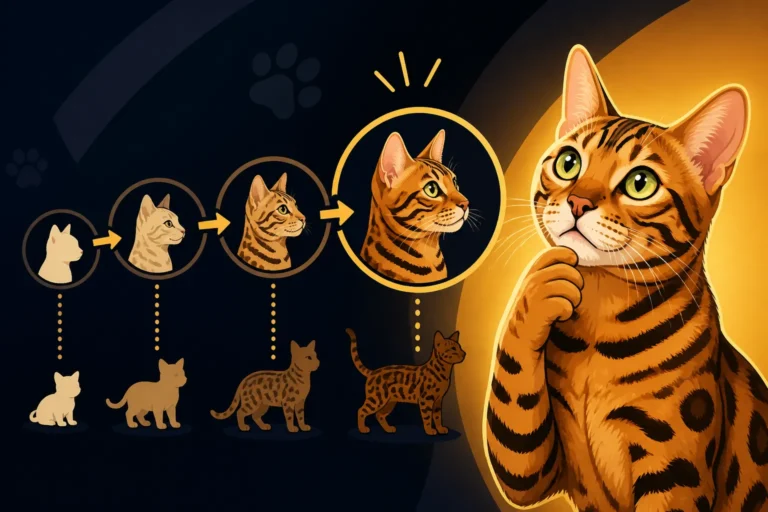
A young seal mink Bengal may not show the same contrast or definition that you notice in an adult. Bengal kittens can go through a fuzzy-looking stage in which the coat appears muted or less sharply patterned. As the kitten matures, the markings and background may become easier to distinguish, though the final appearance varies.
This can be frustrating when you are trying to compare kittens in a litter. Two siblings may have similar coloring early on but develop different levels of contrast, pattern clarity, or warmth. A breeder can describe what they have observed in the kitten’s parents and relatives, but no one can guarantee the precise adult look from a baby photo.
If you are choosing a kitten based on color, it helps to ask for recent photographs taken in natural, indirect light, as well as pictures of the parents. Still, treat images as a guide rather than a promise. A phone camera can make cream look white, brown look nearly black, and aqua eyes appear bright blue.
Lighting and photography change what you see
Indoor bulbs, window light, shadows, and camera settings can all affect how a seal mink coat appears. Warm indoor lighting may make a pale coat look more golden, while cool daylight can make it seem almost ivory. A close-up with strong contrast may exaggerate the darkness of the markings.
When comparing two cats, look at photographs taken under similar conditions. Ideally, the cat should be in even natural light without a filter, and the image should show the full body as well as the face. If the background is heavily edited or the color looks unusually saturated, ask whether an unedited photo is available.
A video can sometimes help you see how the coat looks as the cat moves, but it is not a genetic test either. If color classification matters, rely on the breeder’s records and relevant genetic information rather than trying to solve the question from a screen.
Pattern and build are separate from color
Seal mink describes a color category; it does not tell you whether the cat has rosettes, single spots, or a marbled pattern. Nor does it determine the cat’s temperament or activity level. Two seal mink Bengals can look quite different while sharing the same broad color classification.
The overall appearance of a Bengal includes more than coat shade. The breed standard considers features such as the body, head, pattern, and coat quality. A striking color does not, by itself, mean a cat is show quality or that it has a particular personality. For a broader description of the breed’s appearance, see What a Bengal Cat Looks Like by the Standard.
This distinction is useful when browsing breeder listings. A kitten may be advertised as seal mink with rosettes, for example, but those are two different descriptions: one refers to color, the other to pattern. Asking a breeder to explain both helps prevent confusion.
Questions to ask before choosing a seal mink Bengal
Ask what supports the color description
Ask the breeder how they identified the kitten as seal mink. A clear answer may include the parents’ known colors, the expected inheritance, and any relevant genetic testing or pedigree records. The exact evidence available can differ, but the explanation should make sense and match the breeder’s records.
You can also ask whether the color description is certain or provisional. With very young kittens, a breeder may reasonably describe the expected color while noting that the coat is still developing. That is more useful than a confident promise about the adult shade based only on an early photograph.
Keep color questions separate from health and care questions. Ask about veterinary records, socialization, the kitten’s diet, and the breeder’s health screening practices. Color can be exciting, but it should not distract from the practical information that helps you decide whether this is a responsible placement.
Ask about the parents and the kitten’s future appearance
Photos of both parents can give you a rough sense of the family’s coat colors and patterns. Ask whether the kitten’s markings are expected to become more distinct as it matures, and whether the breeder has kept in touch with previous kitten owners who can share adult photos. These details can help set realistic expectations without pretending that every kitten develops identically.
It is also reasonable to ask what terms the breeder uses for the kitten’s color and why. If a listing says “snow mink,” for instance, ask whether the breeder means seal mink and how they distinguish it from seal lynx point or seal sepia. A knowledgeable breeder should be comfortable explaining the terminology in plain language.
If you are bringing a kitten home, plan for its everyday needs as well as its appearance. A new cat needs an appropriate diet, litter, carrier, scratching options, and play opportunities. Chewy can be one place to compare common supplies, but check that any food or product suits your kitten’s age and needs, and follow the breeder’s transition advice when changing food. A gradual change is usually easier on a kitten than abruptly replacing its familiar diet.
Remember that color does not predict personality
A seal mink Bengal is still a Bengal, and individual temperament depends on the cat, its early experiences, and the environment you provide. The color label does not mean the cat will be calmer, more affectionate, or easier to manage than a Bengal with another coat color. Ask about the kitten’s behavior and routine rather than using color as a shortcut for temperament.
Before bringing a kitten home, think through how you will provide play, climbing opportunities, safe resting places, and a predictable routine. If you are preparing a supplies list, Chewy may help you compare everyday options, but the most important part is choosing items that fit your home and the kitten’s habits. A tall scratching surface, secure carrier, and engaging toys can be more useful than buying products based on appearance alone.
The same practical approach applies after the kitten arrives. Keep notes about eating, litter habits, and behavior, and contact a veterinarian when something concerns you. Chewy can be a convenient place to browse general pet supplies, but questions about health, nutrition, or a kitten’s specific needs are best discussed with a veterinary professional.
Disclaimer
This article is for general informational purposes only and does not constitute professional advice. Laws, prices and regulations vary by location and change over time. Consult a qualified professional for guidance on your specific situation.