What a Seal Sepia Bengal Cat Is
A seal sepia Bengal can look like a warm, pale brown cat with dark rosettes, but the label describes a specific color-point genetic variety—not a separate breed. That can make it tricky to tell apart from other snow Bengals, especially in kitten photos. This guide explains the color, its genetics, how it changes with age, and what to ask a breeder before relying on the label.
What seal sepia means in a Bengal cat
Seal sepia is one of the snow Bengal colors
Bengal cats are commonly described in brown, silver, and snow color families. “Snow” is an umbrella term for lighter-colored Bengals whose coat color is influenced by color-point genes. Seal sepia is one snow variety, alongside seal mink and seal lynx point. The word “seal” is part of the color name; it does not mean the cat is a seal-point Siamese or a separate breed.
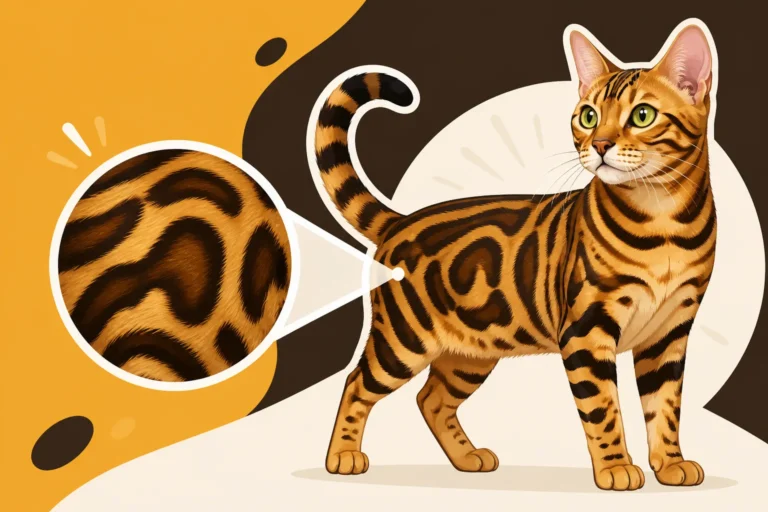
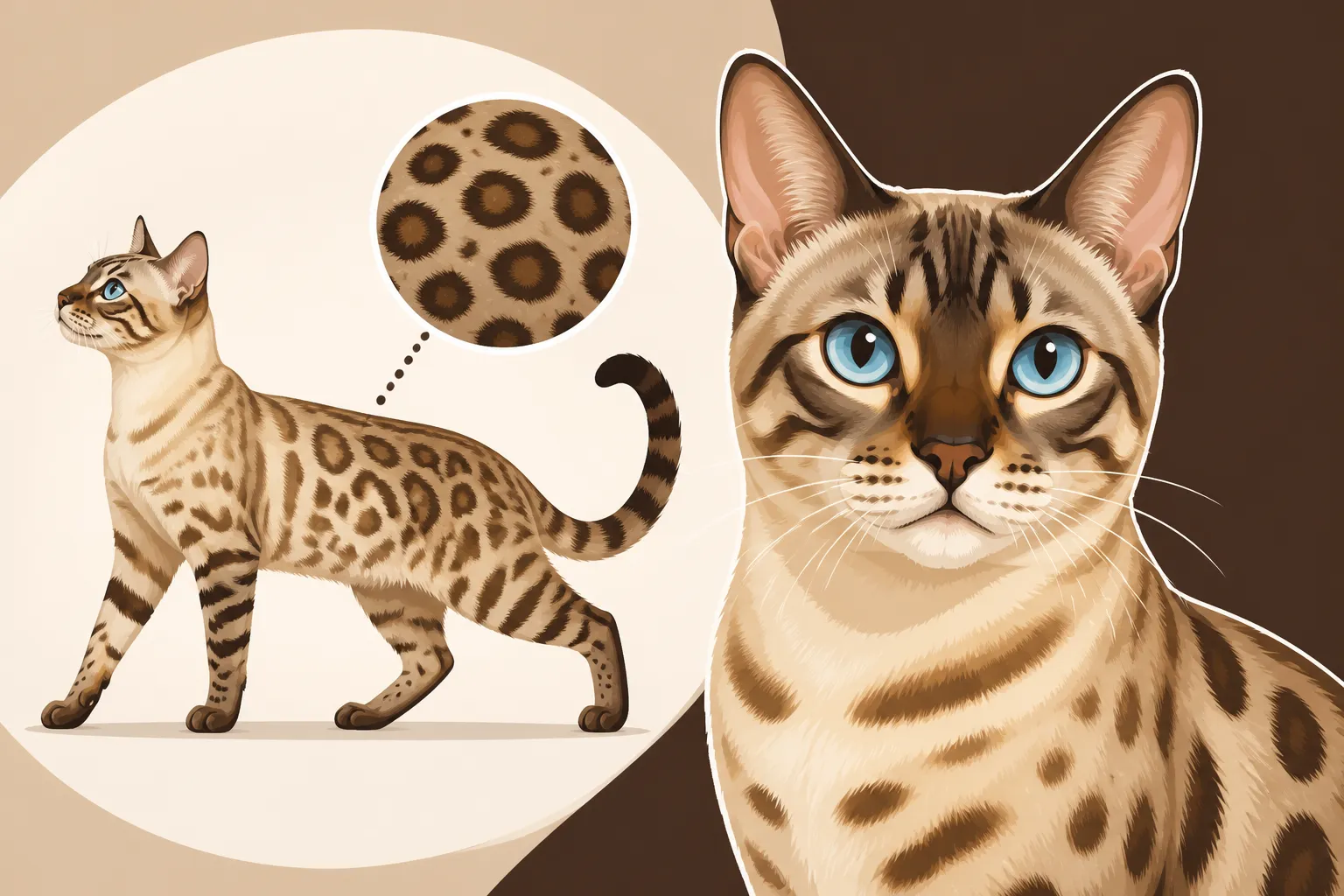
A seal sepia Bengal often has a warm ivory, cream, tan, or light brown ground color, with markings in a darker brown shade. Those markings may be spots or rosettes, or the cat may have a marbled pattern. The contrast and exact shades vary from cat to cat. One may look pale and golden, while another appears noticeably darker and richer in tone.
The name describes color, not pattern. A seal sepia Bengal can be rosetted or marbled, and its pattern is a separate feature from the genetic variety that produces the light background. For more on those markings, see Rosetted Against Marbled: The Two Bengal Cat Patterns and What a Marbled Bengal Cat Is.
How seal sepia differs from other snow Bengals
The three commonly discussed snow varieties are seal lynx point, seal mink, and seal sepia. Their coloring can overlap, particularly when a cat is young or photographed under different lighting. Eye color and genetic background can help distinguish them, but appearance alone is not always conclusive.
Seal lynx point Bengals often have the palest coat and blue eyes. Seal mink Bengals commonly fall between lynx point and sepia in appearance, and their eyes may be aqua or greenish. Seal sepia Bengals typically have warmer, darker coats and gold, green, or related shades of eye color. These are useful tendencies, not guarantees that every individual cat will match a simple visual description.
| Bengal color variety | Typical coat impression | Commonly associated eye colors | Why identification can be tricky |
|---|---|---|---|
| Seal lynx point | Pale cream or near-white background, with darker markings | Blue | Coat contrast and pattern can develop as the kitten matures |
| Seal mink | Cream to tan background, often with moderate contrast | Aqua, green, or related shades | May resemble either lynx point or sepia in some lighting |
| Seal sepia | Warm ivory, tan, or light brown background, often with darker brown markings | Gold, green, or related shades | Individual coat shades and photos vary |
These descriptions are a starting point rather than a way to confirm a cat’s genetic variety. If you want a broader look at color terminology, Which Colors a Bengal Cat Comes In and What a Snow Bengal Cat Is explain how the color families fit into the breed.
The genetics behind a seal sepia Bengal
The color-point gene affects coat pigmentation
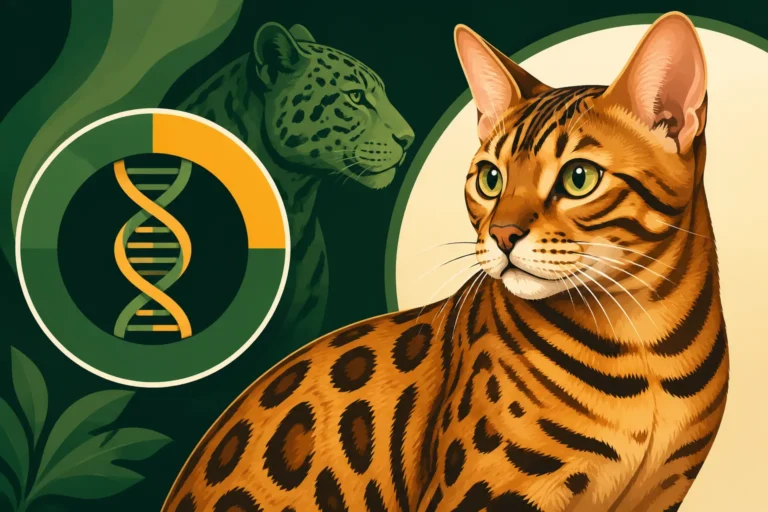
Seal sepia is associated with a color-point gene variant that affects how pigment is expressed. The genetic shorthand often used for the sepia variety is cb/cb, meaning the cat has two copies of the Burmese-pattern allele at the color-point locus. This differs from the combinations associated with seal mink and seal lynx point.
That genetic background helps explain why snow Bengal colors can look related while still having recognizable differences. The color-point gene influences the distribution and intensity of pigment, while other genes contribute to the cat’s pattern and the shades you see in the coat. A seal sepia Bengal is not simply a brown Bengal with a lighter coat, and “sepia” is not a description of a rosette shape.
A kitten’s visible coloring also does not tell the whole genetic story. Two cats may look similar in a photograph but have different color-point combinations. Conversely, kittens from the same litter can have different snow varieties if their parents carry the relevant color alleles. For the basics of how breed color descriptions work, see Every Bengal Cat Color the Registries Accept.
What a breeder’s records and testing can tell you
If a breeder identifies a kitten as seal sepia, ask how that identification was made. Useful information may include the parents’ documented colors, the kitten’s pedigree, and genetic testing that includes the relevant color-point variants. A clear answer should connect the label to the kitten’s known background or test results rather than relying only on a casual visual guess.
Genetic testing can help identify color traits, but it does not establish everything about a Bengal. It does not, by itself, confirm overall health, temperament, quality, or whether a cat meets a particular show standard. If you are buying a kitten, treat color documentation as one part of the records you review, not a substitute for asking about health testing and care. The guide What a Bengal Cat Standard Asks For can help put appearance and breed descriptions in context.
It is reasonable to ask for copies of any available results and to make sure the paperwork clearly refers to the kitten or its parents. If records use unfamiliar terms, ask the breeder to explain the color combination in plain language. A responsible explanation should be understandable without requiring you to infer a kitten’s genotype from a single photo.
How a seal sepia Bengal’s appearance changes as it grows
Kittens can look lighter and less defined
A seal sepia kitten may not arrive with the fully developed contrast an adult will have. Young Bengals can have soft, muted coats, and their markings may become more noticeable as they mature. This is one reason an online kitten photo can be a poor guide to the adult color: age, lighting, camera settings, and the kitten’s coat stage all affect what you see.
Some Bengal kittens also go through a temporary period when their coats look less crisp or more subdued. This is often called the “fuzzy” stage. The pattern can seem hazy for a time, then become clearer as the kitten’s coat develops. If a breeder’s photos show a change in contrast across several months, that does not automatically mean the kitten is a different color variety.
Ask to see recent, naturally lit photos as well as older images, and remember that a phone camera may shift warm browns toward orange or flatten the contrast between the background and markings. If you are comparing siblings, try to view them under the same lighting rather than comparing separate photos taken in different rooms. For more about this developmental phase, see What Fuzzies Are on a Bengal Cat Kitten and When a Bengal Cat's Adult Pattern Comes Through.
Color, pattern, and eye shade are separate details
It helps to describe a Bengal by separating three things: base color, pattern, and eye color. “Seal sepia” refers to the color variety. “Rosetted” or “marbled” describes the pattern. Eye color is another visible trait that may support an identification but should not be used alone to determine the cat’s genetics.
For example, two seal sepia Bengals may have different-looking coats because one has bold, open rosettes and the other has a tighter pattern. A warm cream background can also look nearly white in bright daylight or tan in a room with warm indoor bulbs. Even the apparent depth of the markings can shift depending on whether the coat is wet, freshly groomed, or photographed in shadow.
If a breeder uses several labels at once, ask what each one means. A description such as “seal sepia rosetted” combines the color variety with the pattern. It does not mean that all seal sepia Bengals must have rosettes, nor does a marbled coat rule out the sepia color variety.
Choosing and caring for a seal sepia Bengal
Questions to ask before choosing a kitten
Color may be the first thing that catches your eye, but it should not be the only factor in choosing a Bengal. Ask about the kitten’s health history, socialization, parents, and the breeder’s approach to raising and placing kittens. A beautiful coat is no substitute for a clear account of veterinary care and a kitten who has had time to become comfortable with ordinary household sounds and handling.
Consider asking:
- How was the seal sepia color identified? Ask whether the breeder is using pedigree information, genetic testing, or visual description.
- Can I see the relevant records? Request copies of available results and ask which cat each result belongs to.
- What do you know about the parents’ colors and health? The answer should be specific and consistent with the documents.
- How has the kitten been socialized? Ask about daily handling, household routines, and the kitten’s response to people.
- What food is the kitten eating now? A gradual transition is usually easier than changing the food abruptly after moving home.
A breeder who cannot answer every genetics question may still be able to explain what they know and what their records show. Be cautious of absolute claims based only on appearance, especially if the label matters to you for registration, showing, or future breeding.
Coat care and everyday needs
A seal sepia Bengal does not need a special grooming routine because of its color. Like other shorthaired Bengals, it generally benefits from occasional brushing, routine nail care, and regular checks of its ears, teeth, and skin. A soft brush or grooming mitt can help remove loose hair, but many cats do not need frequent or intensive coat work.
For nutrition, start with the kitten’s established food and discuss any planned changes with your veterinarian. If the breeder has been using a specific food, you can note the exact product and ingredients before bringing the kitten home. Some owners use retailers such as Chewy to keep track of familiar food and litter supplies, while others buy locally; what matters most is a consistent transition and a diet appropriate for the cat’s age and health.
The Bengal’s activity level is worth planning for, regardless of whether the cat is seal sepia, brown, or silver. Provide safe climbing options, interactive play, scratching surfaces, and daily attention. A striking coat does not make a Bengal a low-maintenance decorative pet. For practical background on routine care, see A Bengal Cat Needs Almost No Grooming and How Much Enrichment a Bengal Cat Actually Needs.
A seal sepia Bengal is best understood as a snow-colored Bengal with a particular genetic background, not as a separate breed or pattern. Its warm coat, darker markings, and commonly gold or green eyes can make it distinctive, but kittens change as they mature and visual labels can be uncertain. When the exact color matters, ask for clear records, and choose a kitten based on health, temperament, and fit with your household as well as appearance.
Disclaimer
This article is for general informational purposes only and does not constitute professional advice. Laws, prices and regulations vary by location and change over time. Consult a qualified professional for guidance on your specific situation.