Signs a Bengal Cat Kitten Is Losing Night Vision
It can be incredibly distressing and confusing when you suspect something isn't quite right with your spirited Bengal kitten, especially when it comes to something as vital as their sight. Bengal cats are naturally so energetic and agile that a subtle loss of night vision might easily be dismissed as typical kitten clumsiness or just their wild antics. This comprehensive guide is here to help you identify those subtle, yet crucial, signs that your Bengal kitten might be losing their night vision, empowering you to seek early intervention and provide the best care.
Understanding PRA-b and Early Night Vision Loss in Bengal Kittens
Let's talk about the elephant in the room when it comes to Bengal cat vision: progressive retinal atrophy, specifically the PRA-b variant. This isn't just a generic eye issue; it's a specific genetic condition that disproportionately affects our beloved Bengals. Knowing this helps us understand why night vision is often the first thing to go and what we're really looking for. It's a scary thought, envisioning your playful kitten struggling, but early awareness is your greatest tool.
The Silent Progression of Retinal Degeneration
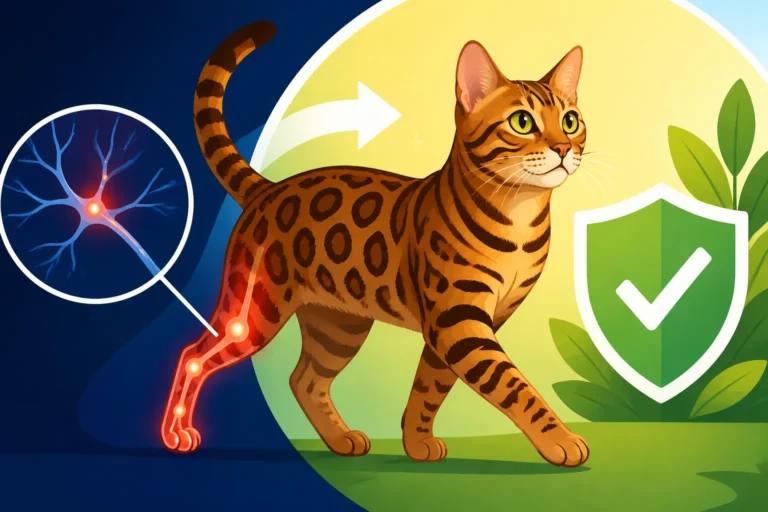
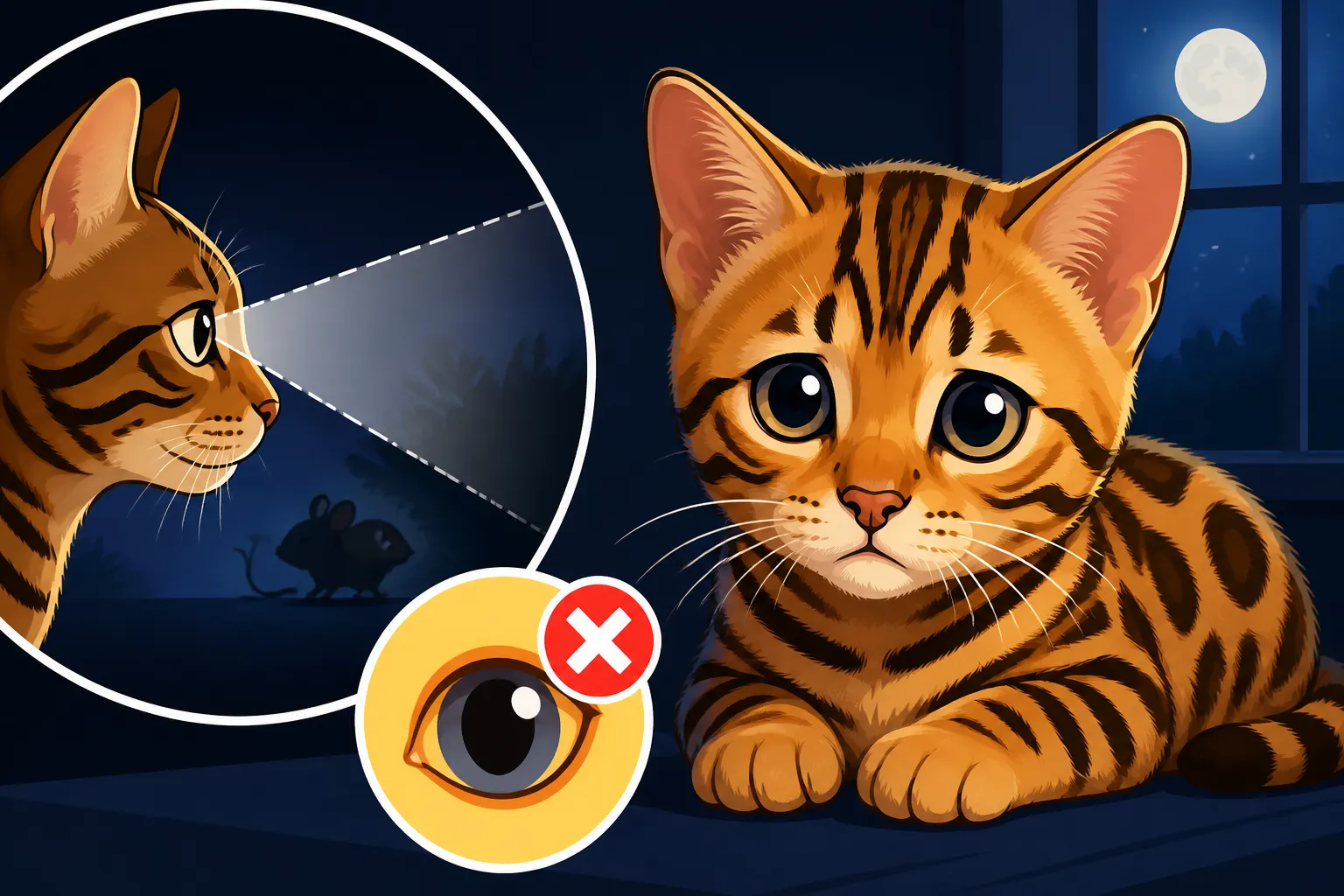
The tricky thing about PRA-b is that it rarely hits like a sudden wall. Instead, it’s a gradual, often silent, thief of sight. In the early stages, it specifically targets the rod cells in the retina, which are responsible for vision in low light conditions. This means your kitten might still navigate perfectly fine during the day, leaping and pouncing as usual, while struggling significantly once dusk falls or in dimly lit rooms.
What makes it even harder for us as owners is how incredibly adaptable cats are. A Bengal kitten, full of instinct and energy, will try its best to compensate. They might memorize the layout of your home, relying more on their whiskers, hearing, and an enhanced sense of smell to get around. This amazing ability to adapt often means that by the time you notice something is truly amiss, the disease might have progressed quite a bit. You might observe a playful kitten that normally charges through a dimly lit hallway suddenly hesitating at the threshold, or taking a much wider, more cautious route around furniture it used to effortlessly dart past. These aren't just one-off instances; it's a pattern of subtle changes.
Genetic Predisposition in Bengal Cats
Unfortunately, PRA-b is a genetic condition, meaning it's inherited. For a kitten to be affected, it needs to inherit two copies of the faulty gene – one from each parent. Even if a parent is only a "carrier" (meaning they have one copy of the gene but don't show symptoms themselves), they can pass it on. This is why it's absolutely crucial for responsible breeders to test their breeding cats. You can learn more about Why PRA-b Is Specific to the Bengal Cat if you're curious about the origins of this particular mutation.
If you’ve acquired your Bengal kitten from a reputable breeder, they should have provided you with genetic test results for the parents, and ideally for the kitten itself, confirming that they are clear or, at the very least, clarifying their carrier status. This information is vital. It’s not just a fancy certificate; it's a window into your kitten’s future health. If you haven't received this, or if you're considering a kitten, it's perfectly reasonable to ask Whether a Breeder Must Show a Bengal Cat's PRA-b Result. Reputable breeders understand and value this transparency.
Key Behavioral Signs of Night Vision Loss
When you’re watching a Bengal kitten, it can feel like you’re trying to decipher a furry, energetic whirlwind. They're so playful and sometimes clumsy by nature that it's easy to second-guess yourself. "Is he just being a clumsy kitten, or is he actually struggling to see?" This is a perfectly valid frustration, but there are distinct patterns of behavior that can signal trouble, especially in low light conditions.
Hesitation and Clumsiness in Low Light
One of the earliest and most noticeable signs of night vision loss in a Bengal kitten is an observable difference in their confidence and agility when the lights are low. Think about how your kitten usually navigates: they probably zip through rooms, scale furniture, and generally act like they own the place.
If their night vision is starting to fail, you might see them:
- Pausing at thresholds: Instead of confidently walking into a dimly lit room, they might stop, lower their head, and slowly feel their way in with their whiskers.
- Bumping into familiar objects: A kitten that normally weaves effortlessly around your coffee table might start bumping into its legs when it’s getting dark. This isn't just a one-off, but a consistent pattern when light levels drop.
- Stair caution: If you have stairs, a kitten losing night vision might become noticeably more hesitant going up or down in low light, sometimes placing their paws extra carefully or even refusing to go.
- Sticking to walls: They might start hugging the walls as they move through a room, using them as a guide, rather than walking freely across the open space.
It’s important to distinguish this from general kitten clumsiness. All kittens have their moments of misjudging a jump or tumbling playfully. The key here is the consistent nature of the hesitation and increased clumsiness, specifically triggered by diminishing light. This is one of the clearest Signs a Bengal Cat Kitten Is Losing Night Vision.
Changes in Play and Hunting Habits
Bengal cats are natural hunters, full of those wild instincts from their Asian Leopard Cat ancestors. Playtime is a huge part of their lives, and it’s often where you’ll notice visual impairment first.
A kitten losing night vision might:
- Struggle with moving targets: While they might still chase a laser pointer or a wand toy during the day, they could start missing pounces or batting at empty air in lower light conditions. Their tracking ability significantly diminishes.
- Prefer stationary toys: They might shift their preference from fast-moving toys to static ones they can locate by smell or touch.
- Be less enthusiastic about nighttime play: If evening play sessions used to be a highlight, you might find your kitten becoming less engaged or even withdrawing from games once the sun goes down.
- Hesitate to jump: Jumping onto furniture or cat trees might become more challenging for them in low light, as they can't accurately gauge distances.
This impacts their core drive. How a Blind Bengal Cat Copes involves a great deal of reliance on their other senses, but in the early stages, the disconnect between their instinct to hunt and their failing vision can be quite frustrating for them.
Increased Startle Response
When one sense begins to falter, others often compensate, leading to heightened sensitivity. A Bengal kitten with diminishing night vision will naturally become more reliant on its hearing and smell. This can lead to an increased startle response, especially in low light where they can't visually confirm what's happening around them.
You might notice your kitten:
- Jumping at unexpected sounds: A door closing, a person walking into the room, or even just a sudden noise that wouldn't normally faze them might cause a significant startle reaction.
- Reacting strongly to shadows or movement: Since their low-light vision is impaired, shadows or sudden, unidentifiable movements might be perceived as threats, causing them to flinch or jump.
- Being more wary of new people or objects in the dark: If they can't clearly see a new person approaching or a novel object placed in their environment, they might be more apprehensive or defensive than usual.
It's like walking through a dark room yourself when you know things are there but can't quite make them out – your other senses become hyper-aware, and you're more prone to jumping if something brushes past you.
Physical and Environmental Clues to Watch For
Beyond what your Bengal kitten does, there are also some physical signs and environmental observations that can provide crucial clues. While not always obvious, these can either confirm your suspicions or prompt further investigation.
Dilated Pupils in Normal Lighting
Normally, a cat's pupils will adjust to the ambient light, becoming slits in bright conditions and dilating in darkness to let in more light. When a cat is losing night vision, especially due to retinal degeneration, their pupils might appear abnormally dilated even in normal, moderate lighting conditions. This is their natural attempt to compensate for the failing rods – their eyes are trying to scoop up every last photon of light, even when it's technically bright enough for normal pupil constriction.
It's a subtle sign, and it's essential to observe this in consistent lighting. If you're in a brightly lit room and your Bengal kitten's pupils look larger than you'd expect, similar to how they'd look in a dark room, that's a red flag. Always compare their pupils in different light levels, and perhaps compare them to another cat if you have one, to get a baseline.
Altered Eye Reflection (Tapetum Lucidum)
The tapetum lucidum is a reflective layer behind the retina in many animals, including cats, which helps them see in low light by reflecting light back through the retina. It’s what gives cats that characteristic "eye shine" when light hits their eyes in the dark, often visible in photos.
In cases of retinal degeneration like PRA-b, this reflective layer or the retina itself can be affected, leading to an altered appearance of the eye shine. You might notice:
- A duller or less vibrant eye shine: When you shine a flashlight into your kitten's eyes in the dark (from a safe distance, gently), the typical bright, greenish-yellow reflection might be muted or appear different.
- Asymmetrical reflection: One eye might reflect differently than the other, or certain areas of the eye might appear darker.
This is often a sign that the degeneration is advanced, and it's definitely something your vet would look for during an ophthalmic exam. While it can be a later sign, it's worth being aware of, particularly if you find old photos of your kitten and notice a change over time.
Environmental Impact and Adaptation
How your kitten interacts with its environment can also speak volumes. A visually impaired kitten relies heavily on a stable and predictable environment.
- Difficulty in new places: If you take your kitten to an unfamiliar room or home, their vision problems will become much more apparent in low light. They won't have the muscle memory or scent maps to navigate, leading to increased bumping and hesitation.
- Resistance to changes: Moving furniture, even slightly, can cause significant distress and disorientation for a kitten with vision loss, especially at night. They rely on their memorized mental map, and disrupting it can make them anxious and prone to accidents. How to Rearrange a Home for a Blind Bengal Cat provides valuable insights if you find yourself in this situation.
- Seeking brighter areas: You might find your kitten gravitating towards areas with more light, such as a window during the day or a well-lit corner at night, and avoiding darker, less predictable spaces.
This reliance on a stable environment is a silent indicator. While a robust pet insurance plan like those offered by Healthy Paws might not prevent inherited conditions, having coverage in place early can certainly help with the costs associated with diagnostics and ongoing care if an issue is diagnosed.
What to Do If You Suspect Vision Loss
Spotting these signs in your energetic Bengal kitten can be disheartening, but it's crucial to act promptly. Early intervention won't reverse PRA-b, but it can help manage the condition, adapt your home, and ensure your kitten's comfort and quality of life.
Consulting Your Veterinarian
The absolute first step is to schedule an appointment with your veterinarian as soon as possible. Don't delay. While they might do a general eye exam, it's highly recommended to ask for a referral to a veterinary ophthalmologist if your regular vet has any suspicions. These specialists have the equipment and expertise to diagnose subtle eye conditions accurately.
During the examination, the vet or specialist might perform:
- Ophthalmic examination: Using special lights and lenses to look at the structures of the eye, including the retina. While a vet might note changes, specialized equipment is often needed for early PRA-b detection. Whether an Eye Exam Finds PRA-b in a Bengal Cat provides more detail on this.
- Electroretinography (ERG): This is a sophisticated test that measures the electrical responses of the cells in the retina when they're stimulated by light. It can detect retinal degeneration even before clinical signs are obvious and is considered the gold standard for diagnosing PRA-b.
Discussing Breeder Information and Genetic Testing
This is where your breeder's due diligence comes into play. If your kitten starts showing signs of PRA-b, reach out to your breeder. A responsible breeder will want to know and might offer support or insights, especially if they have seen similar cases in their lines.
You should also:
- Request parental genetic test results: If you don't already have them, ask for the PRA-b DNA test results for both of your kitten's parents. This can help confirm the genetic link. Which Lab Runs the Bengal Cat PRA-b Test can give you an idea of where these tests are performed.
- Consider genetic testing for your kitten: Even if the clinical signs are strong, a DNA test can confirm the presence of the PRA-b gene mutation. How the Bengal Cat PRA-b DNA Test Works involves a simple cheek swab, which is non-invasive and provides a definitive answer.
Having a robust pet insurance plan, such as one from Healthy Paws, can be invaluable here. While specific waiting periods and exclusions apply, a good policy put in place before a diagnosis can significantly offset the costs of specialist consultations, advanced diagnostic tests like ERG, and any ongoing care your kitten might need. It's an investment in peace of mind.
Creating a Safe and Predictable Environment
While you're awaiting diagnosis or once it's confirmed, you can immediately begin making adjustments to support your kitten. This isn't about pity; it's about practical support to maintain their quality of life.
Here’s a helpful table of immediate actions:
| Area of Concern | Observed Sign | Recommended Action |
|---|---|---|
| Navigation in Low Light | Hesitation, bumping into objects at dusk/night | Keep furniture layout consistent. Use night lights in key areas. |
| Playtime Engagement | Difficulty tracking moving toys in low light | Offer more interactive floor-based or stationary toys. Use auditory toys. |
| Startle Response | Jumping at sounds/movement in dim areas | Announce your presence with a soft voice. Approach slowly. Avoid sudden movements. |
| Pupil Dilation | Pupils appear large in normal light | Consult vet for ophthalmic exam. Monitor for other behavioral changes. |
| Environmental Changes | Disorientation with moved items | Avoid moving large furniture. Create clear pathways. |
These small, consistent changes make a world of difference. Your Bengal kitten thrives on routine and knowing its environment. By providing stability, you reduce their anxiety and help them compensate for their vision loss.
The Outlook for a Bengal Kitten with PRA-b
Discovering your Bengal kitten has a progressive condition like PRA-b is undoubtedly heartbreaking. However, it's vital to remember that a diagnosis isn't a death sentence, and these resilient creatures can lead full, happy lives with the right support.
Progression and Adaptation
PRA-b is a progressive disease, meaning that over time, the night vision loss will eventually lead to complete blindness, typically affecting vision in normal light too. The age this happens can vary, but for the PRA-b variant, it's usually between 2-7 years of age. You can find more details on The Age a Bengal Cat With PRA-b Goes Blind.
The good news is that cats are incredibly adaptable. Unlike humans, they rely heavily on their other senses, and the gradual nature of PRA-b allows them ample time to adjust. A blind cat learns to navigate its world with remarkable precision, often surprising owners with their capabilities. They continue to play, explore (within safe limits), and enjoy their lives. Your love, patience, and commitment to maintaining a stable environment are the most powerful tools you have to help them.
Long-Term Care and Quality of Life
The long-term care for a Bengal cat with PRA-b focuses on safety, enrichment, and regular veterinary check-ups.
- Safety First: Maintain a consistent home layout. Block off dangerous areas like open stairwells or balconies. Consider using scent markers (like different essential oils dabbed on furniture legs) or textured mats to help them identify key areas. Whether a Bengal Cat With PRA-b Lives a Normal Life delves deeper into how to ensure their well-being.
- Mental Stimulation: Don't underestimate their intelligence. Puzzle feeders that rely on smell, toys that make noise, and interactive play where you guide them with sound cues are excellent for mental enrichment.
- Routine Vet Care: Regular check-ups with your vet are important to monitor overall health and address any secondary issues.
- Pet Insurance: Having pet insurance, like Healthy Paws, which is already in place before a diagnosis, can truly be a lifesaver for managing long-term care costs, including specialist visits, medication, and any assistive technologies you might consider. It provides financial reassurance during an already emotionally challenging time.
Remember, a Bengal cat with vision loss can still be a joyful, loving companion. They teach us so much about resilience and finding happiness in their unique way of experiencing the world. Your bond with them will deepen as you learn to support them through their journey.
Disclaimer
The information provided in this guide is for informational purposes only and does not constitute veterinary advice. Always consult with a qualified veterinarian for any health concerns or before making any decisions related to your pet's medical care.