What Distal Neuropathy Does to a Bengal Cat
It's incredibly disheartening when you notice something is "off" with your usually energetic Bengal cat, especially when it involves their movement and agility. These are cats known for their boundless energy and incredible athleticism, so any sign of weakness or an awkward gait can be alarming. This guide is here to shed light on distal neuropathy in Bengal cats, a condition that, while thankfully rare, can significantly impact their quality of life, explaining what it is, how it progresses, and what you can do.
Understanding Distal Neuropathy in Bengal Cats
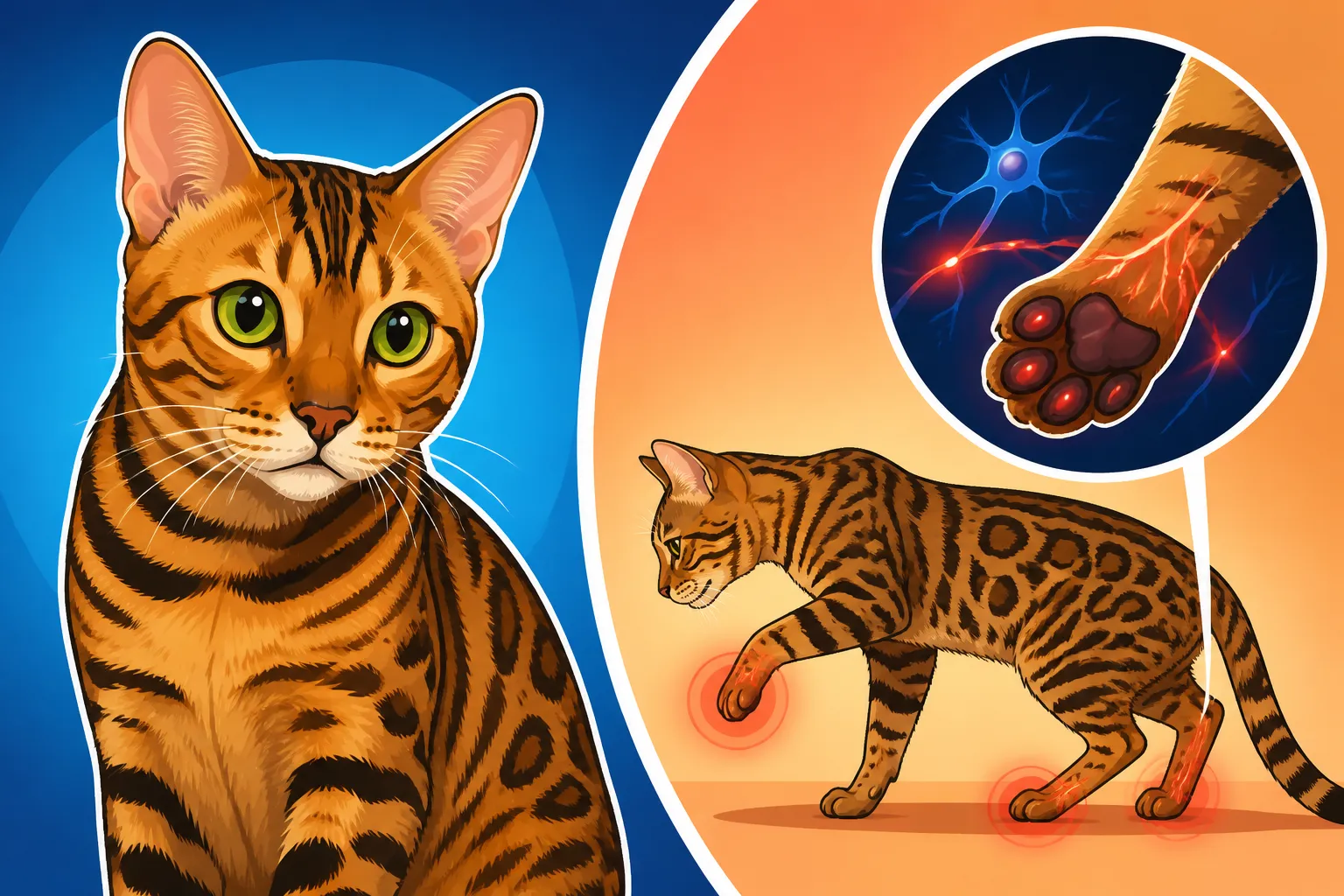
Distal neuropathy is a term that sounds quite scientific, but at its heart, it refers to a problem with the nerves that extend to the furthest parts of your cat's body – think paws, lower legs, and tail. These are the nerves responsible for carrying signals from the brain and spinal cord to the muscles, telling them when and how to move. When these nerves don't function correctly, it can lead to a whole host of mobility challenges.
What is Distal Neuropathy?
At its core, distal neuropathy is a progressive neurological disorder that specifically targets the peripheral nerves, which are all the nerves outside of the brain and spinal cord. These vital communication lines are responsible for relaying sensory information and motor commands. When they're compromised, the muscles they control don't receive the proper signals. This results in weakness, muscle wasting, and impaired coordination, predominantly in the distal (far-reaching) parts of the limbs. It's not typically a painful condition in itself, but the resulting loss of function can certainly cause secondary discomfort or frustration for an active cat. Imagine trying to walk or jump when your legs just don't get the memo from your brain – that's a bit what it's like. The insidious nature of its progression means it often starts subtly, making it tricky to pinpoint initially.
The Specific Impact on Bengal Cats
While distal neuropathy can affect various cat breeds, there have been documented cases specifically in Bengal cats, suggesting a potential genetic predisposition within the breed, though research is still ongoing. In Bengals, the condition often manifests when they are relatively young, typically between one and five years of age, though it can appear earlier or later. It’s particularly heartbreaking to see in a Bengal because they are naturally so athletic and graceful. You expect them to be leaping onto high shelves and tearing around the house, not struggling with basic movements. The disease often progresses gradually, meaning the changes can be so subtle at first that you might dismiss them as a temporary clumsiness or a slight injury. Understanding the unique energy levels of a Bengal, as described in guides like How Active a Bengal Cat Is, helps contextualize just how much of a departure this condition represents from their normal vigor.
Recognizing the Signs and Symptoms
Catching any health issue early is always best, but with a neurological condition like distal neuropathy, the initial signs can be incredibly subtle, easily overlooked, or attributed to other causes. It's about noticing those slight changes in your Bengal's behavior and movement patterns, especially given their normally vibrant nature.
Early Indicators of Distal Neuropathy
When distal neuropathy first begins to take hold, you might start noticing little things that, on their own, don't seem like much, but together could paint a clearer picture. Your Bengal, who usually clears the kitchen counter with ease, might suddenly struggle, needing a little extra effort or missing a jump. Perhaps they seem a bit less interested in their usual rigorous play sessions, finding themselves unable to sustain the same level of activity as outlined in How Many Hours a Day a Bengal Cat Plays. You might observe a subtle change in their gait – maybe a slight wobble or a less confident stride, particularly in their hind legs. They might hesitate before tackling stairs or seem a bit clumsier than usual when navigating furniture. For a breed known for its agility and vertical prowess, any noticeable reduction in their ability to jump or climb should definitely catch your eye. It's often not a dramatic limp, but a general lack of the usual spring in their step.
Progressive Symptoms and Their Impact
As distal neuropathy progresses, these subtle signs unfortunately become much more pronounced and impactful on your Bengal's daily life. The weakness in their limbs will become more obvious, often leading to a distinct, wobbly gait or a more pronounced ataxia (lack of muscle coordination). You might start seeing them drag their paws, particularly their back paws, which can lead to scuffing of the nails or even sores on the top of their feet if not carefully managed. Muscle atrophy, or wasting, often becomes visible, especially in the hindquarters, making their legs appear thinner.
Eventually, the condition can make even simple tasks incredibly difficult. Using the litter box can become a struggle if they can't balance well or step over the sides. Eating and drinking might require changes in how their bowls are presented, perhaps elevated to reduce strain. Their once-vocal demands, often discussed in The Bengal Cat Voice Is a Demand, Not a Greeting, might become quieter as their energy wanes. The constant effort to move can lead to fatigue, and you might find your Bengal spending more time resting. This decline profoundly affects their quality of life, making it crucial to seek veterinary attention at the earliest signs.
Here's a quick look at the typical progression:
| Stage | Early Signs | Moderate Signs | Advanced Signs | Impact on Daily Life |
|---|---|---|---|---|
| Gait | Subtle wobbling, less confident stride | Noticeable unsteadiness, hind limb weakness | Severe ataxia, dragging paws, difficulty standing | Difficulty walking, navigating stairs, playing |
| Activity | Reduced jumping ability, less sustained play | Hesitation to jump, reduced overall activity | Inability to jump, minimal activity, increased rest | Cannot access high places, limited interaction |
| Muscles | No visible changes, perhaps slight weakness | Mild muscle atrophy (especially hind legs) | Significant muscle wasting, especially in distal limbs | Weakness impedes movement, balance issues |
| Coordination | Slight clumsiness, occasional missteps | Frequent missteps, loss of balance, tripping | Severe discoordination, falls | Requires assistance for basic movements, prone to injury |
| Self-Care | No impact | Minor difficulty with litter box or grooming | Significant challenges with litter box, eating, drinking, grooming | Requires extensive help and environmental modifications |
Diagnosis and Management
If you're noticing any of these troubling signs in your Bengal, the first and most important step is to get them to a veterinarian. Diagnosing distal neuropathy requires a careful approach to rule out other conditions and confirm the specific neurological issue at hand.
How Vets Diagnose Distal Neuropathy
Diagnosing distal neuropathy isn't always a straightforward process because its symptoms can mimic other conditions. Your veterinarian will start with a comprehensive physical exam and a detailed neurological assessment. They'll check your Bengal's reflexes, coordination, and proprioception (their sense of body position). This initial exam helps localize the problem to the peripheral nervous system. They’ll want to know about the onset of symptoms, how they've progressed, and any other changes you've observed, even seemingly minor ones.
To rule out other causes of weakness or lameness, your vet might recommend blood tests, urinalysis, and radiographs (X-rays) to check for metabolic diseases, infections, or skeletal problems. For example, some conditions like those that cause Signs a Bengal Cat Is Anemic can also present with weakness. However, a definitive diagnosis of distal neuropathy usually requires more specialized testing. This can include electrodiagnostic studies, such as nerve conduction velocity (NCV) tests and electromyography (EMG). These tests measure the electrical activity of nerves and muscles, helping to identify damage to the peripheral nerves. Sometimes, a muscle or nerve biopsy might be performed to examine tissue samples under a microscope. It’s a thorough investigative process because confirming a specific neurological condition like this is critical for understanding the prognosis and guiding management strategies.
Supportive Care and Prognosis
Unfortunately, there is currently no cure for distal neuropathy in Bengal cats, or most forms of it in felines. The focus of management, therefore, shifts entirely to supportive care, aiming to improve your cat’s comfort and maintain their quality of life for as long as possible. This often involves a multi-faceted approach.
Physical therapy can be incredibly beneficial. Gentle exercises, massage, and assisted standing can help maintain muscle mass and joint flexibility. Environmental modifications are also key: think non-slip rugs on slick floors, easy-access litter boxes with low sides, and elevated food and water bowls to make eating and drinking less strenuous. Ramps or steps can help them access favorite perching spots they can no longer jump to, acknowledging that How High a Bengal Cat Climbs might be severely restricted.
Depending on the progression, some Bengal cats might benefit from a cart or other mobility aids. Nutritional support is also important to maintain a healthy weight and provide essential nutrients for muscle health. Regular vet check-ups are essential to monitor their condition and adjust supportive care as needed. While medication usually isn't a direct treatment for the neuropathy itself, drugs may be prescribed to manage any secondary issues, such as pain from muscle strain or pressure sores, or to address underlying conditions if any are found. Dealing with the ongoing care can be financially demanding, and services like Healthy Paws pet insurance can be a consideration for managing veterinary costs associated with chronic conditions.
The prognosis for Bengal cats with distal neuropathy can vary widely. Some cats may have a slower progression and maintain a relatively good quality of life with supportive care for many years, while others may experience a more rapid decline. It’s a journey that requires immense dedication, patience, and love from their human companions. Understanding that Whether a Bengal Cat Recovers From Distal Neuropathy is generally not the case can be a hard truth, but focusing on comfort and quality of life becomes paramount.
Disclaimer
The information provided in this guide is for informational purposes only and does not constitute veterinary advice. Always consult with a qualified veterinarian for any health concerns or before making any decisions related to your pet's health and treatment.