Which Bengal Cat Patterns Cost the Most
If you've ever found yourself scrolling through endless pictures of gorgeous Bengal cats, utterly captivated by their wild, exotic patterns, you've probably also noticed that the price tags can vary wildly. It's truly baffling to see one kitten listed for a modest sum and another, seemingly similar, commanding a king's ransom. This guide is here to unravel the mystery behind why certain Bengal cat patterns cost more than others, helping you understand what drives these price differences in the fascinating world of Bengal cat ownership.
Understanding the Foundation of Bengal Cat Patterns
When you look at a Bengal cat, what immediately strikes you is that wild, untamed appearance, often resembling a miniature leopard or jaguar. This isn't by accident; it's the result of their heritage, tracing back to the Asian Leopard Cat. The patterns, known as rosettes or marbling, are what truly define the breed's aesthetic appeal and, consequently, often their market value. It's more than just "spots"; there's a whole intricate language to these patterns that breeders and enthusiasts understand, and it directly influences what you might pay.
Rosettes: The Crown Jewel of Bengal Patterns
For many, the rosette is the quintessential Bengal pattern, the one that screams "miniature wild cat" louder than any other. These aren't just simple spots like you'd find on a tabby; rosettes are complex, multi-toned markings where the center of the spot is a different color from the outline, or they appear as an arrowhead shape, like arrowheads pointing down the cat's back. The clarity and definition of these rosettes are paramount to their appeal and, therefore, their cost. A Bengal with perfectly formed, highly contrasted rosettes is truly a sight to behold and will almost always be at the higher end of the price spectrum.
Think of it like a piece of art; a perfectly executed, clear rosette pattern is a masterpiece. Breeders spend generations carefully selecting pairings to achieve these desirable traits, which is why a stunning rosette pattern can significantly increase a kitten's value. You might also be interested to learn more about What Rosettes and Glitter Add to a Bengal Cat's Price and What a Rosetted Bengal Cat Costs to delve deeper into these specific pricing factors.
Marbling: A River of Swirling Beauty
While rosettes get a lot of attention, marbled Bengals possess a unique beauty all their own. Instead of distinct spots, a marbled Bengal has long, flowing, horizontal stripes and swirls that create a dramatic, abstract pattern, often reminiscent of marble stone or even a tiger's stripes. The ideal marbled pattern is one that flows horizontally across the body rather than appearing as a series of random blotches. It should be clear, with strong contrast between the dark markings and the lighter background color, and ideally, have three distinct tones: the ground color, the darker pattern color, and a third, even darker outlining color.
A well-defined, horizontally flowing marble pattern is quite sought after. While perhaps not as universally "wild-looking" as rosettes, a top-quality marbled Bengal is still incredibly striking. There's a certain elegance to the marbled pattern, a captivating depth that draws you in. Understanding What a Marbled Bengal Cat Is can give you a better appreciation for this beautiful, often underrated pattern and how its quality influences its price.
The "Wild Look" Premium: Rosettes and Their Variations
When we talk about what makes a Bengal cat truly special, it often comes back to how closely it resembles its wild ancestor, the Asian Leopard Cat. The rosette pattern is the most direct visual link to this heritage, and within rosettes, there are distinct variations that command different price points.
Donut, Paw Print, and Arrowhead Rosettes
Not all rosettes are created equal, and breeders categorize them based on their shape and definition.
- Donut Rosettes: These are the holy grail for many, featuring a dark outline that completely encircles a lighter, distinct center. Imagine a miniature donut on your cat's fur! The more perfectly rounded and complete the "donut," the higher the demand. These are incredibly difficult to breed consistently, making them a premium feature. They look incredibly exotic and are a clear indicator of high-quality breeding.
- Paw Print Rosettes: These are often described as rosettes that appear to be made up of several smaller spots forming a larger, indistinct cluster, resembling a paw print. They might have partial outlining or simply be a collection of elongated spots. While beautiful, they typically don't command the same top-tier prices as well-defined donut rosettes, simply because they are a bit less rare and less "perfectly wild" in appearance.
- Arrowhead Rosettes: These are triangular markings that point towards the back of the cat, often seen running in lines along the spine. They are distinct and striking, offering a different take on the rosetted look. A Bengal with strong, clear arrowhead rosettes can be highly valued, especially if the pattern is well-distributed and contrasted across the body. The crispness of the edges and the overall symmetry are key here.
The level of contrast, the size, and the distribution of these rosettes across the cat's body are also critical. A cat with large, well-spaced, highly contrasted donut rosettes will undoubtedly be more expensive than one with smaller, less defined, or more scattered paw print rosettes.
Horizontal Flow and Pattern Clarity
Beyond the individual rosette shape, the overall "flow" and clarity of the pattern across the cat's body are huge price drivers. Breeders strive for a pattern that appears to flow horizontally, rather than vertically (which is more common in domestic tabbies), mimicking the natural patterns of wild felines. This horizontal alignment gives the cat a more athletic, sleek, and truly wild aesthetic.
Pattern clarity refers to how crisp and distinct the markings are against the background color. Blurry or muddy patterns, where the rosettes blend into the background or lack sharp definition, are less desirable. A clear, distinct pattern, whether rosetted or marbled, suggests excellent breeding and genetics. It's not just about having the right shape; it's about the entire canvas coming together perfectly. This attention to detail in breeding means more time, effort, and resources for the breeder, which naturally translates to a higher price for the kitten.
Beyond the Spots: Marbled Bengals and Their Price Point
While rosettes often steal the spotlight, a well-bred marbled Bengal is a thing of beauty and can certainly command a respectable price. The nuances within the marbled pattern also dictate its value.
Horizontal Marbling vs. Random Marbling
Just as with rosettes, the quality of a marbled pattern is crucial for its market value. The most coveted marbled patterns are those with strong horizontal flow, where the swirls and stripes run parallel to the ground, rather than vertically or in a chaotic, broken pattern. This horizontal alignment is known as "horizontal flow" and is highly prized as it further enhances the wild appearance, mimicking the stripes you might see on a clouded leopard or other wild cat.
Random or vertical marbling, which can sometimes resemble a classic tabby pattern, is generally less sought after. It lacks the exotic flair that breeders and buyers often look for in a Bengal. A marbled Bengal kitten with this ideal horizontal flow and distinct, contrasted markings will fetch a much higher price than one with a less defined or more haphazard marbled pattern. It's all about that deliberate, wild look.
The Appeal of Three-Tone Marbling
The very best marbled Bengals often exhibit what is known as "three-tone" marbling. This means you can distinguish three distinct shades within the pattern: the ground color of the coat, the color of the marble markings themselves, and an even darker outline around those markings. This layering of color adds incredible depth and dimension to the pattern, making it far more visually complex and appealing than a simple two-tone marble.
Achieving a three-tone marble pattern requires specific genetics and careful breeding, making these cats rarer and, therefore, more expensive. The richer and more pronounced these three tones are, the greater the demand and price. This intricate play of color makes the coat look almost sculptural. When considering a marbled Bengal, asking a breeder about the presence and quality of three-tone marbling can give you a good indication of the kitten's quality and its likely price point.
The Influence of Color on Pattern Cost
While the pattern itself (rosettes vs. marbling, and their quality) is a primary price determinant, the base color of the Bengal cat's coat also plays a significant role in its overall value. Certain colors are rarer, more sought after, or harder to achieve, which impacts the final cost.
Traditional Brown Bengals
The classic brown Bengal cat, with its warm, rich tones and black or dark brown markings, is perhaps the most iconic and widely recognized. Within the brown category, there's a huge range, from golden and tawny shades to rich coppers and fiery oranges. The contrast between the ground color and the markings is key here. A brown Bengal with exceptionally high contrast, where the rosettes or marble pattern truly "pop" against the background, will always be more valuable. Many refer to this as "crisp" patterning.
Brown Bengals are popular partly because they often showcase the rosetted pattern with stunning clarity. However, even among brown Bengals, the rarity of a specific shade or the exceptional quality of the contrast can lead to price variations. While not as rare as some of the "snow" or "silver" varieties, a truly outstanding brown Bengal, especially one with coveted donut rosettes, can still command a very high price. If you're looking for a classic look, a brown Bengal is a fantastic choice, and you can learn more about What a Brown Bengal Cat Is here.
Snow Bengals: A Winter Wonderland of Spots
Snow Bengals are absolutely enchanting, with their creamy, ivory, or pale fawn coats and contrasting seal, mink, or lynx point markings. They come in three main genetic varieties: Seal Lynx Point, Seal Mink, and Seal Sepia.
- Seal Lynx Point (cs/cs): These typically have the palest body color, often appearing almost white, with distinct seal-colored markings that are dark brown. Their eyes are always blue. Achieving clear, highly contrasted rosettes on a light background is challenging, making high-quality Seal Lynx Points quite valuable. You can read more about What a Snow Bengal Cat Costs to get a better idea of their pricing.
- Seal Mink (cb/cs): With a slightly warmer, creamier body color than Lynx Points, Seal Minks also have seal-colored markings, but their eye color can range from aqua to blue-green. Their patterns often develop more slowly and can be harder to discern as kittens.
- Seal Sepia (cb/cb): These have the warmest, richest body tones, often appearing more like a light brown, with sepia-colored markings that are less contrasting than Lynx Points. Their eye color is typically gold or green.
The rarity and unique beauty of Snow Bengals often put them at a higher price point than many brown Bengals, especially those with clear, well-defined patterns and vibrant eye color.
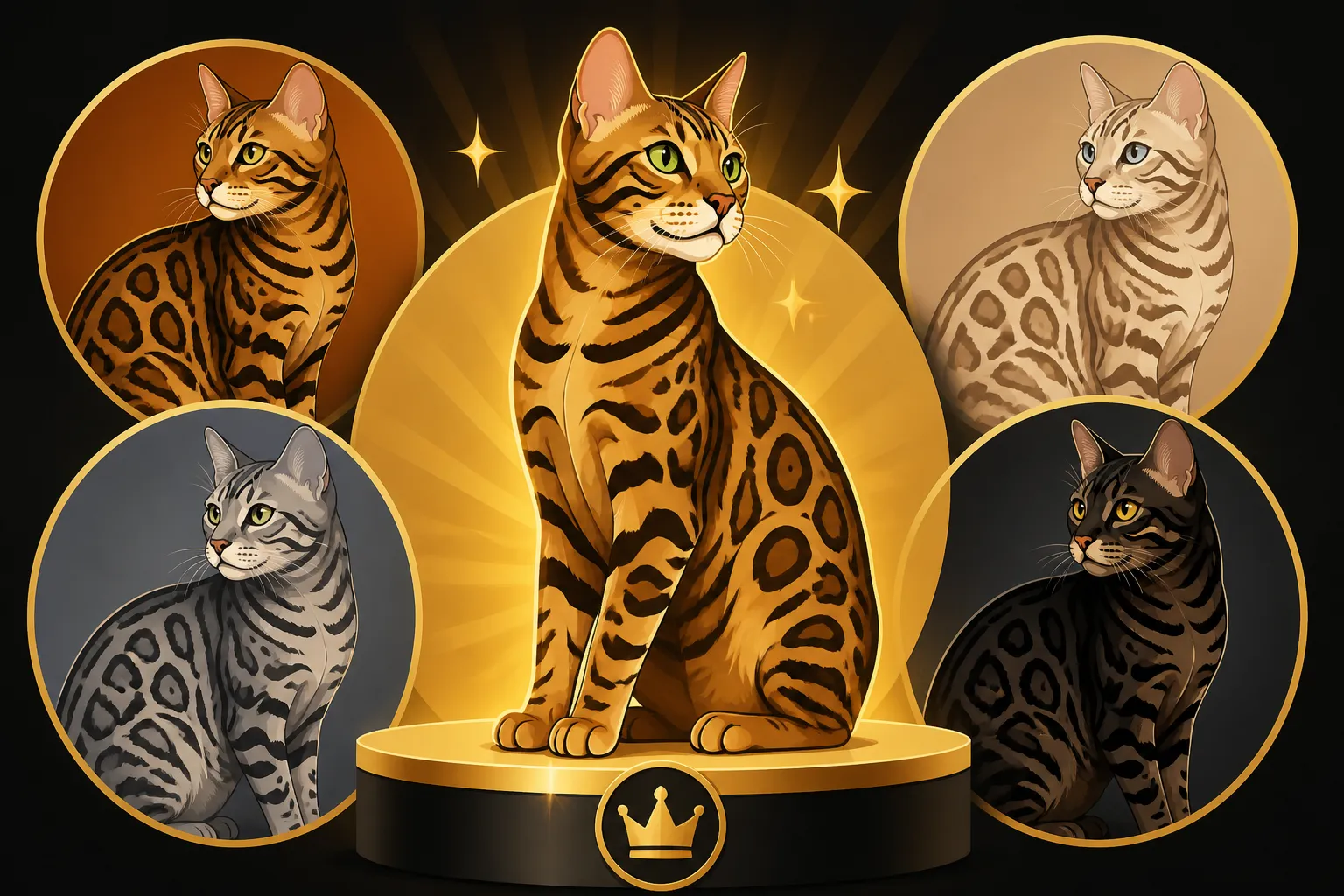
Silver and Charcoal Bengals: Exotic and Striking
Silver Bengals are another highly prized color variety, characterized by a stunning, clear silver-white ground color with black or very dark grey markings. The absence of rufousing (a reddish-brown tone) in the silver areas is key to their value. A "clear" silver, free from tarnishing or brown tones, is highly sought after. These cats are incredibly striking, with their sleek, metallic appearance, and they really make their black rosettes pop. What a Silver Bengal Cat Costs can be quite substantial, reflecting their unique genetics and visual appeal.
Charcoal Bengals, on the other hand, boast a darker, smoky appearance. They are typically a shade of dark brown or grey with exceptionally dark, often black, markings, giving them a very dramatic, almost melanistic look. Many charcoal Bengals also feature a distinctive "Zorro mask" marking around their eyes and a dark cape running down their spine. This striking, wild aesthetic makes them quite popular and can place them in a higher price bracket, especially if they have excellent contrast and pattern definition. Learn more about What a Charcoal Bengal Cat Costs for detailed pricing information.
Other Rare Colors: Blue and Melanistic
While less common and often considered "non-standard" by some registries, colors like blue and melanistic (solid black) Bengals exist and can command interest, though their price dynamics are different.
- Blue Bengals: These cats have a beautiful, soft blue-grey coat with darker blue-grey markings. They are quite rare, as the blue gene is recessive. While not accepted for show championship status in all associations, they have a dedicated following. Their rarity can sometimes drive up the price, but typically they wouldn't surpass the highest-quality traditional or snow Bengals with championship-level patterns. You can explore What a Blue Bengal Cat Costs to understand this niche market.
- Melanistic Bengals: These are essentially black panthers in miniature, with a solid black coat that still shows "ghost" markings (rosettes or marbling) when viewed in certain light. They are visually stunning and unique. Like blue Bengals, they are not typically championship show cats, but their exotic look appeals to many. What a Melanistic Bengal Cat Costs can vary, often driven by their rarity and the specific demand for their unique appearance rather than show quality.
Other Factors Affecting Pattern-Related Cost
It's important to remember that while patterns and colors are huge price drivers, they don't exist in a vacuum. Several other critical factors contribute to the final cost of a Bengal kitten, and these can either enhance or diminish the value derived from a beautiful pattern.
Quality of the Breeder and Health Testing
The reputation and ethics of the breeder are paramount. A responsible, reputable breeder invests heavily in their cats, conducting extensive health screenings, ensuring proper nutrition, and providing excellent socialization. This meticulous care helps produce healthy, well-adjusted kittens, regardless of their pattern. A breeder who routinely tests their breeding cats for genetic diseases common in Bengals, such as HCM (Hypertrophic Cardiomyopathy), PRA-b (Progressive Retinal Atrophy), and PK Deficiency (Pyruvate Kinase Deficiency), is demonstrating a commitment to the breed's health. While the pattern might catch your eye, the peace of mind that comes from a healthy kitten from a responsible breeder is invaluable.
The cost of this health testing, quality food, vet care, and proper cattery management is reflected in the kitten's price. You wouldn't want to save a few hundred dollars on a kitten only to face thousands in vet bills later because the breeder cut corners. Always ask to see proof of health testing for the parent cats. This due diligence ensures you're investing in a healthy companion, regardless of its dazzling spots. A good breeder will freely share information about What a Bengal Cat Breeder Should Have Tested.
Pedigree and Show Quality
A kitten's pedigree, essentially its family tree, can significantly influence its price. Kittens from lines with a history of show champions, particularly those with strong, consistent patterns that adhere closely to the breed standard, will naturally cost more. These "show quality" kittens are bred to excel in the show ring, and their patterns are often flawless. Even if you're not planning to show your cat, a show-quality kitten ensures you're getting a Bengal with the most desirable physical traits, including those prized patterns.
A "pet quality" kitten might have a less perfect pattern – perhaps a slightly less defined rosette, or a marble pattern that isn't quite the ideal horizontal flow. These kittens are still beautiful, healthy Bengals but won't command the absolute top prices. A good breeder will clearly communicate whether a kitten is being offered as pet quality, breeder quality, or show quality, and price them accordingly. Often, breeders will sell "pet quality" kittens with a spay/neuter contract, ensuring they aren't used for breeding themselves. This ensures the integrity of the breed and maintains high standards.
Generation (F1-SBT) and Temperament
The "generation" of a Bengal cat also affects its price and often its temperament. F1, F2, and F3 Bengals (First, Second, and Third generation removed from the Asian Leopard Cat) are known as "early generation" or "Foundation" Bengals. They retain more of their wild ancestor's traits, which can include more intense patterns, but also a more demanding and sometimes less predictable temperament. These early generations are often more expensive due to their rarity and specialized care requirements. Why the Generation Number Decides Whether You Can Own a Bengal Cat and What an F1 Bengal Cat Costs can explain these nuances further.
Most pet Bengals available today are SBT (Stud Book Tradition) Bengals, meaning they are at least F4 or further removed from the Asian Leopard Cat, making them fully domestic. SBT Bengals generally have a more predictable, docile temperament suitable for family life. While their patterns might sometimes be slightly less "wild" than an F1, a high-quality SBT Bengal with stunning patterns is still incredibly desirable and generally costs more than an early generation Bengal with a less impressive pattern, purely because SBTs are bred for pet temperament and beauty combined. The ideal pet owner is usually looking for an SBT Bengal.
Demand and Location
Like any market, the price of Bengal cats, and specific patterns, can be influenced by local demand and availability. In areas where Bengal cats are particularly popular or where there are fewer reputable breeders, prices might be higher. Conversely, if there's a surplus of kittens, prices might be more competitive. Shipping costs, if applicable, also need to be factored in. For specific pet supplies or food, you might find different prices on platforms like Chewy compared to local pet stores, so it's always worth comparing.
This table provides a general overview of how different patterns and colors typically influence the cost of a Bengal cat. Remember, these are broad estimations, and many other factors can shift the actual price.
| Pattern Type | Primary Colors | General Price Influence (Relative) | Notes |
|---|---|---|---|
| Rosetted | Brown, Snow, Silver, Charcoal | High – Very High | Donut rosettes > Paw print/Arrowhead. Clarity & contrast are key. |
| Marbled | Brown, Snow, Silver, Charcoal | Medium – High | Horizontal flow & three-tone highly prized. |
| Brown (Rosetted) | Golden, Tawny, Copper | Medium – High | Excellent contrast elevates price. |
| Snow (Rosetted) | Lynx Point, Mink, Sepia | High | Rarity and blue eyes (Lynx Point) add value. |
| Silver (Rosetted) | Clear Silver, Black markings | High – Very High | Lack of tarnishing and high contrast are premium. |
| Charcoal (Rosetted) | Dark Brown/Grey, Black markings | High | Dark mask & cape are desirable features. |
| Blue (Rosetted/Marbled) | Blue-Grey, Darker Blue markings | Medium – High (Rarity) | Non-standard color, price driven by rarity & aesthetics. |
| Melanistic (Ghost Pattern) | Solid Black | Medium – High (Rarity) | Unique, but ghost pattern hard to discern. |
Finding Value: Balancing Pattern Desirability and Budget
It's completely understandable to dream of that perfect Bengal with breathtaking donut rosettes and glittering fur. However, balancing your desires with your budget and realistic expectations is crucial when bringing home any pet, especially an active breed like a Bengal.
Prioritizing Health and Temperament Over "Perfect" Patterns
While a stunning pattern is undeniably attractive, I cannot stress enough that health and temperament should always be your top priorities. A Bengal cat is a long-term commitment, potentially living for The Twelve to Sixteen Years a Bengal Cat Gets. Investing in a kitten from a reputable breeder who prioritizes genetic health and good socialization will pay dividends in terms of a happy, healthy, and well-adjusted companion, regardless of whether their rosettes are perfectly formed donuts or elegant paw prints. A healthy cat with a good temperament will bring you far more joy than a "perfectly patterned" cat with chronic health issues or behavioral problems. Organizations like Healthy Paws offer pet insurance plans that can help manage unexpected veterinary costs, but prevention through choosing a responsible breeder is always the first line of defense.
Don't be swayed by a lower price tag on a kitten with a gorgeous pattern if it comes from a breeder who can't provide health clearances for the parents or seems rushed. The upfront savings will likely be dwarfed by vet bills down the line. It's truly not worth the heartbreak.
Exploring Pet Quality and Less Common Patterns
If your heart is set on a Bengal but the prices for show-quality, perfectly rosetted kittens are out of reach, consider a "pet quality" kitten. These kittens might have slightly less defined patterns, or a small conformational fault that makes them unsuitable for showing, but they are still purebred Bengals with all the charm, intelligence, and energy you expect. They make wonderful companions and often come at a more accessible price point. A responsible breeder will be transparent about why a kitten is designated as pet quality.
Similarly, don't overlook marbled Bengals! A high-quality marbled Bengal, especially one with strong horizontal flow and three-tone depth, is incredibly beautiful and can sometimes be more affordable than a top-tier rosetted cat. They offer a unique aesthetic that is just as wild and captivating in its own way. Expand your horizons beyond just the "donut rosette" ideal, and you might find the perfect companion at a price that fits your budget.
The Lifetime Cost Beyond the Purchase Price
Remember, the initial purchase price of a Bengal kitten is just the beginning of your financial commitment. Bengal cats require high-quality food (often high-protein, specialized diets), engaging toys that can stand up to their vigorous play, regular veterinary care, and enrichment items like cat trees and cat wheels. The actual Fifteen Years of a Bengal Cat, Priced Out is a much bigger number than the initial adoption fee. This is why some owners consider fresh food subscriptions or rely on a consistent supply of premium kibble and wet food.
When budgeting for a Bengal, ensure you've factored in all these ongoing costs. A slightly higher upfront cost for a healthy, well-bred kitten with a pattern you adore might be a better investment in the long run than a cheaper kitten that ends up costing more in medical care or leads to frustration due to behavioral issues. Ultimately, the "best" pattern isn't just about what's most expensive, but what makes you happy and connects with your heart, all while ensuring you're supporting ethical breeding practices for a healthy, happy feline friend.
Disclaimer
This article is for general informational purposes only and does not constitute professional advice. Laws, prices and regulations vary by location and change over time. Consult a qualified professional for guidance on your specific situation.