What a Brown Bengal Cat Is
A brown Bengal cat can look golden, tawny, orange, or softly cream beneath dark spots and rosettes, so the label does not describe one exact shade. If you are trying to identify a brown Bengal, compare the coat’s warm background, dark markings, facial details, and overall pattern—not just a photo or a seller’s color description. This guide explains what “brown” means and what can change as a Bengal grows.
What brown means in a Bengal cat
Brown describes a color family, not one fixed shade
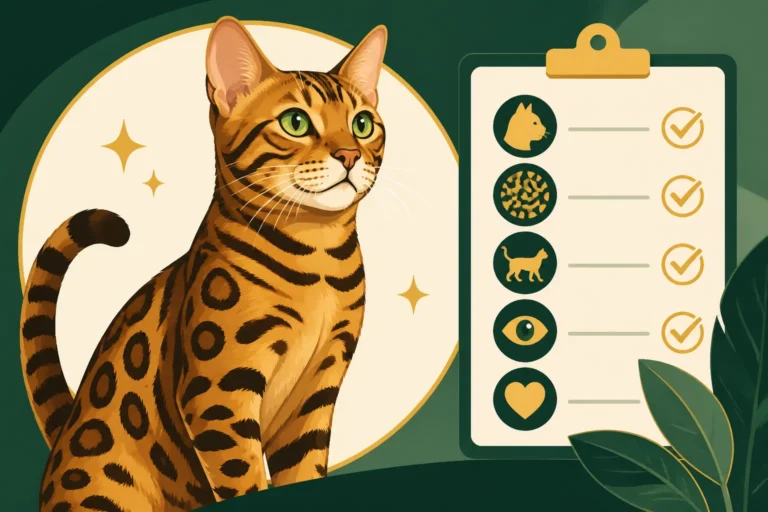
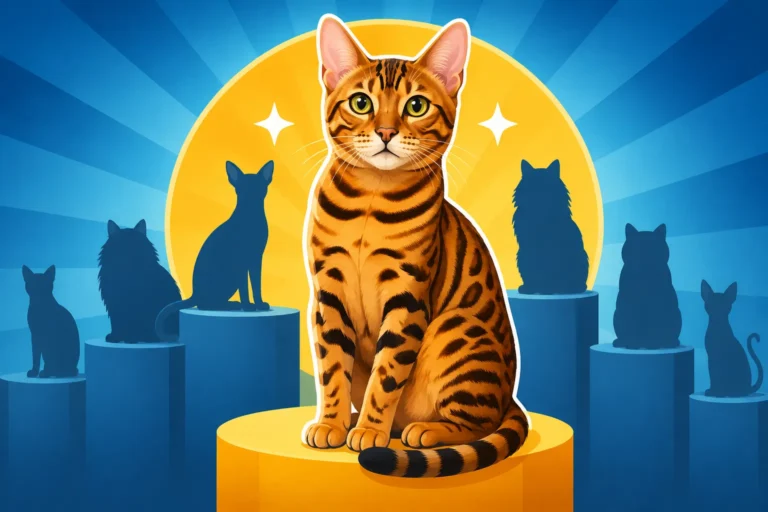
“Brown” is the familiar name for a recognized Bengal color category often described as brown tabby. It does not mean every cat has a chocolate-colored coat from nose to tail. The background can range from pale tan or buff to rich gold, orange, or warm reddish brown. Markings are usually darker, ranging from deep brown to near-black.
That broad range is why two brown Bengals can look noticeably different. One may have a pale, sandy base that makes the markings stand out sharply; another may have a deep golden coat with a warmer overall appearance. Lighting also matters. A cat photographed beside a sunny window may appear brighter and more orange than the same cat in a shaded room.
The word “brown” is therefore a useful coat-color label, but it is not a complete description of a cat’s appearance. Pattern, contrast, shade, and individual coat traits all contribute to the look. For a broader overview of accepted shades, see Which Colors a Bengal Cat Comes In.
Warm ground color and dark markings create the classic look
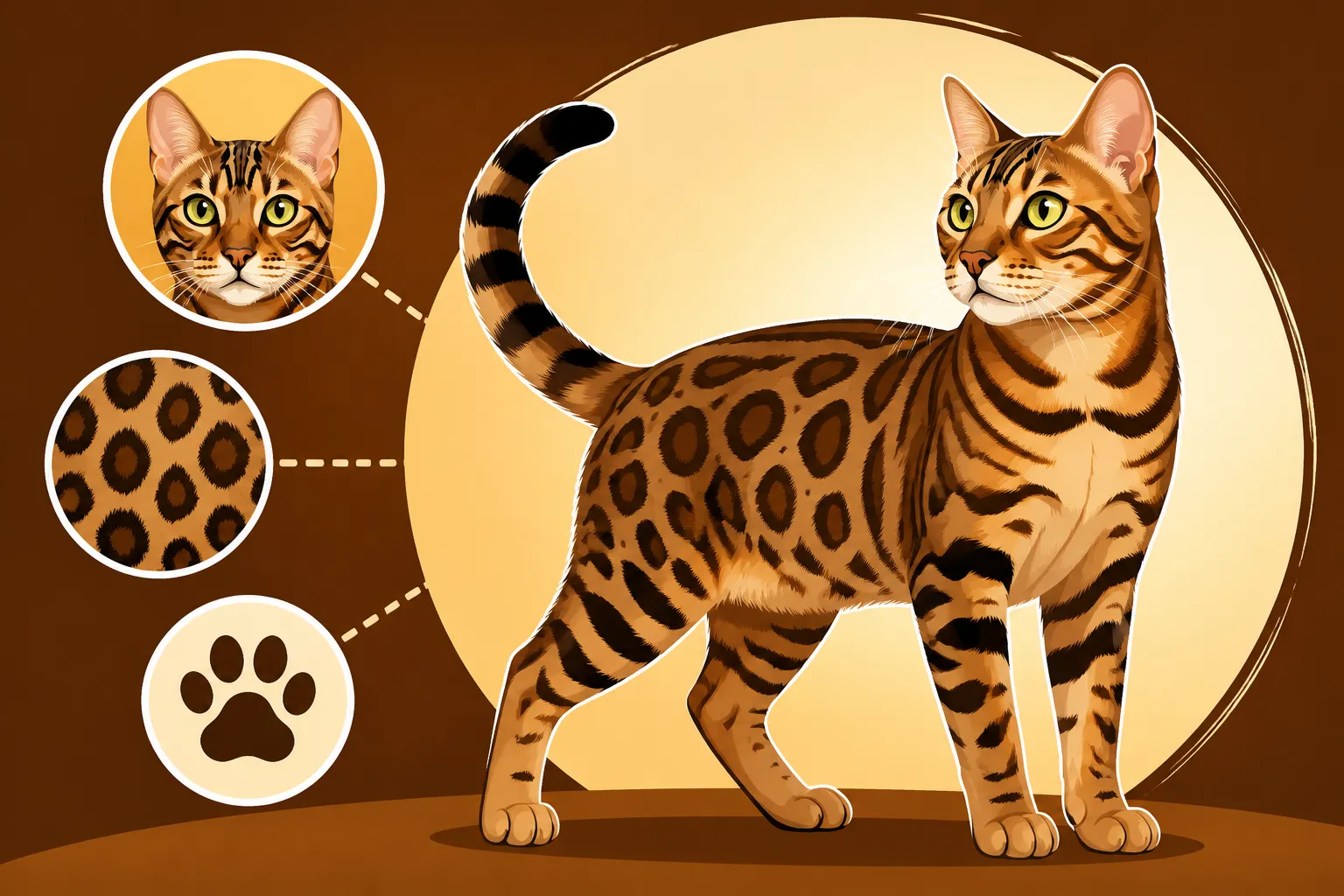
A brown Bengal’s coat is usually easiest to recognize by the contrast between its background color and its markings. Spots or rosettes may appear dark brown, mahogany, or nearly black against a golden or tawny base. A lighter area around the chin, chest, belly, and inner legs can add contrast, though the amount of pale coloring varies from cat to cat.
Rosettes are markings with a darker outline and a lighter center, rather than simple solid spots. Some Bengals have large, clearly defined rosettes; others have smaller or more tightly grouped markings. A brown coat may also show a marbled pattern, where flowing bands and swirls replace the more distinct spotted or rosetted look. Learn more about the markings in What a Rosette Is on a Bengal Cat and What a Marbled Bengal Cat Is.
You may also notice dark lines around the eyes, nose, and mouth, sometimes called facial markings or mascara marks. The nose leather is often brick red or reddish brown, and paw pads are commonly dark. These details can help you understand the overall color impression, but no single feature proves a cat’s breed or color by itself.
Brown is different from silver, snow, and charcoal
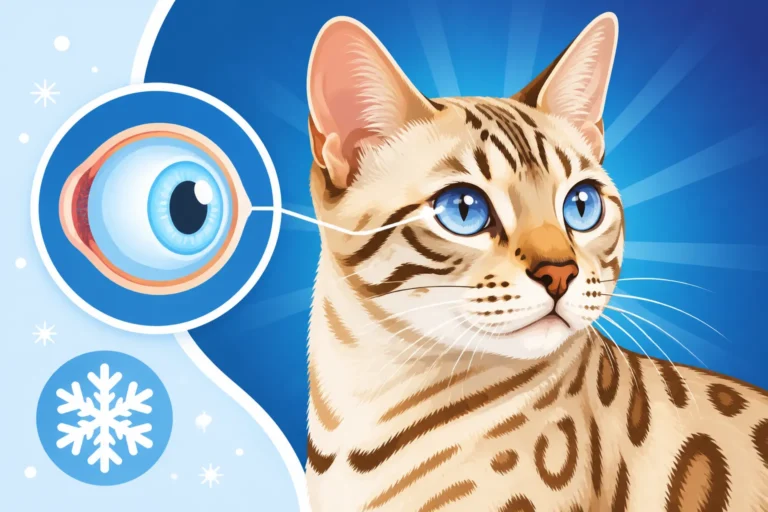
Color names can be confusing because several Bengal colors may have dark markings but very different background shades. A silver Bengal has a cool, pale or silvery base rather than the warm golden or tawny background typical of a brown. Snow Bengals have lighter coats, with color-point genetics influencing their appearance; their markings and eye colors vary by snow variety.
Charcoal is a pattern modifier that can make a Bengal look darker, often with a pronounced facial mask and a darker cape over the back. A brown Bengal can also have charcoal characteristics, so these descriptions are not always mutually exclusive in casual conversation. A melanistic Bengal, meanwhile, has a very dark coat where the markings may be difficult to see except in certain light.
It is easy to mistake a shadowy photo, a dark coat, or a kitten’s changing pattern for a different color category. When comparing cats, look at the whole coat in natural light and ask how the breeder or registry describes the color. What a Snow Bengal Cat Is, What a Silver Bengal Cat Is, and What a Charcoal Bengal Cat Is explain those comparisons in more detail.
| Feature | Brown Bengal | Common comparison |
|---|---|---|
| Background coat | Warm tan, gold, tawny, orange, or reddish shades | Silver has a cooler, pale ground color |
| Markings | Dark brown to near-black spots, rosettes, or marbling | Snow markings can contrast against a much lighter coat |
| Overall impression | Warm and high-contrast, though individual shades vary | Charcoal may look darker and more masked |
| Useful clue | Look at the coat in natural light and assess the pattern | A single photo or label is not enough to identify breed |
How a brown Bengal’s coat and pattern develop
Kitten coats can look muted at first
A Bengal kitten may not arrive looking like a miniature version of the adult cat. Many kittens go through a stage in which their coat appears softer, fuzzier, or less sharply defined. This temporary pattern-softening is often called “fuzzies.” It can make a brown kitten’s markings seem hazy or less dramatic than they may look later.
As the kitten matures, the coat often becomes sleeker and the pattern clearer. The timing and final appearance differ between individuals, so it is unwise to judge a very young kitten’s adult contrast from one early photograph. The warm background may deepen, lighten, or seem to shift as the kitten grows and its coat changes.
If you are choosing a kitten, ask to see photos taken at different ages when available, and ask what the breeder expects the adult coat to look like. A responsible description should acknowledge natural variation rather than promise a precise shade or pattern outcome. For more about kitten coat changes, see When a Bengal Cat's Adult Pattern Comes Through and Why a Bengal Cat Kitten Looks Dull for Months.
Rosettes, spots, and marbling are pattern differences
Brown Bengals can have several pattern styles. Spotted coats have distinct individual spots. Rosetted coats have markings with a darker edge and a lighter center, and marbled coats feature broad, flowing patterns. Within those categories, the size, shape, spacing, and contrast of markings can vary considerably.
The word “rosetted” is not a guarantee that every marking will be a neat, round ring. Rosettes can be shaped in different ways, and their appearance depends on their outlines, centers, and how they sit across the cat’s body. A cat may also have different-looking markings along the shoulders, sides, legs, and tail.
Pattern is separate from the basic brown color label. Two brown Bengals might share a similar background shade but have very different markings. If pattern is important to you, compare photographs of the whole cat rather than focusing on a close-up of one rosette. Rosetted Against Marbled: The Two Bengal Cat Patterns gives a broader comparison of these pattern types.
Glitter can change the way the coat catches light
Some Bengal coats have a sparkling sheen often called glitter. It can make individual hairs catch the light, creating a shimmering effect that is especially noticeable when the cat moves or stands in bright natural light. Glitter is a coat trait, not a color category: a brown Bengal may have it, but the brown label alone does not tell you whether the cat’s coat will glitter.
Lighting can exaggerate or hide the effect. In a dim room, a glittered coat may look like a smooth, ordinary short coat; in sunlight, it may appear to shimmer. Camera flash, image filters, and heavy editing can also change how a coat looks, so in-person observation or unedited photos are more helpful than a polished portrait.
A Bengal’s distinctive coat texture and sheen can be part of its appeal, but they do not determine temperament, health, or how much grooming the cat needs. For a closer explanation, see The Glitter Gene and What It Does to a Bengal Cat's Coat and Whether Every Bengal Cat Has Glitter.
How to identify a brown Bengal responsibly
Color alone does not establish breed
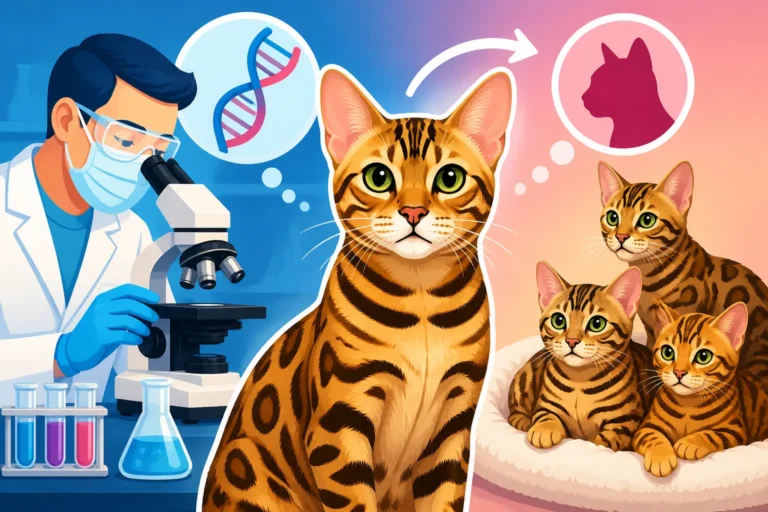
A brown spotted cat is not automatically a Bengal. Domestic shorthairs and mixed-breed cats can also have spots, rosettes, warm coloring, or a sleek coat. A Bengal’s appearance is considered alongside its pedigree and breed characteristics; a coat photograph cannot establish lineage.
If you are adopting a cat, it is perfectly reasonable to describe what you can see—such as “brown spotted cat” or “Bengal-like markings”—without making a definitive breed claim. Breed identification matters most when it affects a practical decision, such as registration, breeding plans, or rules that depend on a cat’s ancestry. In everyday care, the cat’s individual needs matter more than the label.
A breeder should be able to explain how the kitten is registered and provide appropriate pedigree information. Registration documents and a visual resemblance are different kinds of evidence, and neither should be confused with a simple color description. See What a Bengal Cat Looks Like by the Standard for an overview of the breed’s appearance and Whether a DNA Test Confirms a Bengal Cat for the limits of DNA testing.
Ask specific questions instead of relying on a color label
When a breeder calls a kitten “brown,” ask what that description means in their program. Find out whether the background is expected to be golden, tawny, orange, or another warm shade; whether the kitten is spotted, rosetted, or marbled; and whether the adult coat is likely to have strong contrast. These questions help you understand what the label does—and does not—promise.
Ask for clear photographs in ordinary lighting and, if possible, pictures of related adult cats. That will not guarantee that a kitten will grow to look exactly like a parent, but it gives you a more realistic sense of the range of coats in that line. Be wary of anyone who presents an unusually edited image as a certain prediction of adult color.
It is also sensible to ask about the kitten’s overall care, socialization, and health documentation rather than allowing coat color to dominate the conversation. Color is visible and exciting, but it does not tell you whether a kitten has been well cared for or is a good fit for your home. What a Bengal Cat Breeder Should Have Tested and Which Health Results a Bengal Cat Breeder Must Show can help you prepare broader questions.
Caring for a brown Bengal’s coat
Keep grooming simple and gentle
A Bengal’s short coat generally does not need elaborate grooming, though individual cats vary in how much they enjoy handling. A gentle brush or grooming glove can help remove loose hairs and gives you a chance to check the skin. Begin with short sessions, especially if your cat is wary of being touched, and stop before grooming turns into a wrestling match.
You do not need to bathe a cat just to make a brown coat look brighter. Frequent bathing can be stressful and may irritate the skin. If the coat suddenly looks greasy, dull, or unusually unkempt, consider whether there may be a health or grooming issue rather than trying to solve it with repeated baths.
A basic grooming kit can be assembled from ordinary pet-care supplies. If you are comparing brushes, combs, or nail tools, retailers such as Chewy can be one place to look for product descriptions and customer feedback; choose a tool that suits your cat’s coat and comfort rather than buying a large collection. For practical grooming guidance, see A Bengal Cat Needs Almost No Grooming.
Coat quality is about more than food or supplements
A healthy-looking coat is influenced by overall health, nutrition, hydration, and routine care. A brown Bengal does not need a special “brown coat” food just because of its color. Choose a complete, balanced diet appropriate for the cat’s age and health, and ask a veterinarian before adding supplements or changing diets to address a coat concern.
If your cat’s coat becomes patchy, flaky, greasy, or noticeably dull, look at the whole picture. Changes in grooming behavior, appetite, weight, or energy can be relevant, too. A sudden change deserves attention, particularly if the cat is scratching, licking one area repeatedly, or seems uncomfortable.
Food labels can be difficult to compare, and marketing language about shine or coat color does not replace veterinary guidance. If you shop through Chewy or another pet retailer, use the product information to understand the food’s intended life stage and formulation, then discuss a diet change with your veterinarian when there is a medical concern. A glossy coat is lovely, but comfort and health come first.
Keep color expectations realistic
A brown Bengal’s shade can look different depending on the season, lighting, age, and the individual coat. Sunlight can make warm tones appear more vivid, while indoor shadows can make the same coat seem darker or less golden. A phone camera may also shift color balance, so two photographs taken in different rooms can make one cat look like two different shades.
There is no need to chase a particular tone with dyes, color-enhancing products, or unproven supplements. Those approaches can irritate the skin or create stress, and they do not change the cat’s underlying coat genetics. If you have concerns about a true coat change, focus on what has changed and when, and discuss it with a veterinarian.
For everyday care, concentrate on a comfortable home, play, regular health checks, and a diet suited to your cat. A brown Bengal’s beauty comes from its individual combination of warm background color, dark pattern, and lively presence—not from matching a photograph perfectly. Chewy and similar retailers can help you compare routine supplies, but a veterinarian is the right person to guide decisions about health-related products or diet changes.
Disclaimer
This article is for general informational purposes only and does not constitute professional advice. Laws, prices and regulations vary by location and change over time. Consult a qualified professional for guidance on your specific situation.