Why a Bengal Cat Is Not Afraid of Water
Many cat owners have learned to dread bath time, or even just leaving a glass of water unattended, thanks to the widely accepted notion that cats universally despise water. But if you live with a Bengal cat, you know this common wisdom can be completely thrown out the window! It can be baffling and sometimes frustrating when your typically dry house suddenly has puddles from a cat who seems more fish than feline. This guide will dive deep into why Bengal cats often have a unique, even passionate, relationship with water and how you can understand and manage this fascinating trait.
The Wild Ancestry: A Splash of the Asian Leopard Cat
To truly grasp why your Bengal cat is so drawn to water, we need to look back at their roots, specifically to their wild ancestor: the Asian Leopard Cat (ALC). The Bengal breed was created by crossing domestic cats with ALCs, and with that wild heritage came a whole host of interesting traits, including their unusual affinity for water.
Natural Habitat and Behavior
Imagine the natural habitat of an Asian Leopard Cat. They're typically found across various environments in Asia, from dense forests to mountainous regions, and crucially, often near rivers, streams, and other water bodies. Unlike many domestic cat breeds whose ancestors may have originated in arid deserts, the ALC's survival often depended on its ability to interact with water. They are known to be adept swimmers and will readily enter water, not just for a quick drink, but as a hunting ground.
Picture an ALC patiently stalking small fish, crustaceans, or amphibians in shallow streams. They might also use water as a means of escape from predators, or simply to cool down on a hot day. This isn't just an occasional dip; it's an integrated part of their natural behavior and survival strategy. They are comfortable and capable in aquatic environments, and this fundamental comfort with water is one of the most significant gifts their wild genes passed down to our beloved Bengals.
Genetic Predisposition and Instinct
What does this mean for your Bengal? It means that their love for water isn't just a quirky habit or something they randomly picked up. It's a deeply ingrained genetic predisposition. It's an instinct that tells them water is safe, interesting, and even a source of play and sustenance. When your Bengal starts pawing at the running faucet or dipping their toy into their water bowl, they're not just being mischievous; they're acting on ancient impulses.
This genetic blueprint explains why you might have a Bengal who immediately jumps into the shower with you, while your friend's Persian cat would rather disappear than get a single paw wet. It's not a learned behavior in the same way that a cat might learn to use a scratching post; it's part of who they are, woven into their DNA. Some Bengals might display this trait more strongly than others, perhaps a reflection of which specific ancestral genes were most prominent in their lineage, but the potential is there in nearly all of them. Understanding this helps us appreciate their uniqueness rather than trying to "train" it out of them. It's simply a love of water that comes from the wild (Whether a Bengal Cat's Water Love Comes From the Wild).
More Than Just Instinct: Play, Curiosity, and Hydration
While their wild ancestry provides a strong foundation for their water affinity, it's not the only factor. Bengal cats are incredibly intelligent, active, and curious creatures, and water offers a fantastic outlet for these characteristics in myriad ways.
The Playful Predator
Bengals are bundles of energy, renowned for their high activity levels and their need for constant mental and physical stimulation. A bored Bengal is often a destructive Bengal! Water, with its unpredictable movements and captivating reflections, provides an irresistible playground for their inner predator.
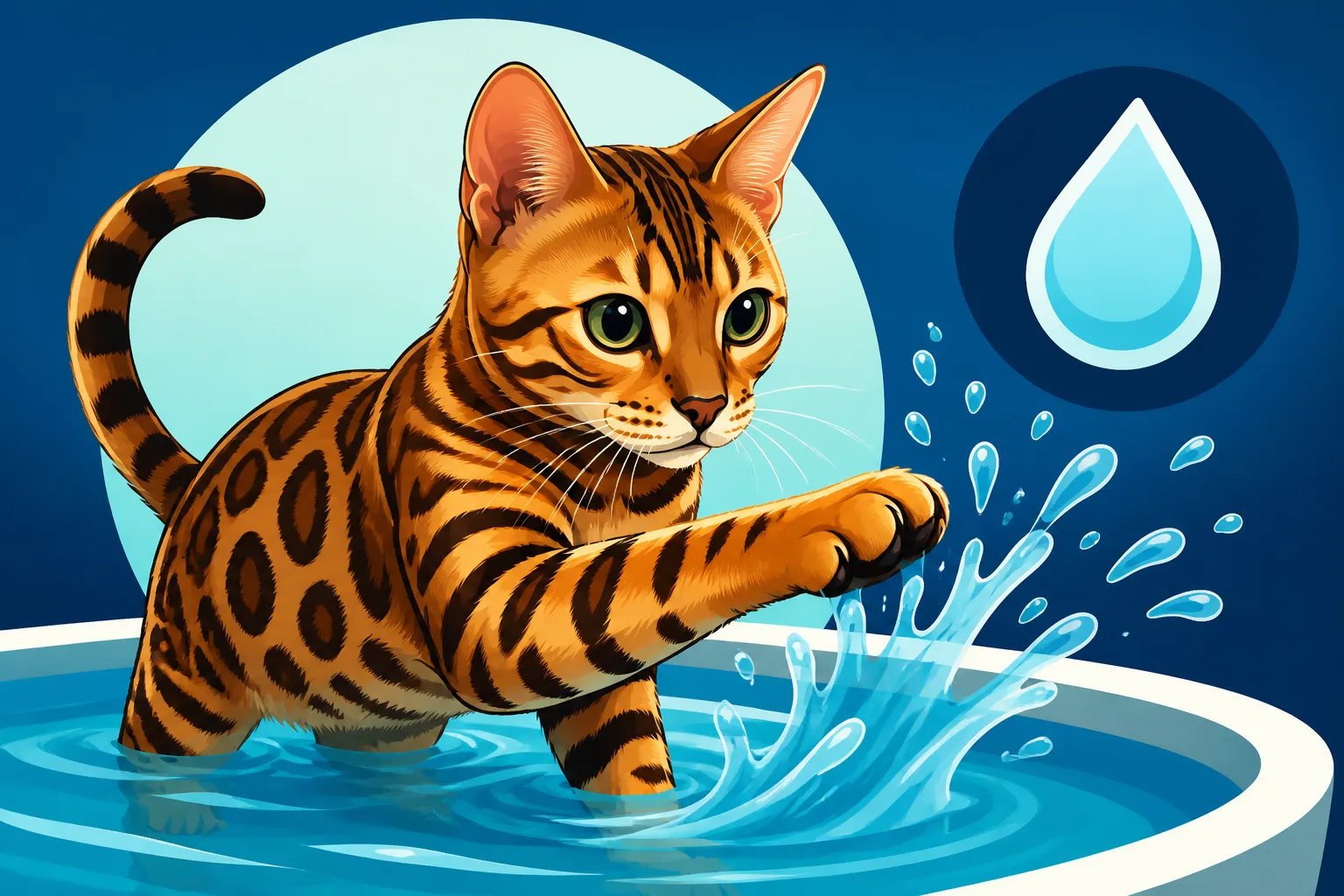
Think about how a Bengal reacts to a dripping faucet. The slow drip, then the faster flow, mimicking the movement of small prey. They'll swat at it, try to "catch" it, and often splash enthusiastically. This isn't just random play; it's a simulated hunt. They might bat at floating toys in a shallow bowl, pounce on the ripples, or even try to "fish" for ice cubes. This playful interaction with water is a fantastic way for them to burn off energy and satisfy their hunting instincts in a safe, engaging manner. Many owners find their Bengals absolutely captivated by running water, leading to playful sessions in sinks and bathtubs. It's easy to see Why a Bengal Cat Plays in the Sink when you observe their intense focus and enjoyment.
Unquenchable Curiosity
If there's one word to describe a Bengal cat, it's curious. They have an insatiable desire to explore every nook and cranny of their environment, to understand how things work, and to interact with everything around them. Water presents a unique sensory experience: the sound of running water, the cool feel on their paws, the way light reflects off its surface, and even the simple mystery of where the water goes down the drain.
This curiosity drives them to investigate bathtubs, often jumping in after you've drained it, just to sniff the residual moisture. It's why they might try to join you in the shower or bath, not necessarily to get clean, but to be part of what you're doing and explore this unusual phenomenon. And yes, this curiosity can extend to the toilet bowl – a fascinating, constantly refilling water source that unfortunately presents its own set of challenges. This often leads to the question, Why a Bengal Cat Drinks From the Toilet? It's all part of their deep-seated need to understand and engage with their world.
Hydration Habits
Beyond play and curiosity, water plays a crucial role in a Bengal's health, and their unique preferences reflect this. Many cats, regardless of breed, have an instinctive preference for moving water over still water, as it signals freshness and safety in the wild. Bengals often take this preference to an extreme.
You might notice your Bengal persistently pawing at their water bowl, spilling water onto the floor, or trying to drink directly from the tap. This isn't just about making a mess; it's about seeking out the freshest, most appealing water source. Water fountains are often a lifesaver for Bengal owners, as they provide that continuous flow that satisfies their primal urge for running water. Keeping them well-hydrated is vital for their overall health, and their natural inclination towards water often makes this easier, provided you offer it in a way they find irresistible. Using a sturdy, high-quality water fountain, perhaps even one made of ceramic or stainless steel, can make a huge difference, ensuring they have access to appealing water while withstanding their enthusiastic interaction. Many good options can be found on Amazon.
Managing a Water-Loving Bengal in a Domestic Home
Living with a Bengal cat who thinks every water source is an invitation to play can be an adventure, but it also requires some practical management to keep your home dry and your cat safe.
Water-Proofing Your Home (and Sanity)
When you have a water-loving Bengal, a few simple adjustments can save you a lot of hassle. Start with the obvious: bathroom doors should be kept closed, especially when toilets aren't supervised. Toilet lids should always be kept down to prevent an impromptu drinking session or, worse, a fall. For those particularly clever Bengals, child-proof locks on cabinet doors under sinks might even be necessary if they've figured out how to access pipes.
Water bowls for drinking can become a major source of splashing. Consider investing in a heavier ceramic or stainless steel bowl that's harder to tip over, or one with a narrower opening. As mentioned, a good quality pet fountain can often satisfy their desire for running water while minimizing spillage, though some Bengals will still try to fish for the water and make a mess. You can find a range of effective and durable pet fountains on Amazon that might just stand up to your Bengal's antics. If your Bengal has mastered the art of turning on faucets, which many are known to do, you'll need to explore creative solutions like child safety covers for knobs or even installing motion-sensor faucets if feasible. These preventative measures can help How to Stop a Bengal Cat Turning on Taps.
Embracing the Splash: Safe Water Play
Instead of fighting their natural inclination, embrace it by providing safe and structured opportunities for water play. This can be a wonderful way to bond with your Bengal and keep them entertained.
- Shallow Tubs: A shallow basin or even a clean storage tub filled with just a few inches of water can be a fantastic "splash zone." Throw in some floating cat toys or even ping-pong balls. Watching them bat at these toys in the water can be incredibly entertaining for both of you.
- Dedicated Water Toys: Look for toys specifically designed for water play, made from durable, non-toxic materials that won't absorb water or fall apart. Small plastic balls, fishing lures (without hooks, of course!), or even rubber duckies can be big hits. These kinds of toys often spark their inner hunter and provide a satisfying outlet for their energy. If you're wondering Which Water Toy Suits a Bengal Cat, durable plastic or rubber toys that float are usually best.
- Supervised Shower/Bath Time: Some Bengals absolutely adore joining their humans in the shower or bath. If yours is one of them, ensure the water isn't too hot, and use only cat-safe shampoos if you plan to give them a wash. For many, it's more about the experience of the running water and being with you. It's not uncommon to hear stories of owners whose Bengals literally demand to get in, illustrating Whether a Bengal Cat Gets in the Shower. And if your Bengal genuinely enjoys it, it can be a unique bonding experience and a great way to ensure they're clean, particularly as How Much a Bengal Cat Enjoys a Bath can vary wildly but is often surprisingly high for this breed.
- Leash Walks Near Water: For leash-trained Bengals, a supervised walk near a shallow, clean pond or stream can be an exciting adventure. Always ensure the water is safe, free of strong currents, and any contaminants.
Understanding Their Limits and Safety
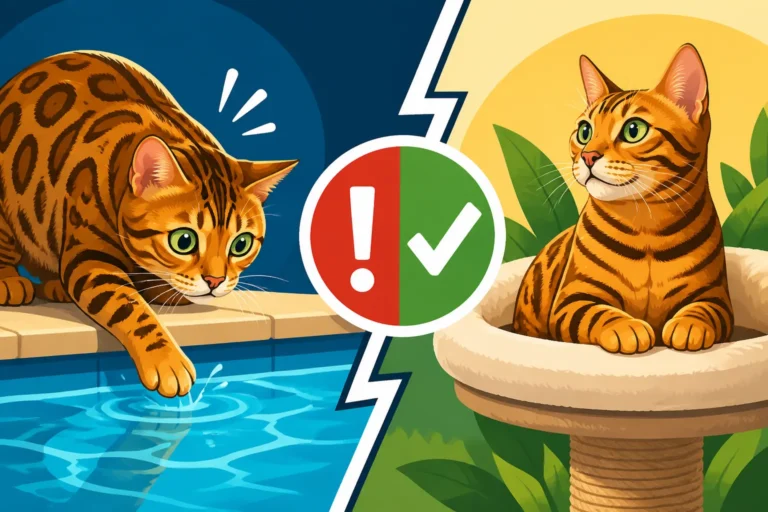
While Bengals love water, it's crucial to remember they are still cats, not otters. They are not impervious to danger in water, and supervision is always paramount. Deep water, like swimming pools or large bodies of water, can still pose a significant drowning risk, especially if they panic or can't find their way out. Whether a Pool Is Dangerous for a Bengal Cat often depends on factors like accessibility and the cat's swimming ability, but it's always safer to supervise.
Chemicals in pools or even natural toxins in stagnant outdoor water sources can be harmful. Always ensure any water they play in is clean and safe. After a particularly enthusiastic water session, especially if it's cold indoors or outdoors, make sure to dry your Bengal thoroughly with a towel. Although they have a sleek coat, they can still get chilled, and nobody wants a soggy cat tracking water all over the house. Considering Whether a Bengal Cat Gets Cold After Water Play is important for their comfort and health.
Debunking Myths and Understanding Bengal Uniqueness
The Bengal cat truly stands out from many other feline breeds, not least for their unique take on water. It's a trait that often surprises first-time owners and delights seasoned Bengal enthusiasts.
Beyond the Stereotype: Not All Cats Hate Water
The age-old saying "cats hate water" is, for most domestic cats, largely true. Many breeds will go to great lengths to avoid getting wet, seeing it as an unpleasant or even threatening experience. However, the Bengal cat, along with a few other notable breeds like the Turkish Van, challenges this stereotype entirely.
It's important to differentiate. While a typical domestic shorthair might tolerate a quick drink from a bowl, a Bengal might actively seek out opportunities to engage with water, whether it's pawing at the sink or jumping into a running shower. This isn't just a slight deviation from the norm; it's a fundamental difference rooted in their ancestry and amplified by their personality. They are a testament to the incredible diversity within the feline world, showing that generalizations often fail when faced with specific breed characteristics. How Well a Bengal Cat Swims is often impressive, showcasing their natural comfort in water.
| Behavior Trait | Typical Domestic Cat | Bengal Cat |
|---|---|---|
| Reaction to Water | Avoids contact, often runs away | Actively seeks out and plays with water |
| Drinking Habits | Prefers still water, some like moving water | Strong preference for running water, splashes |
| Bath/Shower | Generally averse, struggles during baths | May voluntarily join owners, enjoys warm water |
| Play with Water | Minimal, might bat at a drip curiously | Enthusiastic splashing, "fishing," chasing |
| Puddle Encounter | Steps around or avoids | May walk through, investigate, or play in |
The Impact on Daily Life and Bonding
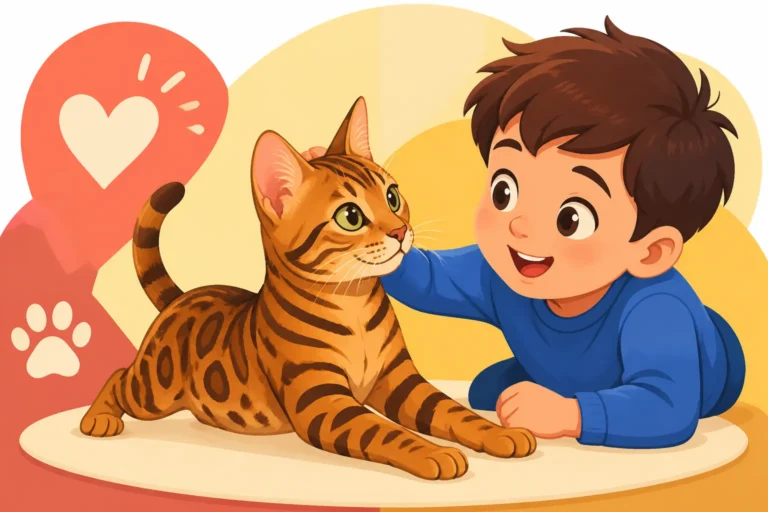
Living with a water-loving Bengal cat isn't just about managing potential messes; it's about understanding and appreciating a core part of their personality. This trait can profoundly impact your daily life and the way you bond with your feline companion. Instead of seeing their water antics as a nuisance, many owners find joy in watching their Bengals play so enthusiastically.
It can become a unique way to interact, whether it's filling a shallow tub for them to splash in or letting them 'help' you with the dishes by pawing at the running water. Their love for water is just another facet of their wild charm and their intensely curious, playful nature. It's a characteristic that makes them truly unique and, for many, deeply endearing. You might find that your Bengal wants to be where the action is, including the bathroom, reinforcing Why a Bengal Cat Joins You in the Bath. Far from being a problem to be fixed, their water fascination is simply another wonderful quirk that makes a Bengal cat such a captivating and joyful companion.
Disclaimer
This article is for general informational purposes only and does not constitute professional advice. Laws, prices and regulations vary by location and change over time. Consult a qualified professional for guidance on your specific situation.