How to Stop a Bengal Cat Demanding
If you’ve ever felt like your Bengal cat is constantly trying to tell you what to do – with insistent meows, persistent nudges, or even a dramatic flair of knocking things over – you’re definitely not alone. It’s easy to feel overwhelmed by their endless energy and vocalizations, wondering if you'll ever have a quiet moment or drink a glass of water uninterrupted. This comprehensive guide is here to unravel the mysteries behind your Bengal’s demanding nature and provide actionable strategies to foster a more peaceful, yet still engaging, home environment for both of you.
Decoding Your Bengal Cat's Demands: More Than Just Noise
It’s easy to write off a demanding Bengal as simply being "noisy" or "needy," but that's often an oversimplification of a complex cat with a unique heritage. These aren't your average housecats; their wild ancestry gives them an intelligence and drive that manifests in various ways, including their communication style. Understanding that their demands are often a form of communication, rather than just rudeness, is the first step in addressing the behavior.
Your Bengal isn't necessarily trying to annoy you (though it can certainly feel that way at 4 AM!). They are trying to convey a need, a desire, or sometimes, just expressing their vibrant personality. Learning to differentiate between these signals is crucial for a harmonious household.
The Bengal Cat Voice: A Command, Not a Suggestion
If you've spent any time with a Bengal, you know their voice is far from a gentle purr. It can be a chirrup, a yowl, a trill, or a rapid-fire series of meows that almost sounds like a conversation. Many owners describe it as less of a greeting and more of a directive. They aren't asking; they're telling. This vocal characteristic comes straight from their wild side, where clear, insistent communication is vital. When a Bengal is demanding, their vocalizations can range from a low rumble in their throat when they want immediate attention, to a loud, drawn-out caterwaul when they feel ignored. It's an expression of their strong will and desire to interact, often in a very specific way.
It’s important to acknowledge that The Bengal Cat Voice Is a Demand, Not a Greeting, and this isn't something you can easily train out of them entirely. Instead, the goal is to channel it and teach them that polite requests work better than incessant nagging. They learn quickly, but they are also incredibly persistent. The sheer volume and variety of sounds they make can be startling for new owners, leading to a quick response just to quiet the noise, inadvertently reinforcing the demanding behavior.
Body Language: The Silent Demands
While their voices are undeniable, Bengal cats also use a rich vocabulary of body language to make their demands known. These can be more subtle but just as effective. A quick head-butt to your hand, a persistent rub against your leg as you walk, or even a sudden leap onto your shoulder when you're trying to work can all be powerful demands for attention. These physical cues are often precursors to vocal demands, or sometimes, they’re the only demand if they’ve learned you respond to touch more readily.
Beyond direct physical contact, observe their environment. Is your Bengal staring intently at a closed door, then at you, then back at the door? That's a demand to open it. Are they pawing at their empty food bowl with exaggerated movements, even if it's not mealtime? That's a demand for food or treats. Their agility and intelligence also mean they might resort to more dramatic displays, like knocking items off shelves one by one, watching your reaction carefully. This isn't naughtiness for naughtiness' sake; it's a calculated strategy to get your attention and achieve their objective.
Addressing the "Why": Common Reasons for Demanding Bengal Behavior
Before you can tackle demanding behavior, you need to understand why your Bengal is doing it. Unlike a traditional housecat who might quietly wait for an opportunity, a Bengal will actively create one. Their intelligence means they quickly learn what gets a reaction from you, and they will exploit it.
Boredom and Under-stimulation
This is perhaps the biggest culprit behind demanding Bengal behavior. These cats are incredibly intelligent and energetic, with a profound need for mental and physical stimulation. A bored Bengal is a destructive Bengal, or at the very least, a very loud one. If they don't have enough outlets for their energy, they will invent their own entertainment, which often involves you. They need constant engagement, and if they’re not getting it, they will demand it. Think about it: if you were stuck in a house all day with nothing to do, wouldn’t you try to get some attention from the person who could entertain you?
This isn't just about providing toys; it's about providing sufficient and varied enrichment. A Bengal cat needs more than a few dangly toys tossed around the floor. They need puzzles, climbing opportunities, interactive play, and often, companionship. How Much Enrichment a Bengal Cat Actually Needs is far more than most people initially realize, and underestimating this need is a common mistake for new Bengal owners. A Bengal with pent-up energy will vocalize, zoom around, and generally make their dissatisfaction known until their needs are met.
Unmet Needs or Discomfort
Sometimes, a demand is simply your cat communicating a basic need. Are they hungry? Thirsty? Is their litter box dirty? While these are obvious, sometimes the need isn't quite so clear. They might be demanding your attention because they feel unwell or are in pain. Cats are notorious for hiding illness, so a sudden increase in demanding behavior, especially if it's unusual for your cat, could be a red flag. Always consult your vet if you suspect a health issue.
Other unmet needs could be a lack of security, perhaps if there's been a recent change in the household, or even just a desire for comfort – a warm lap, a soft blanket, or a specific spot on the couch. A Bengal's demands can also stem from wanting access to a particular area, like a closed bedroom door or a high shelf they can't quite reach on their own. They're not shy about asking for what they want, and they expect you to understand.
Attention-Seeking and Learned Behavior
Bengals thrive on interaction with their humans. They form strong bonds and truly enjoy being part of your daily life. If they feel ignored, or if their attempts at polite interaction don't get a response, they quickly learn that demanding behavior does work. Every time you respond to a loud meow or a knocked-over item, you are inadvertently teaching your Bengal that this is an effective way to get your attention. It's a classic case of positive reinforcement.
Imagine this scenario: your Bengal meows softly, you're busy, so you don't respond. They meow louder. Still nothing. Then they knock your favorite mug off the coffee table. Voila! Instant attention. From your cat's perspective, they just discovered a foolproof way to get you to look at them. This behavior, once learned, can be incredibly hard to unlearn because they are so intelligent and persistent. It's why Why a Bengal Cat Yowls at You often escalates if not managed early. They're just very good at training us.
Practical Strategies to Curb Vocal Demands
Now that we've explored the "why," let's dive into the "how." Taming a Bengal's demanding vocalizations requires a consistent, patient approach. The key is to teach them that quiet, calm behavior earns rewards, while incessant noise does not.
Ignore the Unwanted, Reward the Quiet
This is the golden rule for reducing vocal demands. It sounds simple, but it's incredibly difficult in practice, especially when your Bengal has a voice that could wake the dead. When your Bengal starts demanding attention vocally, whether it's a persistent meow, a yowl, or a chirruping fit, do not respond. Do not look at them, do not talk to them, do not touch them, and absolutely do not give them what they're demanding. Turn your back, leave the room, or even pretend to be deeply engrossed in something else.
The moment there is a break in the vocalization – even a second of silence – that's when you can offer a reward. This might be a calm word, a gentle stroke, or a small treat. The goal is to create a clear association: silence gets attention, noise gets ignored. Be prepared for an "extinction burst" – your Bengal will likely escalate their vocalizations dramatically at first, because what used to work isn't working anymore. They'll try harder, louder, longer. This is the critical period where you must remain steadfast. If you give in during this phase, you've just taught them that if they just try hard enough, you'll eventually cave.
Establish a Predictable Routine
Bengals thrive on routine. A predictable schedule for feeding, playtime, and even cuddle sessions can significantly reduce anxiety and the need for demanding behavior. When they know when they will eat, when they will play, and when they will get attention, they are less likely to demand it incessantly. For example, if your Bengal tends to wake you up at an ungodly hour for breakfast, shift their feeding time slightly later each day until it aligns with a more reasonable wake-up time for you.
Similarly, designate specific times for interactive play. These cats need How Much Exercise a Bengal Cat Needs a Day, and scheduling a rigorous play session before you sit down for dinner, and another before bed, can make a huge difference. This not only satisfies their physical needs but also their mental need for engagement. A satisfied Bengal is a quieter Bengal. Using automatic feeders, perhaps ones available on Amazon, can also help regulate meal times and decouple food delivery from your immediate presence.
Increase Enrichment and Play Sessions
Since boredom is such a major factor, upping your enrichment game is paramount. This means more than just leaving toys out. Bengals need interactive play that mimics hunting, opportunities to climb, and mental challenges. Consider these options:
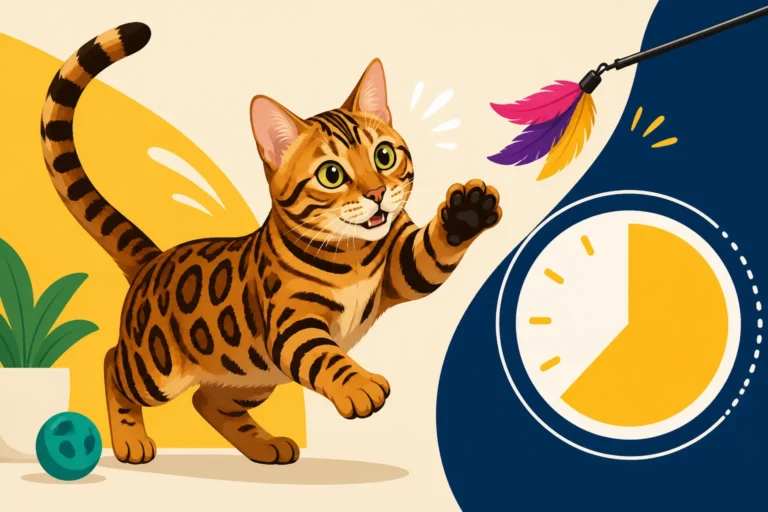
- Interactive Play: Schedule two to three dedicated play sessions daily, each lasting 10-15 minutes, using wand toys, laser pointers, or feathers on a string. Really get them running, jumping, and chasing. The goal is to truly tire them out.
- Puzzle Feeders: Instead of just putting food in a bowl, use puzzle feeders. These make your Bengal "work" for their meals, engaging their minds and slowing down their eating. You can find many options on Amazon that range from beginner to advanced. Whether a Puzzle Feeder Tires a Bengal Cat is a resounding yes – it works their brain, which is just as important as physical exercise.
- Vertical Space: Bengals love to climb. Install cat shelves, tall cat trees, or catios (outdoor enclosures) to give them safe, elevated spaces to survey their territory. This allows them to express natural instincts.
- Cat Wheels: A cat wheel can be an excellent outlet for their boundless energy, especially if they are primarily indoor cats. Many Bengals take to them naturally and will run for extended periods.
By fulfilling their intrinsic needs for play and exploration, you decrease the likelihood that they’ll resort to demanding behavior out of sheer boredom. Signs a Bengal Cat Is Bored often include destructive actions, excessive vocalizing, and harassing you.
Managing Physical and Attention-Seeking Demands
Beyond vocalizations, Bengals are masterminds at physical demands. They might tap you with a paw, rub their face against your keyboard, or even "steal" small items to get you to chase them. These behaviors, while often endearing in moderation, can become frustrating when they are constant or disruptive.
Redirection and Substitution
When your Bengal engages in a physical demand, the strategy is similar to vocal demands: redirect their energy. If they're pawing at your arm while you're working, gently push them off and then immediately offer an appropriate alternative, like a favorite toy. Engage them in a quick play session, then disengage. This teaches them that engaging with a toy is what gets them positive interaction, not pestering you while you're busy.
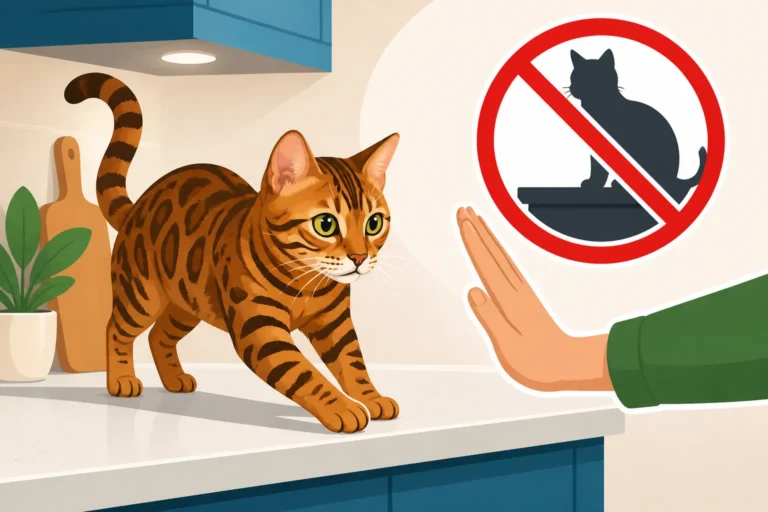
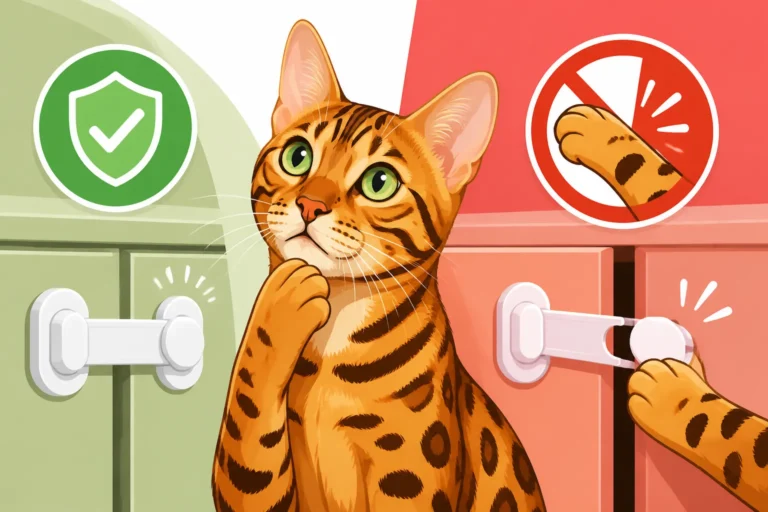
For behaviors like counter-surfing or getting into cabinets, immediate redirection is key. As soon as they jump on the counter, gently but firmly remove them and place them on a designated cat tree or mat, offering a treat or praise there. For adventurous Bengals who figure out how to open doors or cabinets, consider cat-proof locks. Simple child locks, easily found on Amazon, can be surprisingly effective at keeping curious paws out of places they shouldn't be. This helps prevent them from learning that these "demands" for access are successful. Which Locks Stop a Bengal Cat can be a lifesaver for your pantry!
The "No" or "Quiet" Command
While ignoring unwanted behavior is powerful, sometimes a direct command can be useful, especially for persistent vocalizations. Choose a clear, consistent word like "no" or "quiet" and use it calmly but firmly when your Bengal starts demanding. Pair this with turning away or leaving the room. The goal isn't to punish, but to interrupt and signal that the current behavior is not acceptable.
Once they pause, even for a second, then you can offer praise or a small reward for their quietness. It takes time and repetition, but Bengals are smart and can learn simple commands. The consistency of your reaction is paramount; if you sometimes give in and sometimes don't, you're only teaching them that persistence eventually pays off.
| Demand Type | Potential Meaning | Recommended Strategy | What NOT to Do |
|---|---|---|---|
| Vocal (Meowing, Yowling) | Attention, hunger, boredom, pain, wanting access | Ignore, then reward silence; consistent feeding/play routine | Yell back, pick them up while they're meowing, give in to demands |
| Physical (Pawing, Nudging, Head-butting) | Affection, attention, wanting to be held, marking territory | Redirect to a toy, provide alternative scratching surfaces | Push them away aggressively, give attention immediately |
| Destructive (Knocking things over, scratching furniture) | Boredom, lack of appropriate outlets, attention-seeking | Increase enrichment, provide tall scratchers, secure items | Chase them, physically punish them, immediately replace items |
| Access Seeking (Paw at doors/cabinets) | Curiosity, desire for specific space or item | Install cat-proof locks, create designated safe spaces for exploration | Open the door/cabinet every time they demand it, leave valuables unsecured |
The Importance of Routine and Enrichment to Prevent Demanding Behavior
Ultimately, preventing demanding behavior in a Bengal cat comes down to proactively meeting their extensive needs for physical activity, mental stimulation, and consistent social interaction. These are not low-maintenance pets, and trying to treat them as such will almost inevitably lead to frustration for both you and your cat.
A Structured Day Keeps Demands Away
Establishing a solid daily routine is your best defense against a demanding Bengal. Think of it as structuring their day so they know what to expect and when. This reduces anxiety and the need to constantly pester you. Your routine should include:
- Fixed Feeding Times: As mentioned, this helps reduce food-related demands. Use an automatic feeder if your schedule is inconsistent.
- Dedicated Play Sessions: Schedule these energetic playtimes when you can give them your full attention. Mornings, evenings, and perhaps a quick session during your lunch break can work wonders.
- Quiet Times: Just as important are times when your Bengal learns you are busy and cannot interact. During these times, ensure they have access to their puzzle feeders, vertical spaces, or a cat wheel. How Long a Bengal Cat Copes Alone depends heavily on how well their environment is enriched when you're not actively engaging them.
- Cuddle and Grooming Times: Integrate specific moments for affection, whether it's a cuddle on the sofa or a gentle brush (many Bengals actually enjoy this, despite their self-sufficiency).
A structured day gives your Bengal a sense of security and purpose. They learn that their needs will be met, just not necessarily the instant they demand it.
Continuous Environmental Enrichment
Your home needs to be a Bengal playground. These cats thrive in environments that challenge them and allow them to express their natural behaviors. This goes beyond just toys.
- Verticality is Key: Install cat trees, wall shelves, and cat superhighways. Bengals love to climb and observe their territory from above. Look for robust, tall options on Amazon that can withstand their athletic leaps.
- Hunting Opportunities: Rotate toys regularly to keep them interesting. Incorporate toys that require batting, pouncing, and "killing." Automated toys that move on their own can also provide engagement when you're not available.
- Window Perches: Provide comfortable spots near windows where they can watch the world outside. Bird feeders placed strategically can offer endless entertainment.
- Catios: If possible, a secure outdoor catio is an incredible way to provide safe exploration and fresh air. This satisfies their innate desire to be outdoors without the dangers of free-roaming.
Remember, a Bengal is an incredibly intelligent and active animal. If you don't provide sufficient outlets for their energy and curiosity, they will find their own ways to stay entertained, and those ways often involve demanding your attention or creating chaos. By anticipating their needs and providing a rich, stimulating environment, you can significantly reduce the demanding behaviors and enjoy a more harmonious relationship with your incredible feline companion. What a Bored Bengal Cat Destroys can range from furniture to your sanity, making proactive enrichment truly essential.
Disclaimer
This article is for general informational purposes only and does not constitute professional advice. Laws, prices and regulations vary by location and change over time. Consult a qualified professional for guidance on your specific situation.