Whether a Bengal Cat’s Water Love Comes From the Wild
If you're a Bengal cat owner, you've probably experienced it: finding your pristine bathroom looking like a splash zone, or walking into the kitchen to discover your kitty enthusiastically batting at the faucet, sending water everywhere. It's enough to make you wonder, "Why on earth does my cat love water so much?" This isn't just a quirky habit; it's deeply rooted in their ancestry. This guide will delve into the fascinating wild origins behind your Bengal's aquatic antics, helping you understand their behavior and manage their water obsession in your home.
Understanding the Asian Leopard Cat's Relationship with Water
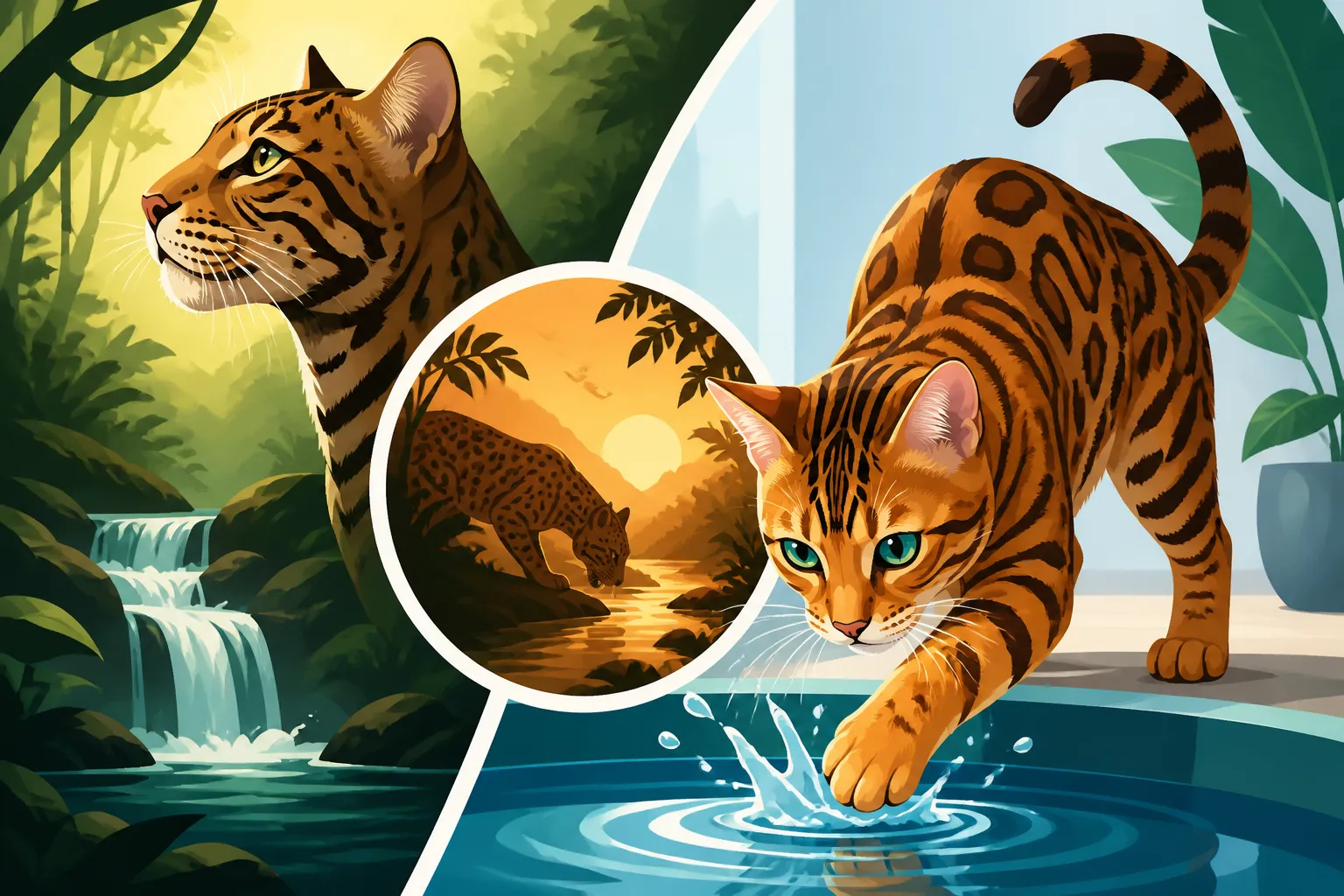
To truly grasp why your Bengal cat is so drawn to water, we need to look back, way back, to their wild ancestors: the Asian Leopard Cat (ALC). These aren't your average housecats; they're small, agile wild felines with a very different relationship to their environment than a typical domestic tabby. Their world shaped their instincts, and those instincts live on in the DNA of your stunning Bengal.
The Asian Leopard Cat's Natural Habitat and Prey
The Asian Leopard Cat thrives across a vast range in Asia, from the warm, humid jungles of Southeast Asia to cooler, more temperate regions. One common thread throughout many of these habitats? Water. ALCs are frequently found in areas rich with rivers, streams, lakes, and marshes. They aren't just passing through these watery landscapes; they actively utilize them as part of their survival strategy. This proximity to water isn't just for drinking, it's intrinsically linked to their hunting grounds and food sources.
Unlike many domestic cats, whose diet is largely land-based (mice, birds, insects), ALCs are opportunistic predators. While they certainly hunt small mammals like rodents and birds, a significant portion of their diet can include aquatic or semi-aquatic prey. We're talking about things like fish, frogs, lizards, and even crabs, depending on their specific location and the season. Imagine a sleek, spotted hunter patiently stalking the banks of a stream, ready to pounce on a unsuspecting fish. This isn't just a hypothetical image; it's a routine part of an ALC's life. This direct reliance on water for sustenance is a critical difference when comparing their ancestral behaviors to those of most domestic cat species, which evolved in drier, more arid environments.
Swimming and Fishing: Survival Skills for the Wild Ancestor
For the Asian Leopard Cat, water isn't something to be feared or avoided; it's a valuable resource and an extension of their hunting territory. They are remarkably adept swimmers and have no qualms about entering the water when necessary. If a prized meal, such as a fish, is in a shallow pool, an ALC won't hesitate to wade in and scoop it out with a swift paw. This isn't just about snatching a meal; it's a sophisticated hunting technique, honed over generations. They learn to gauge water depth, understand fish movements, and execute precise strikes, all while being comfortable and capable in an aquatic environment.
Beyond hunting, swimming also serves other survival purposes. An ALC might swim across a stream to access a new hunting ground, or even to escape a larger predator. Think of it as a natural means of travel and evasion. Their physical attributes support this aquatic lifestyle: their sleek, short coats dry relatively quickly, and their strong, muscular bodies are built for agility both on land and in water. This inherent comfort and capability in water are key traits that have been passed down through generations to your domestic Bengal. It explains why they don't recoil in horror at the sight of a full bathtub, but rather see it as a potential playground or even a hunting ground. How Well a Bengal Cat Swims is often a surprise to new owners, but it makes perfect sense given their lineage.
How Wild Instincts Manifest in Your Domestic Bengal
So, how does all this ancient history translate into the modern-day antics of your Bengal cat? Quite directly, as it turns out! Those ingrained behaviors from the Asian Leopard Cat ancestor are very much alive and well, albeit sometimes comically misplaced, in our beloved domestic companions. Understanding these links can help us see their splashing not as naughtiness, but as a fascinating expression of their true nature.
Splashing, Playing, and Drinking from the Tap
It's a scene played out in countless Bengal-owning homes: your cat fixates on a dripping faucet, then attempts to bat at the stream of water, or even dips a paw in their water bowl just to splash it around. This isn't random chaos; it's your Bengal's inner ALC trying to "fish" or investigate a potential water source. The movement and sound of running water are incredibly stimulating to them, mimicking the subtle ripples of a stream where their ancestors might have found prey. Why a Bengal Cat Plays in the Sink can often be attributed to this instinctual drive to interact with moving water, exploring its properties and potential.
Many Bengals will go a step further, attempting to join you in the shower or even leaping into a running bath. While you might see this as an odd quirk, for them, it could be an extension of exploring a new "pond" or simply reveling in the sensory experience of warm, moving water, just as an ALC would naturally enter a river or stream. The sheer joy they seem to get from these activities, often oblivious to the ensuing mess, is a clear indicator of how deeply rooted this water affinity is. This is perhaps the most obvious way that Whether a Bengal Cat's Water Love Comes From the Wild truly shines through in daily life. It’s part of what makes them such unique and often surprising companions.
The Allure of Running Water and its Connection to Freshness
Another fascinating aspect of your Bengal's water habits is their strong preference for running water. Many Bengals will ignore a perfectly clean bowl of still water in favor of a leaky faucet, a toilet bowl, or even the water running down the drain in the shower. This isn't just a preference; it's a survival instinct coded deep within their genetics. In the wild, stagnant water can be a breeding ground for bacteria, parasites, and algae, making it unsafe to drink. Running water, on the other hand, is usually fresher and cleaner.
Your Bengal, even though they live in a safe, controlled home environment, still carries that primal urge to seek out the freshest possible water source. The gurgling sound of a faucet or the swirl of water in a toilet bowl signals "fresh" to their ancient instincts, making it far more appealing than a still bowl. This is why investing in a good quality pet water fountain, available on sites like Amazon, can often solve the problem of your Bengal ignoring their water dish. They are simply responding to an innate drive for perceived purity and safety. It's also why Why a Bengal Cat Turns on a Faucet becomes such a common, if exasperating, behavior—they're actively seeking that preferred running water source.
Living with a Water-Loving Bengal: Practical Solutions and Enrichment
While your Bengal's wild instincts are endearing, they can also lead to some rather damp challenges in a human household. The good news is that by understanding why they love water, you can redirect their natural urges into safe, acceptable, and even fun activities, while also protecting your home from unnecessary puddles.
Creating Safe and Engaging Water Play Opportunities
Since you can't fight instinct, it's best to embrace it! Providing your Bengal with appropriate outlets for their water fascination can be a game-changer. Think of designated "water zones" where they can splash to their heart's content without soaking your entire bathroom. A shallow, sturdy plastic tub or a large, wide bowl placed in an easy-to-clean area (like a tiled floor or even outdoors on a patio) can become their personal mini-pool. Fill it with an inch or two of water and toss in some floating toys. Hard plastic balls, corks, or even ping-pong balls from Amazon are perfect for batting around.
Interactive cat fountains are another excellent solution, serving both as a hydration source and a plaything. These fountains mimic running water, satisfying your Bengal's instinct for freshness while providing a stimulating flow for them to bat at. Many cats, especially Bengals, find the bubbling or streaming water irresistible. When looking for one, consider durability and ease of cleaning, as Which Water Fountain Survives a Bengal Cat is a real concern with these enthusiastic drinkers. Some models even feature multiple streams or different flow settings, adding to the enrichment. These opportunities allow your Bengal to express their inherent love for water in a constructive way, often reducing their desire to explore less appropriate water sources.
Managing the Mess and Protecting Your Home
Despite your best efforts to provide designated play areas, a Bengal's ingenuity often knows no bounds. You might still find them trying to access sinks, toilets, or even shower drains. This calls for some proactive measures to manage the inevitable mess and protect your home from water damage. For starters, keep bathroom doors closed whenever possible. This might seem obvious, but it’s the first line of defense against impromptu sink parties or toilet dips.
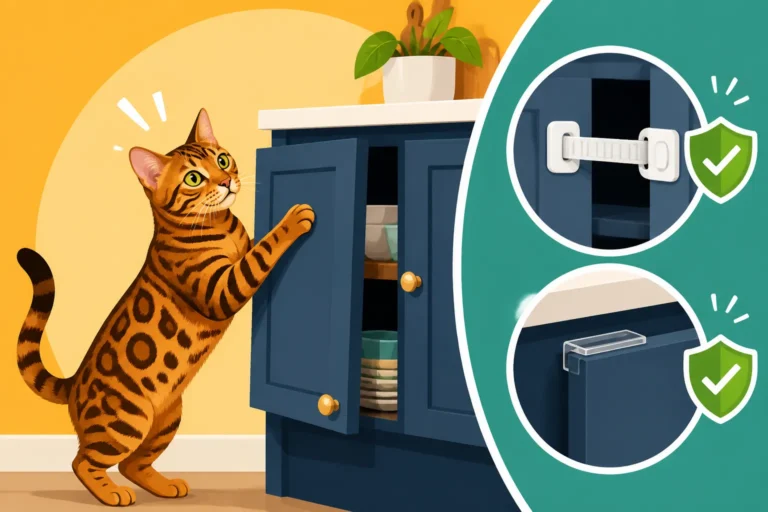
When doors aren't an option, consider child-proofing latches on cabinet doors, especially those under sinks where pipes might be accessible. Bengals are surprisingly clever with their paws and can quickly figure out how to open doors and drawers. How to Cat Proof Cabinets From a Bengal Cat can involve simple magnetic locks or latches found at hardware stores or on Amazon. Always keep toilet lids down – this is paramount not only for preventing splashes but also for safety, as some cleaning chemicals can be toxic. Placing large, absorbent waterproof mats around water bowls and fountains can catch spills and minimize the spread of water. These mats are often machine washable and a lifesaver for keeping your floors dry. For those Bengals who insist on joining you, How to Stop a Bengal Cat Flooding the Bathroom might involve drying them off with a quick towel rub immediately after they've had their fun, or supervising them closely.
Beyond Instinct: Other Reasons Your Bengal Might Love Water
While the Asian Leopard Cat ancestry is undeniably the primary driver behind a Bengal's love for water, it's not the only reason. There are other factors, both behavioral and physiological, that can contribute to their aquatic enthusiasm. Understanding these additional motivations can give you an even more complete picture of your unique feline companion.
Temperature Regulation and Sensory Stimulation
Bengal cats have a distinctive coat that's often described as a "pelt" rather than fur. It's usually very short, sleek, and lies close to their body, with little to no undercoat. This type of coat, while beautiful and soft, means they might not have the same insulating properties as a thicker-coated domestic cat. In warmer climates or even just on a hot day, their love for water could partly be about cooling down. Splashing in a bowl or dipping their paws in a cool stream of water can be a very effective way for them to regulate their body temperature. Why a Bengal Cat Has Almost No Undercoat contributes to this, as they don't have that dense layer to protect them from heat, making water an appealing relief.
Beyond temperature, there's the sheer sensory experience. Bengals are incredibly intelligent and active cats, and they thrive on mental and physical stimulation. Water provides a multi-sensory playground: the sound of running water, the feel of the cool liquid on their paws, the visual fascination of ripples and reflections, and the challenge of "catching" a moving stream. It's a highly engaging activity that appeals to their curious and playful nature. This stimulation is crucial for a breed as energetic as the Bengal; without enough outlets, they can become bored and destructive. The Bengal Cat Is the Most Active Cat You Can Own is not an exaggeration, and water play is just one more way they burn off that boundless energy.
Learned Behavior and Attention Seeking
While instinct lays the groundwork, a Bengal's environment and their interactions with you can also shape their water-loving habits. Sometimes, a Bengal might learn that playing with water is a fantastic way to get your attention. Imagine this scenario: your Bengal bats at the faucet, water sprays, and you rush over, perhaps with a surprised gasp or a quick "No!" Even negative attention is attention, and for a clever cat, that's a win. They might quickly associate water play with you appearing and interacting with them.
It's a classic case of operant conditioning. If a behavior gets a desired response (even an unintended one), the cat is likely to repeat it. If your Bengal discovers that jumping into the shower causes you to laugh, or that splashing their water bowl leads to you refilling it with fresh water (which they prefer anyway), they'll continue that behavior. Whether a Bengal Cat Gets in the Shower might have started as an instinctual urge but could be reinforced by your reaction. To manage this, it's important to provide alternative, acceptable outlets for their energy and attention, like dedicated play sessions, puzzle toys, and plenty of praise for appropriate behaviors, rather than inadvertently rewarding the water mischief.
| Behavior Observed | Wild Ancestor Connection | Other Contributing Factors | Practical Solution / Owner Response |
|---|---|---|---|
| Playing in sink/faucet | Hunting fish/amphibians, seeking fresh water | Sensory stimulation, attention seeking | Provide cat fountain (Amazon), designated water play area, ensure fresh water in bowls. |
| Jumping in shower/bath | Swimming for travel/escape, cooling down | Temperature regulation, sensory stimulation | Supervise, offer shallow tub play with toys, dry off immediately. |
| Batting at water bowl | Checking for movement, freshness of source | Sensory play, boredom | Use heavy, stable bowls on waterproof mats, consider a fountain. |
| Drinking from toilet | Seeking cool, running water | Perceived freshness | Keep toilet lids down, offer multiple water sources (fountains, bowls). |
| Exploring puddles | Natural curiosity, hunting small prey | Sensory exploration | Limit outdoor access, ensure safe indoor alternatives for curiosity. |
Disclaimer
This article is for general informational purposes only and does not constitute professional advice. Laws, prices and regulations vary by location and change over time. Consult a qualified professional for guidance on your specific situation.