Why a Bengal Cat Should Be Microchipped
It’s a heartbreaking scenario many Bengal cat owners dread: you turn your back for just a second, and your incredibly clever, lightning-fast furball has found a tiny crack in the door or an open window, vanishing into the great unknown. Bengal cats are famous for their athleticism, intelligence, and insatiable curiosity, which unfortunately makes them prime candidates for impromptu outdoor adventures. This guide isn't just about if you should microchip your Bengal, but why it's one of the most crucial steps you can take to ensure their safe return if the unthinkable happens.
Why Bengal Cats Are Prone to Escaping
Anyone who shares their home with a Bengal cat knows they aren't your average couch potato feline. These magnificent creatures are bundles of energy, intelligence, and an almost dog-like curiosity that drives them to explore every nook and cranny of their world. While this makes them incredibly engaging companions, it also presents unique challenges, especially when it comes to keeping them safely contained.
Their Boundless Energy and Curiosity
Bengal cats possess an unparalleled zest for life and an energy level that can often astound first-time owners. They aren't content to simply laze in a sunbeam all day; they crave constant mental and physical stimulation. This inherent drive means they are always looking for something new to investigate, a new height to conquer, or a new challenge to overcome. If their indoor environment doesn't provide enough excitement, their minds naturally wander to what lies beyond the windows and doors. You might notice them intently watching birds outside, their tails twitching with suppressed excitement, or meticulously examining the latch on a door. This isn't just idle curiosity; it's the wild instinct of their Asian Leopard Cat ancestors bubbling to the surface, prompting them to seek out new territories.
This boundless energy means that even a momentarily open door can become an irresistible invitation. They aren't just slipping out by accident; often, it's a calculated, albeit quick, dash towards freedom and adventure. Their minds are constantly at work, figuring out puzzles, and the outside world is the ultimate puzzle box. It's a fundamental part of The Bengal Cat Is the Most Active Cat You Can Own, and this activity level directly translates to a higher risk of them exploring unintended areas.
Master Escape Artists
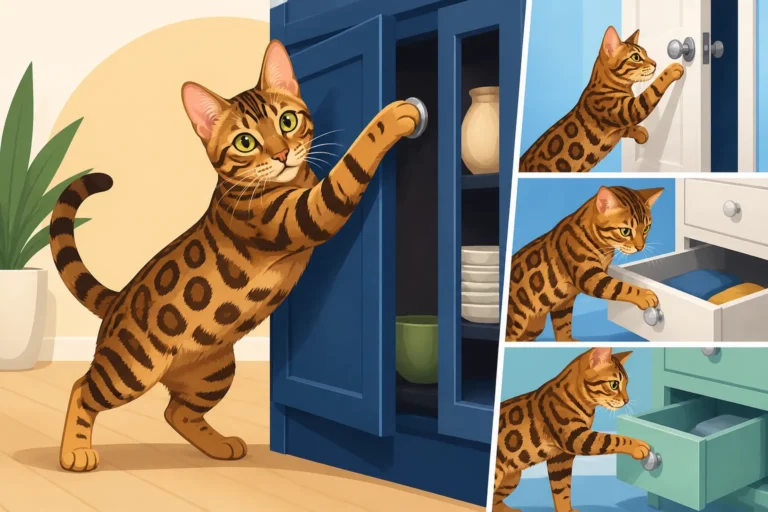
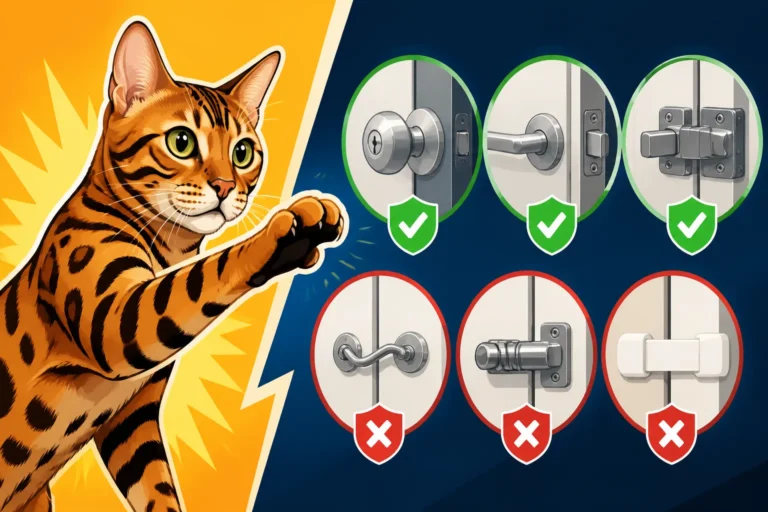
Let's be real, many Bengal owners have a story about their cat doing something incredibly clever to get where they shouldn't be. These cats are known for their problem-solving skills, and a locked door or a closed cabinet is often seen as a personal challenge, not an insurmountable barrier. They can learn to manipulate door handles, slide windows open, or even push through seemingly secure screens with surprising ease. It's not uncommon to hear tales of Bengal cats figuring out child locks or even complex latches.
Their intelligence and agility combine to make them formidable escape artists. A Bengal cat won't just bat at a door; they'll observe how you open it, perhaps stand on their hind legs and try to mimic the action. If a lever handle door is in your home, you know exactly what I'm talking about. How a Bengal Cat Learns to Open a Cabinet is often just one step away from them learning how to open an actual door. This isn't naughtiness; it's simply their nature. They are wired to explore and interact with their environment in a highly intelligent way, and sometimes that means outsmarting their human companions.
The Lure of the Outdoors
Even if you strive to create the most enriching indoor environment, with cat trees, puzzle feeders, and plenty of interactive play, the allure of the outdoors is incredibly strong for a Bengal cat. The scents, sounds, and movements of the natural world are a powerful draw, tapping into their ancestral instincts. While many domestic cats might cautiously step outside and quickly retreat, a Bengal cat is more likely to launch into a full-scale exploration.
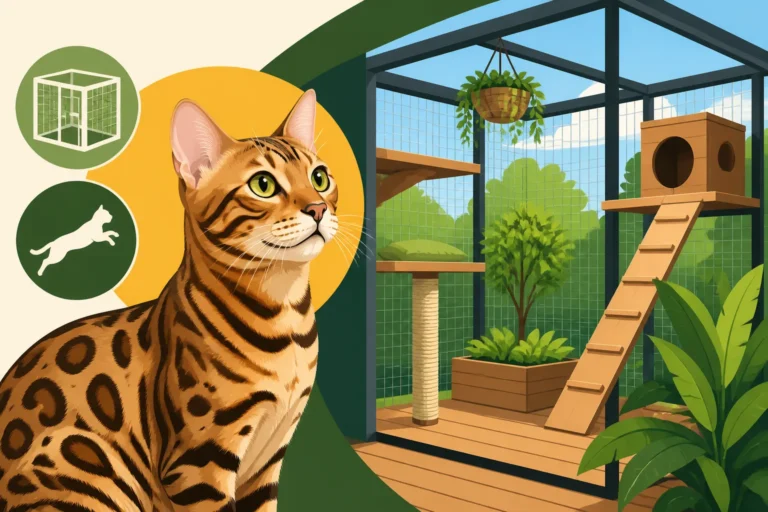
The dangers outside, from traffic to other animals to unfamiliar toxins, are numerous, and a Bengal cat, for all its intelligence, doesn't understand these risks. They see an open door as an opportunity for an exciting hunt or a new climbing adventure. This means that even the most dedicated indoor-only Bengal cat owner faces the constant threat of an accidental escape. The thought of How Far a Bengal Cat Goes If It Escapes can be terrifying, as their speed and stamina mean they can cover significant ground very quickly, making them incredibly difficult to track down without proper identification. For owners determined to keep them indoors, understanding Whether a Bengal Cat Can Be an Indoor Only Cat is critical, but even then, accidents happen.
What a Microchip Actually Is and How It Works
So, we've established that keeping a Bengal cat safely inside can be an ongoing endeavor. This is where microchipping comes in as an invaluable safety net. It's a simple, reliable technology that provides a permanent form of identification, vastly increasing the chances of reuniting with your beloved pet if they ever get lost.
The Tiny Device and Its Function
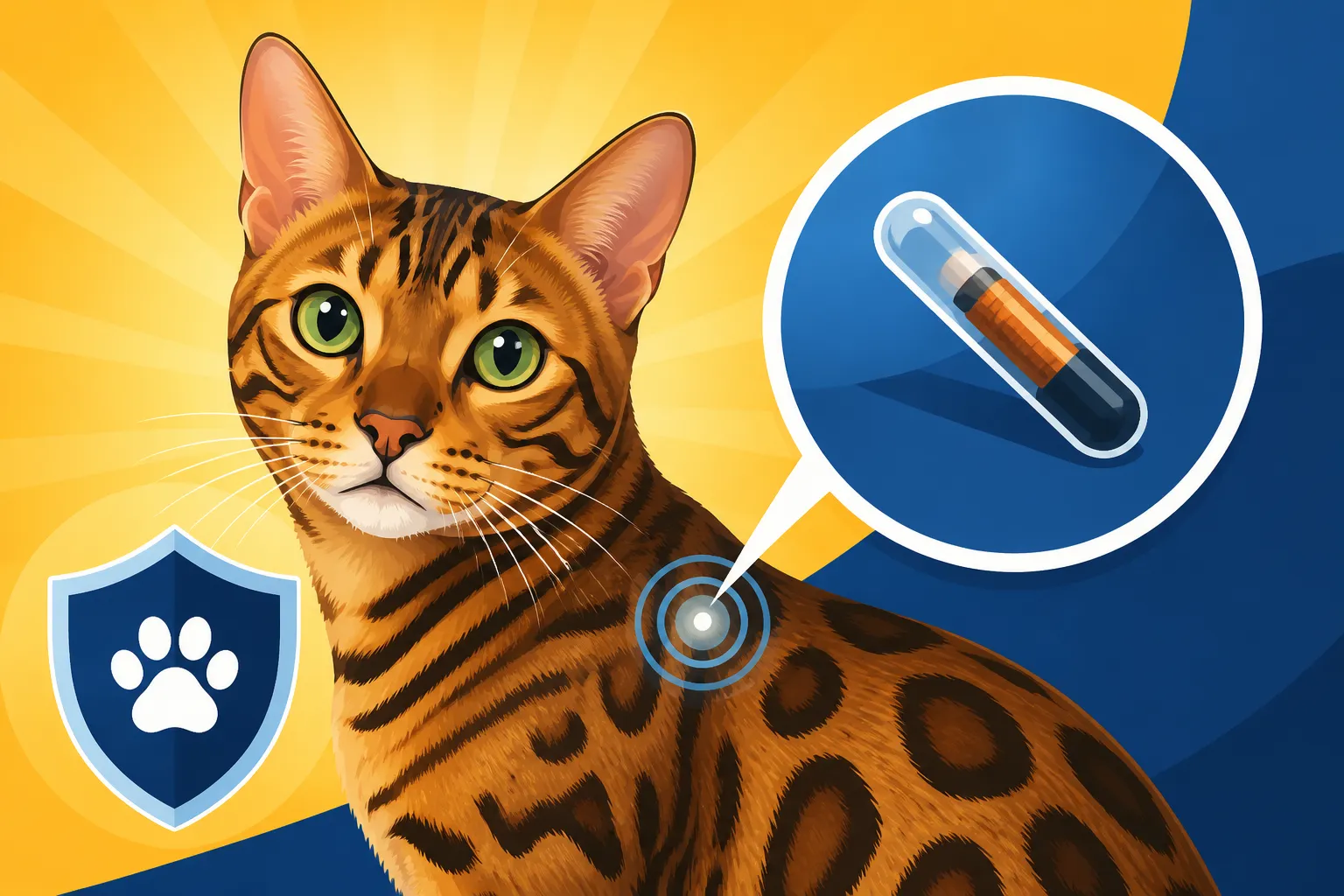
A microchip is essentially a very small, passive radio-frequency identification (RFID) transponder. Think of it as a tiny capsule, roughly the size of a grain of rice. This minuscule device contains a unique identification number, but no battery, no moving parts, and no internal power source. It's completely inert until activated by a scanner. When a special scanner passes over the chip, it emits a low-frequency radio wave that powers the chip, allowing it to transmit its unique ID number back to the scanner.
This simple technology means the microchip can last for your cat's entire life without needing replacement or recharging. It's typically implanted by a veterinarian or trained professional right under the skin, usually between the shoulder blades. The procedure is quick, much like a routine vaccination, and causes minimal discomfort to your cat. Once implanted, it's a permanent identifier that can't be lost, removed, or tampered with like a collar tag might be.
The Scanning Process
When a lost pet is found and brought to an animal shelter, veterinary clinic, or even a local police station, one of the first things they'll do is scan for a microchip. Staff members use a handheld scanner that's waved over the cat's back. If a microchip is present, the scanner will beep and display the unique identification number on its screen. This number is the key to everything.
Once the number is retrieved, the next step is to look it up in a national pet recovery database. This is why registration is absolutely critical – without it, the microchip is just a number. The database connects that specific microchip number to your contact information, allowing the person who found your Bengal to get in touch with you directly. It's a seamless process that bypasses the need for your cat to be wearing a tag that could fall off or become illegible.
Registration and Database Importance
Having your Bengal cat microchipped is only half the battle. The microchip itself doesn't contain your personal information; it only holds that unique ID number. For the microchip to be effective, that number must be registered with a pet recovery service, and your contact details kept up-to-date. This is arguably the most crucial step. Many owners make the mistake of assuming the chip is automatically registered by their vet, but often it's a step you need to complete yourself or confirm with the veterinary office.
When you register your chip, you provide your name, address, phone number, and email. If you move or change your phone number, it is paramount that you update this information with the microchip registry. An outdated record renders the microchip almost useless. Think of it like a library card: the card itself has a number, but without a record linking that number to your account, no one knows who borrowed the book. There are several reputable microchip registries, and many now offer online portals to make updates easy. Some vets register the chip for you as part of the service, but always double-check and make sure you receive confirmation and instructions on how to access and update your information.
The Lifesaving Benefits of Microchipping
While we all hope our Bengal cats stay safely by our side, life happens. A sudden loud noise, a door left ajar, or even a clever escape plan can lead to them getting lost. In these stressful situations, a microchip isn't just a convenience; it's often the single most effective tool for a happy reunion.
The Best Chance for Reunion
Let's face it, a lost pet is every owner's nightmare. For an adventurous breed like a Bengal, who might decide to explore How Long a Bengal Cat Would Survive Outdoors, the dangers are amplified. Traditional identification methods like collars and tags are certainly important, and I always recommend them. You can find some fantastic, durable collars and customizable tags on platforms like Amazon that are great for everyday identification. However, collars can break, snag, or simply fall off. Tags can become scratched and unreadable. A microchip, on the other hand, is permanent and tamper-proof. It cannot be lost or removed.
Statistics consistently show that microchipped pets are far more likely to be reunited with their owners than those without chips. Shelters and vets routinely scan every animal that comes through their doors. If your Bengal has a microchip and your contact information is current, that unique ID number becomes a direct link back to you. This cuts down on the time your beloved cat spends in a stressful shelter environment and significantly increases the odds of them coming home. It truly is the ultimate safety net for any pet owner, especially for a breed as active and curious as the Bengal.
Proof of Ownership
Beyond simply reuniting you with a lost cat, a microchip serves a crucial purpose as undeniable proof of ownership. Imagine the distress of your Bengal going missing, only to find out someone else has claimed them as their own. This scenario, while thankfully rare, does occur. Without clear identification, it can be incredibly difficult to prove legal ownership, especially if the cat has no collar or an outdated tag.
The unique, unalterable identification number stored in your Bengal's microchip, combined with your registration details in a national database, provides concrete evidence that the cat belongs to you. In unfortunate disputes, this can be invaluable. It ensures that if your Bengal is found, and there's any question about who their rightful family is, the microchip stands as a definitive record. This becomes particularly important if a Bengal Cat Gets Stolen, as the microchip can track their identity even if their appearance is altered or their collar removed.
Deterring Theft
While it’s a grim thought, highly sought-after breeds like Bengal cats, known for their striking appearance and sometimes considerable purchase price, can unfortunately be targets for theft. A microchip might not prevent a theft from happening, but it significantly deters those who might try to re-sell or re-home a stolen pet. Any reputable veterinarian or animal shelter will scan a new animal for a microchip. If a stolen Bengal is brought in, that scan will immediately reveal the chip and, crucially, your information as the registered owner.
This creates a digital trail that makes it extremely difficult for a thief to pass off the cat as their own. It also means that if your Bengal ends up at a shelter, they won't simply be rehomed to a new family without an attempt to find you first. While the initial investment in microchipping might seem like just another cost, particularly when considering What a Bengal Cat Costs to Buy in 2026, the peace of mind and protection it offers against theft is truly priceless. It adds an extra layer of security for your valuable family member.
Common Misconceptions and Concerns About Microchipping
Despite the overwhelming benefits, some owners still have reservations about microchipping their pets. These often stem from misunderstandings about the technology or the procedure itself. Let's clear up some of the most common concerns.
Is It Painful or Dangerous?
One of the most frequent questions I hear is about pain and safety. It's completely understandable to worry about anything that might cause your beloved Bengal discomfort. The microchip implantation process is very quick, typically less painful than a routine vaccination. The needle used is slightly larger than a standard vaccine needle, but most cats react with nothing more than a momentary flicker of their ear or a quick glance. Many vets perform it during a regular check-up or even during spaying/neutering while the cat is already under anesthesia, making it even less noticeable.
Serious adverse reactions are incredibly rare. The microchips are made from inert, biocompatible materials, meaning they are designed to not cause a reaction with your cat's body tissue. They don't migrate significantly from the implantation site, and issues like infection are almost non-existent when performed by a professional in a sterile environment. The benefits of permanent identification far outweigh the minimal, transient discomfort of the procedure itself. Your Bengal will likely forget it happened within minutes, going back to demanding play sessions with their favorite interactive toys from Amazon.
GPS Tracking Misconceptions
Another common misconception is that a microchip is a GPS tracking device. This is a very persistent myth, and it's important to clarify: a standard pet microchip does not have GPS capabilities. It cannot be used to actively track your Bengal's location if they get lost. As mentioned earlier, it's a passive device that only transmits its unique ID number when a compatible scanner is passed over it.
If you're looking for GPS tracking, that's a different technology entirely, typically involving a collar-mounted device with a battery and cellular service. While those can be useful for active tracking, they are much larger, more expensive, and prone to being lost if the collar comes off. The microchip's purpose is identification after your pet has been found, providing a permanent and reliable link back to you. Both technologies serve different, but complementary, roles in pet safety. You might find GPS trackers for cats on Amazon, but understand they are distinct from the implanted microchip.
When and Where to Microchip
Deciding when and where to microchip your Bengal is relatively straightforward. Most veterinarians recommend microchipping as early as possible, typically during a kitten's first vet visits or concurrent with their spay/neuter surgery. This ensures they have this permanent identification before they ever have the chance to wander off, even as a curious youngster. If you've adopted an adult Bengal cat who isn't microchipped, it's never too late to get it done. It's a quick, outpatient procedure that can be scheduled at any time with your vet.
It's also worth noting that many animal shelters and rescue organizations will microchip pets before adoption, often including the registration fee in the adoption cost. Always ask for proof of microchipping and the associated registration paperwork when you adopt. For a breed known for its cleverness and occasional escape attempts, like when figuring out How Often a Bengal Cat Escapes the House, a microchip is an indispensable tool that offers unparalleled peace of mind. Without it, if your Bengal ends up lost, the outcome could lead to significant distress and potential rehoming if they land in a shelter where What Happens to a Confiscated Bengal Cat is a serious concern.
Microchip vs. Collar & Tag: A Quick Comparison
While this article champions microchipping, it's crucial to understand that it complements, rather than replaces, a collar and ID tag. Each serves a distinct purpose, and using both offers the best possible protection for your adventurous Bengal.
| Feature | Microchip | Collar & ID Tag |
|---|---|---|
| Visibility | Internal, invisible | External, highly visible |
| Permanence | Permanent, lifelong | Can be lost, broken, or removed |
| Information Held | Unique ID number linked to database | Contact info (name, phone) directly on tag |
| Retrieval Method | Requires a scanner | Read visually by anyone |
| Cost | One-time fee (chip + registration) | Initial purchase, occasional replacement |
| Proof of Ownership | Definitive legal proof | Suggestive, but not definitive legal proof |
| Function | Aids reunion when found by official channels | Quick identification by the public; immediate contact |
As you can see, both have their strengths. A bright, durable collar with an easily readable tag (you can find fantastic options on Amazon) allows a friendly neighbor to call you immediately if your Bengal is found wandering close to home. The microchip acts as the failsafe, the ultimate backup plan if the collar is lost or the cat travels further afield. For a clever, curious cat with How Intelligent a Bengal Cat Is like a Bengal, having both layers of protection is simply the smartest way to keep them safe.
Disclaimer
This article is for general informational purposes only and does not constitute professional advice. Laws, prices and regulations vary by location and change over time. Consult a qualified professional for guidance on your specific situation.