How a Bengal Cat Learns to Open a Cabinet
One of the most frustrating and often hilarious quirks of living with a Bengal cat is their uncanny ability to outsmart seemingly simple household obstacles. If you've ever walked into your kitchen to find cabinet doors ajar and contents strewn across the floor, you know the particular brand of chaos a curious Bengal can create. This guide will delve into the brilliant, mischievous mind of your Bengal, explaining precisely how they learn to open cabinets and, more importantly, how you can outwit them.
The Inquisitive Mind of a Bengal Cat
It’s not just happenstance when your Bengal cat figures out how to open a cabinet. Their actions are driven by a powerful combination of intelligence, instinct, and an insatiable curiosity that often makes them feel more like tiny, furry detectives than typical housecats. Understanding this innate drive is the first step to truly "Bengal-proofing" your home.
Why Bengals Are Such Clever Problem Solvers
The Bengal cat is a fascinating blend of domestic feline grace and the wild spirit of their Asian Leopard Cat ancestors. This unique lineage imbues them with a heightened intelligence and a primal drive to explore, hunt, and solve problems. Unlike many domestic breeds content with a simple toy, a Bengal craves mental stimulation. Their brains are wired for complex thought, observation, and strategizing. When faced with a closed cabinet door, their mind isn't just seeing an obstacle; it's seeing a puzzle, a challenge to be conquered. They are natural problem-solvers, and every successful cabinet breach reinforces this behavior, making them even more determined for the next "heist."
This isn't limited to cabinets, either. Many Bengal owners report their cats learning to manipulate door handles, much like in How a Bengal Cat Opens a Door, or even turning on faucets, a common topic discussed in Why a Bengal Cat Turns on a Faucet. This dexterity and intelligence are not just cute party tricks; they are direct manifestations of their wild heritage, where survival depended on keen observation and adaptability. When they target a cabinet, it’s often because they suspect something interesting lies within, or simply because the act of opening it is a reward in itself – a mental workout.
Observing and Learning: The Bengal's Copycat Tendencies
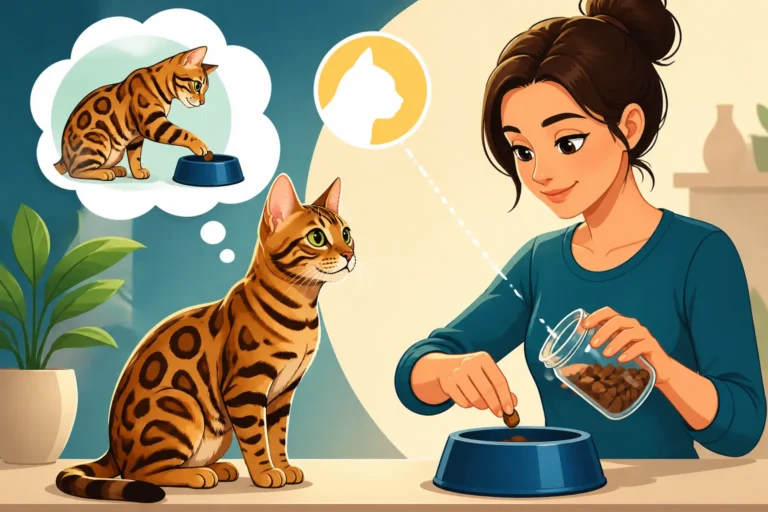
Bengals are incredibly observant creatures, and this is a key factor in how they learn to open cabinets. They watch you. Every time you open a cabinet, they're not just idly sitting by; they're studying your movements, the way your hand grasps the knob, the slight twist or pull, the sound it makes. They connect the action with the reward (access to whatever is inside, or just the satisfaction of opening it). It’s a classic case of observational learning, similar to how a child might mimic an adult's actions.
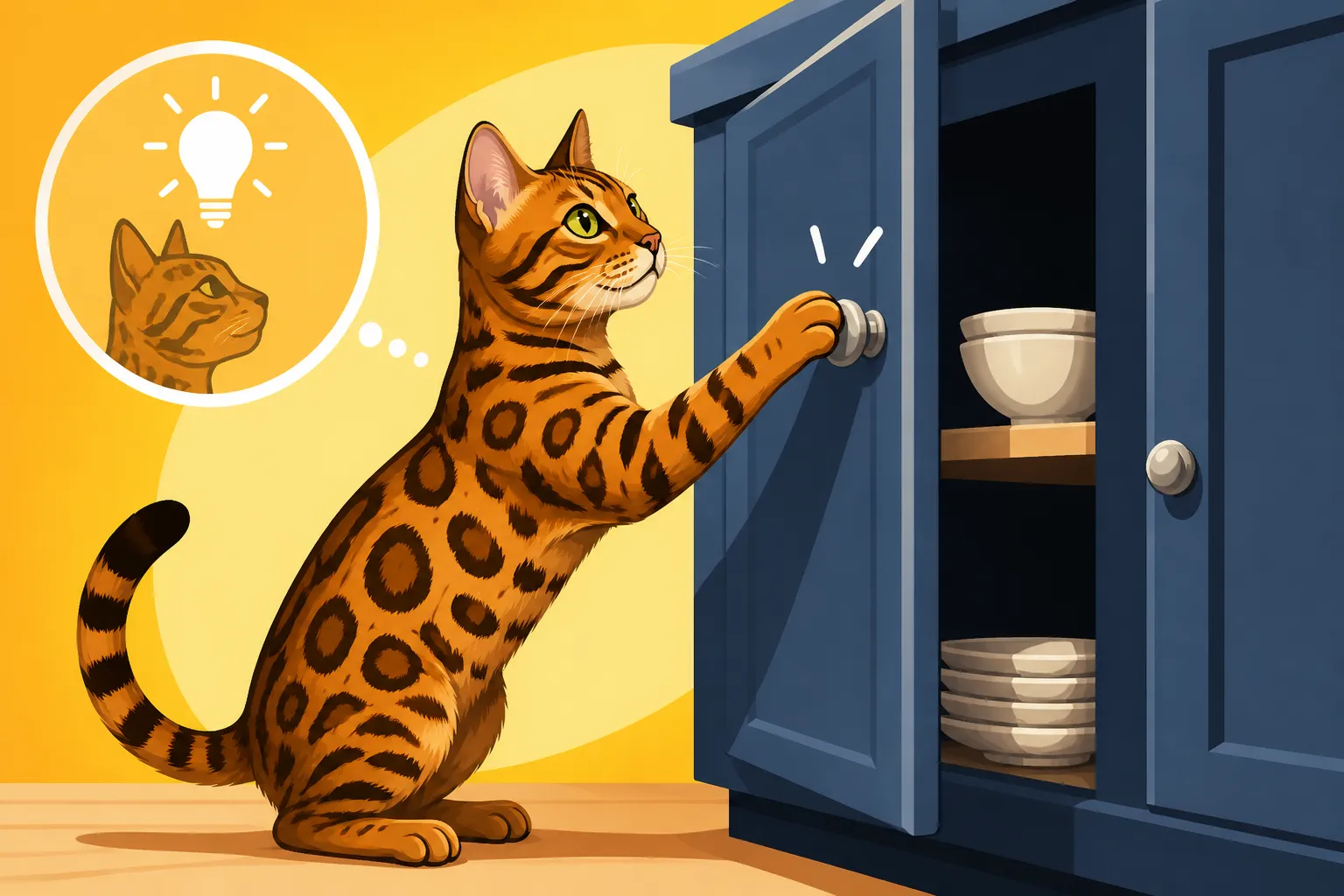
Once they've observed, they begin their own experiments. They'll try pawing at the handle, batting it with their claws, perhaps even attempting to hang from it to see if gravity can assist. They are persistent and will try various methods until something works. A Bengal isn't easily discouraged; a failed attempt is just data for the next try. This trial-and-error approach, coupled with their sharp intellect, means that if there's a weakness in your cabinet's security, your Bengal will eventually find it. They might start with a light tap, progress to a persistent jiggle, and before you know it, they’ve mastered the art of the swift paw-hook that pops the door right open.
Common Cabinet-Opening Tactics and Motivations
So, how exactly do these clever felines manage to breach your culinary fortresses? It's a combination of physical prowess, strategic thinking, and, let's be honest, a certain level of mischievous charm. Understanding their methods and motivations is crucial for staying one step ahead.
The Reach, Pull, and Pry Method
When a Bengal cat sets its sights on a cabinet, it employs a range of physical tactics. Their agile paws are incredibly dextrous, almost like little hands. They can reach around a cabinet door, hooking a claw or paw pad onto a knob or handle. From there, it's a matter of leverage. They might pull downwards, trying to engage the latch, or pry outwards with surprising strength. Some will even brace their back feet against the floor or a nearby object to get more purchase, using their strong, athletic bodies to their advantage.
Different cabinet styles present different challenges. A simple knob might be easier to hook and pull, while a recessed pull handle might require a more intricate paw maneuver. Magnetic closures, which might deter a regular housecat, are often seen as just another level of puzzle for a Bengal. They learn the exact amount of force needed, the precise angle to apply pressure, and the specific sound that indicates success. It’s like they're practicing lock-picking, but with purrs and head-butts instead of tools. They have an impressive physical vocabulary when it comes to doors and drawers.
What's So Enticing Inside? The Lure of the Forbidden
While the act of opening a cabinet can be rewarding in itself for a Bengal, there's usually a deeper motivation: curiosity about what lies within. To a Bengal, a closed cabinet represents a hidden treasure chest. The most common lure, of course, is food. Whether it's their own kibble bag, a stash of irresistible treats, or even your human snacks, if it smells remotely edible, they'll want to investigate. I've heard countless stories of Bengals tearing into bread bags, snagging potato chips, or even trying to get into the pantry where their dry food is kept.
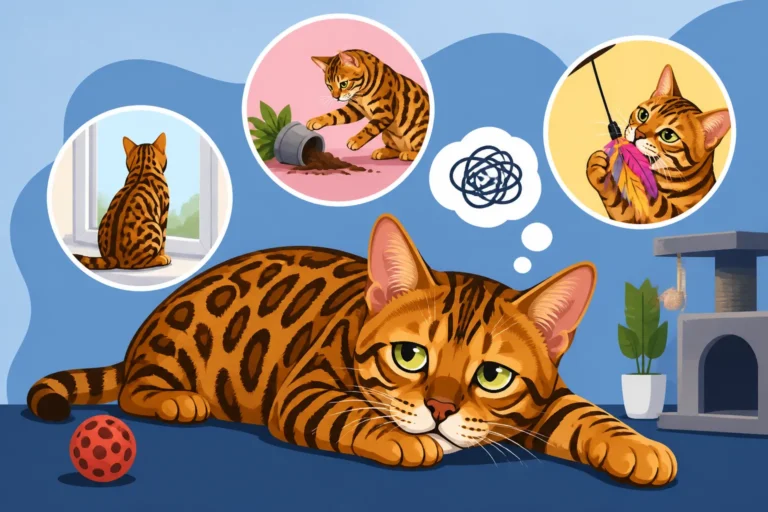
Beyond food, cabinets often hold exciting toys that have been put away, or objects with intriguing textures or smells. Cleaning supplies, for example, might not be appealing to us, but the scent of a new chemical or the crinkle of a plastic bottle can be enough to pique a Bengal's interest. And then there's the sheer thrill of discovery. A bored Bengal will often find mischief just for the sake of it. If they aren't getting enough mental and physical stimulation, they'll seek it out themselves, and an unopened cabinet is a prime target. This is why addressing What a Bored Bengal Cat Destroys often involves providing plenty of appropriate outlets for their energy and intelligence, lest your cabinets become their personal playground.
Practical Strategies to Bengal-Proof Your Cabinets
It can feel like a losing battle when your brilliant Bengal constantly outsmarts your attempts to keep them out of cabinets. But don't despair! There are effective strategies you can employ to secure your home and protect both your belongings and your cat. The key is thinking like a Bengal – anticipate their moves and make it genuinely impossible for them to succeed.
Child-Proofing Solutions: Your First Line of Defense
When it comes to securing cabinets from a Bengal, "child-proofing" really means "Bengal-proofing." The locks designed to thwart toddlers are often surprisingly effective against our feline escape artists. However, you can't just slap on any old lock and expect it to hold. Bengals are strong and persistent, so you need robust solutions.
Magnetic cabinet locks are often a fantastic option. They install on the inside of the cabinet or drawer, making them invisible from the outside, which means your Bengal can't see what they're fighting against. You use a magnetic key to open them, and they automatically lock when closed. These are often strong enough to withstand significant prying. Another popular choice involves adhesive strap locks or sliding locks that wrap around handles. These are visible, which means your Bengal might try to chew on them, so opt for durable materials. For cabinets with side-by-side doors, a simple hook-and-eye latch, installed high up, can also be quite effective. Remember, a Bengal will eventually figure out simple push-button locks or anything that can be easily dislodged with enough force.
When choosing, consider reviewing options available on Amazon, as many brands offer specific "pet-proof" ratings alongside their child safety features. It's worth investing in high-quality options, as a cheap lock will quickly become just another toy for your Bengal to conquer. As highlighted in Whether Child Locks Work on a Bengal Cat, the answer is yes, but only if you choose wisely and install them securely!
Redirection and Enrichment: Addressing the Root Cause
Simply locking cabinets treats the symptom, not the cause. A Bengal cat's drive to explore and problem-solve is innate. If you don't provide appropriate outlets for this energy, they'll just find new, often more destructive, ways to entertain themselves. This is where redirection and enrichment come in.
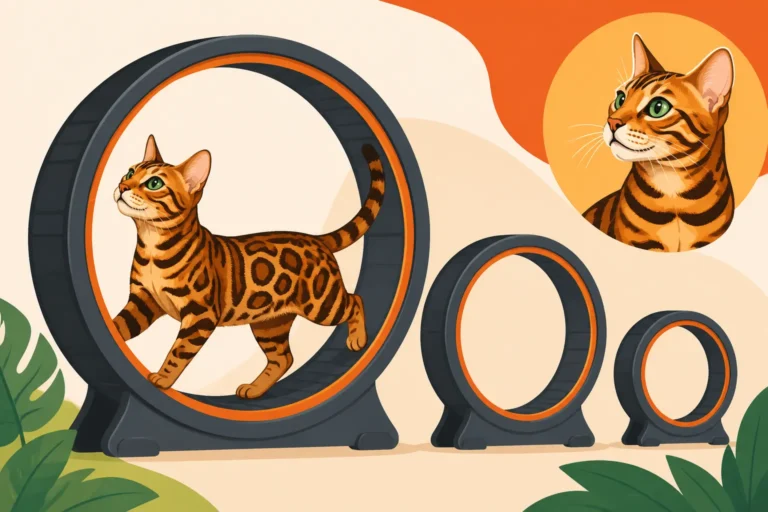
Provide plenty of interactive toys that challenge their minds. Puzzle feeders, for instance, make them work for their food, satisfying both their hunger and their problem-solving instincts. You can find a huge variety of these on Amazon, from simple treat balls to complex multi-stage puzzles. Rotate their toys regularly to keep things fresh and exciting, preventing boredom. A cat wheel is another excellent investment for burning off excess energy, as discussed in How Much Enrichment a Bengal Cat Actually Needs.
Beyond toys, create a stimulating environment. Bengals thrive on vertical space, so cat trees, wall shelves, and cat "superhighways" give them places to climb, observe, and feel safe. These vertical territories satisfy their natural instinct to climb and survey their domain. By making their approved play areas more interesting than your cabinets, you naturally redirect their focus. When considering which challenging toys might truly stump your intelligent companion, you might want to read Which Puzzle Feeder Beats a Bengal Cat. A truly enriched Bengal is a less mischievous Bengal.
Training and Boundaries: Teaching "No"
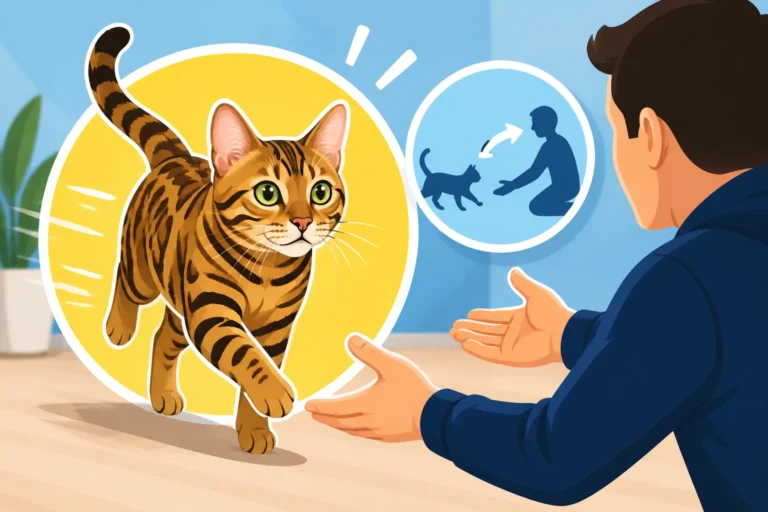
While Bengals are notoriously independent, they are also highly intelligent and can be trained. Consistency is paramount. When you see your Bengal attempting to open a cabinet, a firm "No" and a gentle redirection away from the cabinet can begin to establish boundaries. Positive reinforcement works wonders: when they don't try to open the cabinet, reward them with a treat or praise.
Clicker training can be particularly effective for Bengals, as their intelligence makes them quick learners. You can teach them commands like "leave it" or "off." However, remember that training a cat is different from training a dog. You're not aiming for absolute obedience, but rather for a clear understanding of what behaviors are acceptable and which are not. The challenge lies in the fact that your Bengal knows perfectly well what "no" means, but they might decide the reward of the cabinet is worth the temporary reprimand! For more insights into their cognitive abilities, explore How Intelligent a Bengal Cat Is. The goal is to make the "reward" of opening the cabinet less appealing than the "reward" of following your rules.
When Cabinet-Opening Becomes a Safety Concern
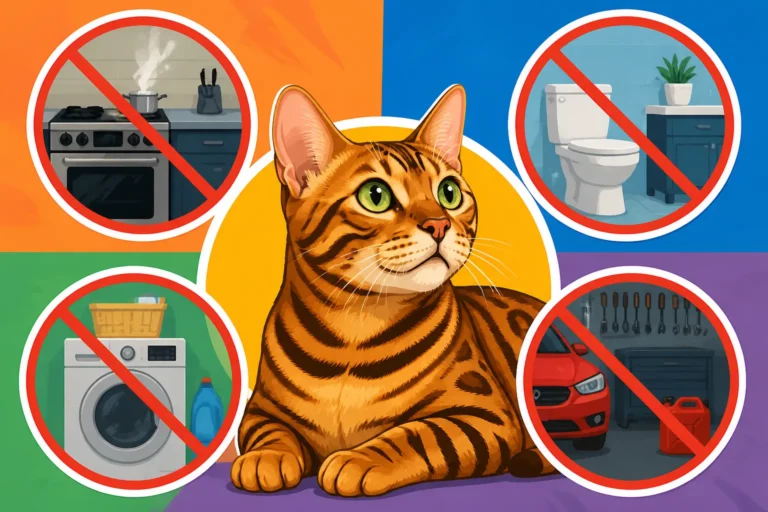
While the occasional spilled bag of flour is annoying, a Bengal cat's cabinet-opening habit can quickly escalate into a serious safety hazard. Our homes are full of items that are harmless to us but highly toxic or dangerous to our curious felines. Recognizing and mitigating these risks is paramount for any Bengal owner.
Identifying Dangerous Contents
It’s not just food that tempts a Bengal. Many common household items stored in cabinets are incredibly dangerous if ingested or accessed by a cat. Think about your cleaning supplies: bleach, detergents, disinfectants, and even seemingly benign all-purpose cleaners can cause severe chemical burns, organ damage, or poisoning. Medications – both human and pet – are another huge risk. Even over-the-counter pain relievers or vitamins can be lethal to cats.
Other hazards include small objects that could be swallowed, leading to choking or internal obstructions. This could be anything from rubber bands and hair ties to craft supplies or small hardware. Plastic bags, if found in a cabinet, also pose a suffocation risk. Consider everything stored behind those doors from your Bengal's perspective: is it chewable? Can it be swallowed? Is it toxic? If the answer to any of those questions is "yes," then that cabinet must be absolutely secure or the item moved to an entirely inaccessible location, like a locked utility closet or a high shelf they simply cannot reach.
The Importance of a Secure Home Environment
A Bengal cat's intelligence and athleticism mean that a truly secure home environment goes far beyond just cabinet locks. They are master escape artists and climbers. If they can open cabinets, they can probably figure out how to open other doors or manipulate windows. Therefore, a comprehensive approach to safety is essential.
Ensure all external doors and windows are secure, especially if you have an "indoor-only" Bengal. Consider screens that can withstand their clawing and weight if they decide to launch themselves at a window. Trash cans, particularly those in the kitchen, should either be heavy-lidded or secured in a locked cabinet to prevent them from becoming an enticing foraging ground, as detailed in How to Keep a Bengal Cat Out of the Trash. Even seemingly benign items, like a fish tank, require extra precautions, as discussed in Whether an Aquarium Is Safe Around a Bengal Cat.
Ultimately, creating a secure home for a Bengal involves constant vigilance and a proactive approach. It means consistently checking locks, anticipating potential dangers, and always striving to be one step ahead of their next brilliant escapade. Their wild intelligence is one of their most charming traits, but it also demands a responsible and thoughtful owner who can ensure their safety and well-being within a domestic environment.
| Cabinet Lock Type | Description | Bengal Effectiveness Rating (1-5, 5 being best) | Pros | Cons |
|---|---|---|---|---|
| Magnetic Locks | Hidden inside cabinet, requires a magnetic key to open. | 5 | Invisible, very secure, durable. | Requires drilling for installation, easy to lose key. |
| Adhesive Strap Locks | Strap with adhesive pads that connect two surfaces (e.g., door to cabinet frame). | 3 | No drilling, easy to install, adjustable. | Can be chewed off, adhesive might fail, visible. |
| Sliding Locks (U-shaped) | Slips over existing cabinet knobs/handles to prevent opening. | 2 | No installation, portable, inexpensive. | Easily defeated by a determined Bengal, can damage finish. |
| Spring-Loaded Latches | Internal latch that hooks onto a strike plate; pushes down to open. | 4 | Relatively secure, less visible. | Requires drilling, can be noisy, sometimes stiff. |
| Hook & Eye Latches | Metal hook and eye, typically installed on the outside of the door. | 4 | Very strong, simple, clearly visible (deterrent). | Requires drilling, can look unsightly, visible. |
| Toggle Locks | External strap with a button or lever mechanism. | 3 | Easy to install, often strong plastic. | Visible, can be chewed, mechanism might be figured out. |
Disclaimer
This article is for general informational purposes only and does not constitute professional advice. Laws, prices and regulations vary by location and change over time. Consult a qualified professional for guidance on your specific situation.