Which Harness Fits a Bengal Cat
Finding a harness that actually stays on an athletic, determined Bengal cat can feel like an impossible mission. So many harnesses are designed for your average house cat, not a feline powerhouse who sees a leash walk as an extreme sport. If you’ve ever found your Bengal wiggling out of a seemingly secure harness faster than Houdini, you’re not alone. This guide is going to walk you through exactly what to look for, and how to fit, the perfect harness that will keep your adventurous Bengal safe and secure, whether you're exploring the backyard or heading out for a grander adventure.
The Unique Challenge of Harnessing a Bengal Cat
Bengal cats aren't your typical couch potato felines. They possess a unique blend of athleticism, intelligence, and an insatiable curiosity that sets them apart. This means that finding a suitable harness for them isn't as simple as grabbing the first cute one you see at the pet store. Their wild ancestry, though generations removed, still manifests in their physical capabilities and their determined personalities. They are often described as having dog-like qualities, especially their enjoyment of How Much Exercise a Bengal Cat Needs a Day and eagerness to explore.
Why Standard Harnesses Just Won't Do
Many standard cat harnesses on the market are designed with less active, more placid domestic cats in mind. They might offer a single strap around the neck and another around the chest, held together by a flimsy clip or a bit of Velcro. For a Bengal, this is often no more than a suggestion of restraint. They are masters of contortion, capable of twisting and flexing their bodies in ways that allow them to slip out of ill-fitting gear with alarming ease. You might find yourself clipping the leash only for your Bengal to be a free agent moments later, leaving you with an empty harness and a rapidly disappearing cat. This isn't just frustrating; it's a safety hazard, especially if you're near a busy road or an unfamiliar area.
The typical H-style harness, while better than just a collar, often doesn't provide enough security for a truly determined Bengal. The narrow straps can create pressure points if the cat pulls, and if there's any slack, a quick backward movement can see them backing right out. Owners often express surprise at how strong and agile their Bengals are, and a flimsy harness simply can't stand up to that power. It’s like trying to secure a sleek, furry eel – they just know how to find the gaps.
The Bengal's Physicality and Drive to Explore
Think about what makes a Bengal cat so special: their muscular build, their lean, powerful bodies, and their boundless energy. They thrive on activity, enjoy puzzle toys that challenge their minds, and many even love water, making them unique explorers. This inherent drive means they aren't content to just sit quietly on a leash; they want to sniff every bush, climb every available surface, and chase every rustling leaf. They also have a very strong prey drive, so a sudden squirrel or bird can trigger an instant dash. This combination of strength, agility, and high prey drive demands a harness that can withstand sudden lunges, unexpected twists, and determined attempts at escape.
Moreover, Bengal cats can be incredibly curious and intelligent. They learn quickly, and if they discover a weakness in their harness or a method to escape, they will exploit it. A harness for a Bengal needs to feel like an extension of their body, secure without being restrictive, allowing them to move naturally while still keeping them safely tethered. This requires a much more robust and well-designed piece of equipment than what you might typically find for other cat breeds. They truly benefit from How to Leash Train a Bengal Cat from a young age to get accustomed to it.
Decoding Harness Types for Your Agile Adventurer
When you start shopping for a Bengal cat harness, you’ll quickly notice there are several main styles. Each has its pros and cons, but for a Bengal, security and comfort are paramount. The goal is to find something they can't easily slip out of, but that also allows them to move freely and enjoy their time outdoors or during travel.
The Security of a Vest Harness
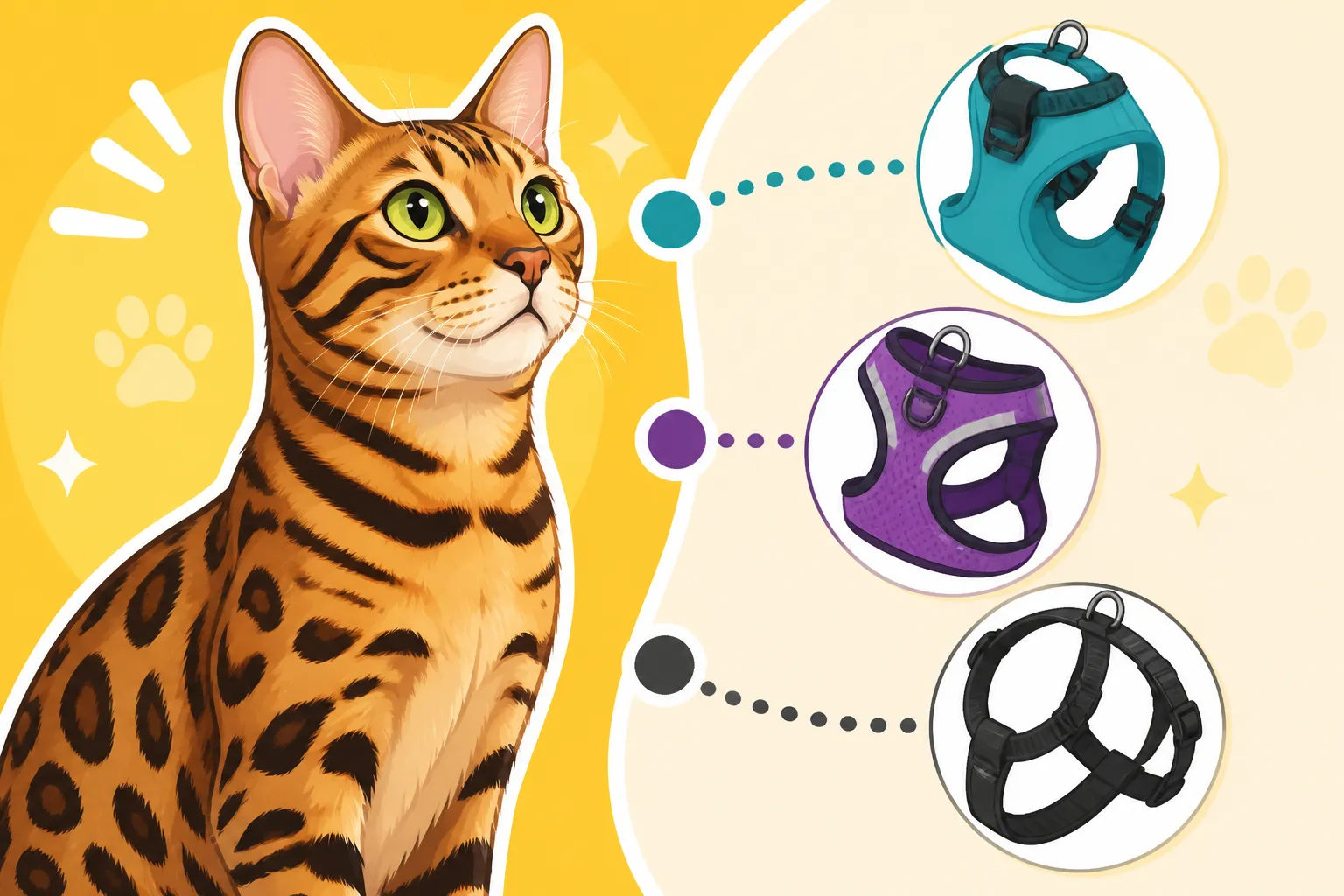
For most Bengal cat owners, a vest-style harness is the undisputed champion. These harnesses are designed to distribute pressure more evenly across a larger surface area of the cat's torso, rather than concentrating it on the delicate neck or throat area. They often resemble a small vest, covering the chest and a good portion of the back.
Pros of a Vest Harness for Bengals:
- Escape-Proof Design: The broader coverage and secure strapping make it significantly harder for a Bengal to wriggle out. There's simply less "give" for them to exploit. Many models offer multiple points of adjustment, ensuring a snug, custom fit that minimizes gaps.
- Comfort and Support: The wider straps and soft, often padded material prevent chafing and distribute any pulling pressure more comfortably. This is crucial for an active cat that might be pulling or making sudden movements.
- Safety: The robust design offers better protection, especially if you need to quickly grab your cat or they suddenly bolt. Some even feature reflective strips, which is a great bonus if you're out during low light conditions.
- Secure D-Ring Placement: Typically, the leash attachment point (D-ring) is located on the back, which provides better control and reduces pressure on the neck compared to a collar attachment.
Cons of a Vest Harness for Bengals:
- Bulkier: Compared to an H-style harness, a vest harness is more substantial, which some cats might initially resist.
- More Difficult to Put On: They often involve more buckles or Velcro straps, which can take a bit longer to secure, especially with a squirmy cat.
When looking at vest harnesses on Amazon, you'll find a range of materials and designs. Opt for breathable fabrics, especially if your Bengal will be out in warmer weather, and always prioritize adjustable straps over fixed sizes. Look for brands known for durable construction, as a Bengal will put any harness through its paces.
Understanding the H-Style Harness
The H-style harness gets its name from its shape: two loops (one for the neck, one for the chest) connected by a strap along the cat's back, forming an 'H' when laid flat. This is a very common type of cat harness, but its suitability for a Bengal is debatable.
Pros of an H-Style Harness for Bengals:
- Lightweight: Less material means it can feel less restrictive for some cats.
- Easier to Put On: Generally simpler with fewer buckles, making it quicker to put on and take off.
- Less Bulky: Doesn't cover as much of the cat's body, which some cats prefer.
Cons of an H-Style Harness for Bengals:
- Less Secure: This is the big one. If not fitted absolutely perfectly, a Bengal can often back out of an H-style harness. The narrower straps provide more opportunity for them to twist and escape.
- Pressure Points: If the cat pulls hard, the narrow straps can dig into their skin, especially around the neck, which is uncomfortable and potentially dangerous.
- Limited Control: Because the straps are narrower, it offers less overall control compared to a vest, which can be challenging with a cat as energetic as a Bengal.
While some Bengals might tolerate an H-style harness, especially if they are very calm and well-trained on a leash, it's generally not the first choice for the average Bengal owner concerned about safety. It simply doesn't offer the same peace of mind.
Why Avoid Step-In and Collar-Only Options
There are a couple of other options you might see, but they are almost universally unsuitable for a Bengal cat.
- Step-In Harnesses: These are designed for a cat to step their front paws through two loops, which are then pulled up and fastened over their back. While they can be quick to put on, they offer minimal security for a cat with a Bengal's strength and flexibility. The narrow straps and often limited adjustability make them easy to escape. Imagine your Bengal suddenly lunging after a bird; a step-in harness would offer very little resistance against their determined efforts to chase.
- Collar-Only Leash Attachments: This is an absolute no-go for any cat, especially a Bengal. A collar offers no real security for leash walking. Cats have delicate tracheas, and pulling on a collar can cause serious injury to their neck, throat, and even eyes. Furthermore, a determined Bengal can slip out of a collar in seconds, even if it seems snug. Collars are for ID tags and maybe a bell, not for leash attachment during walks. Always remember that for safety, your Bengal should also be Why a Bengal Cat Should Be Microchipped, regardless of whether they wear a collar.
| Harness Type | Bengal Suitability | Escape-Proof Factor | Comfort Level | Ease of Use | Notes |
|---|---|---|---|---|---|
| Vest Harness | Excellent | High | High | Medium | Best for active, escape-prone Bengals. |
| H-Style Harness | Moderate | Low to Medium | Medium | High | May work for very calm, leash-trained Bengals, but risky. |
| Step-In Harness | Poor | Low | Low | High | Easily escaped, limited control. |
| Collar-Only | Dangerous | Very Low | Very Low | Very High | Absolutely avoid for leash walking. |
Essential Features for a Bengal-Proof Harness
Beyond the general type, specific features make a huge difference in how well a harness fits and performs for a Bengal cat. Don't just pick one that looks good; delve into the details to ensure it meets the rigorous demands of your adventurous companion. The right harness is crucial for enabling activities like leash walks (How to Leash Train a Bengal Cat).
Material Matters for Comfort and Durability
The material of the harness is critical for both your cat's comfort and the harness's longevity.
- Breathability: Bengals are active cats. If they're going to be wearing a harness for any length of time, especially in warmer weather or during vigorous play, the material needs to be breathable to prevent overheating and skin irritation. Mesh fabrics, lightweight nylon, or breathable cotton blends are good choices. Avoid heavy, thick materials that can trap heat.
- Durability: Your Bengal will put their harness through its paces. Look for high-quality, rip-resistant materials like durable nylon or strong, tightly woven polyester. Stitching should be reinforced, and all seams should be smooth to prevent chafing. Cheap materials can fray or tear, compromising the harness's security and your cat's safety.
- Softness/Padding: While durability is key, the material against your cat's skin should be soft and non-abrasive. Some vest harnesses offer soft padding on the interior, which can greatly enhance comfort, especially around the chest and armpits, where rubbing is most likely to occur. A good quality harness available on Amazon will usually highlight these features.
Secure Closures and Adjustability Are Key
No matter how good the material, if the harness doesn't stay on or can't be adjusted correctly, it's useless.
- Multiple Adjustment Points: This is perhaps the most crucial feature. A good Bengal harness should have at least two, and ideally three or more, points of adjustment. This means you can customize the fit around the neck, chest/girth, and sometimes even the length of the back. Bengals, like all cats, come in various shapes and sizes, even within the breed. The ability to fine-tune the fit prevents gapping that an agile cat could exploit to escape. Without multiple adjustment points, you’ll find that a harness either chafes or is too loose, and neither is acceptable.
- Robust Buckles and Fasteners: Look for strong, quick-release buckles made of durable plastic or metal. Avoid Velcro-only closures, as they can lose their grip over time, are easily defeated by a determined cat, and can be noisy, which might frighten some sensitive Bengals. The buckles should snap securely and require a deliberate squeeze to open, ensuring your cat can't accidentally (or intentionally) pop them open.
- D-Ring Quality and Placement: The D-ring, where you attach the leash, should be made of strong metal. Its placement is usually on the back, between the shoulder blades, for optimal control and comfort. Ensure it's securely stitched or riveted to the harness and won't pull loose under pressure. A reliable D-ring means you can confidently lead your Bengal on their How Far a Bengal Cat Will Walk adventures.
Thoughtful Design for Safety and Visibility
While basic functionality is primary, additional design elements can greatly enhance safety and user experience.
- Reflective Strips: If you ever plan to walk your Bengal near roads or in low-light conditions (dawn, dusk), reflective strips are a non-negotiable safety feature. They significantly increase visibility, making your cat more noticeable to drivers, cyclists, and pedestrians. This is especially important for adventurous Bengals who might dart unexpectedly.
- Handle/Grab Loop: Some vest harnesses include a sturdy handle on the back. This can be incredibly useful in situations where you need to quickly grab or assist your cat, such as lifting them over an obstacle or quickly restraining them if they get spooked. It provides immediate control without putting pressure on the leash.
- Escape-Proof Design Elements: Certain harnesses incorporate specific features to deter escapes, such as additional chest straps, anti-escape clips, or a narrower opening around the neck. These are often subtle but effective design choices that experienced manufacturers add. When browsing harnesses on Amazon, look for descriptions that explicitly mention "escape-proof" or "anti-escape" features, and check user reviews from other Bengal owners.
Mastering the Fit and Training for Success
Even the most expensive, well-designed harness is useless if it doesn't fit correctly or if your Bengal cat isn't comfortable wearing it. Getting the fit right is paramount to both security and your cat's willingness to accept the harness.
Precise Measurement for an Escape-Proof Fit
Before you even think about putting a harness on your Bengal, you need to measure them accurately. Don't guess! A poorly fitting harness is not only uncomfortable but also ineffective at preventing escapes.
- Neck Circumference: Measure around the base of your Bengal's neck, where a collar would naturally sit. Ensure the tape measure is snug but not tight.
- Girth/Chest Circumference: This is the most critical measurement. Measure around the widest part of your Bengal's chest, just behind their front legs. Again, keep the tape snug.
- Back Length (for vest harnesses): Some vest harnesses might ask for a back length measurement, from the base of the neck to just before the tail. This helps ensure the vest covers enough of their body without being too long.
Once you have these measurements, compare them to the manufacturer's sizing chart. Don't assume your Bengal is a "small" or "medium"; always go by the numbers. When you receive the harness, try it on indoors first. A properly fitted harness should allow you to comfortably slide two fingers underneath the straps around both the neck and the girth. If you can fit more than two fingers, it's too loose. If you can barely fit one, it's too tight. It should fit snugly like a second skin, without restricting movement or causing discomfort. Pay particular attention to the area behind the front legs; if it's too tight here, it can rub and cause sores, and if it's too loose, they can slip a leg out. You want it secure, but not so tight it hinders their natural, agile movements. Knowing What a Bengal Cat Weighs can also give you a general idea for sizing, but specific measurements are always best.
Introducing the Harness with Patience and Positivity
Putting a harness on a cat for the first time, especially one as intelligent and strong-willed as a Bengal, requires patience and a positive approach. Rushing this step will only create a negative association and make future attempts harder.
- Allow Sniffing and Exploration: Start by simply laying the harness out for your Bengal to sniff and investigate. Let them get used to its presence in their environment. You can even place it near their food bowl or sleeping area.
- Positive Association: Place treats on or near the harness. This creates a positive association, linking the harness with good things. You can do this over several days.
- Brief Wearing Sessions: Once they seem comfortable with its presence, try putting the harness on for just a minute or two, without fastening all the buckles at first. Immediately reward them with high-value treats and praise. The key is to make it a positive, short experience.
- Gradually Increase Time: Over several days or weeks, gradually increase the time your Bengal wears the harness. Keep sessions short and always end on a positive note. Distract them with play or food while they're wearing it.
- Add the Leash (Indoors): Once they are comfortable wearing the harness, attach the leash, but don't hold it yet. Let them drag it around the house under supervision. Then, gently pick up the leash and let them walk a few steps, immediately rewarding them. This is the first step in How to Leash Train a Bengal Cat.
- Outdoor Adventures: Only when your Bengal is completely comfortable with the harness and leash indoors should you venture outside. Start in a quiet, safe area, and keep initial excursions short. Always supervise them closely. Remember, their activity levels mean they love to be outside, and a secure harness opens up a world of enrichment. How Much a Bengal Cat Enjoys a Bath might surprise you, but their love for water extends to outdoor exploration too.
Regular Checks and Maintenance for Longevity
Even the best harness won't last forever, and regular checks are essential for safety.
- Inspect for Wear and Tear: Before each use, quickly inspect the harness for any signs of damage: frayed straps, loose stitching, cracks in plastic buckles, or rusted D-rings. If you spot any damage, replace the harness immediately. A small tear can quickly become a large one when put under pressure by an active Bengal.
- Clean Regularly: Depending on how often and where your Bengal wears their harness, it will get dirty. Follow the manufacturer's cleaning instructions. Keeping it clean not only extends its life but also prevents skin irritation for your cat.
- Re-adjust as Needed: Cats can gain or lose weight, or their fur might change density with the seasons. Periodically re-check the fit of the harness using the two-finger rule and adjust the straps as necessary. A harness that fit perfectly a few months ago might be too loose or too tight now.
By taking the time to choose the right type of harness, ensuring a perfect fit through careful measurement, and patiently training your Bengal to accept it, you'll open up a world of safe and stimulating adventures for your magnificent feline friend.
Disclaimer
This article is for general informational purposes only and does not constitute professional advice. Laws, prices and regulations vary by location and change over time. Consult a qualified professional for guidance on your specific situation.