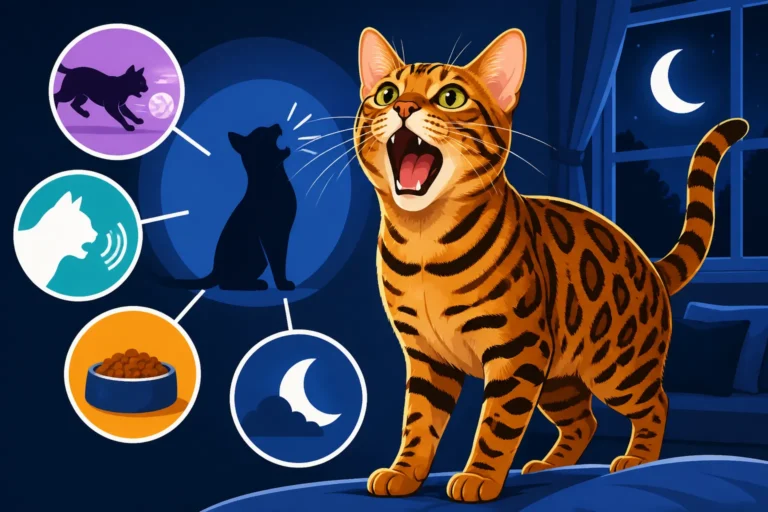
Why a Bengal Cat’s Voice Sounds Wild
If you're a Bengal cat owner, you know that distinct sound: it’s not quite a meow, not exactly a purr, but something altogether more… wild. Many of us fall in love with their stunning leopard-like coats, but quickly realize their vocalizations are just as unique, often leading to moments of surprise, laughter, or even confusion when friends visit. This guide will explore exactly why your Bengal’s voice carries that unmistakable call of the wild, breaking down its origins and helping you understand what your vocal companion is trying to tell you.
Echoes of the Wild: The Genetic Roots of the Bengal's Voice
It's truly something else, isn't it? You expect a typical "meow" from a domestic cat, but then your Bengal lets out a sound that makes you pause, wondering if there’s a small jungle cat somewhere in your house. This isn't just a quirk; it’s a direct genetic inheritance from their wild ancestors, particularly the Asian Leopard Cat (ALC). When breeders first crossed ALCs with domestic shorthairs to create the Bengal breed, they weren't just passing on stunning patterns; they were also passing on a different vocal repertoire.
The Asian Leopard Cat's Influence
Think about the environment where an Asian Leopard Cat thrives. They are wild, solitary hunters, communicating not just with each other but also with their surroundings. Their vocalizations aren't just for demanding dinner; they are tools for survival. They might use sharp chirps to alert their young to danger, low growls to warn off rivals, or peculiar trills when hunting. These are sounds far removed from the simple meows developed by domestic cats over thousands of years of living alongside humans. Our domestic companions have largely evolved their "meow" specifically to communicate with us. The Bengal, being a relatively new breed with direct wild lineage, retains more of that ancient, varied vocal toolkit. It's truly fascinating how strongly What the Bengal Cat's Wild Ancestor Is Like influences even the smallest aspects of their behavior and communication.
Differences from Domestic Cat Vocalizations
The most common domestic cat sound is the "meow," a versatile vocalization that can mean anything from "feed me" to "pet me." While Bengals certainly can meow, it's often not their primary mode of communication, and even their meows often have a raspy, almost guttural quality that sets them apart. Instead, you'll hear a much wider array of sounds: chirps, trills, chattering, cooing, and sometimes even deep, resonant yowls or growls that can be quite startling if you're not expecting them. These aren't just variations; they are fundamentally different sound productions, originating from an anatomical and neurological setup geared for a more diverse range of wild communication. It’s like comparing a flute to a full orchestra – both make music, but one has a far broader range of expression. This is why their voice sounds so unique, and it’s one of the first things people notice about them, beyond their striking looks.
The Bengal's Extensive Vocabulary: More Than Just a Meow
It's easy to dismiss a cat's sounds as just noise, but with a Bengal, you quickly learn that each sound has a specific meaning and context. Their vocalizations are incredibly expressive, reflecting their intelligence and their strong drive to communicate with their human companions. Far from being simple, their vocal palette is rich and nuanced, capable of conveying everything from playful joy to serious demands.
Chirps, Trills, and Chatter: The Affectionate Side
You might be surprised to hear your Bengal emit soft chirps or trills, especially when they're happy to see you or when they're observing birds out the window. These sounds are often a sign of contentment and curiosity. A low trill, almost like a rolled "r" sound, can be a particularly endearing greeting, inviting you to come closer for a cuddle or a head scratch. When they're watching prey, whether it's a bird or a bug, you might hear a rapid, almost machine-gun-like "chatter." This isn't just random noise; it's thought to be an expression of frustration or anticipation, a mimicry of a killing bite, or even an attempt to lure prey. These softer, more complex vocalizations often catch new owners off guard, revealing a playful and affectionate side that contradicts the "wild" image. For more insight into these specific sounds, you might want to read What a Bengal Cat's Chirp Means.
Demands and Warnings: The Yowls and Growls
Then there's the other end of the spectrum: the loud, insistent, and sometimes alarming sounds. Bengal cats are famous for their powerful and often dramatic vocalizations, especially when they want something. A deep, drawn-out yowl isn't usually a sign of distress as it might be with a domestic cat; with a Bengal, it's often a demand – for food, for play, for attention, or to be let into a room. These yowls can be incredibly persistent and loud, sometimes sounding less like a housecat and more like a small wild animal in distress, which can be quite unsettling initially. Why a Bengal Cat Yowls at You delves into this in more detail.
Beyond the yowls, some Bengals will even growl. This isn't always aggressive; sometimes it's simply a sign of intense focus during play, or a warning if they feel their space is being invaded. For instance, if another pet gets too close to their favorite toy or food bowl, you might hear a low, rumbling growl. It's a clear, unmistakable declaration of boundaries, directly inherited from their wild lineage where such vocal cues were vital for survival and establishing dominance. Understanding these sounds is key to living harmoniously with your vocal Bengal.
Why Your Bengal Has So Much to Say
It's not just what they say, but how often they say it that can be truly astounding. Bengal cats are not known for being shy or retiring. Their vocalizations are deeply tied to their personality: intelligent, active, and highly communicative. They have a zest for life and an intensity that expresses itself in every chirp, trill, and yowl.
Seeking Attention and Engagement
One of the biggest reasons your Bengal is so vocal is simply to get your attention. These cats are incredibly intelligent and bond deeply with their families, often acting more like canine companions than typical felines. They thrive on interaction and can become quite demanding if they feel ignored. If your Bengal is constantly "talking" to you, especially when you're busy, it’s a clear sign they want to engage. They might follow you from room to room, narrating their journey with various sounds, or sit intently by your feet, letting out persistent cries until you acknowledge them. This isn't always a bad thing; it shows they see you as part of their "pride" and want to interact. They are truly social creatures, and their voice is their primary tool for maintaining that connection. Understanding How Vocal a Bengal Cat Is can help you discern the various nuances of their pleas.
Expressing Boredom or Frustration
A Bengal cat that is bored is a Bengal cat that will find ways to entertain itself, and often, that involves making noise. These cats are incredibly active and intelligent, requiring a significant amount of mental and physical stimulation. If they don't get enough play, if their environment isn't enriching, or if they're left alone for long periods, they can become frustrated. This frustration often manifests as excessive vocalization, including loud yowls or even destructive behaviors. It’s their way of saying, "Hey, I need something to do!" Imagine being a super-smart, high-energy individual stuck in a dull room all day; you'd probably start making some noise too. This is why it's so important to provide ample enrichment, from interactive toys found on Amazon to dedicated play sessions. Neglecting their needs can lead to more than just noise; it can lead to bigger behavioral issues. If you find yourself asking Why a Bengal Cat Yowls at Night, boredom might be a significant factor.
Communicating Needs and Desires
Beyond just attention or boredom, Bengals use their voices to communicate very specific needs and desires. Is their food bowl empty? You'll hear about it. Do they want access to a particular room? They'll yowl at the door. Do they want you to throw their favorite toy? Expect a persistent series of chirps and trills. They are not subtle creatures. They have a clear understanding of cause and effect, and they've learned that their distinct vocalizations are highly effective at getting a response from their humans. It’s their way of actively participating in household life, ensuring their opinions and requirements are heard. This constant communication is a hallmark of the breed and a testament to their intelligence and drive. Sometimes, these vocal demands can even signify deeper issues, so always pay attention if the tone or frequency changes dramatically, as it could be a subtle sign of discomfort or illness.
Living with a Talkative Bengal: Tips for Harmony
Embracing your Bengal's wild voice is part of the joy of owning one of these magnificent cats, but it also means learning how to manage their vocalizations so they don't become overwhelming. It's all about understanding their needs and channeling their energy and intelligence productively.
Meeting Their Enrichment Needs
Since boredom and a lack of stimulation are major drivers for vocalization, providing adequate enrichment is paramount. Bengals need an environment that challenges their minds and bodies. Think vertical space: cat trees that reach the ceiling, wall-mounted shelves, and cat tunnels. These allow them to climb, explore, and survey their domain from a height, satisfying their natural instincts. Interactive toys that mimic prey are also crucial. Look for durable wand toys with feathers or long, flowing attachments, as well as puzzle feeders that make them work for their treats. You can find a huge variety of these on Amazon. Regularly rotating toys keeps things fresh and engaging. A cat wheel is also a fantastic investment for these highly active cats, giving them an outlet for their boundless energy. The more mentally and physically stimulated your Bengal is, the less likely they are to resort to incessant yowling out of sheer boredom. Remember, How Much Enrichment a Bengal Cat Actually Needs is probably more than you think!
Training and Redirection
You might think you can't "train" a cat not to be vocal, but you can certainly redirect their vocal energy and teach them appropriate communication. Positive reinforcement works wonders with Bengals, who are highly intelligent and eager to please (when it suits them!). If your Bengal yowls for attention, try to ignore the vocalization and only reward them with attention, play, or treats when they are quiet or use a softer, more acceptable sound, like a gentle trill. Consistency is key here.
You can also use clicker training to teach them commands, which not only provides mental stimulation but also strengthens your bond. If they learn to "sit" or "stay" for a treat, they're using their brains in a productive way. When they start to yowl excessively, try redirecting their energy by initiating a play session with a favorite wand toy. This gives them an appropriate outlet for their high energy and can shift their focus away from demanding vocalizations. Consider investing in a variety of robust toys from Amazon, as they often destroy cheaper ones quickly.
When to Consult a Vet
While a Bengal's loud and varied vocalizations are often normal, it's vital to know when a change in their voice might signal a problem. Any sudden increase in vocalization, especially if accompanied by changes in behavior, appetite, or litter box habits, warrants a vet visit. If your usually quiet Bengal suddenly becomes very loud, or if their typical sounds change in pitch, intensity, or quality (e.g., becoming hoarse or strained), it could indicate pain, discomfort, or an underlying medical issue.
Older Bengals, in particular, can become more vocal due to cognitive dysfunction or age-related aches and pains, so keeping an eye on The Age a Bengal Cat Is Considered Senior and their subsequent behavior is wise. Sometimes, increased vocalization can also be a sign of hyperthyroidism or kidney disease. It's always better to rule out a medical cause first. Your veterinarian can perform a thorough examination and recommend any necessary tests to ensure your vocal companion is healthy and happy.
Bengal Cat Vocalization Comparisons
To give you a clearer picture, here's a quick comparison of typical domestic cat sounds versus what you might expect from a Bengal:
| Vocalization Type | Typical Domestic Cat | Bengal Cat (Wild Sound Influence) | Common Meaning / Context |
|---|---|---|---|
| Meow | Soft, varied pitch | Often raspy, guttural, insistent | Greetings, demands, attention |
| Purr | Gentle rumble | Deeper, more resonant rumble | Contentment, comfort |
| Chirp/Trill | Less common | Frequent, especially as a greeting | Affection, curiosity, happiness |
| Yowl/Howl | Distress, heat | Loud, prolonged, demanding | Attention, protest, hunger |
| Growl | Aggression, fear | Can be playful, warning, or aggression | Play, threat, boundary setting |
| Chatter | Rare | Common when watching prey | Frustration, anticipation, mimicry |
Final Thoughts on Your Bengal's Wild Voice
Living with a Bengal cat is an experience like no other, and their unique vocalizations are a huge part of their charm. While they might occasionally wake you up with a dramatic yowl or demand your undivided attention with a series of insistent chirps, these sounds are a direct link to their wild heritage and a testament to their engaging personalities. By understanding why your Bengal talks so much and what they're trying to say, you can foster an even deeper bond with your spirited companion. Embrace the wild symphony, provide plenty of enrichment, and you'll find that your Bengal's voice, far from being a nuisance, is just another wonderful facet of their incredible character.
Disclaimer
This article is for general informational purposes only and does not constitute professional advice. Laws, prices and regulations vary by location and change over time. Consult a qualified professional for guidance on your specific situation.