How a Bengal Cat Reacts to a Laser
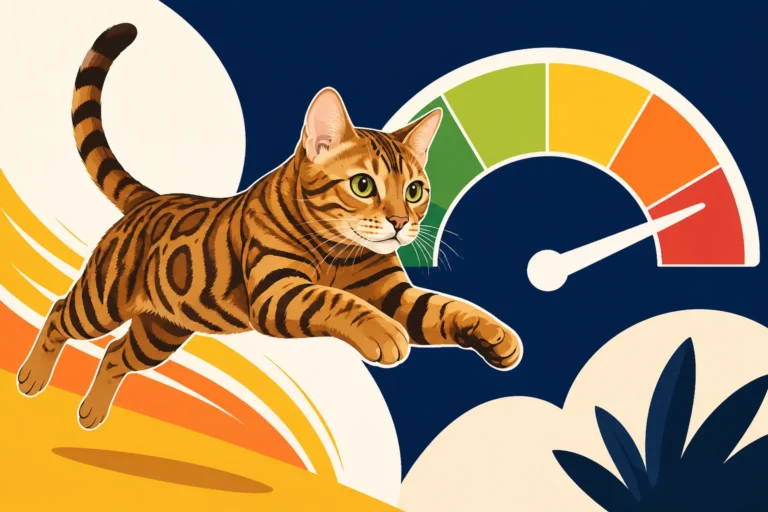
We all know that feeling: you've got a Bengal cat, a bundle of seemingly boundless energy, and you're constantly looking for ways to keep them engaged and active. The laser pointer often seems like the perfect solution – a tiny red dot that can send them zipping across the room, up the walls, and under furniture, burning off steam with incredible speed. It’s certainly a tempting shortcut when you’re tired or short on time, offering a quick burst of intense activity. But while it provides instant gratification for both you and your cat, the laser pointer isn't quite the simple, perfect solution it appears to be, especially for a breed as intelligent and instinct-driven as the Bengal. This guide will delve into how a Bengal cat truly reacts to a laser pointer, exploring the benefits, the often-overlooked frustrations, and crucial considerations for incorporating this toy safely and effectively into their play routine.
The Allure and Agitation: Why Laser Pointers are a Double-Edged Sword for Bengal Cats
For many Bengal cat owners, the laser pointer is a go-to toy. It's easy to use, requires minimal physical effort from us, and triggers an almost primal response in our wild-looking companions. But beneath that frantic chasing, there's a complex interplay of instinct and unfulfilled desire that can lead to frustration rather than satisfaction for your Bengal.
The Instinctual Drive: Why Bengals Chase That Red Dot
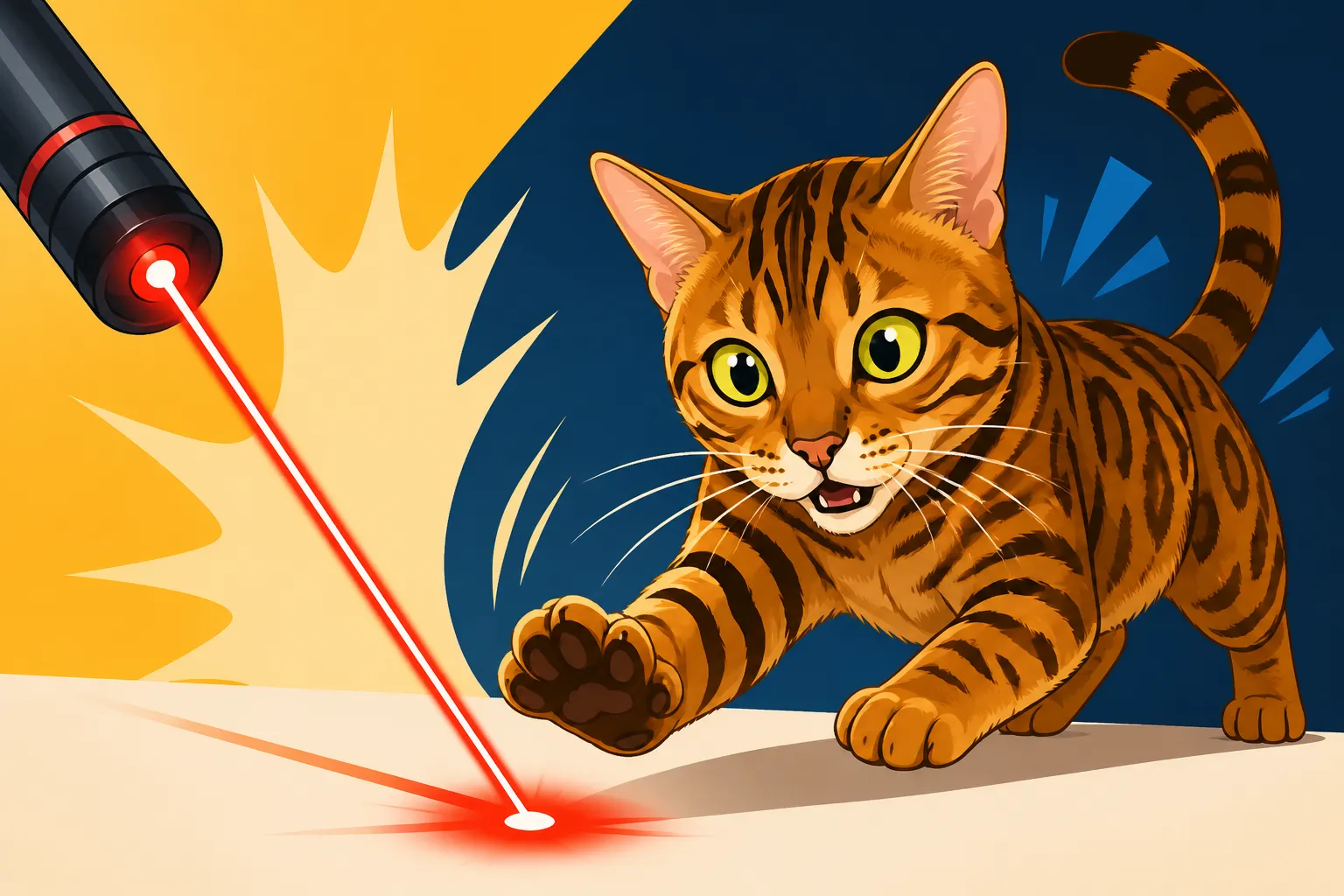
Bengal cats are, at their core, magnificent animals with a recent wild ancestry, tracing back to the Asian Leopard Cat. This isn't just a fun fact; it profoundly influences their behavior, especially their play patterns. When a Bengal sees that little red dot flitting across the floor, it doesn't just see a light; it sees prey. Their entire genetic makeup, honed over millennia in the wild, screams "hunt!"
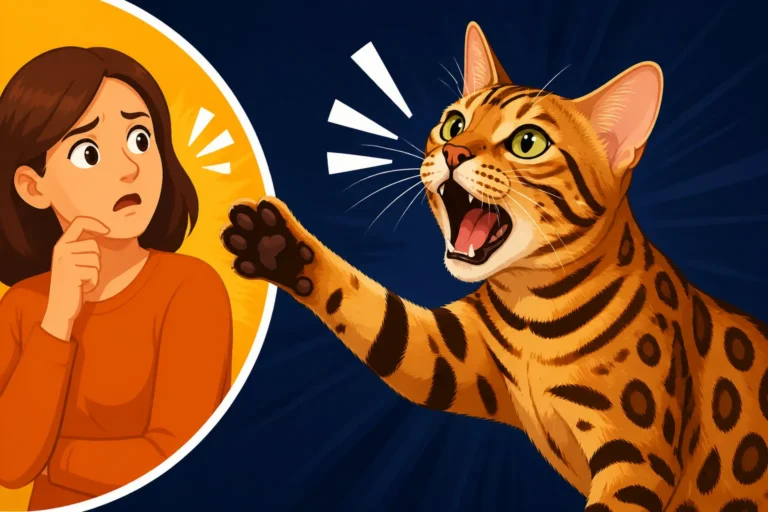
This instinct manifests as an incredibly strong prey drive. They aren't just playing; they are actively hunting. Their dilated pupils, their low crouch, the focused intensity in their gaze, the twitching tail — these are all classic signs of a predator in pursuit. The laser perfectly mimics the erratic, unpredictable movements of small prey like insects, rodents, or birds, which is why it's so incredibly effective at grabbing and holding their attention. For a Bengal, this isn't a game; it's a deeply ingrained behavioral pattern being activated. They love the thrill of the chase, the mental stimulation of predicting where the "prey" will go next, and the physical exertion of the sprint, leap, and pounce. It's an instant energy burner that taps directly into their deepest instincts.
The Unresolved Hunt: The Frustration of No Catch
Here's where the double-edged sword comes in. Unlike a feather wand, a crinkly ball, or even a toy mouse, the laser pointer offers no tangible reward at the end of the hunt. There's no satisfying "kill." Imagine spending all your energy, all your focus, all your honed instincts on a chase, only for your prey to vanish into thin air every single time. That's what happens to your Bengal cat with a laser pointer.
This constant lack of a successful "capture" can lead to significant psychological frustration. Cats are hardwired to complete the hunting sequence: spot, stalk, chase, pounce, and kill. The "kill" involves actually biting and manipulating the prey with their paws and mouth, which releases crucial endorphins and satisfies that deep-seated predatory urge. Without this culmination, your Bengal is left with a build-up of energy and an unmet instinct. They've been revved up for the hunt, but the payoff never arrives. Over time, this can leave them feeling confused, anxious, or perpetually restless, searching for the phantom prey long after the light is gone. It’s a bit like someone always setting you up for success and then pulling the rug out at the last second, repeatedly.
Understanding the Bengal Cat's Unique Play Drive and How Lasers Fall Short
To truly understand why laser pointers can be problematic, we need to dig a little deeper into the Bengal cat's specific needs when it comes to play and enrichment. Their intelligence and energy levels demand more than just a simple chase. How Active a Bengal Cat Is is often underestimated, leading owners to seek out quick fixes like laser pointers.
The Wild Ancestry and Its Impact on Play
Bengal cats aren't just a pretty face with a wild pattern; their heritage as a hybrid breed means they carry many of the instincts of their Asian Leopard Cat ancestors. These wild cats are solitary hunters, incredibly agile, intelligent, and driven by a powerful need to chase, pounce, and capture. This isn't just about survival in the wild; it's about mental stimulation and physical conditioning.
For your Bengal, this translates into a higher demand for interactive play that mimics real hunting scenarios. They thrive on challenges, on problem-solving, and on engaging their minds as much as their bodies. A simple red dot, while exciting, doesn't offer the complexity of a natural hunt. It lacks scent, texture, and the ability to be truly "caught" and "killed." This fundamental difference is where laser pointers often fall short in truly satisfying a Bengal's deep-seated needs. They need play that is varied, engaging, and allows them to feel like the successful predator they are. This is why toys that allow for batting, biting, and shredding are often far more fulfilling.
The Importance of a Satisfying "Kill" for Mental Well-being
As we touched upon, the "kill" phase of the hunt is absolutely vital for a cat's mental and emotional well-being. It's not just about physical exertion; it's about the psychological closure of a successful hunt. When a cat catches its prey, whether it's a real mouse or a feathered toy, they will often perform a "kill bite" and then hold onto it, sometimes even carrying it off to a "den" or playing with it further. This sequence is a reward in itself, releasing neurotransmitters that promote feelings of satisfaction and calm.
Without this crucial step, the hunting cycle is incomplete. It's like building up to a crescendo in a song that never quite arrives. For a Bengal, who is naturally more intensely driven in their play, this can lead to a state of perpetual arousal without resolution. They might continue to search for the dot, even after it's gone, looking under furniture or staring intently at the wall where it disappeared. This restless searching isn't cute; it's a sign of a frustrated instinct. Providing toys that they can truly "kill," like a robust wand toy with a feather attachment that they can eventually drag away and chew on, helps them achieve this essential psychological closure. Which Wand Toy a Bengal Cat Destroys Fastest is often a good indicator of their preferred "prey" type.
The Potential Downsides: When Laser Play Becomes a Problem
While tempting for a quick burst of exercise, relying too heavily on laser pointers for your Bengal cat can introduce some real behavioral challenges. It's important to be aware of these potential pitfalls to ensure your cat remains happy and well-adjusted.
Obsessive Behavior and Anxiety
One of the most concerning outcomes of excessive laser pointer use in Bengals is the development of obsessive or compulsive behaviors. Because their hunting instinct is constantly stimulated but never satisfied, some Bengals can become fixated on finding that elusive red dot. You might notice them staring intently at walls, shadows, or reflections, perpetually scanning the environment for any sign of movement that could be their phantom prey. This isn't just cute; it can be a genuine source of anxiety and stress for them.
A Bengal who is constantly on high alert, driven by an unfulfilled hunting urge, might struggle to relax. They may pace, meow excessively, or even become agitated. This obsessive searching can interfere with their normal routines, like eating, sleeping, or interacting calmly with family members. It’s a clear sign that their mental state is being negatively impacted, creating a cycle of arousal and frustration that never quite resolves. This kind of anxiety can manifest in various ways and it's something we want to avoid for our naturally energetic but ultimately sensitive companions. What a Bored Bengal Cat Destroys might also be a symptom of this underlying frustration or lack of proper enrichment.
Redirected Aggression and Safety Concerns
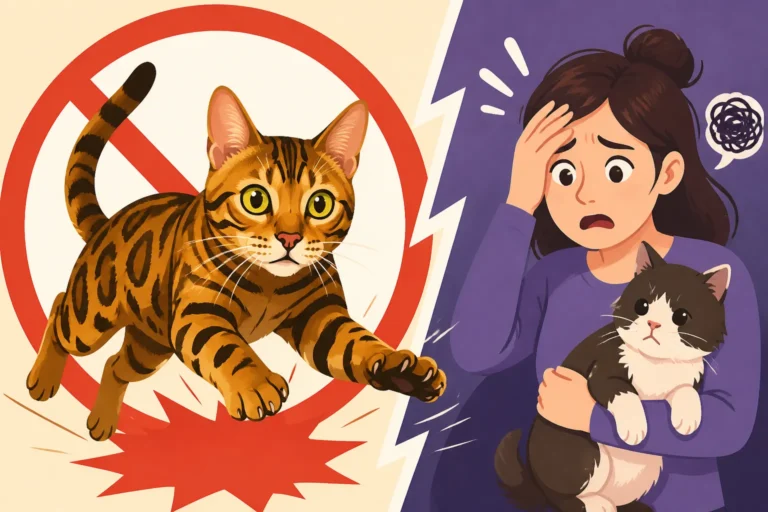
Another serious consequence of laser pointer frustration can be redirected aggression. When a cat's prey drive is stimulated but they can never actually catch the "prey," that pent-up energy and frustration has to go somewhere. Sometimes, it gets redirected towards anything nearby that moves or offers a tactile response – your ankles, another pet, or even furniture. They might suddenly pounce on your feet as you walk by, or initiate an aggressive interaction with a housemate cat who simply crosses their path. This isn't malice; it's a frustrated predator acting out because their primary instinct was engaged but left incomplete.
Beyond aggression, there are also direct safety concerns. While modern laser pointers are generally low-power, it's never a good idea to shine them directly into your cat's eyes, or indeed any animal's or person's eyes, as it could potentially cause temporary or permanent damage. Additionally, if a cat is frantically chasing the dot, they can easily collide with furniture, slip on smooth floors, or fall from high places, especially in the heat of the moment. We want to encourage their incredible agility, but not at the risk of injury from uncontrolled, desperate chasing. Ensuring their play environment is safe, regardless of the toy, is always paramount.
Integrating Laser Play Safely: Best Practices for Your Bengal
Given the potential downsides, does this mean you should throw out your laser pointer? Not necessarily! With a bit of mindful adjustment, you can incorporate laser play into your Bengal's routine in a way that minimizes frustration and maximizes fun. The key is to understand your Bengal's needs and consciously address the "kill" instinct.
Always End with a Tangible Reward
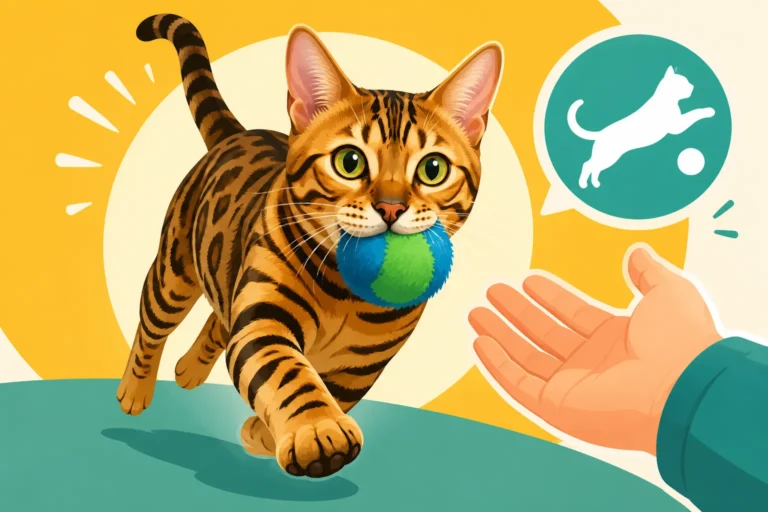
This is perhaps the single most important rule for safe and satisfying laser play with a Bengal cat. You must give them a successful "capture" at the end of every session. Don't just let the red dot disappear. Instead, guide the dot onto a physical toy – a soft plush mouse, a crinkly ball, or a sturdy kicker toy. Let your Bengal "catch" the dot on the toy, then immediately turn off the laser. This allows them to physically pounce on, bite, and grapple with a tangible object, completing the hunting cycle and providing that crucial sense of accomplishment.
After they "catch" the toy, allow them a few minutes to bat it around, carry it off, or even chew on it. This simulates the actual "kill" and consumption process. You can even follow up with a small treat, like a freeze-dried chicken bit, to further reinforce the positive experience and provide a different type of reward. This strategy helps prevent the build-up of frustration and teaches your Bengal that the laser chase ultimately leads to a satisfying outcome. It's about redirecting that intense energy into a fulfilling conclusion, rather than leaving them hanging. Many great toys are available on Amazon that can serve as excellent "kill" targets.
Using Lasers as a Warm-up, Not the Main Event
Think of the laser pointer as an appetizer, not the main course, for your Bengal's play session. Its primary benefit is its ability to quickly engage their prey drive and get them moving, essentially "warming them up" for more structured play. Start with a few minutes of laser chasing – enough to get their heart rate up and their hunting instincts activated.
Once they're thoroughly engaged and panting a little, transition immediately to an interactive wand toy. Now, with their energy and focus already high, they'll be even more enthusiastic about chasing and ultimately capturing the physical toy. This combination provides the best of both worlds: the initial excitement and cardio of the laser, followed by the deep satisfaction and mental engagement of a successful hunt with a tangible object. This also helps to vary their play, which is vital for a breed that needs How Much Enrichment a Bengal Cat Actually Needs. Remember, a single play session might need to incorporate different types of toys to keep them fully stimulated.
| Play Type | Pros for Bengal Cats | Cons for Bengal Cats | Addresses "Kill" Instinct? |
|---|---|---|---|
| Laser Pointer | High energy burn, instant engagement, taps into prey drive | No tangible catch, leads to frustration, potential for obsession | No |
| Wand Toy | Mimics prey movement, allows for chase & capture, interactive | Requires active human participation, can be destroyed quickly | Yes |
| Puzzle Feeder | Mental stimulation, slows eating, rewards problem-solving | Less physical exertion, not for burning high energy | Partially (mental "catch") |
| Interactive Toy | Self-play, varying textures, can be "killed" or shredded | Can lose interest quickly, some durable toys are expensive | Yes |
| Cat Wheel | Excellent cardio, independent exercise | High initial cost, some cats need encouragement | No |
Recognizing When to Avoid Laser Pointers Altogether
While laser pointers can be used responsibly, there are definitely situations where it's best to simply avoid them entirely. If you notice your Bengal developing any signs of obsessive behavior – staring at walls, chasing shadows when the laser isn't present, or becoming unusually anxious or agitated – it's a strong signal that the laser pointer is doing more harm than good. In these cases, it's crucial to stop using it and redirect their energy into other forms of play that offer a more complete hunting experience.
Similarly, if your Bengal shows any signs of redirected aggression during or after laser play, such as pouncing on people's ankles or attacking other pets, put the laser away. Their frustration is clearly manifesting negatively, and continuing its use will only reinforce these undesirable behaviors. Instead, focus on enriching their environment with challenging Whether a Puzzle Feeder Tires a Bengal Cat, climbing structures, and plenty of interactive sessions with toys they can truly "kill." Always prioritize your Bengal's mental well-being and a positive, fulfilling play experience over the convenience of a quick-flick red dot. After all, a truly happy Bengal is one who feels satisfied, not perpetually on edge. Remember that How Intelligent a Bengal Cat Is means they need variety and challenge, not just endless, unfulfilled chasing. For ideas on how to manage their significant energy, you might also want to read about How Long a Bengal Cat Copes Alone to ensure they're not getting bored or anxious.
Building a Comprehensive Play Routine for Your Bengal
Integrating laser pointers safely is just one piece of the puzzle when it comes to enriching the life of your Bengal cat. Their high energy, intelligence, and strong prey drive mean they need a truly diverse and engaging play routine to thrive. Relying on a single type of toy or activity will inevitably lead to boredom, frustration, or even behavioral issues.
The Power of Interactive Play with Wand Toys
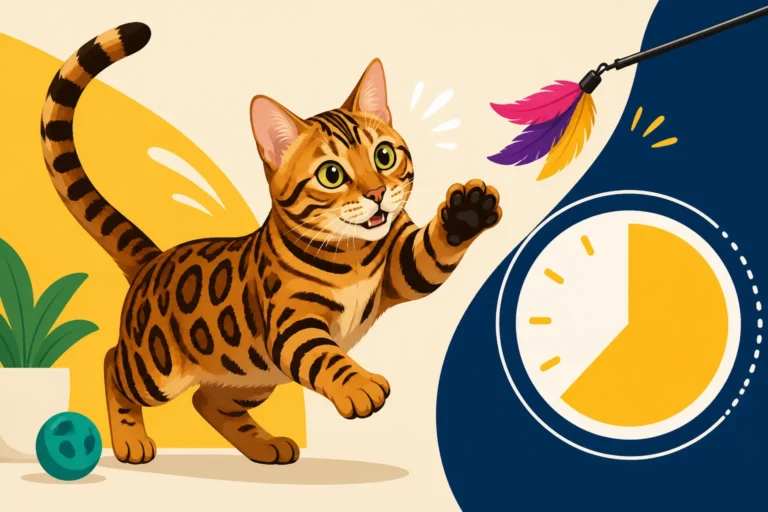
For a Bengal, interactive wand toys are gold. These are the unsung heroes of feline enrichment because they allow you to mimic the erratic movements of real prey and engage directly with your cat's hunting instincts in a deeply satisfying way. Imagine a feather attached to a flexible rod, darting, pausing, and hiding – it’s a direct simulation of a bird or a small mammal.
When you play with a wand toy, you're not just moving an object; you're orchestrating a hunt. Let the "prey" hide behind furniture, creep along the floor, or take flight. Encourage stalking, pouncing, and leaping. The key is to allow your Bengal to successfully catch the toy multiple times during a session. Let them grab it, wrestle with it, and perform that satisfying "kill bite." This completes their hunting cycle, providing both physical exertion and crucial mental closure. Many durable wand toys are available on Amazon, some even with interchangeable attachments, which keeps things fresh. You'll find that How Many Play Sessions a Bengal Cat Needs means incorporating these interactive sessions frequently throughout the day.
Creating an Enriching Environment: Vertical Space and Puzzle Toys
Beyond direct play, a Bengal's environment needs to be set up to cater to their unique needs. They are natural climbers and observers, loving high vantage points. Providing ample vertical space through tall cat trees, wall-mounted shelves, or even a secure catio can dramatically improve their quality of life. A multi-level Which Cat Tree a Bengal Cat Needs allows them to survey their territory, climb, and expend energy independently. This satisfies their natural inclination to climb How High a Bengal Cat Can Jump and explore.
Puzzle feeders are another fantastic tool for mental enrichment. Instead of just putting food in a bowl, make your Bengal work for it. There are many options, from simple treat balls to complex multi-step puzzles. These toys engage their problem-solving skills, slow down their eating, and provide mental stimulation that can be just as tiring as physical play. It’s an excellent way to combat boredom and prevent them from developing destructive habits out of sheer ingenuity. Signs a Bengal Cat Is Bored often include destructive chewing or excessive vocalization, and puzzle toys can help mitigate this.
The Role of Scheduled Play and Routine
Bengal cats thrive on routine. While they have boundless energy, structuring their play sessions can help manage their activity levels and provide predictability, which reduces anxiety. Aim for at least two to three dedicated interactive play sessions a day, each lasting 10-15 minutes, with additional opportunities for independent play throughout. Morning and evening sessions are often best, as these align with a cat’s natural crepuscular (dawn and dusk) hunting times.
Consistency is key. If your Bengal knows that an intense play session is coming at a certain time each day, they are more likely to relax between sessions, rather than constantly demanding attention. Ending each interactive session with a tangible catch, and perhaps a small meal, further reinforces this routine and signals the "end of the hunt." This structured approach helps channel their energy constructively, making for a happier, more content Bengal and a more harmonious home. Finding ways to How to Tire a Bengal Cat Before Bed can also greatly improve your sleep!
Disclaimer
This article is for general informational purposes only and does not constitute professional advice. Laws, prices and regulations vary by location and change over time. Consult a qualified professional for guidance on your specific situation.