How Intelligent a Bengal Cat Is
Many cat owners are caught off guard by the sheer brainpower of a Bengal. You might think all cats are clever, but Bengal owners quickly realize their feline companions operate on a whole different level, sometimes leading to hilarious antics, and sometimes to frustrated head-scratching when your clever cat figures out yet another way to get into mischief. This guide will dive deep into what makes Bengal cats so intelligent, how it manifests in their daily lives, and practical ways to channel their impressive smarts for a harmonious household.
The Foundation of Bengal Intelligence: Their Wild Ancestry
It’s impossible to talk about the Bengal cat's intelligence without acknowledging its roots. Unlike purely domestic breeds, the Bengal carries the wild legacy of the Asian Leopard Cat (ALC) in its veins, especially in the earlier generations. This isn't just about their stunning looks; it's about their inherent hardwiring.
The Asian Leopard Cat's Influence on Bengal Brains
The Asian Leopard Cat is a wild, solitary hunter known for its sharp senses, incredible agility, and keen problem-solving abilities necessary for survival in diverse natural habitats. When these traits were blended with domestic cat characteristics to create the Bengal, a significant portion of that primal intelligence came along for the ride. It’s not just a genetic lottery; it’s a foundational aspect of the breed. Imagine a domestic cat with a built-in "supercomputer" for navigating its environment, remembering complex sequences, and adapting quickly to new challenges. This is largely due to the ALC contribution, giving them an advantage over many other breeds when it comes to quick thinking and environmental awareness.
This wild intelligence often translates into an intensely curious and observant nature. A Bengal isn't just looking at a closed door; it's assessing the handle, observing how you operate it, and mentally cataloging the steps. They possess an innate drive to understand their surroundings and interact with them actively, rather than passively observing. This manifests as a cat that’s always exploring, always investigating, and rarely content with just sitting idly by. This deep-seated curiosity means they're constantly learning, whether you're teaching them or not.
Problem-Solving for Survival vs. Problem-Solving for Treats
In the wild, problem-solving means finding food, avoiding predators, and securing shelter. For a Bengal in a domestic setting, that same drive is channeled into opening cabinets, figuring out how to get to that tempting bag of treats, or even manipulating door handles. They observe, they experiment, and they remember what works. If a door handle moves a certain way to open, your Bengal will practice that movement until they've mastered it. I've heard countless stories of Bengal owners needing to install child-proof locks on cupboards or even replace doorknobs because their clever cats simply figured out the mechanism.
Consider the classic scenario of a treat jar on a high shelf. A less intelligent cat might meow incessantly or give up after a few unsuccessful leaps. A Bengal, however, will meticulously analyze the situation. Can they climb the nearby bookcase? Is there a counter they can jump to, then launch themselves from? They'll remember previous successes and apply those lessons to new challenges, demonstrating incredible persistence and strategic thinking that would make many a human envious. This isn't just playful mischief; it's a testament to their deep-seated instinctual problem-solving capabilities, now applied to the comforts of home.
Signs of a Highly Intelligent Bengal Cat
So, how does this elevated intelligence actually show up in a Bengal cat's everyday life? It's more than just being "smart"; it's a collection of unique behaviors and traits that set them apart.
Observational Learning and Mimicry
One of the most striking aspects of a Bengal's intelligence is their ability to learn by watching. They don't just passively observe; they actively process and imitate. If you routinely open a cabinet to retrieve their favorite toys, don't be surprised if your Bengal starts trying to mimic your actions, pawing at the handle or even attempting to pull it open themselves. They are fantastic students, constantly soaking up information about how their human companions interact with the world around them. This can lead to some truly astonishing moments, but also some unexpected challenges. How a Bengal Cat Learns From Watching You delves deeper into this fascinating trait.
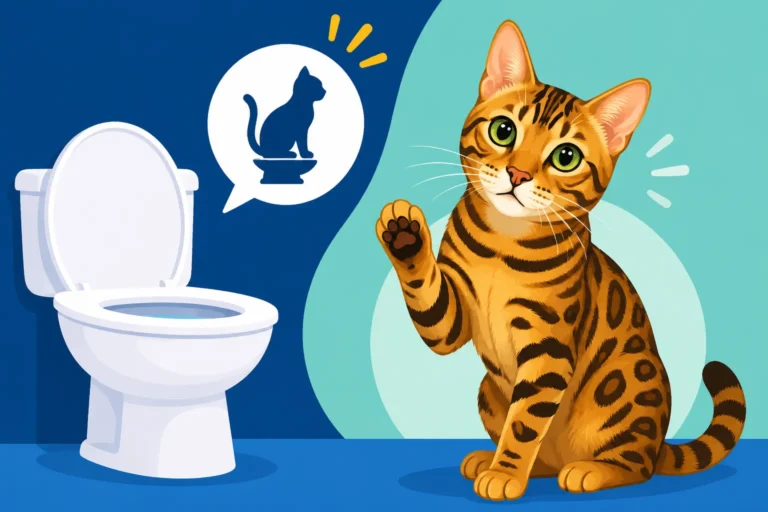
I once had a Bengal named Jasper who learned to flush the toilet. He'd sit and watch us, day after day, and one morning, we heard the distinct sound of the toilet flushing, only to find Jasper proudly perched on the rim, having pressed the handle himself. He didn't do it because he needed to use it; he did it because he saw us do it and wanted to understand the cause-and-effect. This level of mimicry goes beyond simple conditioning; it suggests a deeper cognitive understanding of sequences and actions. This same curiosity leads them to explore every nook and cranny, learning the layout of your home and how every item works.
Communication Beyond the Meow
While all cats communicate, Bengals often take it to another level. Their vocalizations are diverse and expressive, ranging from chirps and trills to demanding yowls and even chattering. They seem to understand that different sounds elicit different responses from their humans, and they quickly learn which "words" get them what they want. It’s not uncommon for a Bengal to have a specific sound for "I'm hungry," another for "Play with me!" and yet another for "Let me into that room right now."
Beyond vocalizations, Bengals use complex body language, often communicating their intentions and desires with a directness that can be surprising. They might lead you to their food bowl, tap your leg when they want attention, or even "point" with their nose towards something they want. This sophisticated communication system is a hallmark of their intelligence, demonstrating a clear intent to interact meaningfully with their environment and their human family. They aren't just making noise; they are attempting to convey information, and they're often very good at it! How Vocal a Bengal Cat Is explores their unique communication style.
Memory and Recall
Have you ever hidden a treat from your cat, only for them to find it hours later in a spot you thought was ingenious? Bengals have excellent memory, not just for where things are, but for routines, people, and past experiences. They'll remember where you stored that special toy, the specific time you usually play, and even particular interactions with strangers. This means they quickly learn your household's rhythm and can anticipate events, which is both impressive and a little bit intimidating for their humans.
This strong memory also means they learn quickly from both positive and negative reinforcement. If a certain action consistently leads to a desired outcome (like a treat for sitting on command), they'll remember and repeat it. Conversely, if an action leads to an undesirable consequence (like a startling noise when jumping on the counter), they'll often remember that too, at least for a while. Their capacity for recall is a significant factor in their trainability and their ability to adapt to new situations, solidifying their reputation as one of the smartest cat breeds.
Channeling Your Bengal's Brainpower
An intelligent cat is a wonderful companion, but unchanneled intelligence can quickly turn into destructive boredom. Providing ample mental stimulation is crucial for keeping your Bengal happy and your home intact.
The Critical Need for Mental Stimulation
A bored Bengal is a recipe for chaos. These cats need their minds to be as engaged as their bodies. Without sufficient mental challenges, they can become destructive, anxious, or develop undesirable behaviors like excessive vocalization, scratching furniture, or obsessively trying to open doors. Think of it like a highly intelligent child who needs stimulating activities; if they’re not challenged, they’ll find their own—often less than ideal—ways to entertain themselves. This means that providing enrichment isn't just a nicety; it's a fundamental part of responsible Bengal ownership.
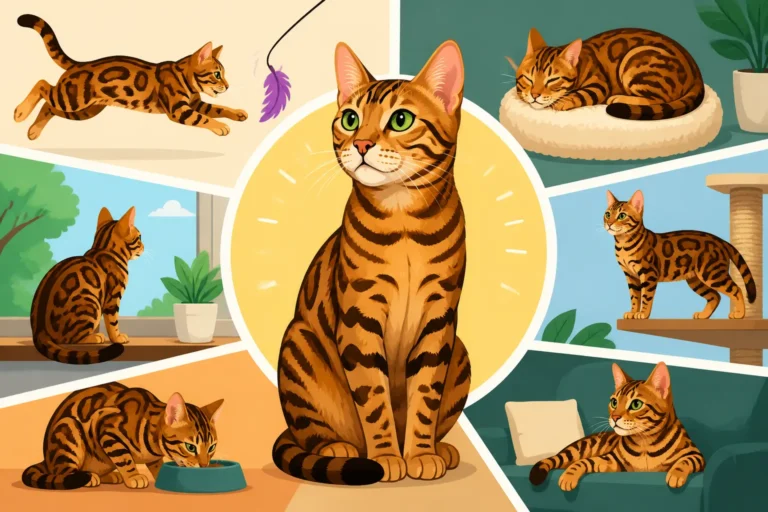
One of the best ways to provide mental stimulation is through interactive play. Wands with feathers or ribbons that mimic prey, laser pointers (used responsibly to avoid frustration), and even simple games of fetch can be incredibly engaging. Many Bengals enjoy retrieving small toys, much like a dog. This isn't just about physical exercise; it's about stimulating their hunting instincts and problem-solving skills as they chase, pounce, and "capture" their prey. Remember, variety is key; rotate toys and introduce new challenges regularly to keep them interested.
Preventing Destructive Boredom with Engaging Activities
To prevent your clever Bengal from becoming a menace, you need to proactively engage their brains. Puzzle feeders are an absolute game-changer for intelligent cats. Instead of simply eating from a bowl, your Bengal has to figure out how to extract their meal, stimulating their mind and slowing down their eating at the same time. You can find a wide variety of these on Amazon, from simple treat balls to more complex multi-stage puzzles. It’s amazing to watch them problem-solve to get their kibble! Whether a Puzzle Feeder Tires a Bengal Cat offers more insights into these tools.
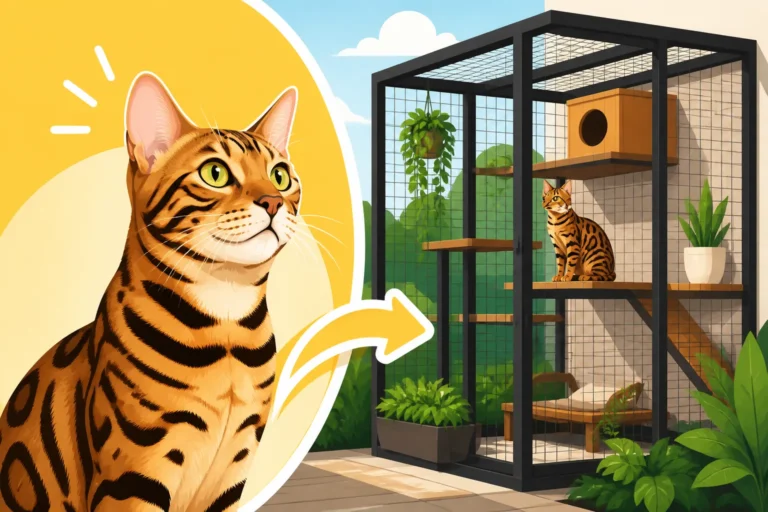
Environmental enrichment is also vital. Bengals love vertical space and enjoy climbing. Tall cat trees, wall-mounted shelves, and cat "highways" provide opportunities for them to explore and survey their territory from above, satisfying their instinctual need to climb and observe. Catios, which are secure outdoor enclosures, are another fantastic way to provide safe stimulation, allowing them to experience the sights, sounds, and smells of the outdoors without the dangers of free-roaming. A well-designed catio can be a Bengal's personal paradise, offering endless opportunities for exploration and mental engagement. Why a Catio Is the Answer to a Bengal Cat explains why these are so beneficial.
Training a Bengal Cat: Beyond the Basics
Given their intelligence, Bengals are remarkably trainable, often surprising owners who are used to more independent, less responsive cat breeds. Their eagerness to learn and please (especially for treats!) makes them excellent students.
Clicker Training and Complex Tricks
If you've ever thought about teaching a cat tricks, a Bengal is your ideal pupil. They respond incredibly well to clicker training, a method that uses a distinct sound (the click) to mark desired behaviors, followed immediately by a reward. This clear communication helps them quickly understand what you want them to do. With patience and consistency, Bengals can learn an impressive array of tricks, far beyond a simple "sit."
I've known Bengals who can high-five, spin, weave through legs, jump through hoops, and even fetch specific toys by name. Their intelligence allows them to grasp complex sequences and associate actions with verbal cues. The key is to keep training sessions short, positive, and fun. Always end on a successful note to keep them eager for the next session. Amazon has plenty of resources, from clickers to training guides, that can help you get started on your trick-training journey. Which Tricks a Bengal Cat Can Learn provides a great starting point for aspiring trainers.
Harnessing Their Curiosity for Leash Walking
Many Bengal owners find that their cats take readily to leash walking, an activity more commonly associated with dogs. This isn't just a party trick; it's a fantastic way to provide mental and physical stimulation, allowing your Bengal to explore new environments safely. Their innate curiosity and adventurous spirit mean they're often eager to investigate the world beyond their four walls. How to Leash Train a Bengal Cat offers a step-by-step guide to introducing your Bengal to a harness and leash.
The process usually involves gradually acclimating them to a comfortable, well-fitting harness (look for H-style harnesses on Amazon that prevent escape), then to the leash, and finally to short walks in quiet, safe areas. Their intelligence helps them understand the boundaries and expectations of leash walking relatively quickly, though consistency on your part is vital. It's a wonderful way to bond with your Bengal and satisfy their adventurous side, offering a mental workout as they process new sights, sounds, and smells.
Engaging with Puzzle Toys and Interactive Play
Beyond formal training, a highly intelligent cat like a Bengal thrives on regular, interactive play and access to puzzle toys. These aren't just for kittens; adult Bengals continue to need mental engagement throughout their lives. Interactive toys that simulate hunting, like wand toys with enticing attachments, are excellent for channeling their predatory instincts in a constructive way. They love the challenge of "catching" something that moves unpredictably.
Puzzle toys, as mentioned earlier, are fantastic for solitary play, offering a rewarding challenge when you can't actively engage with them. You can even get creative and make your own simple puzzles with cardboard boxes, toilet paper rolls, and treats. The goal is to make them think, to use their paws and minds to achieve a goal. Rotate these toys frequently to keep things fresh and exciting, preventing your clever cat from getting bored and finding their own, potentially destructive, forms of entertainment. A variety of such toys can be found easily on Amazon, designed to cater to cats of all "intellectual levels."
| Intelligence Trait | General Domestic Cat | Bengal Cat Specific |
|---|---|---|
| Learning Style | Primarily associative (classical/operant conditioning) | Strong observational learning and mimicry, associative |
| Problem-Solving | Basic, often trial-and-error | Advanced, strategic, persistent, memory-driven |
| Communication | Vocalizations (meows, purrs), body language | Highly varied vocalizations (chirps, yowls, chattering), complex body language, direct pointing |
| Memory | Good for routines, food locations | Excellent long-term memory for complex sequences, people, hidden items |
| Curiosity | Moderate to high | Intense, insatiable, exploratory, investigative |
| Trainability | Moderate (basic commands) | High (complex tricks, leash walking, agility) |
| Need for Stimulation | Moderate physical play | High mental and physical stimulation required |
Disclaimer
This article is for general informational purposes only and does not constitute professional advice. Laws, prices and regulations vary by location and change over time. Consult a qualified professional for guidance on your specific situation.