When a Bengal Cat Needs a GPS Collar
We all know that heart-stopping moment: the front door is open for just a second too long, and suddenly, your lightning-fast Bengal cat is a blur of spots heading for the horizon. Their innate curiosity and boundless energy can make them true escape artists, leaving you in a panic. This guide will delve into the specific scenarios where a GPS collar isn't just a gadget, but a genuinely helpful tool for your peace of mind and your Bengal's safety.
Understanding the Bengal Cat's Predisposition to Roam
Bengal cats aren't your average couch potato felines. They carry a vibrant spark of their wild Asian Leopard Cat ancestors, and that heritage manifests in a powerful drive to explore, hunt, and interact with their environment in ways many other domestic breeds simply don't. This isn't a fault; it's just who they are, and understanding this core aspect of their personality is the first step in creating a safe and enriching life for them.
Their Insatiable Curiosity and Activity Levels
If you live with a Bengal, you know they are perpetually in motion. They're not content to simply observe; they want to investigate, climb, and get into every nook and cranny. This high level of activity means they're not easily deterred by fences or closed doors, especially if there's an intriguing scent or sound on the other side. A sudden gust of wind carrying the smell of a bird or a rustling bush can be an irresistible siren call, making a dash for freedom almost inevitable if an opportunity presents itself. Their athletic build and agile bodies make quick escapes a real possibility. When you consider How Active a Bengal Cat Is, it's clear why they're always pushing boundaries.
They have an almost dog-like eagerness to engage with the world, and this extends beyond the confines of your home. A typical housecat might peek out a cracked window and then settle back down, but a Bengal is far more likely to see it as an invitation to an adventure. This isn't misbehavior; it's simply a strong manifestation of What a Bengal Cat's Temperament Is Really Like. They are intelligent, driven, and constantly seeking new stimulation, which can sometimes put them in harm's way if not managed carefully.
The Bengal's Cleverness and Problem-Solving Skills
One of the most charming, yet sometimes frustrating, traits of a Bengal cat is their astonishing intelligence. These aren't cats you can easily outsmart. They learn quickly, observing your routines and figuring out how things work. Many Bengal owners have stories of their cats opening cabinets, figuring out child-proof latches, or even manipulating door handles. A simple turn of a knob might be second nature to us, but a Bengal sees it as a puzzle to be solved, especially if the reward is a thrilling outdoor escapade.
This problem-solving ability means that traditional cat-proofing methods might not be enough. What works for a domestic shorthair might be merely a minor inconvenience for a determined Bengal. They'll watch how you open a window or unlock a gate and then, given the chance, try to replicate it. This makes prevention a constant, active effort, and even the most vigilant owner can face a momentary lapse that a clever Bengal will instantly exploit. It’s part of How Intelligent a Bengal Cat Is, for better or worse!
The Instinct to Explore and Hunt
Deep within every Bengal cat lies the primal hunting instinct of their wild ancestors. Even if they've never set paw outside, that drive is present. They are highly motivated by prey, whether it's a housefly buzzing by the window or the imagined rustle of a mouse in the bushes. This instinct fuels their desire to explore, to stalk, and to chase. For an indoor Bengal, this might manifest as intense play sessions with wand toys, but the call of the real wild is a powerful one.
If a Bengal manages to slip outside, their natural instincts kick in almost immediately. They're not likely to just sit on the porch; they'll be off exploring, sniffing out trails, and potentially chasing anything that moves. This makes them vulnerable to traffic, other animals, and getting disoriented in unfamiliar territory. It's a fundamental part of their being, and one that requires us as owners to be extra diligent in keeping them safe, especially if we live in an area with potential dangers.
Scenarios Where a GPS Collar Becomes Essential
Given their unique blend of boundless energy, sharp intelligence, and strong instincts, there are several situations where a GPS collar can transition from a "nice-to-have" accessory to an absolutely vital piece of safety equipment for your Bengal. It’s not just about tracking them; it's about providing an additional layer of protection against the inevitable moments when their curiosity gets the better of them.
Frequent Door-Dashing or Escape Attempts
This is perhaps the most common reason Bengal owners consider a GPS collar. If your Bengal has a habit of trying to bolt out the door every single time it opens, or if they've already had successful escapes, a tracker is invaluable. You might be the most careful person in the world, but life happens. A delivery person rings the doorbell, a child rushes in or out, or you simply forget for a split second. These momentary lapses are all a determined Bengal needs.
Knowing that you have a way to quickly locate them can turn a terrifying search into a manageable retrieval mission. Imagine the stress of How Often a Bengal Cat Escapes the House and the dread of them getting lost. A GPS collar doesn't prevent the escape, but it dramatically increases the chances of a swift and safe reunion. This is especially true if you live in a busy neighborhood where an escaped cat could quickly disappear into unfamiliar backyards or busy streets.
Living Near Busy Roads or Wildlife
The proximity of potential dangers should heavily influence your decision regarding a GPS collar. If your home is near a busy road, a dense forest, or an area known for predators like coyotes or even aggressive dogs, an escaped Bengal faces significantly higher risks. Their natural hunting instincts, while fascinating to observe, can lead them straight into hazardous situations they're not equipped to handle in a domestic setting. They might cross roads in pursuit of prey or wander into territories of larger, more dangerous animals.
In these environments, every minute counts after an escape. A GPS collar can provide real-time location data, allowing you to narrow down the search area and intervene before serious harm comes to your adventurous feline. While we try our best to secure our homes, sometimes the environment outside our control poses the biggest threats. For instance, How Far a Bengal Cat Goes If It Escapes can be quite a distance, making a manual search extremely difficult and time-consuming in dangerous areas.
Travel and Unfamiliar Environments
Traveling with a Bengal cat, whether it's a short trip to the vet or a cross-country move, always comes with an elevated risk of escape. An unfamiliar environment, strange smells, and new sounds can make even the calmest cat anxious and more prone to bolting. Imagine pulling over at a rest stop, and your Bengal, startled by a sudden noise, slips out of their carrier or harness. The sheer panic of searching for them in an unknown location is something no pet owner wants to experience.
A GPS collar can be an absolute lifesaver in these situations. It provides a safety net during car journeys, hotel stays, or visits to new homes. Even if your Bengal is usually a perfect traveler, the unpredictable nature of new surroundings can override their typical behavior. Having a tracker means that if the worst happens, you have a solid tool to aid in their recovery, no matter how disoriented they might be in the unfamiliar territory.
Multi-Cat Households with Different Outdoor Access
Sometimes, the challenge isn't just one adventurous Bengal, but managing a household with multiple cats, some of whom may have outdoor privileges while your Bengal is strictly indoor. The constant opening and closing of doors for the outdoor cats can create prime opportunities for your curious Bengal to sneak out. They observe their feline housemates coming and going and naturally want to experience that freedom too.
This dynamic increases the risk of an unintended escape for your Bengal, even if you’re vigilant. A GPS collar can help mitigate this risk by giving you the means to track them immediately if they do manage to slip through the cracks. It allows you to maintain the routines for your other cats without constantly worrying that your Bengal will follow them out the door. It's a way to manage the complex logistics of a multi-cat household safely, particularly when one cat is an inveterate explorer.
Specific Health Conditions That Increase Risk
While less common, certain health conditions can also make a GPS collar a prudent choice. For example, a Bengal with hearing loss might not respond to your calls if they wander off, making them incredibly difficult to find. Similarly, a Bengal with an underlying medical condition that could suddenly incapacitate them, or one that requires specific medication, would be at severe risk if lost for any period.
Even an aging Bengal cat, whose senses might be dulling or who might become disoriented more easily, could benefit from the added security of a GPS tracker. While The Age a Bengal Cat Is Considered Senior might bring a slowdown, their instincts can still lead them astray. In such cases, the ability to locate them quickly isn't just about peace of mind; it's about potentially saving their life by ensuring they get the care they need or are retrieved from a dangerous situation before their condition worsens.
Choosing and Using a GPS Collar Effectively
So, you've decided a GPS collar might be right for your Bengal. Great! But the world of pet trackers can be a bit overwhelming. It's not just about slapping a device on their neck; it's about choosing the right tool for your specific needs and ensuring your cat is comfortable and safe while wearing it.
Types of GPS Trackers: Real-Time vs. Logging
When you start looking, you'll generally find two main categories of GPS trackers.
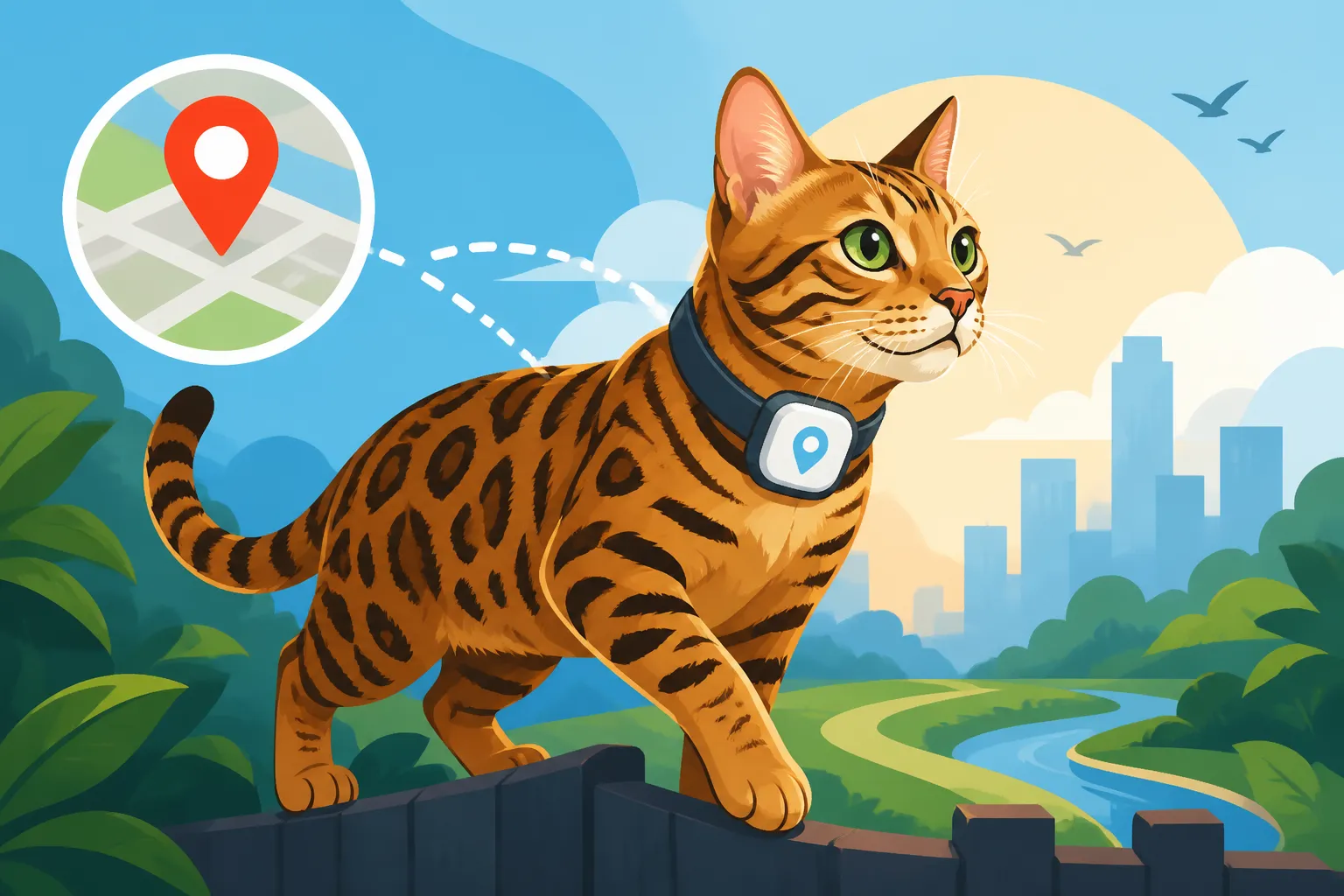
Real-time GPS trackers are what most people think of. These devices use cellular networks (and sometimes satellites) to continuously send location data to your smartphone app. This means you can open the app and see exactly where your Bengal is right at that moment. Many offer features like "geofencing," where you can set virtual boundaries (like your yard), and you'll get an alert if your cat crosses them. These usually require a subscription service to cover the cellular data costs, which is important to factor into the overall expense. For a Bengal that's prone to darting, this immediate feedback is often the most desirable option. You can search for various real-time GPS trackers on platforms like Amazon to see the range of options available.
Logging GPS trackers (sometimes called data loggers) are less common for pets but exist. These devices record your pet's journey, storing the data on the device itself. You then retrieve the device and download the information to see where they've been. While interesting for understanding your cat's roaming habits, they offer no real-time tracking, making them less useful for urgent recovery situations. For a Bengal prone to quick escapes, the immediate, real-time data from the first type of tracker is usually preferred for quick recovery.
Features to Look For in a Bengal Cat GPS Collar
When shopping for a GPS collar, especially for an active and intelligent Bengal, you'll want to prioritize certain features:
- Size and Weight: This is paramount. The tracker should be lightweight and small enough not to impede your Bengal's movement or cause discomfort. They're agile creatures, and a bulky device will be a nuisance.
- Battery Life: Real-time tracking can be power-intensive. Look for a device that offers a good balance of tracking frequency and battery longevity. Some trackers offer different modes (e.g., "power-saving" vs. "live tracking") that you can adjust based on your needs. Imagine how frustrating it would be if the battery died right when your cat went on an adventure!
- Durability and Water Resistance: Your Bengal is a cat of action. The tracker needs to withstand their antics, whether it's climbing trees, exploring wet grass, or even playing in water (many Bengals love water!). Look for robust construction and at least splash-proof or water-resistant ratings.
- Geofencing: As mentioned, this feature allows you to define safe zones. If your cat leaves a predefined area, you get an instant alert, enabling you to react quickly. This is incredibly useful for setting boundaries around your property.
- Location Accuracy: While no GPS is 100% pinpoint accurate indoors or under heavy tree cover, good trackers will provide accuracy within a few feet. Read reviews to see real-world performance.
- Comfort and Attachment: Ensure the tracker can be securely attached to a comfortable, safe collar. More on this next. You can often find a good selection with detailed specifications on sites like Amazon.
| Feature | Description | Why it Matters for a Bengal Cat |
|---|---|---|
| Size & Weight | Small, lightweight module | Bengals are agile; too heavy/bulky will hinder movement or be removed. |
| Battery Life | Lasts several days on a single charge | Frequent charging is a hassle, and you need it to work when they roam. |
| Durability | Robust casing, resistant to scratches and impacts | Bengals are active and adventurous; the device will take a beating. |
| Water Resistance | Rated for splashes or submersion | Many Bengals love water; essential for playing in sinks or getting caught in rain. |
| Real-time Tracking | Continuous location updates to your phone | Crucial for immediate search and rescue if they escape. |
| Geofencing | Alerts when cat enters/exits predefined safe zones | Instant notification of an escape allows for quick response. |
| Collar Type | Attaches securely to a breakaway or elastic collar | Prevents strangulation if the collar gets snagged. |
Acclimatization and Safety Tips for Collars
Introducing any collar, let alone one with a device attached, to a cat requires patience. For an energetic Bengal, this is especially true.
Start Slow: Begin by letting your Bengal wear a lightweight, comfortable collar without the tracker attached for short periods indoors. Praise them, offer treats, and make it a positive experience. Once they're used to the collar, attach the inactive tracker for short periods, gradually increasing the time.
Breakaway Collars Are a Must: Never use a non-breakaway collar on a cat, especially one as active and curious as a Bengal. If the collar gets snagged on a branch, fence, or even another cat's tooth during play, a breakaway mechanism allows the collar to come off, preventing strangulation. This is non-negotiable for safety. While you want the GPS, your cat's life comes first. Which Harness Fits a Bengal Cat can give you an idea of how particular these cats are about what's on their body.
Regular Checks: Periodically check the collar for fit (you should be able to fit two fingers snugly underneath) and ensure the tracker is securely attached. Also, inspect your cat's neck for any signs of irritation or rubbing.
Limitations of GPS Collars
While incredibly useful, GPS collars aren't a magic bullet.
- Battery Dependency: They need to be charged. If you forget, or if your cat is gone for longer than the battery lasts, the tracker becomes useless.
- Network Coverage: Most real-time trackers rely on cellular networks. If your Bengal wanders into an area with poor signal, the tracker may not be able to transmit data accurately or at all.
- Cost: There's the upfront cost of the device, plus usually a monthly or annual subscription fee for the tracking service. This adds to What the First Year With a Bengal Cat Costs.
- Loss or Damage: Bengals are tough, but trackers can be lost or damaged, especially if the breakaway collar activates.
- False Sense of Security: A GPS collar is a recovery tool, not a preventative measure. It shouldn't replace vigilant cat-proofing, securing your home, or careful supervision if your Bengal has supervised outdoor access. It's a layer of security, not the only solution.
Beyond the Collar: Holistic Safety Measures
While a GPS collar is a fantastic tool, it's most effective when integrated into a broader strategy for your Bengal's safety. Relying solely on a collar is like having a single lock on a house with many open windows. For a creature as resourceful as a Bengal, a multi-faceted approach is key to ensuring their well-being.
Microchipping as a Baseline
Every cat, especially an adventurous Bengal, should be microchipped. A microchip is a tiny, passive transponder injected under their skin, usually between the shoulder blades. It stores a unique identification number that can be scanned by a vet, shelter, or animal control officer. This number links to your contact information in a national database.
Unlike a collar, a microchip cannot be lost, removed, or fall off. If your Bengal manages to ditch their GPS collar (which, let's face it, is always a possibility with their cleverness) and ends up at a shelter, the microchip is their permanent ticket home. Think of the GPS collar as active tracking and the microchip as passive, permanent identification. They complement each other perfectly. Regularly ensure your microchip registration information is up-to-date. This is a fundamental part of responsible pet ownership, and essential considering Why a Bengal Cat Should Be Microchipped.
Secure Enclosures and Catio Solutions
For Bengals with their strong drive to be outdoors, the safest and most enriching solution is often a secure outdoor enclosure, or "catio." A catio provides your Bengal with fresh air, sunshine, and sensory stimulation of the outdoors without the risks of free-roaming. They can climb, bask, and observe nature from a safe, contained space.
Catios can range from simple window boxes to elaborate, multi-level structures with tunnels and ramps. Building or buying a robust catio specifically designed for active cats like Bengals is a worthwhile investment. It allows them to satisfy their outdoor instincts without putting them in danger, and without you constantly worrying about escapes. Many Bengal owners find catios drastically improve their cats' quality of life and reduce their urge to dash out the door. Considering What a Catio for a Bengal Cat Costs might seem like an expense, but the peace of mind and enrichment it provides are priceless.
Training for Recall and Leash Walking
Believe it or not, Bengal cats are highly trainable, often enjoying the challenge. Teaching your Bengal a reliable recall command, where they come to you when called, can be an incredibly valuable safety tool. Start training indoors with high-value treats and consistent practice. Imagine if your Bengal does slip out, and you can simply call them back before they get too far.
Leash training is another excellent way to provide safe outdoor enrichment. How to Leash Train a Bengal Cat involves patience and the right gear, but many Bengals take to it enthusiastically. A well-fitted harness and leash allow you to take your Bengal on supervised walks, letting them explore the world safely by your side. This controlled outdoor time can significantly reduce their urge to make unsupervised escapes, as their need for adventure is being met in a structured way.
Home Security Measures and Vigilance
Ultimately, the best defense against a lost Bengal is a secure home and vigilant owners.
- Door and Window Locks: Ensure all windows have secure screens and that doors are always fully closed. Consider child-proof locks or specific cat-proof latches on doors and cabinets that your Bengal has learned to open.
- Entryway Protocol: Establish a strict "Bengal-aware" protocol for anyone entering or leaving your home. This might mean having a designated "safe room" for your cat when guests are arriving, or always checking that your Bengal isn't near the door before opening it.
- Supervision: Never leave doors or windows ajar, even for a moment, without knowing exactly where your Bengal is. Their speed is legendary.
- Enrichment Indoors: A bored Bengal is a destructive or escape-prone Bengal. Ensure your home offers plenty of vertical space (cat trees, shelves), puzzle feeders, and regular, engaging play sessions to burn off their energy and satisfy their intelligence. This is crucial for What a Bengal Cat Does All Day to keep them happy and stimulated inside.
By combining the proactive tracking ability of a GPS collar with these robust preventative measures, you can create the safest possible environment for your extraordinary Bengal cat, allowing them to thrive while giving you the peace of mind you deserve.
Disclaimer
This article is for general informational purposes only and does not constitute professional advice. Laws, prices and regulations vary by location and change over time. Consult a qualified professional for guidance on your specific situation.