Why a Bengal Cat Has an Ocelli on Each Ear
Bengal cat ear markings and the ocellus explain the pale thumbprint trait linked to wild Asian leopard cat ancestry.
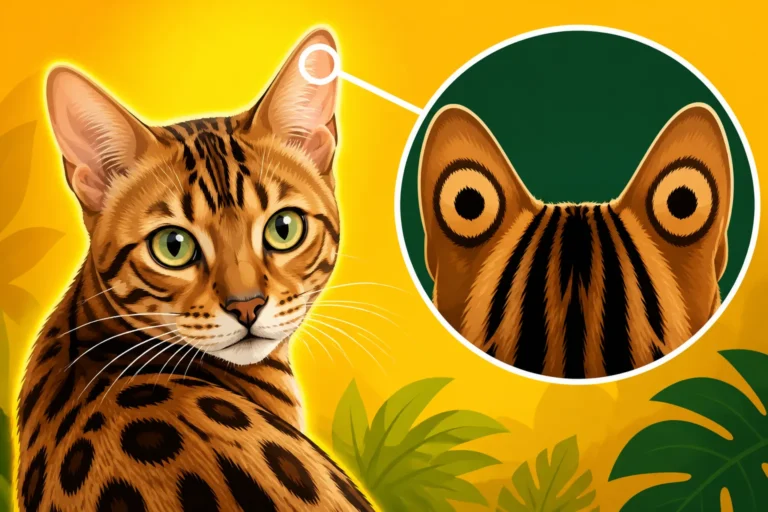
Bengal cat ear markings and the ocellus explain the pale thumbprint trait linked to wild Asian leopard cat ancestry.
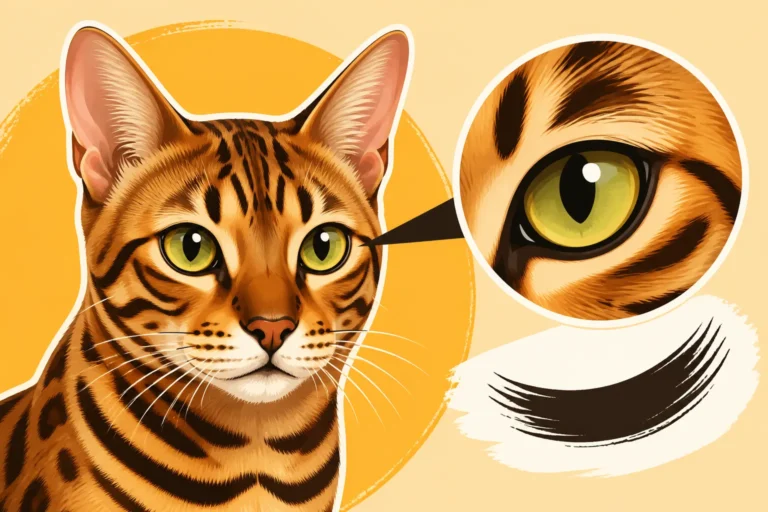
Bengal cat mascara marks are dark lines beside the eyes, forming a natural facial pattern of inherited pigmentation.
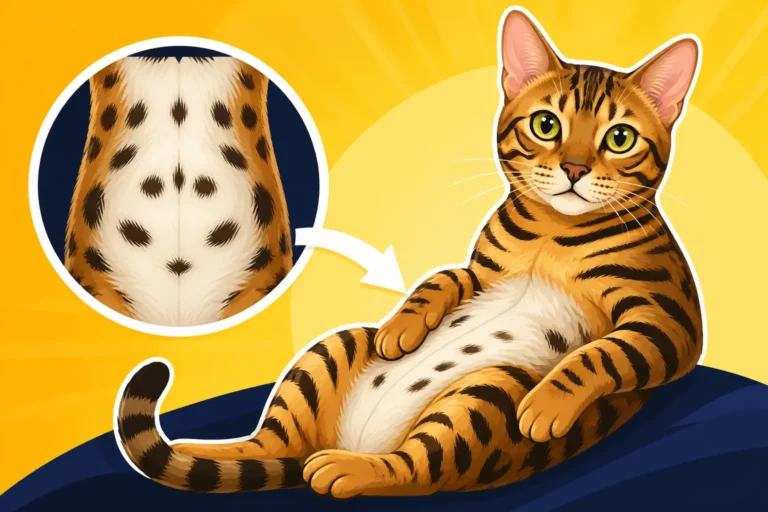
A Bengal cat pale belly is normally a natural coat contrast showing ivory, cream, or pale tan rather than white spotting.
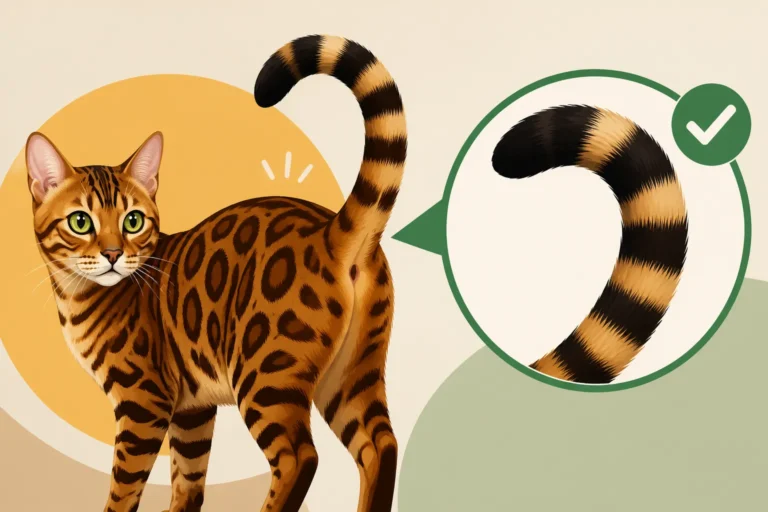
Bengal cat tail shape, thickness, markings, and carrying positions show breed standards and when veterinary care is needed.
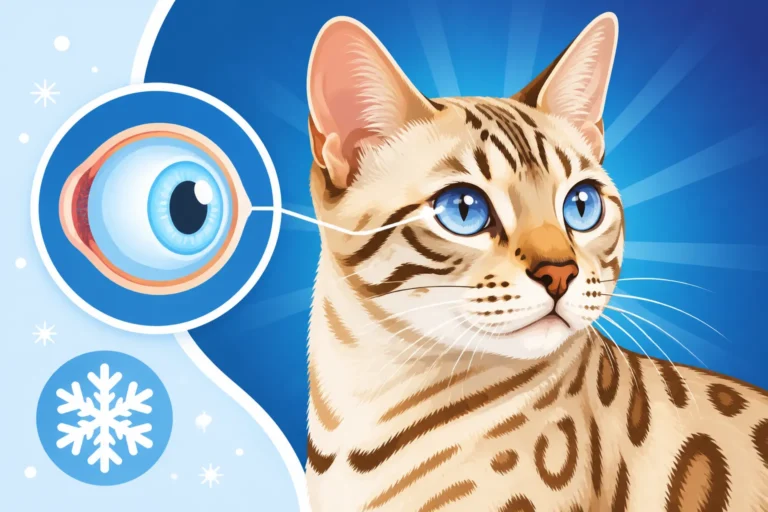
A colorpoint gene limits pigment production to create the pale coat and blue eyes of seal lynx point Snow Bengals.
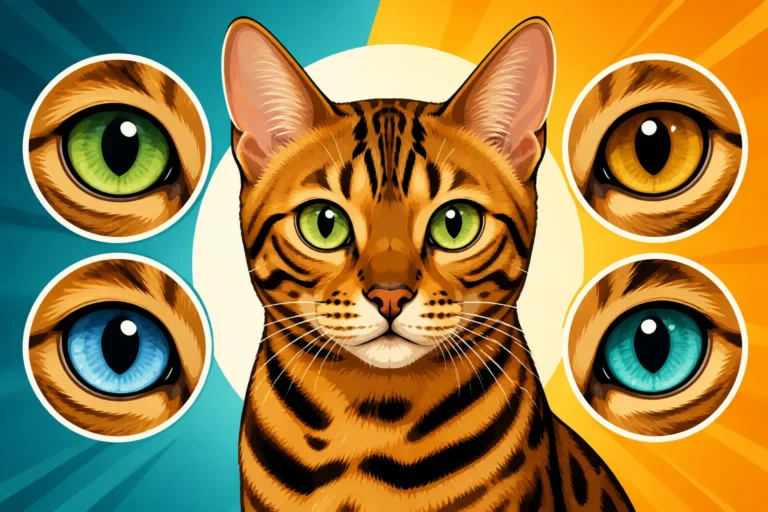
Bengal cat eye colors range from gold and green to vivid blue depending on coat variety and genetics, including seal lynx point and sepia types.
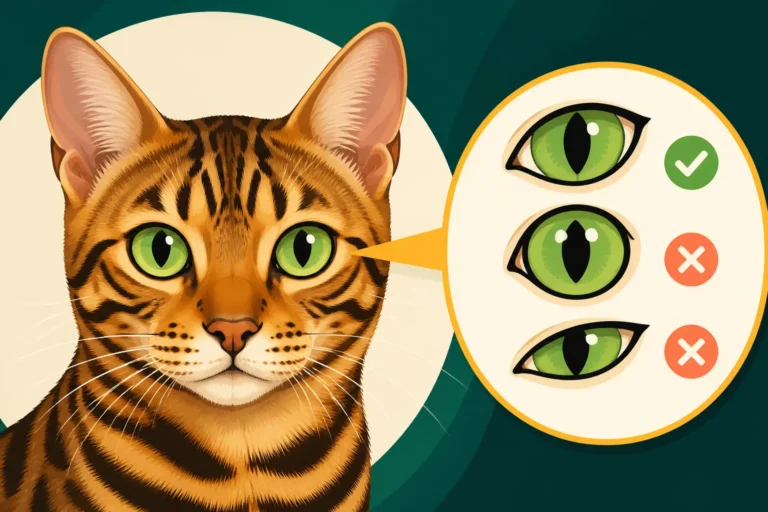
Large, oval eyes that can look almost round give the breed an alert, slightly wild expression, though a sudden change in shape may need a veterinary check.
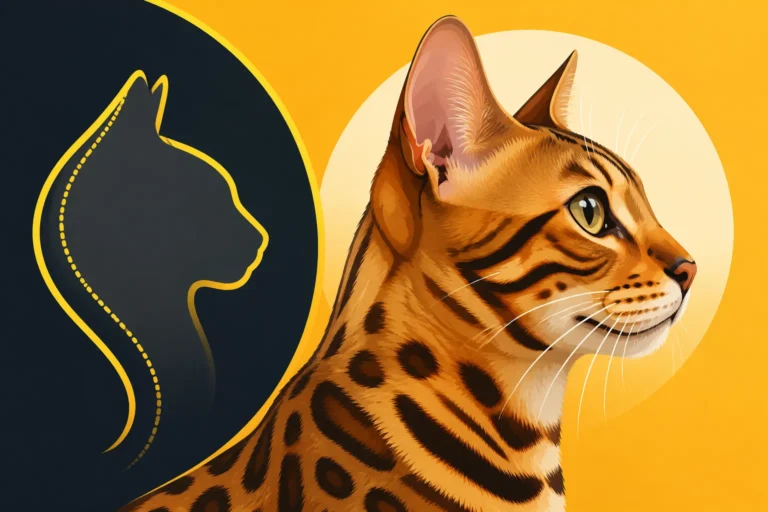
A Bengal cat side profile explains head shape traits, breed standards, and when a change requires veterinary attention.
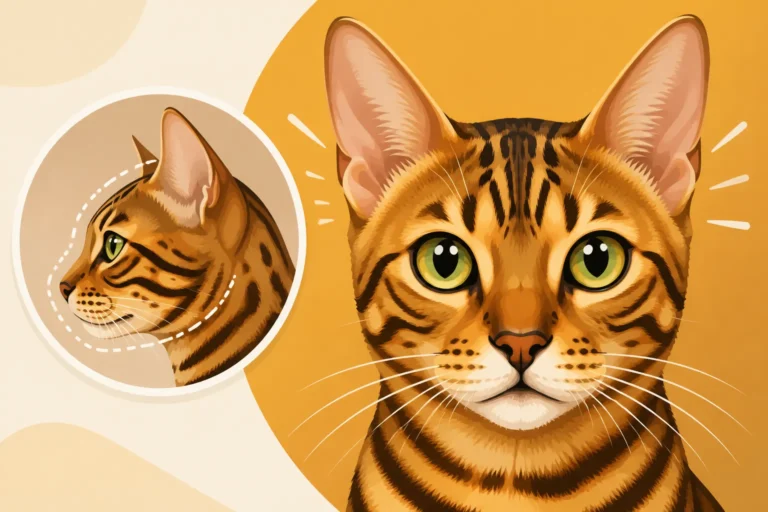
Bengal cat head shape details, including modified wedge contours, medium ears, and large eyes explained clearly.
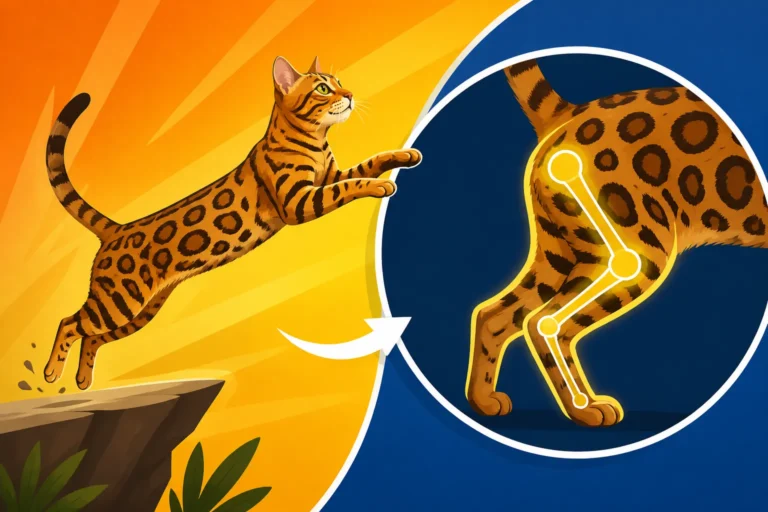
Bengal cat hind legs that appear longer than the front legs create an athletic build that helps the cat jump and sprint.