Why a Bengal Cat Has an Ocelli on Each Ear
A Bengal cat’s pale “thumbprint” marking on the back of each ear can look like a tiny eye, and it’s easy to wonder whether it signals a health problem or has a special purpose. This guide explains what an ocellus is, why Bengal cats have one, how it relates to their wild ancestry, and when an ear change deserves a closer look.
What an ocellus on a Bengal cat’s ear looks like
The pale spot behind the ear
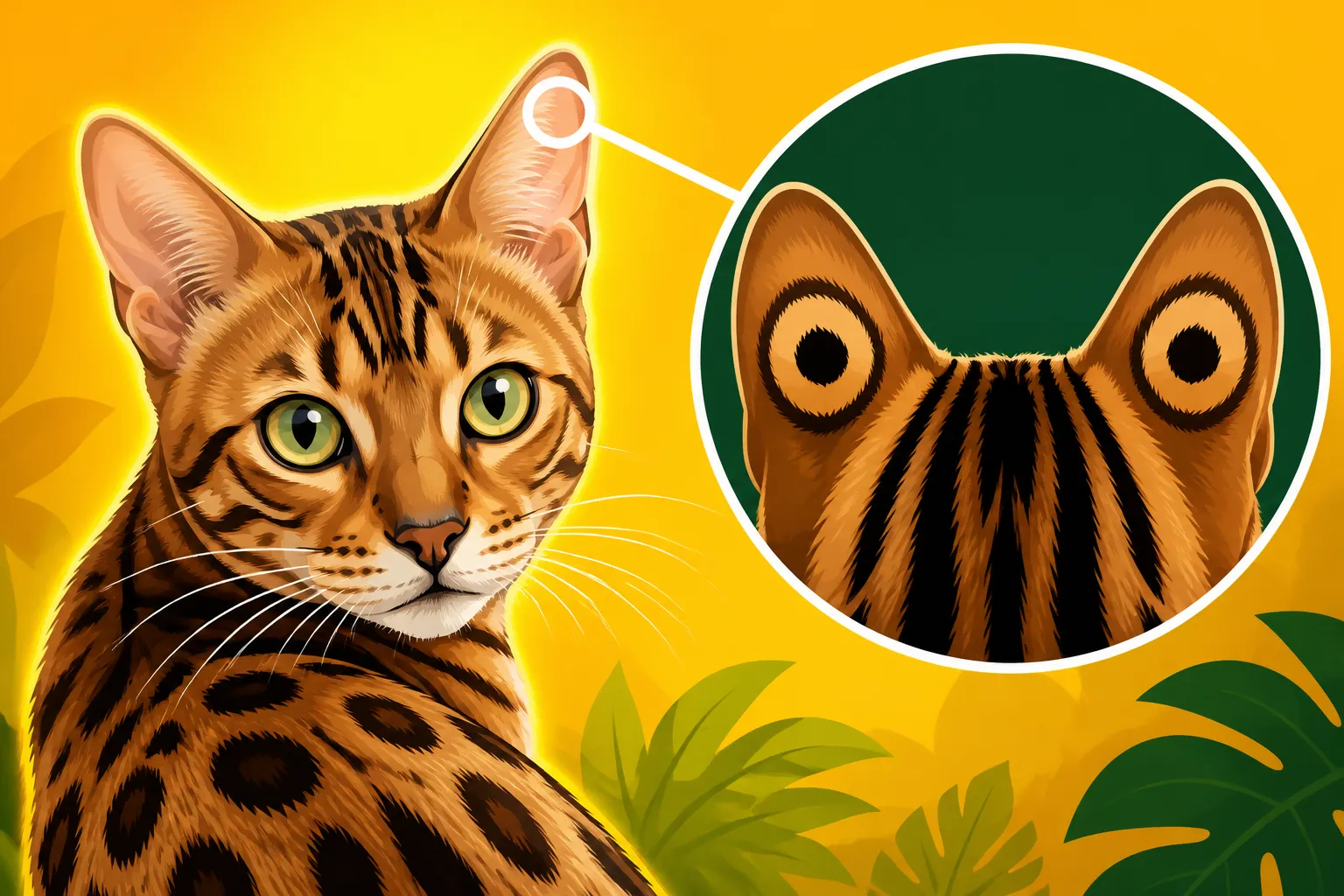
An ocellus is a light-colored marking on the back of an ear. On a Bengal cat, it may look like a small cream or white thumbprint against the darker outer ear. The word is often used for a conspicuous, rounded spot that resembles a little eye, though the marking does not need to be a perfect circle to be called an ocellus.
The marking is on the ear’s outer, back-facing surface—not inside the ear canal. That distinction matters if you’re checking your cat’s ears at home. An ocellus is part of the visible coat pattern; earwax, irritation, and debris are separate issues and are usually found on or inside the ear’s inner surface.
How noticeable the spot is varies. It may stand out clearly on one Bengal and look faint or partly blended into the coat on another. Lighting, coat color, pattern, and the cat’s age can affect how easy it is to see. A subtle marking does not, by itself, mean something is wrong.
The ocellus is one feature among many in the Bengal’s distinctive appearance. Rosettes and marbling draw most people’s attention, but facial markings, coat pattern, build, and ear shape all contribute to the breed’s overall look. For a broader description, see What a Bengal Cat Looks Like by the Standard.
How it differs from other ear markings
An ocellus is a marking, not a special structure in the ear. It does not mean the cat has an extra opening, a different kind of hearing, or an eye-like organ on its ear. The “eye” description refers to the spot’s appearance, not to its function as a sensory organ.
It can also be confused with pale fur around the ear or a lighter patch elsewhere on the head. A true ocellus is typically described as being on the back of the ear, where it contrasts with the surrounding darker fur. If you’re unsure whether a mark is simply coat color or a change in the skin, gently compare both ears and check whether the skin itself looks healthy.
A stable, flat patch of fur color is generally different from a new scab, swelling, crust, or area of hair loss. If a spot appears suddenly or changes alongside redness, discharge, odor, or persistent scratching, treat that as an ear or skin concern rather than assuming it is an ocellus.
Why Bengal cats have ocelli
A feature linked to wild ancestry
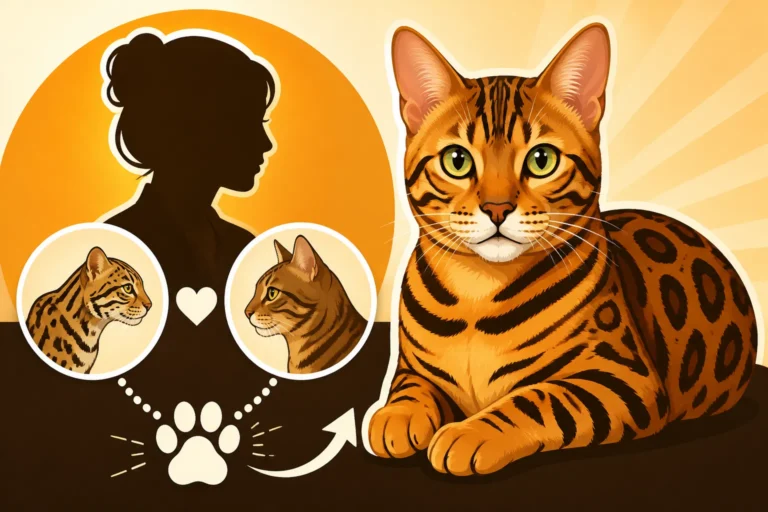
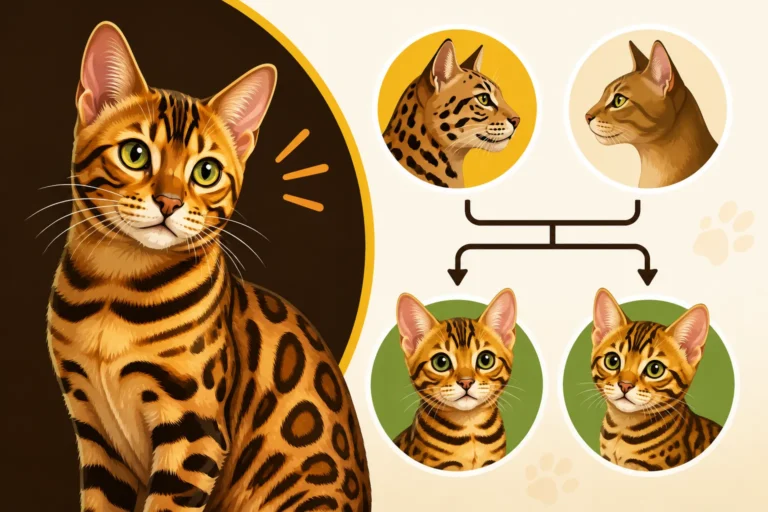
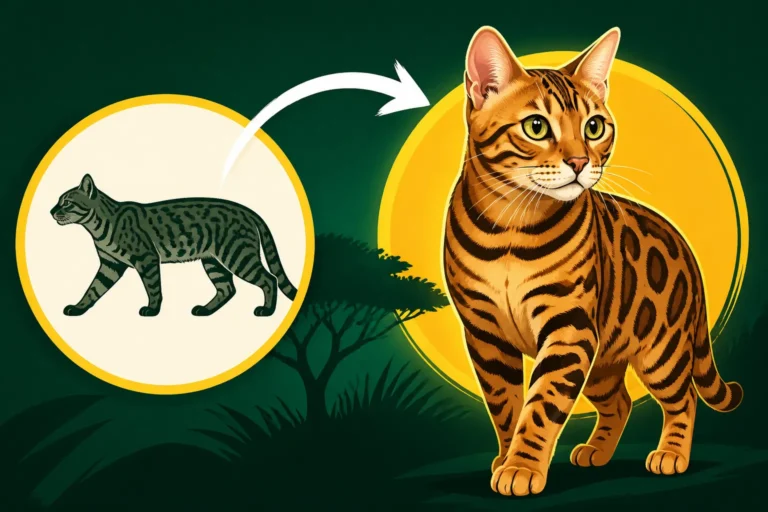
Bengals were developed from domestic cats and the Asian leopard cat, a small wild cat native to parts of Asia. The Asian leopard cat has pale markings on the backs of its ears, and the Bengal’s ocelli are commonly understood as a feature connected to that ancestry. The Bengal is a domestic breed, though; an ocellus does not make an individual cat wild or change its needs as a companion animal.
The Bengal’s history helps explain why its coat and appearance can look different from those of many other domestic cats. Its lineage includes the Asian leopard cat, while generations of selective breeding shaped the social, physical, and patterned traits of the domestic Bengal. You can read more in Where the Bengal Cat Comes From and What the Bengal Cat's Wild Ancestor Is Like.
It’s best to be careful about claims that assign one definite purpose to the marking. Pale ear spots occur in several wild cat species, and people have proposed that such markings could help with visual signaling or confuse a predator. But that does not prove exactly why the feature evolved, or that it serves a particular function in a pet Bengal today.
Why the marking is not a health feature
An ocellus is not a warning sign, a disease marker, or a reliable way to judge a Bengal’s health. It does not tell you whether your cat can hear well, whether the ear is clean, or whether the cat has a genetic condition. A cat can have clear ocelli and still develop an ear problem, just as a cat with faint or hard-to-see markings can have perfectly healthy ears.
Likewise, the presence or absence of a striking ear spot is not enough to confirm that a cat is a Bengal. Coat markings can resemble those of other cats, and appearance alone cannot establish a pedigree. If you’re curious about breed traits, What People Get Wrong About the Bengal Cat offers useful context on common assumptions about the breed.
The full head shape, ears, profile, and other features are considered together when describing breed type. A single marking can be interesting, but it should not be treated as a stand-alone test of breed identity or quality. For more on the head and ear area, see What a Bengal Cat's Head Should Look Like and What the Bengal Cat Standard Asks For.
What makes Bengal ear markings vary
Coat color and contrast
The same pale ear marking can look different depending on the cat’s overall coat color and contrast. On one Bengal, it may be sharply defined; on another, it may blend into lighter fur. A photo can also make it look more or less pronounced depending on the angle, natural light, and how the ear is positioned.
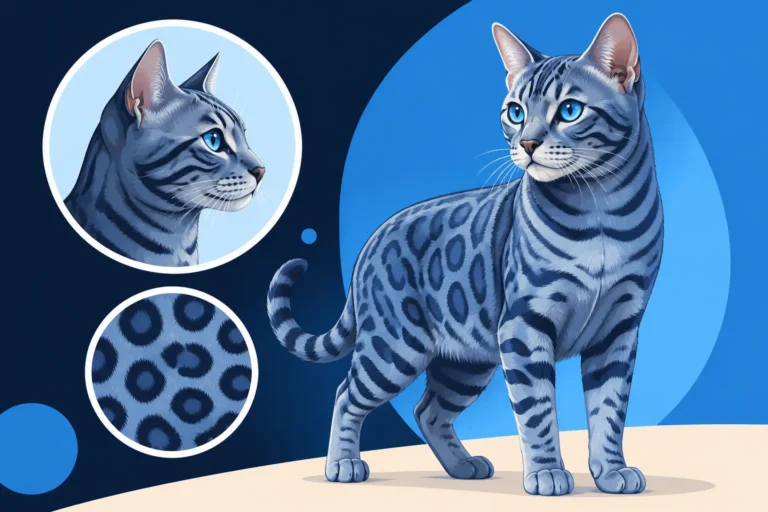
Bengals come in several recognized colors and patterns, and the contrast between a light mark and the surrounding ear can vary accordingly. The ocellus is not expected to look identical on every cat. If you’re comparing your cat with pictures online, remember that photographs may be edited, strongly lit, or taken at different stages of the cat’s coat development. See Which Colors a Bengal Cat Comes In for an overview of the breed’s accepted color variety.
Young cats can also look different as their coats mature. Bengal kittens may go through a period when their pattern looks less crisp, and the adult coat can become more defined over time. That doesn’t mean every marking will change, but it’s one reason not to judge a kitten’s eventual appearance from a single photo.
Individual differences within the breed
Even cats from the same breed can have small differences in ear shape, coat pattern, and how clearly an ocellus shows. One ear marking may be more visible than the other, or the spot may appear uneven at a glance because the cat is turning its head or the fur is lying differently. Mild asymmetry in coat markings is not automatically a problem.
Breed descriptions can help explain the general look people associate with Bengals, but they do not mean that every individual has identical markings. The overall appearance is broader than one feature. A cat’s temperament, comfort, and health matter far more in everyday life than whether its ear spots are especially bold.
If you’re choosing a Bengal kitten, focus on the breeder’s care practices, health information, and the kitten’s behavior—not just a striking photograph. A dramatic ocellus may catch your eye, but it cannot replace questions about veterinary care, socialization, and the kitten’s background.
| What you notice | What it may mean | What to do |
|---|---|---|
| A flat, pale spot on the back of the ear | A normal coat marking called an ocellus | Observe it as part of the coat pattern |
| A new crust, scab, or patch of missing fur | Possible irritation or a skin issue | Contact your veterinarian if it persists or worsens |
| Redness, odor, discharge, or frequent head shaking | Possible ear irritation or infection | Arrange veterinary advice rather than treating at home |
| A marking that looks different in photos | Lighting, angle, or coat contrast may be affecting its appearance | Check the ear in natural light without pulling or rubbing it |
How to care for the ears without disturbing the markings
Look, but do not scrub the spot
You don’t need to clean an ocellus. It is part of the coat, so scrubbing it or applying an ear product to make it look brighter can irritate the skin without providing any benefit. If the fur around the ear is dusty, a gentle look is usually enough; routine bathing or special treatment is not needed just because a Bengal has a pale marking.
During normal handling, take a brief look at both ears. Notice whether the skin appears comfortable and whether there is any unusual debris, odor, swelling, or redness. Avoid pushing cotton swabs into the ear canal, and don’t use human ear products or home remedies unless your veterinarian has specifically advised you to do so.
If your veterinarian recommends an ear-cleaning product for a diagnosed or recurring issue, follow their directions and the product label. Retailers such as Chewy may list product ingredients and instructions, but a product listing cannot determine whether your cat needs cleaning or treatment. Ask your clinic before using a cleaner if you are unsure what the symptoms mean.
Know when an ear change needs attention
A pale mark that has been present for a long time and looks like fur color is usually different from a sudden change in the ear. Pay attention to symptoms such as persistent scratching, frequent head shaking, tenderness when the ear is touched, discharge, a strong smell, redness, or swelling. Those signs deserve veterinary advice, whether or not the cat has visible ocelli.
A cat with ear discomfort may also hold one ear differently or become reluctant to have its head handled. Don’t try to diagnose the cause based on appearance alone. Ear mites, infection, allergies, injury, and other problems can look similar to an owner, and the right care depends on what is actually causing the irritation.
If your vet recommends a particular cleaner or care routine, keep the instructions handy and use only what they approve. Chewy can be one place to review product labels when you’re comparing options, but do not start treatment simply because a product is marketed for cats. If the ear is painful, swollen, bleeding, or producing discharge, contact your veterinary clinic rather than trying to clean it first.
A Bengal’s ocelli are a small visual detail with a strong connection to the breed’s distinctive appearance and ancestry. Enjoy the marking, but treat it as coat pattern—not as a health test or something that needs special grooming. For questions about a new spot or uncomfortable ears, a veterinary examination is the safer way to get an answer. If you’re looking for routine supplies after receiving veterinary guidance, Chewy’s product descriptions can help you check ingredients and directions before you buy.
Disclaimer
This article is for general informational purposes only and does not constitute professional advice. Laws, prices and regulations vary by location and change over time. Consult a qualified professional for guidance on your specific situation.