How to Slim an Overweight Bengal Cat
Overweight Bengal cats lose extra pounds through high-protein diets, portion control, and increased daily activity levels.
The daily stuff, done right.
Feeding amounts by life stage, coat and skin routines, dental and nail care, exercise needs, and what changes as they age.
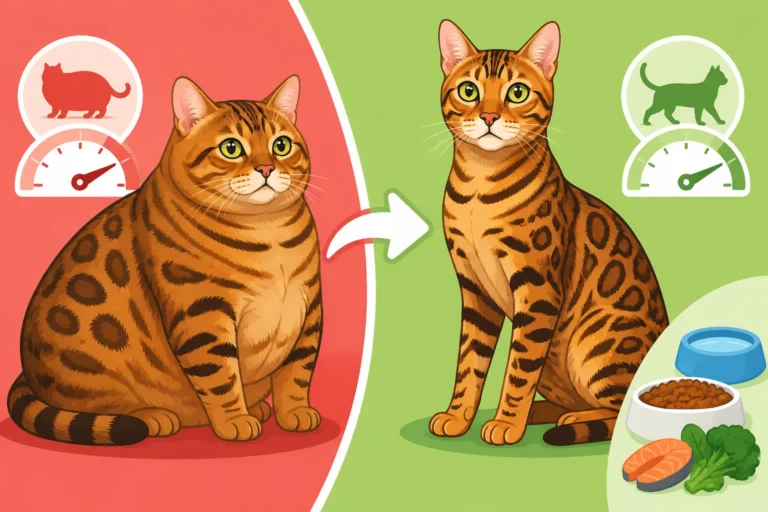
Overweight Bengal cats lose extra pounds through high-protein diets, portion control, and increased daily activity levels.
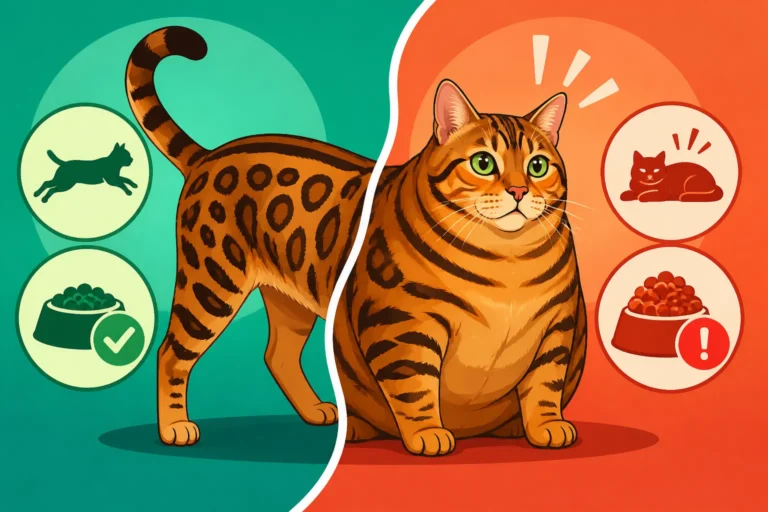
Bengal cat weight gain occurs when daily calories outpace energy output. Learn how to prevent feline obesity and keep pets healthy.
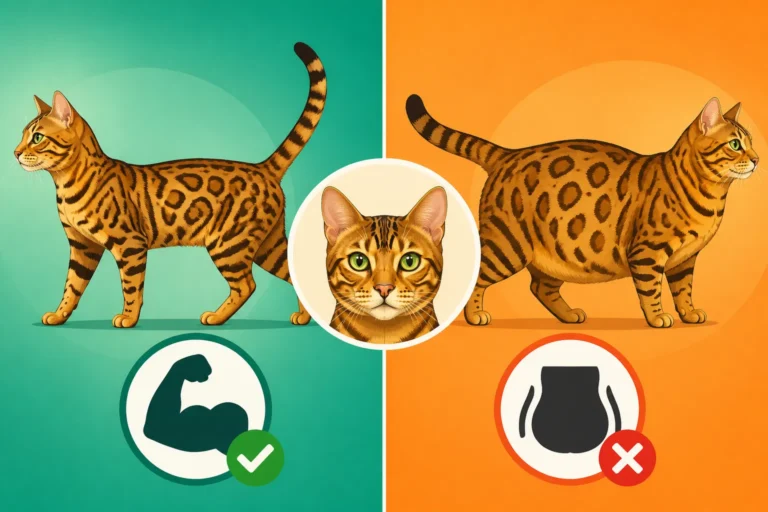
Bengal cat body condition indicators help owners distinguish lean muscle mass from excess padding using visual and tactile checks.
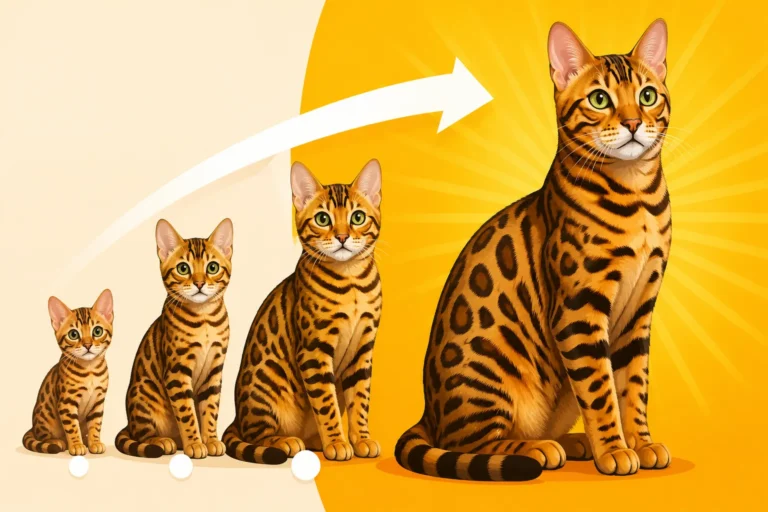
Bengal cat growth timelines show that skeletal size develops by eighteen months and muscles finish maturing by three years.
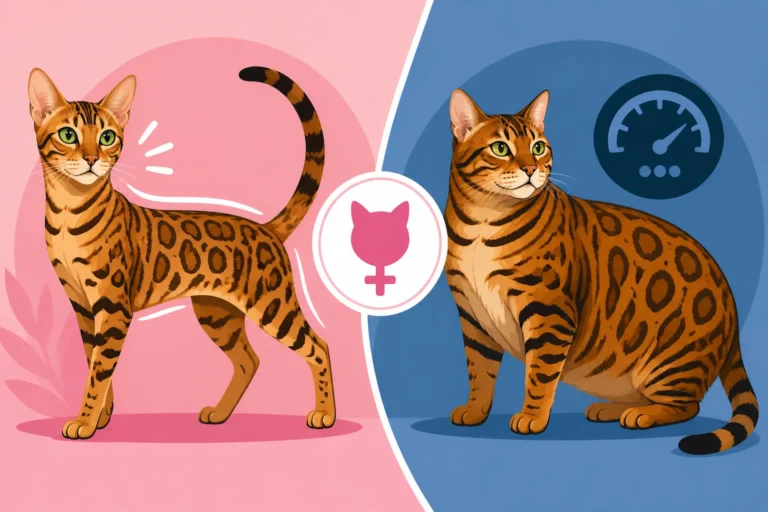
Female Bengal cat genetics, metabolism, high energy output, and estrogen levels create a naturally slender and muscular body shape.

Testosterone levels and genetic lineage from the Asian Leopard Cat explain why male Bengal cats develop larger muscles.
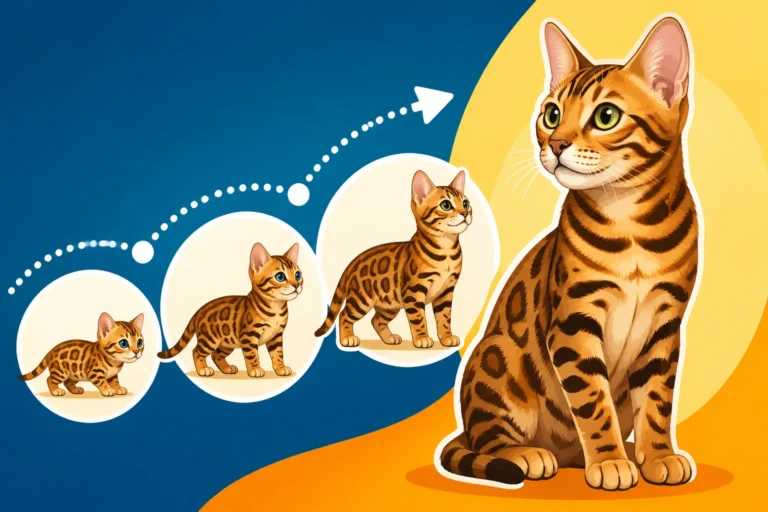
Bengal kitten weights and growth stages, ranging from eight weeks to twelve months, explained with average pound ranges.
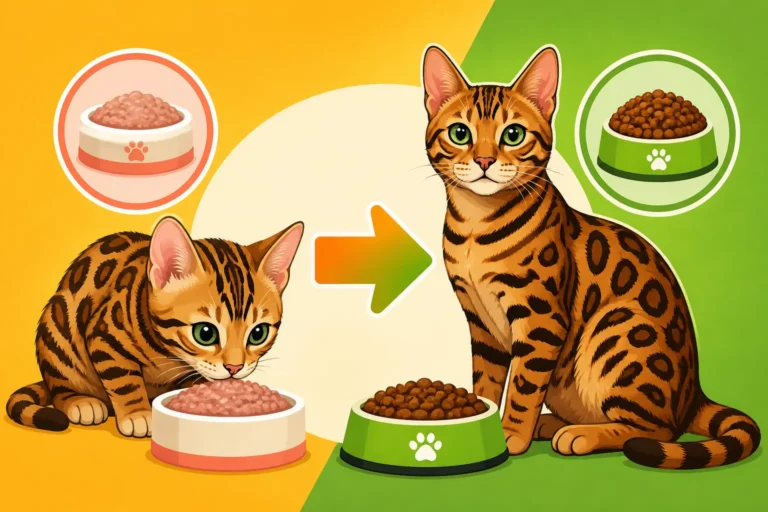
Bengal cat food transition timing around ten to fifteen months prevents digestive upset and excessive weight gain.

Bengal kittens need specialized kitten food longer due to slow muscle and bone development and fast metabolisms.

Bengal cat kitten muscle development requires high protein diets, healthy fats, micronutrients, and proper nutrition.