When a Bengal Cat Reaches Full Weight
It's incredibly common to watch your Bengal cat grow from a tiny, energetic kitten and wonder when, exactly, they're going to hit their full stride and stop getting bigger. That gangly, often chaotic adolescent phase can feel endless, making you question if they'll ever settle into their adult physique. This guide is here to shed some light on the Bengal cat's unique growth timeline, helping you understand when your magnificent feline will truly reach its full adult weight and physical maturity.
The Energetic Whirlwind: From Kittenhood to Adolescent Growth
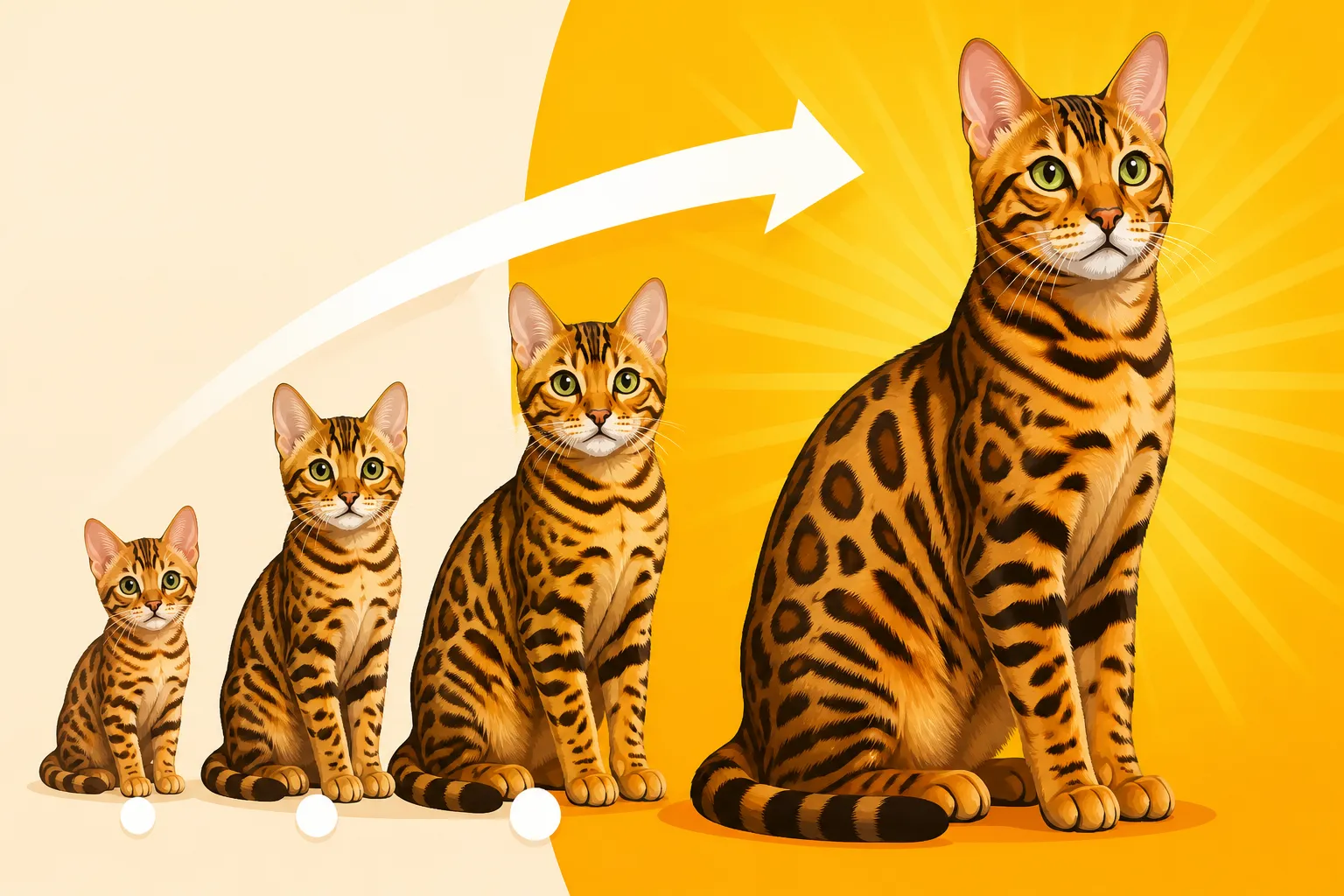
When you first bring home a Bengal kitten, it’s like adopting a tiny, spotted tornado. Their energy levels are off the charts, and they seem to grow before your very eyes. This initial period, roughly from 8 weeks to about 6 months, is characterized by rapid skeletal growth. They're all legs and ears, constantly exploring, climbing, and burning through calories at an astonishing rate. You might feel like you're constantly refilling their food bowl!
During these early months, a Bengal kitten's weight gain is steady but not always as bulky as you might see in some other domestic breeds. They tend to be long and lean, building bone structure and developing those powerful hind legs that will later enable their impressive leaps. Don't be surprised if your kitten still looks a bit "skinny" compared to a portly housecat of the same age; this is often normal for the breed. Their metabolism is a furnace, fueling their endless adventures. You might notice them gaining weight in spurts, rather than a completely smooth, linear progression.
This adolescent phase, typically from 6 months up to about 12 months, sees them continue to lengthen, but the rapid upward growth starts to slow. Instead of just getting taller, they begin to fill out a little. Their coordination improves, and while they're still incredibly active, you might start to see the sleek, muscular outline of the adult Bengal cat emerging. It’s during this time that their wild ancestry really shines through in their physical prowess. They're developing the powerful musculature that makes them such incredible athletes, and this takes quality nutrition and plenty of space to run and play. Ensuring they have access to good quality, high-protein food is key during this intense developmental period, with brands available on Chewy offering a wide variety of options tailored to active cats.
Settling into Adulthood: The Physical Maturity Phase
While many cat breeds reach their full skeletal size around 12 months, Bengal cats, with their more athletic and muscular build, often take a bit longer to truly "fill out." You'll find that their bone structure is largely set by around 12 to 18 months of age, but their muscle development, which contributes significantly to their overall weight and powerful physique, can continue for quite some time after that. This isn't just about gaining fat; it's about building dense, lean muscle mass.
Think of it like an athlete maturing. Their height and basic frame might be established, but their strength and muscle definition continue to develop with training and proper nutrition. For a Bengal, this means that while they might not get noticeably taller after 18 months, their chest can deepen, their shoulders can broaden, and their overall presence can become more robust. This "filling out" process often continues until they are around two, or even three, years old. It’s a slow and steady process, often subtle from week to week, but noticeable over the span of months. You might weigh your cat regularly and see small, incremental gains that contribute to their eventual adult weight. This is very different from the rapid growth of a kitten.
It's also important to distinguish between sexual maturity and physical maturity. A Bengal cat can reach sexual maturity and be capable of breeding much earlier, sometimes as young as 8-12 months. However, this doesn't mean their body is fully grown and developed. Just like with humans, there's a difference between being able to reproduce and being fully developed physically. Breeders often understand this distinction, waiting until a Bengal queen is fully mature before considering her for breeding, ensuring she has completely developed her own physical resources. This extended development period contributes to their striking, powerful appearance as adults. You can explore more about their physical traits in Why a Bengal Cat Looks So Muscular.
Factors Influencing Your Bengal's Final Size and Weight
Several elements play a significant role in determining when and how your Bengal cat reaches its full weight and ultimate physical stature. It’s not just a matter of time; it's a combination of genetics, nutrition, and lifestyle. Understanding these factors can help you better anticipate your cat's growth trajectory and ensure they develop into a healthy, robust adult.
Genetics and Lineage
The size of your Bengal's parents and their lineage is perhaps the most influential factor. If your kitten comes from a line of smaller Bengals, it's very likely they will also be on the smaller side of the breed's spectrum. Conversely, if both parents were large, well-muscled Bengals, your kitten has a higher genetic predisposition to grow into a similarly impressive size. This is why a reputable breeder will often provide information about the parents' size and temperament, giving you a glimpse into your kitten's potential. Looking at their pedigree can sometimes offer clues, as certain lines may be known for producing larger or smaller individuals.
The generation number can also play a subtle role. While the breed standard for SBT (Stud Book Traditional) Bengals is consistent, earlier generations (F1-F3) might sometimes exhibit a slightly wider range of sizes due to their closer proximity to the Asian Leopard Cat, whose size can vary. However, for most pet owners, an SBT Bengal is the most common, and their size will largely depend on the specific breeding lines.
Nutrition and Diet Quality
A Bengal cat's diet is paramount to proper development. These are incredibly active and muscular cats, meaning they have higher caloric and protein needs than many other domestic breeds. Feeding a high-quality, protein-rich diet is crucial throughout their growth phases. Cheap, filler-heavy foods simply won't provide the building blocks needed for optimal muscle development and overall health.
You should aim for cat foods that list real meat as the first few ingredients and have a high protein percentage. Whether you opt for a high-quality kibble, wet food, or even a carefully balanced raw diet (which some Bengal owners swear by), consistency and quality matter. Specialized fresh food diets and a wide range of high-protein dry and wet foods can be excellent for meeting these nutritional needs. Inadequate nutrition can stunt growth or lead to a less muscular, less robust adult physique, even if the genetic potential for size is there. Remember, a Bengal cat's gut can be sensitive, so finding the right food is critical; you can read more about this in When a Bengal Cat Needs a Special Diet for Its Gut.
Activity Levels and Exercise
Bengal cats are, by nature, highly active and athletic. Their constant motion isn't just cute; it's essential for building and maintaining their lean muscle mass. A Bengal that doesn't get enough exercise may not develop the same muscular physique as one that is allowed to run, jump, and climb to its heart's content. Think of a human athlete who trains versus one who doesn't – the frame might be the same, but the musculature is vastly different.
Providing ample opportunities for play, enrichment, and exercise is vital for a Bengal to reach its full physical potential. This could mean daily interactive play sessions, access to tall cat trees, cat wheels, or even a secure outdoor enclosure (catio). All this physical activity helps burn calories efficiently and sculpts their body into that magnificent, wild-looking form we all admire. A cat that is consistently under-exercised might carry more fat and less muscle, not truly reflecting their genetic potential for weight and build.
Gender and Spay/Neuter Status
Generally, male Bengal cats tend to be larger and heavier than females. This is a common pattern across many cat breeds, and Bengals are no exception. A fully grown male Bengal can easily weigh a few pounds more than a female, and often appears more muscular and imposing.
| Factor | Male Bengal Cat (Typical Adult Range) | Female Bengal Cat (Typical Adult Range) |
|---|---|---|
| Weight | 10-15+ pounds | 8-12 pounds |
| Height | 10-14 inches | 9-13 inches |
| Length | 18-22 inches (nose to tail base) | 16-20 inches (nose to tail base) |
| Maturity Age | 2-3 years to fully fill out | 1.5-2.5 years to fully fill out |
Spaying or neutering can also subtly influence a cat's final weight and body composition. While the primary purpose is health and population control, removing reproductive hormones can sometimes lead to a slight decrease in metabolic rate. This means spayed or neutered Bengals might be prone to gaining weight more easily if their diet and activity levels aren't adjusted accordingly. However, it's more about preventing obesity than altering their mature, healthy weight. A neutered male might still grow to be a large, muscular cat, but an owner will need to be diligent about feeding appropriate portions and ensuring adequate exercise to maintain a lean, healthy physique. For more on what to expect, refer to How Much a Male Bengal Cat Weighs and How Much a Female Bengal Cat Weighs.
Beyond Weight: When a Bengal Cat Truly Matures
While we talk a lot about physical size and weight, it's equally important to understand that "full maturity" for a Bengal cat encompasses more than just their body. Behavioral and emotional maturity can take even longer to fully develop, often extending well past the point when their physical growth has ceased. Owners often mistakenly believe that once their cat stops growing, their wild kitten antics will immediately subside. While there's some truth to them settling, Bengals retain their unique personality traits for life.
A Bengal cat's boundless energy and playful nature are hallmarks of the breed. While a young adult Bengal might still be a whirlwind of activity, by around 2 to 3 years of age, you might notice a subtle shift. The constant, almost frantic energy of kittenhood might morph into more focused play sessions and a slightly increased ability to relax. They might still demand attention, but perhaps with a bit more grace and less chaotic destruction than their younger selves. This is when their personality truly solidifies, and you see the intelligent, affectionate, and sometimes demanding companion they will be for years to come.
Some Bengal cats, particularly males, can take even longer to completely outgrow their most boisterous adolescent behaviors, sometimes not truly settling down until they are 3 or even 4 years old. This doesn't mean they become sedentary lap cats; it simply means their decision-making and play might become a little more refined and less prone to impulsive mischief. They're still active, still curious, and still very much a Bengal, but they've gained a certain wisdom and self-assuredness. It’s important to remember that every cat is an individual, and some will mature faster or slower than others, both physically and emotionally. Patience and consistent enrichment are key to nurturing a well-adjusted adult Bengal. You might find some useful insights on their long-term care in The Twelve to Sixteen Years a Bengal Cat Gets.
Ultimately, watching your Bengal cat grow is a journey. From the gangly kitten with endless energy to the sleek, muscular adult, each stage is fascinating. While they might reach their final height and length around 12-18 months, their bodies continue to fill out with dense muscle for another year or two, culminating in that striking, powerful physique. Beyond the physical, their personalities mature over several years, becoming the magnificent, intelligent companions we cherish.
Disclaimer
This article is for general informational purposes only and does not constitute professional advice. Laws, prices and regulations vary by location and change over time. Consult a qualified professional for guidance on your specific situation.