How a Vet Confirms PK Deficiency in a Bengal Cat
Pyruvate kinase deficiency in Bengal cats is a hereditary metabolic disorder causing hemolytic anemia and requiring diagnostic testing.
Know what to watch for.
Breed-specific conditions, screening and DNA tests, what surgery actually costs, and the daily habits that stretch a healthy lifespan.
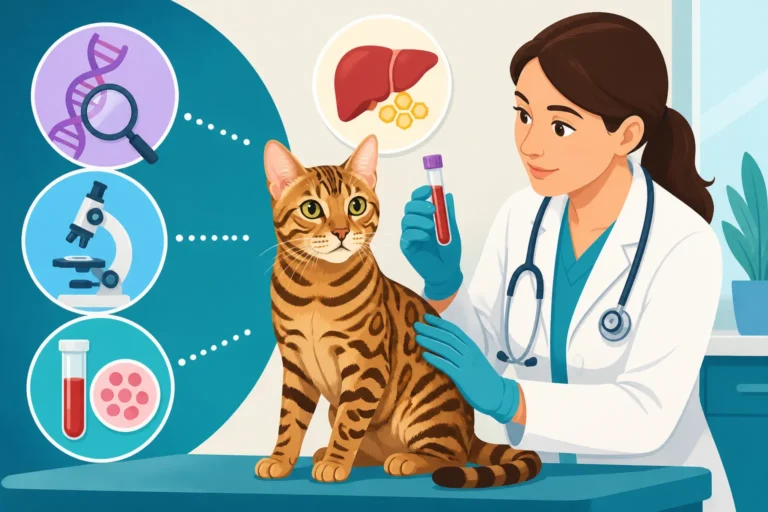
Pyruvate kinase deficiency in Bengal cats is a hereditary metabolic disorder causing hemolytic anemia and requiring diagnostic testing.

Pyruvate Kinase Deficiency in Bengal cats causes cyclical red blood cell destruction, explaining unpredictable good and bad days.
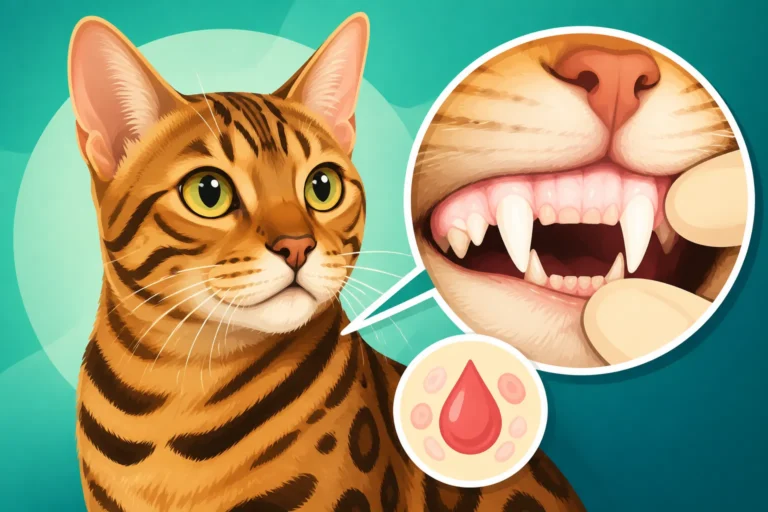
Pyruvate Kinase Deficiency in Bengal cats causes hemolytic anemia, leading to pale gums due to premature red blood cell destruction.
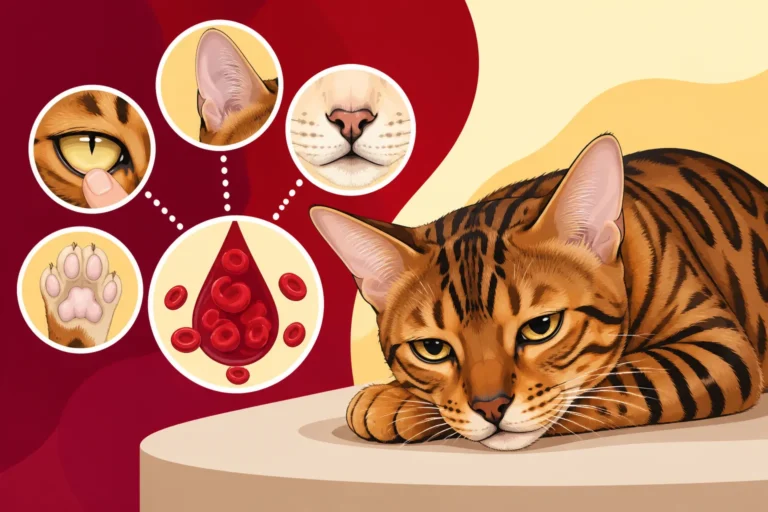
Bengal cat anemia signs include lethargy, weakness, and genetic conditions like Pyruvate Kinase Deficiency causing red blood cell breakdown.
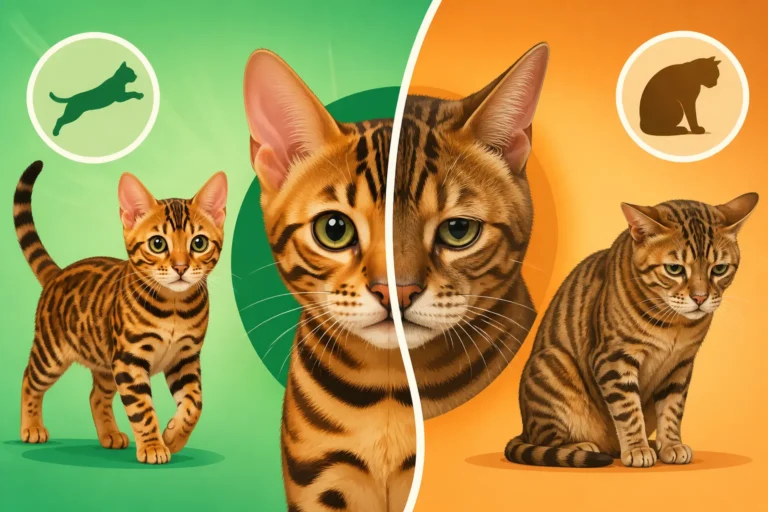
Pyruvate kinase deficiency symptoms in Bengal cats usually appear between six months and five years of age, causing fragile red blood cells.
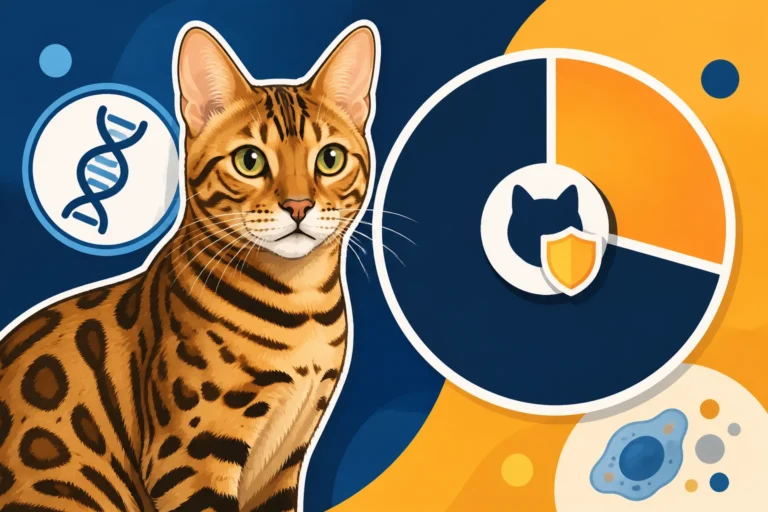
Pyruvate Kinase Deficiency carrier rates in Bengal cats, genetic testing methods, and symptoms like anemia and enlarged spleens.
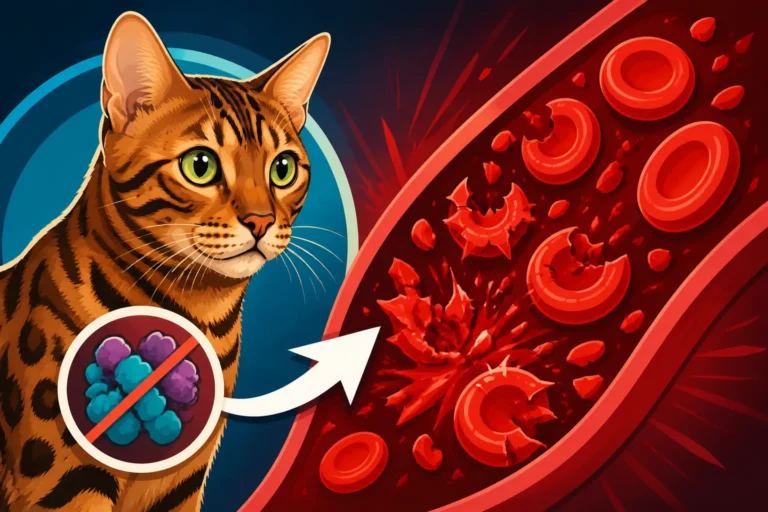
Pyruvate kinase deficiency is an inherited disorder that destroys red blood cells in Bengal cats, causing hemolytic anemia.
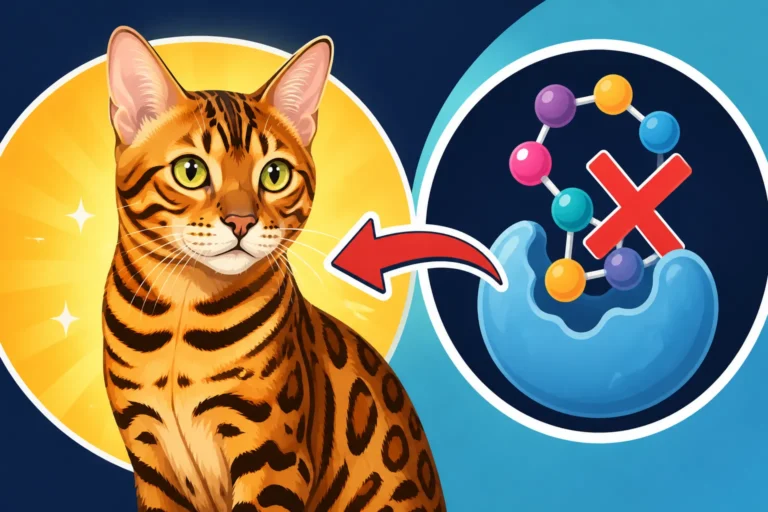
Pyruvate kinase deficiency in Bengal cats removes a vital energy-producing enzyme from red blood cells, causing hemolytic anemia.
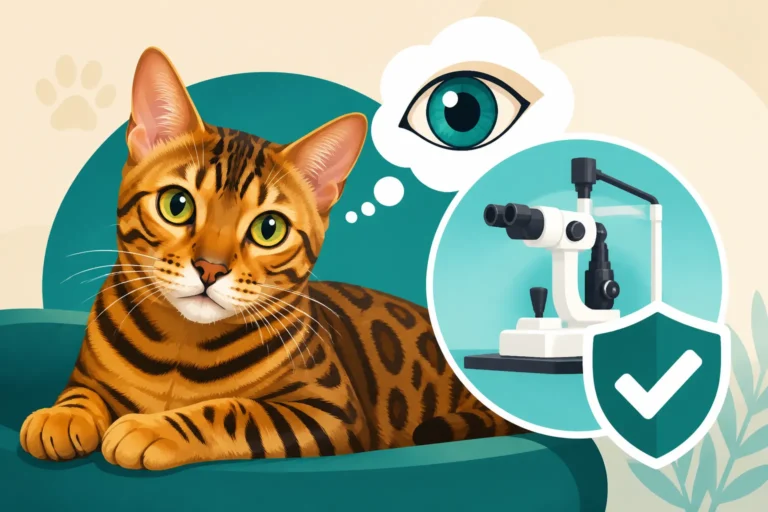
Rescue Bengal cat health history checks reveal whether shelter pets received genetic screenings for the PRA-b eye condition.

Bengal cats require a specific genetic test for PRA-b because other breed screenings fail to detect this distinct mutation.