How High a Bengal Cat Can Jump
You've likely heard that Bengal cats are incredibly athletic, but until you live with one, you might not truly grasp their impressive vertical abilities. That beautiful kitchen counter or that high bookshelf suddenly looks like an appealing launchpad to your spotted companion. This guide will dive deep into just how high these agile cats can jump, what drives this behavior, and most importantly, how to channel their extraordinary athleticism safely and constructively within your home.
The Incredible Vertical World of the Bengal Cat
Living with a Bengal cat means understanding that the world isn't just horizontal; it's a thrilling vertical playground waiting to be conquered. These aren't your average couch potato kitties. Their very genetics are designed for explosive power and graceful leaps, making them champions of the high ground in your home. You'll quickly discover that if there's a surface, a Bengal will probably find a way to get on top of it.
It can be a constant source of wonder and, let's be honest, sometimes a little bit of stress, as you watch them effortlessly scale heights that would leave other cats contemplating the logistics for hours. Their confidence in these aerial feats is truly something to behold, a direct echo of their wild heritage.
Inherited Agility: The Asian Leopard Cat's Leaping Legacy
The Bengal cat's extraordinary jumping ability isn't just a quirky trait; it's a deeply ingrained instinct passed down from their wild ancestor, the Asian Leopard Cat. These stunning wild felines are arboreal hunters and incredibly agile, relying on their powerful hindquarters and keen senses to navigate dense forests, hunt prey, and escape predators by leaping into trees. When Jean Mill first envisioned the Bengal, she aimed to capture that wild beauty and athleticism, and she certainly succeeded.
This means your Bengal isn't just jumping for fun; they're fulfilling a primal need. They have compact, muscular bodies designed for bursts of speed and incredible strength. Their bone structure and powerful leg muscles act like coiled springs, allowing them to propel themselves upwards with astonishing force. It’s part of what makes them such unique and captivating companions, but also why their needs are so different from a typical domestic shorthair.
Understanding Their Impressive Vertical Reach
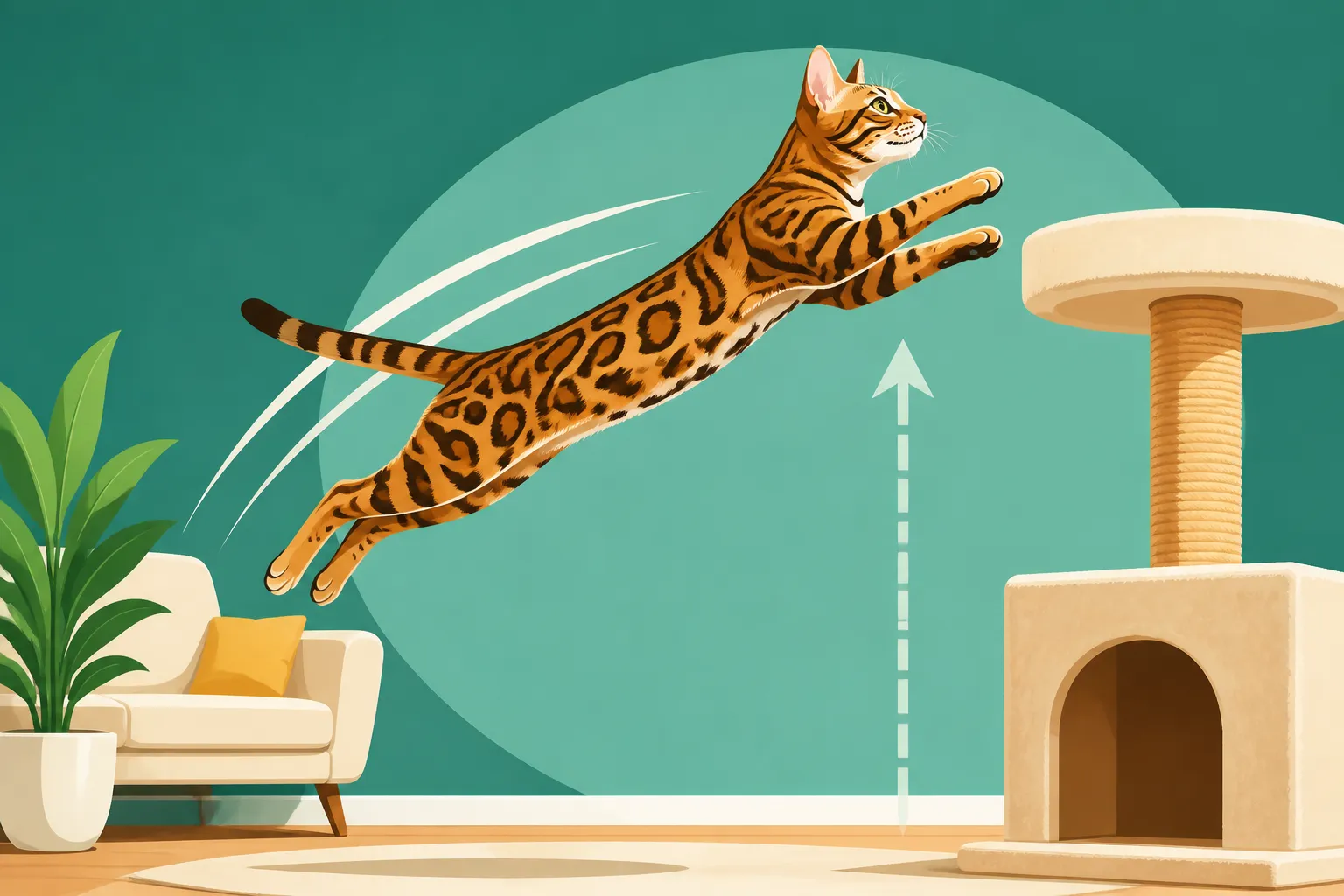
So, how high can a Bengal cat jump? While every cat is an individual, and factors like age, fitness, and motivation play a role, a healthy adult Bengal can easily clear vertical distances of five to seven feet from a standstill. Yes, you read that right – that's well over your head for many people! From a running start or with a boost from an intermediate surface, they can go even higher, often reaching the top of refrigerators, tall bookshelves, or even door frames.
I've personally seen my own Bengal, Jasper, effortlessly spring from the living room floor to the very top of a seven-foot tall cat tree. There was no hesitation, no struggling, just a fluid, almost silent ascent. It's not just about raw power; it's about incredible balance and spatial awareness. They can calculate trajectories and land with pinpoint precision, which is why your precarious vase on the top shelf isn't as safe as you think it is.
What Influences a Bengal Cat's Jumping Prowess?
While the potential for incredible jumps is inherent in the breed, not every Bengal will perform like an Olympic high-jumper every single day. Several factors come into play that dictate just how high, how often, and how enthusiastically your Bengal will choose to explore the vertical dimensions of your home. Understanding these influences can help you anticipate their behavior and provide the best environment for them.
It's not just a physical act; it's often a mental one. A bored or under-stimulated Bengal will often find creative (and sometimes destructive) ways to engage their natural abilities, which often means jumping onto things they shouldn't.
Age, Health, and Individual Capabilities
Just like human athletes, a Bengal cat's peak jumping performance can vary. Young, healthy adult Bengals (typically between one and seven years old) are usually at their most agile and powerful. A playful kitten might attempt impressive feats, but they're still developing their coordination and strength. As Bengal cats age, you might notice a slight reduction in their highest leaps. An older Bengal might still enjoy vertical spaces, but they might rely more on intermediate steps or show a little less spring in their step. If you're caring for an older Bengal, remember their needs change, as detailed in Caring for a Bengal Cat Past Ten.
Physical health is paramount. An overweight Bengal, for instance, won't be as agile or able to jump as high as a lean, muscular one. Similarly, certain health conditions can impact their mobility. For example, conditions like Patellar Luxation in a Bengal Cat could make jumping painful or difficult, so if you notice a change in their jumping habits, a vet visit is always a good idea. Every Bengal is an individual, too; some are simply more driven to climb and leap than others, even within the same litter.
The Powerful Motivators Behind Every Leap
Bengal cats don't just jump aimlessly. There's almost always a motivation behind their vertical expeditions. One of the biggest drivers is their intense curiosity. They want to see what's up there, what's happening, and what they can get into. A high shelf with interesting objects is an irresistible challenge. They are incredibly intelligent, and problem-solving often involves a vertical approach. For insight into their cognitive abilities, check out How Intelligent a Bengal Cat Is.
Another huge motivator is their prey drive. If they spot a fly buzzing near the ceiling, a bird outside a high window, or even a dust bunny on top of a wardrobe, their hunting instincts kick in, and they'll launch themselves into action. High places also offer a sense of security and a prime vantage point. From above, they can survey their territory, observe household activity, and feel safe, much like their wild ancestors would from a tree branch. This is part of What a Bengal Cat Does All Day – observing their domain. They love to be at eye level with you, or even above you, feeling like the king or queen of their castle.
Designing a Vertical Haven for Your High-Flying Feline
Given their innate need to climb and jump, one of the most important things you can do for your Bengal cat is to provide plenty of appropriate vertical space. Without it, they'll create their own, often using your furniture, curtains, or even you, as their personal climbing gym. This isn't just about giving them somewhere to play; it's about enriching their environment and fulfilling a fundamental behavioral need.
Failing to provide adequate vertical options can lead to frustration, boredom, and potentially destructive behavior. You want to give them acceptable outlets for their incredible energy and agility, making both your lives happier.
Providing Ample and Engaging Vertical Space
When designing a home for a Bengal, think three-dimensionally. Floors are fine for running around, but the real excitement for a Bengal often lies upwards. Providing vertical space isn't just a luxury; it's a necessity for their physical and mental well-being. It allows them to express their natural instincts, get much-needed exercise, and feel secure in their environment. Without proper outlets, you might find your Bengal trying to scale your cabinets or leaping onto surfaces you'd rather they didn't, which can be frustrating, as discussed in How to Keep a Bengal Cat Off the Counter.
A truly engaging vertical environment offers variety: different heights, textures, and opportunities for climbing, perching, and even napping. Think about walkways, shelves, and tall structures that allow them to survey their domain from multiple vantage points. This helps prevent boredom and gives them a sense of control over their territory. For more on this, read How Much Vertical Space a Bengal Cat Needs.
Choosing the Right Cat Trees and Wall Perches
When it comes to cat trees, go big or go home (or rather, go big so your Bengal can go home… on the cat tree!). A small, wobbly cat tree designed for a sedate housecat simply won't cut it for a powerful Bengal. They need tall, sturdy, multi-level structures that can withstand their explosive leaps and vigorous play. Look for wide, heavy bases and thick posts to prevent tipping. My personal recommendation is to choose trees with durable sisal scratching surfaces and plush perches where they can survey their kingdom. You can find some fantastic, robust options on Amazon that are built to handle the athleticism of a Bengal. Don't skimp on quality here; a cheap, unstable tree is not only a waste of money but can also be dangerous if it collapses mid-leap. For more guidance, see Which Cat Tree a Bengal Cat Needs and Why a Bengal Cat Destroys Cheap Cat Furniture.
Wall-mounted shelves and perches are another excellent way to utilize vertical space without taking up floor space. These can be staggered to create a climbing path up a wall, offering a dynamic and challenging environment. Ensure they are securely mounted into wall studs, as a Bengal's weight and jumping force can easily pull flimsy shelves down. Again, Amazon offers many modular wall systems designed for active cats. Consider installing them near windows so your Bengal can enjoy some bird-watching from their elevated vantage point. If you're handy, building your own shelves can also be a rewarding project, and you can find tips in How to Build Shelves for a Bengal Cat.
The Catio: Unleashing Their Inner Mountain Climber
For the ultimate vertical experience, nothing beats a catio. A catio – an outdoor cat enclosure – provides a safe and stimulating environment where your Bengal can enjoy fresh air and the thrill of climbing even higher. Catios can range from small window boxes to elaborate multi-level structures with ramps, shelves, and bridges, allowing your Bengal to scale walls, perch high above the yard, and mimic their wild ancestors' arboreal habits.
Inside a catio, you can install even taller and more complex climbing structures than you might safely have indoors. They can leap between platforms, scramble up tall posts, and enjoy the sun and breeze without any risk of escape or encountering outdoor dangers. It's a fantastic way to satisfy their craving for exploration and movement. For many Bengal owners, a catio is essential, especially if you're keen to ensure your cat gets outdoor stimulation safely, as discussed in Why a Catio Is the Answer to a Bengal Cat. These enclosures can be customized to your space and budget, offering endless vertical opportunities.
Navigating Life with a Jumper: Safety, Protection, and Redirection
Living with a high-jumping Bengal is an adventure, but it also requires a bit of strategic planning to keep both your cat and your belongings safe. Their incredible agility means that what you consider "out of reach" might just be an interesting challenge for them. It's all about understanding their capabilities and proactively managing their environment.
This proactive approach not only protects your valuables but, more importantly, keeps your curious companion safe from potential hazards that come with high-flying exploits.
Safeguarding Your Home from Counter Surfers and Shelf Explorers
It's a familiar scenario for Bengal owners: you turn your back for a moment, and suddenly your cat is on the kitchen counter, investigating whatever you left there. They are notorious counter surfers and shelf explorers, and their jumping prowess makes it effortless. To avoid frustration (and broken items), it's crucial to adopt a "nothing valuable or dangerous on reachable surfaces" policy. This means clearing counters of breakables, food they shouldn't eat, and anything that could be knocked over.
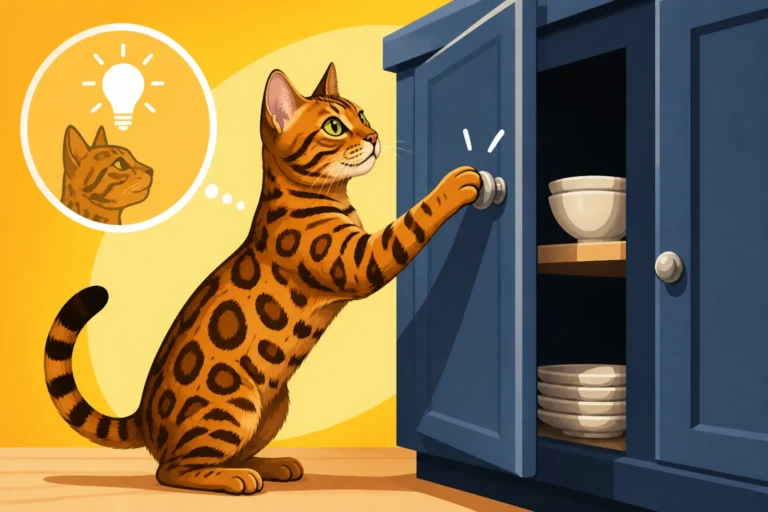
Secure cabinet locks might become your new best friend, as Bengals are also adept at opening doors and drawers. Beyond the obvious kitchen counters, consider what's on high shelves in other rooms. That framed photo on the top of the bookcase? It's a target. Small, shiny objects are especially tempting, as Bengal cats are known for Why a Bengal Cat Steals Small Objects. Think like a Bengal: if it looks interesting and it's physically possible to reach, they will try.
Ensuring Your Bengal Cat's High-Rise Adventures Are Safe
While you want to encourage their jumping, you also need to ensure their aerial escapades are safe. Check that any cat trees or wall-mounted shelves are stable and sturdy. Loose fixtures can lead to dangerous falls. Ensure landing zones are clear and soft – avoid having fragile items or hard flooring directly beneath their favorite jumping spots. Consider rugs or soft mats in high-traffic vertical areas.
Windows are another area of concern. While they love to perch and look out, ensure screens are secure to prevent accidental falls or escapes. For more on keeping them indoors, consider Whether a Bengal Cat Can Be an Indoor Only Cat. As your Bengal ages, their agility might slightly decrease, and their joints might not be as resilient. It’s important to monitor their jumping as they become senior, as detailed in What Changes in a Bengal Cat After Ten, and ensure they still have safe, accessible vertical spaces, possibly with ramps or extra steps.
Training and Enriching for Positive Vertical Behavior
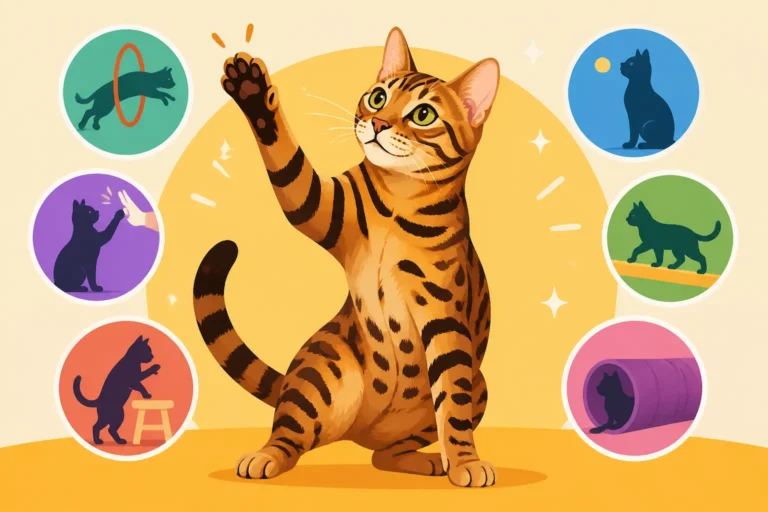
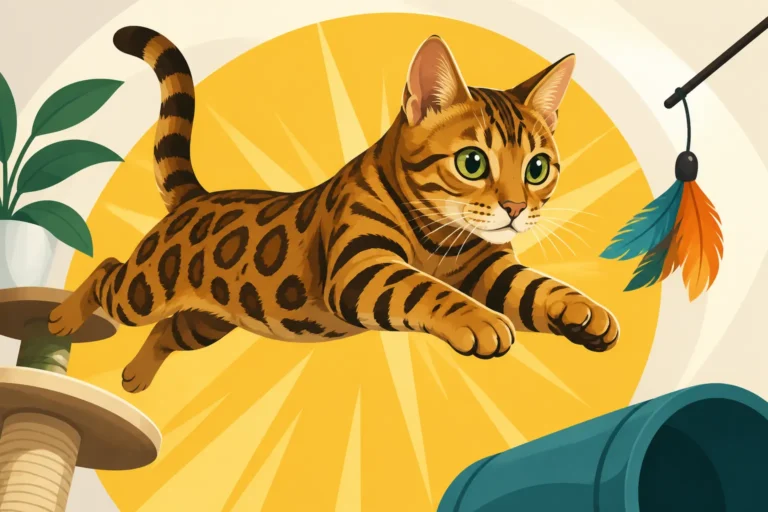
Training a Bengal isn't about stopping them from jumping entirely – that's impossible and goes against their nature. Instead, it's about redirection and providing positive outlets. Use interactive toys, like wand toys (my Bengals go absolutely wild for those feathery ones you can find on Amazon!), to encourage them to jump and chase in designated play areas. This satisfies their prey drive and gives them a healthy workout. Their intelligence means they learn quickly, so positive reinforcement works wonders. If they jump on a cat tree, reward them. If they jump on the counter, gently redirect them to an appropriate vertical space and reward them there. For tips on their learning capabilities, explore How a Bengal Cat Learns From Watching You.
Puzzle feeders placed on shelves or cat trees can also encourage them to use vertical spaces in a constructive way, making them "work" for their food. By making the desirable high spots exciting and rewarding, and the undesirable ones boring or inaccessible, you can gently guide their incredible jumping talents towards activities that keep everyone happy and safe.
| Vertical Enrichment Option | Description | Pros | Cons |
|---|---|---|---|
| Tall Cat Trees | Multi-level structures with scratching posts, perches, and often cubbies. | Provides immediate vertical space; easy to move; offers scratching surfaces. | Can be bulky; may not reach desired heights; cheap ones can be unstable. |
| Wall-Mounted Shelves | Individual platforms or modular systems installed directly onto walls. | Saves floor space; customizable climbing paths; blends with decor. | Requires secure installation (drilling); permanent; not easily reconfigured. |
| Catios | Enclosed outdoor spaces, from window boxes to large custom builds. | Safe outdoor access; unlimited vertical potential; fresh air and natural stimulation. | Can be costly to build; requires yard/balcony space; may need maintenance. |
| Window Perches | Small, simple perches that attach to windowsills or suction to glass. | Easy to install; provides outdoor viewing; inexpensive. | Limited vertical space; less robust for active jumpers; not for every window. |
Disclaimer
This article is for general informational purposes only and does not constitute professional advice. Laws, prices and regulations vary by location and change over time. Consult a qualified professional for guidance on your specific situation.