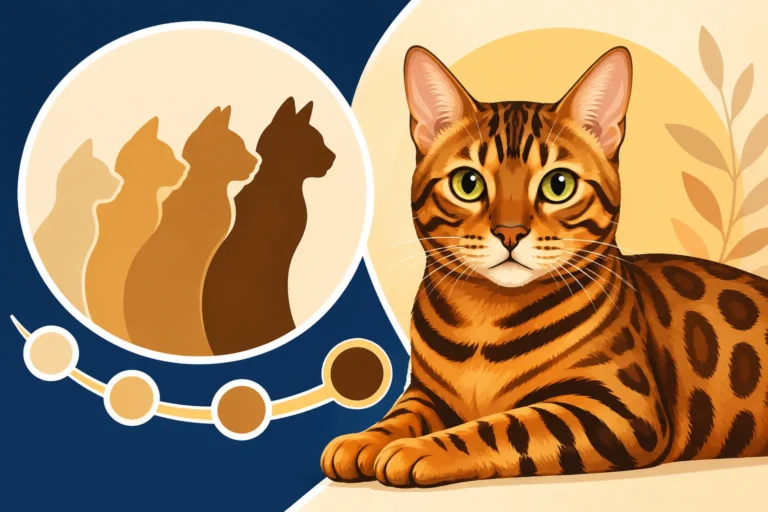
What a Sheet Marble Bengal Cat Is
A Bengal kitten can look spotted at first glance, then develop broad, twisting bands that seem to flow across its sides. That can make “sheet marble” sound like a separate color or breed variety when it is really a descriptive term for a particular kind of Bengal marbled pattern. This guide explains what the term means, how to recognize the pattern, and what may change as a kitten grows.
What a sheet marble Bengal cat looks like
Broad, flowing markings rather than separate spots
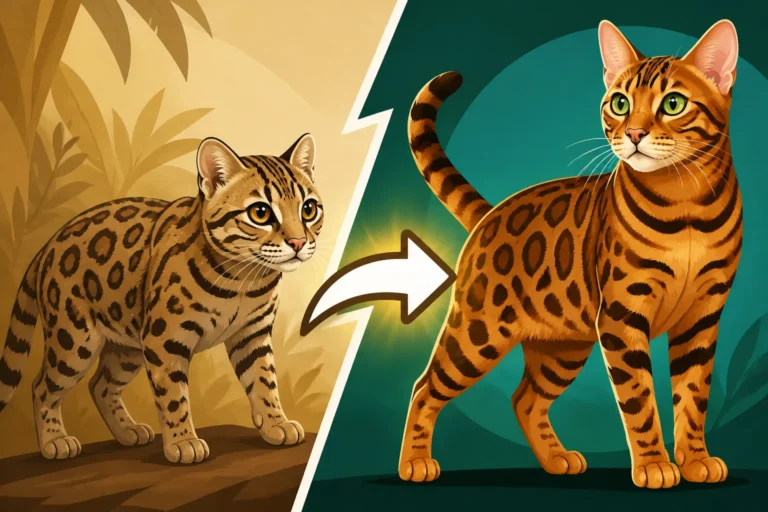
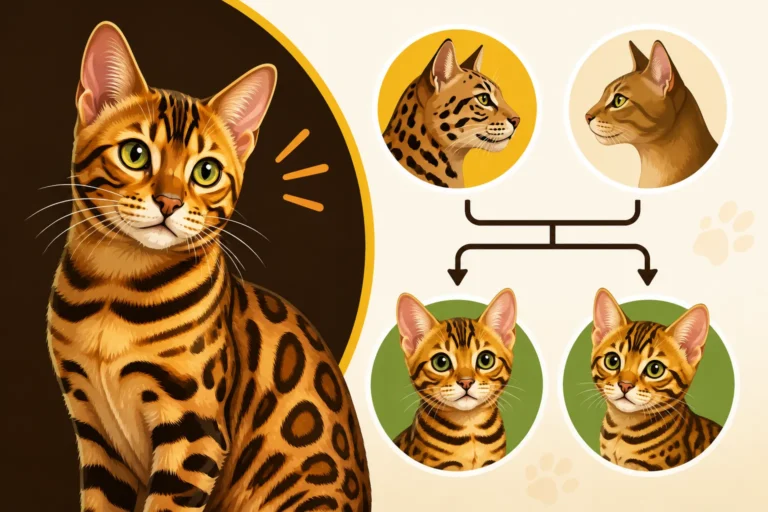
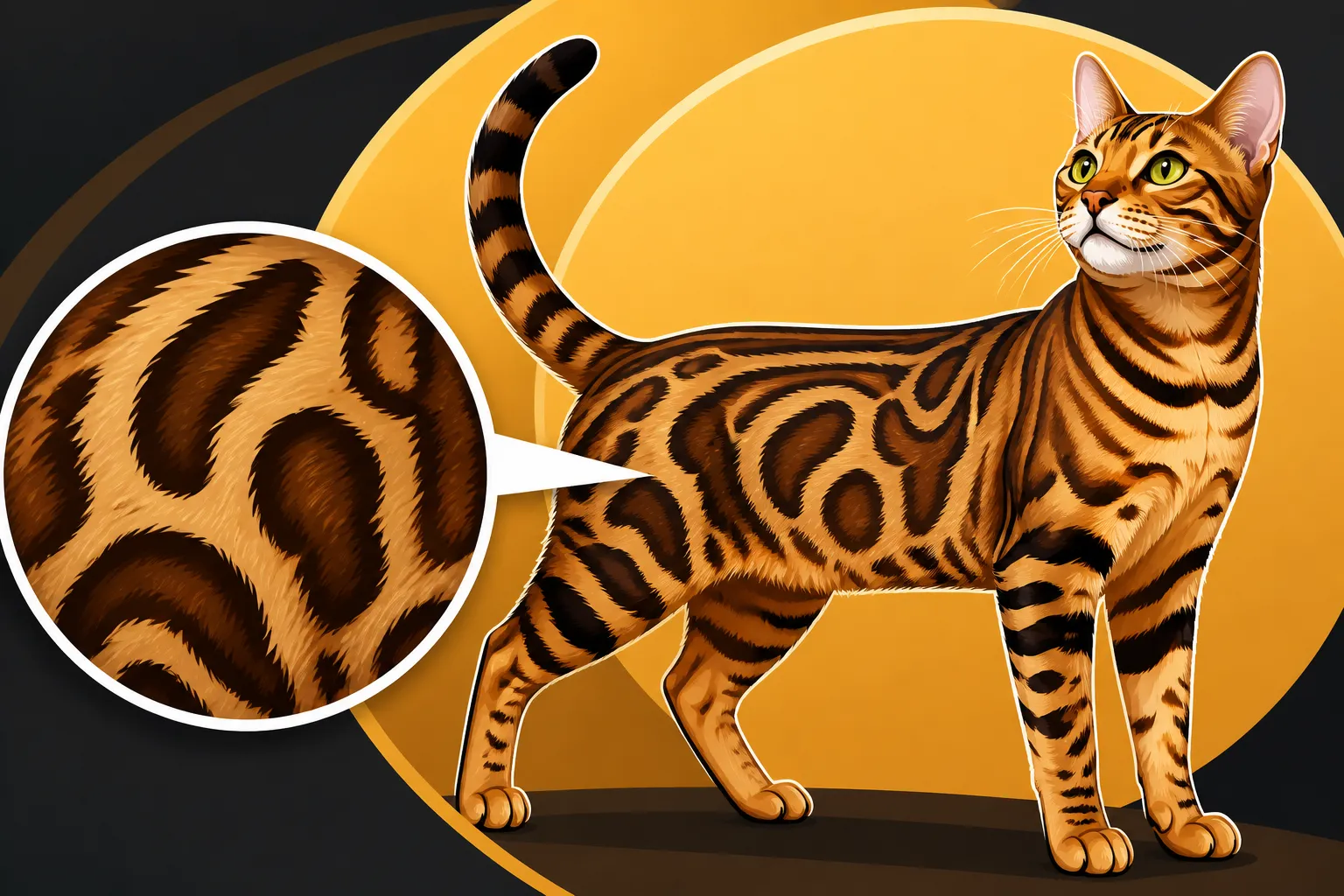
A sheet marble Bengal has a marbled coat pattern with large, connected swaths of color. Instead of looking like neat, separate dots or rosettes, the markings can sweep across the body in long ribbons, loops, and irregular patches. The pattern may bring to mind a piece of polished stone: contrasting lines and shapes seem to run together across the coat.
“Sheet” describes the broad, substantial appearance of those markings. It is not a promise that every marking will form one uninterrupted band from shoulder to hip. The pattern can still include separate shapes, curls, and broken lines. What stands out is the overall impression of expansive, flowing color rather than a field of distinct spots.
A useful comparison is to picture two cats standing side by side. One has clearly separated rosettes, each with a darker outline and lighter center. The other has long, connected swirls that stretch along its flank. The second cat might be described as sheet marble, especially if its markings cover broad areas and create a strong horizontal flow.
For a wider look at the two main pattern families, see Rosetted Against Marbled: The Two Bengal Cat Patterns. A sheet marble is part of the marbled side of that comparison, not a third pattern family.
The pattern is a description, not a separate Bengal variety
“Sheet marble” is commonly used as a descriptive term by Bengal owners, breeders, and enthusiasts. It does not mean the cat belongs to a different breed, has a different coat length, or has a special color category. The cat is still a Bengal with a marbled pattern; the phrase describes the way that pattern looks.
Terminology can vary from one breeder or conversation to another. One person may call a cat sheet marble because its markings are broad and connected, while another may describe the same coat simply as a bold or flowing marble. That variation is one reason photos and close descriptions are more useful than relying on the label alone.
It also helps to distinguish the pattern from the base color. A Bengal’s coat can have a brown, snow, silver, or another accepted color background, while the pattern describes how the darker or contrasting markings are arranged over it. To explore the range of accepted backgrounds, read Every Bengal Cat Color the Registries Accept.
| Feature | Sheet marble appearance | Rosetted appearance |
|---|---|---|
| Overall impression | Broad, connected, flowing shapes | More distinct markings across the coat |
| Marking shape | Swirls, bands, loops, and irregular patches | Spots or rosettes with clearer boundaries |
| Direction | Often creates a horizontal flow along the body | Markings may appear more individually scattered |
| What the term describes | A look within the marbled pattern | A separate Bengal pattern family |
| What it does not identify | A separate breed or color | A different breed or coat length |
How to tell sheet marble from other Bengal patterns
Follow the markings across the body
When you are trying to identify a sheet marble, look at the whole side of the cat rather than focusing on one patch. The shoulder, ribs, and flank often show whether the markings connect into broad, winding shapes or remain more clearly separated. A close-up of a single marking can be misleading; a full-body view gives a better sense of the coat’s overall flow.
The pattern does not have to be perfectly symmetrical from one side to the other. In fact, the left and right sides can look quite different. That asymmetry is normal in marbled coats, so do not assume a cat is not sheet marble just because one flank has a large loop while the other has a different arrangement of bands and patches.
A helpful way to examine a photo is to trace the dark markings with your eyes. Do they form extended curves and connected areas that move along the body? Or do you see many separate spots or ring-like rosettes, with the background coat clearly visible between them? The first impression points toward a marbled pattern; the second may point toward a rosetted one. For more on the distinction, see How Marbling Differs From Rosetting in a Bengal Cat.
Look beyond one dramatic marking
A cat can have a striking swirl or broad patch without being what someone would call sheet marble overall. Pattern labels are based on the coat’s general appearance, not one standout marking. A kitten might have some open spaces, broken lines, and isolated spots mixed in with larger flowing shapes, all within a marbled pattern.
Lighting and camera angle can also change what the pattern seems to look like. A photo taken from above may flatten the coat’s curves, while a side view can show how the markings travel along the body. Flash, sunlight, and shadows may deepen or soften the contrast. If you are comparing kittens, try to look at several clear photos taken in similar lighting rather than deciding from a single image.
The Bengal standard describes the desired overall appearance of the breed, but casual terms such as “sheet marble” are not always used in exactly the same way in everyday conversation. What the Bengal Cat Standard Asks For offers useful context for understanding how coat pattern fits into the broader picture of a Bengal’s appearance. A pattern label by itself does not establish show quality, pedigree, health, or temperament.
How the pattern can change as a Bengal grows
Kitten coats may look less defined
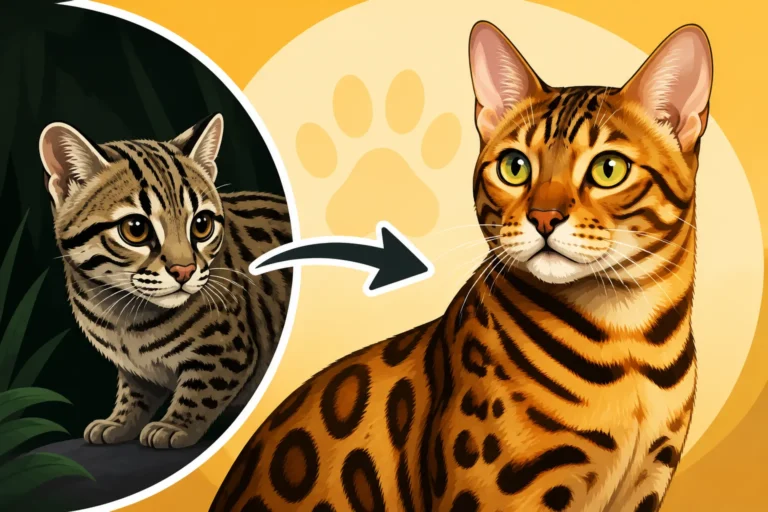
Young Bengal kittens can have soft, fuzzy coats that make their markings seem muted or blurry. This early coat can temporarily soften the contrast, so a kitten’s pattern may not look as crisp or dramatic as an adult’s. A broad marble design might be visible early, but the edges and color balance can still be hard to judge.
As the coat changes, the underlying pattern may become easier to see. That does not mean the cat’s markings are being created from scratch; rather, the coat’s texture and contrast can change how clearly the existing pattern reads. A breeder may be able to show photos of older relatives or previous kittens at different ages, but those images should be treated as examples, not guarantees of exactly how a particular kitten will look.
If you are looking at a very young kitten, keep expectations flexible. A photo taken at one stage can make markings appear tighter, softer, or more blended than they will later. For background on this early coat stage, see What Fuzzies Are on a Bengal Cat Kitten and How a Bengal Cat's Adult Pattern Comes Through.
A changing appearance does not mean the pattern has become another type
Owners sometimes worry that a marbled kitten will “turn into” a different pattern as it grows. The coat can become more or less visually defined, but the underlying pattern category does not normally switch from marbled to rosetted simply because the cat matures. What can change is how noticeable particular markings are, how strong the contrast looks, and how the coat lies.
That is why breeders may use different descriptions for the same cat at different ages. A kitten whose broad shapes were partly hidden by fuzzies may look more clearly marbled later. A different cat may have a vivid kitten coat that seems less contrasting as an adult. These differences are part of coat development and individual variation, not proof that a label was necessarily dishonest.
If pattern is important to you, ask for current photos in natural light, photos from more than one angle, and images of the kitten’s parents when available. You can also ask the breeder what they mean by “sheet marble” and whether they use the term as a casual description or a consistent label in their own program. A thoughtful answer should explain what they see rather than relying on a fashionable phrase.
What to consider if you are choosing a sheet marble Bengal
Do not choose by coat pattern alone
A sheet marble can be beautiful, but pattern is only one part of living with a Bengal. Before making a decision, consider the cat’s temperament, your household routine, the breeder’s practices, and whether you can meet the breed’s daily needs. A striking coat does not make a Bengal calmer, easier to care for, or better suited to a particular home.
Ask about the kitten’s socialization and how it responds to ordinary household sounds, handling, and play. Ask to see relevant health information and learn how the breeder supports kittens after they go home. For a broader view of appearance, What a Bengal Cat Looks Like by the Standard is a useful companion to coat-specific descriptions.
Be cautious if a seller makes unusually strong promises based on the pattern label, such as guaranteeing that a kitten will look exactly like a particular adult photo. Coat development has individual variation, and photos can be affected by light, pose, and editing. It is reasonable to ask questions and request clear images, but no casual pattern term can tell you everything about the cat you are bringing home.
Keep coat care simple and make photo handling comfortable
A Bengal’s short coat generally does not require elaborate grooming. Occasional brushing or a grooming mitt can help remove loose hair, but many cats prefer brief, gentle sessions over being held still for a long time. If you want good pictures of the pattern, let the cat settle on a familiar surface and take several relaxed photos rather than repeatedly repositioning it.
Positive reinforcement can make routine handling easier. A small treat after a calm grooming session or photo can help a cat associate the experience with something pleasant. If you already shop at Chewy, you might find treats or a grooming mitt there; choose products that suit your cat and check ingredients if your veterinarian has recommended dietary restrictions.
Some cats are more comfortable exploring than posing. A wand toy can help you get a natural side view when the cat pauses to watch or play, and a familiar mat can provide a steady place to stand. Chewy is one place owners may look for basic grooming tools or interactive toys, but the particular brand matters less than choosing safe, appropriately sized products and introducing them at the cat’s pace.
For a new Bengal owner assembling everyday supplies, Chewy may also be a convenient place to compare carriers, scratchers, or treats. Those items do not affect whether a cat is sheet marble; they simply help create a comfortable home where the cat can settle in. If you are shopping, focus on sturdy construction and your cat’s needs rather than assuming a special product is required because of the coat pattern.
The simplest definition is this: a sheet marble Bengal is a marbled Bengal whose markings appear especially broad, connected, and flowing across the body. The term describes a visual impression, and usage can vary, so look at the whole coat and ask what the breeder means by it. Pattern can be a lovely part of choosing a Bengal, but it is best considered alongside health, temperament, and the realities of caring for an active cat.
Disclaimer
This article is for general informational purposes only and does not constitute professional advice. Laws, prices and regulations vary by location and change over time. Consult a qualified professional for guidance on your specific situation.