What Happens If You Ship a Bengal Cat to Hawaii
Bringing your beloved Bengal cat with you when moving to a place as beautiful as Hawaii can feel like a dream come true, but many owners discover too late that the islands have extremely strict animal import laws, especially regarding hybrid breeds like the Bengal. This guide will clarify why Hawaii has these rules, what specifically makes Bengal cats problematic for entry, and the serious consequences you could face if you attempt to ship your Bengal cat to the Aloha State.
Why Hawaii Has Such Strict Animal Import Laws
Hawaii's unique ecosystem is incredibly fragile and precious. Being isolated for millions of years, the islands developed a diverse range of plant and animal life that exists nowhere else on Earth. This natural isolation also means that many native species have no natural defenses against diseases or predators common on the mainland. When non-native species are introduced, even seemingly harmless ones, the balance can be irrevocably disrupted.
Protecting a Fragile Ecosystem from Invasive Species
The primary concern for Hawaii's Department of Agriculture is protecting this delicate balance. Invasive species are not just a nuisance; they can wipe out entire populations of native birds, insects, and plants, leading to irreversible ecological damage. When you think of invasive species, you might imagine rats or snakes, but even domestic animals, if they carry diseases or have traits that allow them to thrive in the wild, can become a significant threat. This is why pet importation is regulated with such an iron fist, aiming to prevent any potential risks from reaching the islands.
Imagine a scenario where a new parasite or virus, common on the mainland and harmless to domestic pets there, suddenly finds a susceptible host in Hawaii's native wildlife. The consequences could be catastrophic, leading to extinctions or widespread illness among species that cannot adapt quickly enough. This isn't just a theoretical fear; it's a reality that has played out in many island ecosystems around the world.
Preventing the Spread of Rabies
One of the most critical reasons for Hawaii's stringent animal import laws is its status as a rabies-free state. Rabies is a deadly viral disease, and keeping it out of Hawaii is a top public health priority. The protocols for importing any cat or dog are designed to prevent even a single case from entering the state. This means strict quarantine requirements, extensive vaccination records, and thorough health examinations are mandatory for all animals allowed entry.
For a pet owner, preparing a regular domestic cat for entry into Hawaii involves months of planning, vet visits, blood tests, and potentially a mandatory quarantine period, even under the "5 Day Or Less" program. This process is complex and requires diligent adherence to every step. Any deviation, even a minor one, can result in your pet being subjected to a longer quarantine, or worse. The system is designed to be failsafe against rabies, and there's very little room for exceptions or shortcuts.
The Specific Ban on Bengal Cats in Hawaii
This brings us to the specific issue of Bengal cats. Unlike many domestic breeds, Bengal cats are classified as a hybrid, a mix between a domestic cat and an Asian Leopard Cat. This hybrid status is the crux of why they are not allowed in Hawaii, regardless of their generation.
Why Hybrid Cats are Prohibited
Hawaii's laws specifically prohibit the import of certain hybrid animals, and this includes all generations of Bengal cats. The concern stems from their wild ancestry. Even though many generations removed from their wild ancestor, the Asian Leopard Cat, Bengal cats retain certain traits that the state considers a risk. These can include a stronger prey drive, a more independent nature, and physical characteristics that make them more adaptable to a wild environment if they were to escape.
The state's perspective is that these traits could potentially enable them to establish feral populations, impacting native wildlife or even interbreeding with existing feral cat populations, further complicating conservation efforts. It's a "better safe than sorry" approach, prioritizing the unique ecosystem over individual pet ownership preferences. This stance is firm and applies across the board, making no exceptions for later generation Bengals, which are generally considered fully domesticated in most other places. If you are curious about specific local rules, you can learn more about Hawaii Bans Every Bengal Cat, Whatever the Generation.
What an F Number on a Bengal Cat Means Legally for Hawaii
The "F" number, or filial generation, on a Bengal cat's pedigree indicates how many generations removed it is from its wild Asian Leopard Cat ancestor. An F1 Bengal is a direct cross, an F2 has one ALC grandparent, and so on. Typically, by F4 or F5, most Bengal cats are considered fully domesticated in temperament and physical traits. However, for Hawaii, this distinction doesn't matter. The law views the Bengal cat as a hybrid breed, full stop, regardless of its generation.
This means that whether you have an F1 Bengal that might still display strong wild traits, or an SBT (Stud Book Traditional) Bengal, which is generally F4 or beyond and behaves very much like a regular housecat, the outcome for Hawaii import is the same: they are prohibited. The legal definition doesn't account for the domestication efforts made by breeders or the individual temperament of your cat. It's a blanket ban based on breed classification, which can be incredibly frustrating for responsible owners of well-behaved, later-generation Bengals.
What Happens If You Attempt to Ship a Bengal Cat to Hawaii
This is where things get serious, and it's vital to understand the gravity of the situation. Attempting to bypass Hawaii's import regulations, especially for a prohibited animal like a Bengal cat, carries severe consequences that go far beyond a simple fine.
Confiscation and Immediate Action
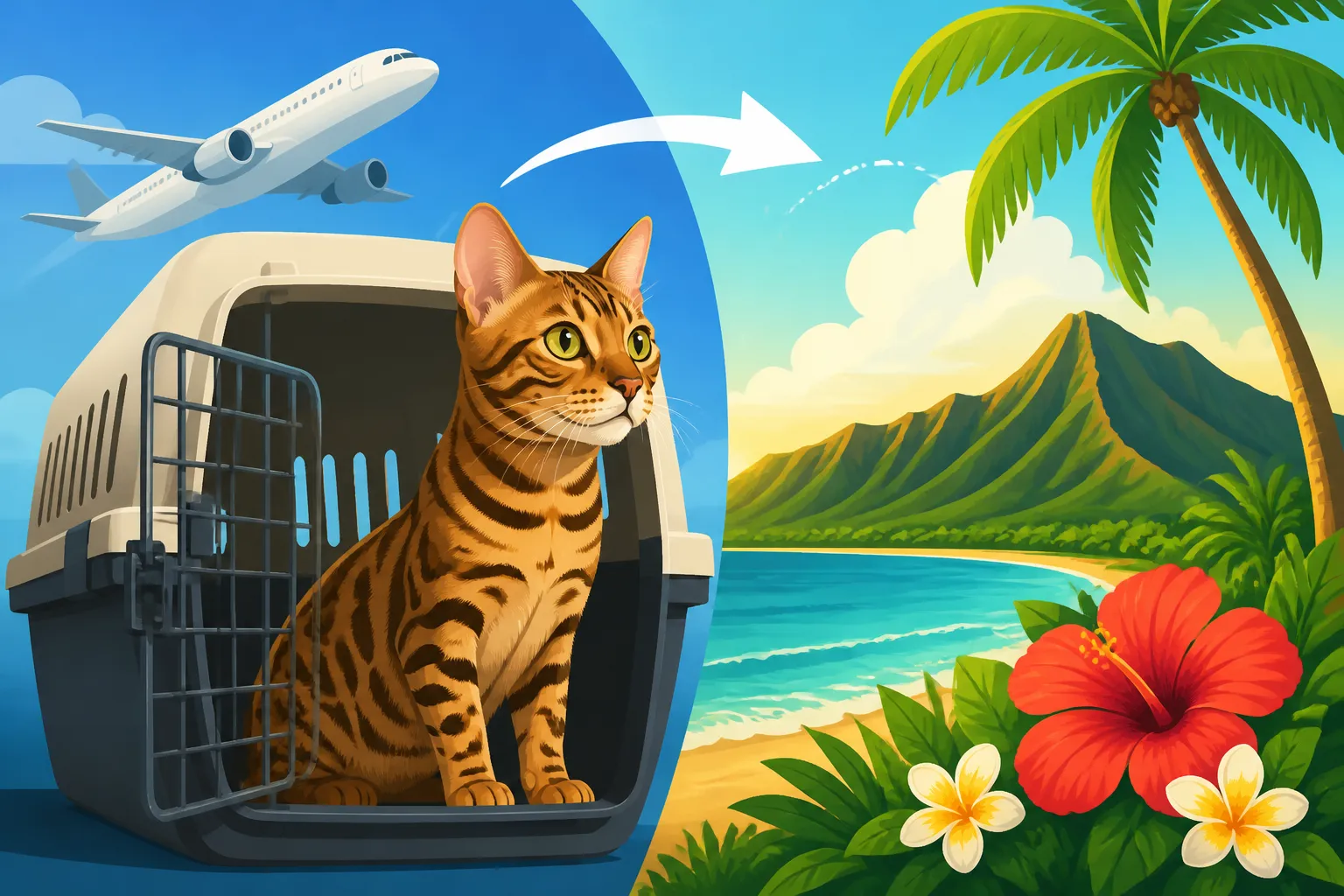
If you attempt to ship a Bengal cat to Hawaii, or arrive with one, the animal will be immediately confiscated by the Hawaii Department of Agriculture (HDOA) upon arrival. There's no negotiation, no "oops, I didn't know," and no quick fix. This isn't a minor infraction; it's a serious violation of animal importation laws designed to protect public health and the environment.
Your cat will be taken into custody, and this can be an incredibly distressing experience for both you and your pet. Imagine your beloved companion, already stressed from travel, suddenly separated from you and placed in an unfamiliar government facility. This is not a pleasant quarantine; it's a holding facility for prohibited animals. The HDOA's priority is to prevent the animal from entering the general population, not to provide comfort or familiar surroundings. This is the stark reality that many unprepared owners face. You can also explore What Happens to a Confiscated Bengal Cat for more insight.
Legal Penalties and Fines
Beyond the immediate confiscation of your pet, you, as the owner, will face significant legal repercussions. The penalties for violating Hawaii's animal import laws are substantial. These can include:
- Hefty Fines: Fines can range into the thousands of dollars per violation. These aren't just slaps on the wrist; they are designed to be a strong deterrent.
- Costs of Care and Housing: You will be responsible for all costs associated with your Bengal cat's care, housing, and potential re-shipment while it is in HDOA custody. These daily fees can quickly accumulate, adding immense financial strain to an already dire situation.
- Prosecution: In some cases, depending on the severity and intent, you could face criminal charges. While rare, it's a possibility for egregious violations or repeat offenses. This could mean a permanent mark on your record, impacting future travel or even employment opportunities.
Let's look at a hypothetical scenario to illustrate the financial impact:
| Item | Estimated Cost (Mainland USD Equivalent) | Notes |
|---|---|---|
| HDOA Daily Housing/Care Fee | Variable, potentially $100+/day | Costs can add up quickly during custody. |
| Fines for Illegal Importation | $1,000s – $10,000s | Specific amounts depend on the exact violation and discretion of authorities. |
| Veterinary Assessment/Health Checks | $500 – $1,500+ | Required by HDOA to assess the animal's condition and potential risks. |
| Return Flight (Cargo) | $1,000s – $3,000+ | Shipping a cat back to the mainland is expensive, especially as cargo. |
| Airline Pet Carrier (IATA Compliant) | $150 – $400+ | Must meet strict airline standards for safe travel. |
| Ground Transportation (HDOA to Airport) | $100 – $300+ | Arranging transport of the confiscated animal to a designated flight. |
| Kenneling on Mainland (if no immediate owner) | $50 – $100/day | If you don't have immediate arrangements, further costs for boarding. |
| Legal Consultation (if applicable) | Variable, potentially $1,000s | If you dispute the confiscation or face charges. |
As you can see, the costs can escalate rapidly, making a heartbreaking situation also a financially devastating one.
Mandatory Re-Shipment or Euthanasia
Once confiscated, the HDOA will likely mandate that you either re-ship your Bengal cat back to the mainland (or another legal destination) at your own expense, or, in the worst-case scenario, the animal may be euthanized. This is the heartbreaking reality for many owners who didn't fully understand or chose to disregard the laws.
Re-shipping involves arranging and paying for another flight, which can be complicated and costly, especially with the added pressure of HDOA deadlines. If you cannot arrange or afford the re-shipment, or if no legal destination can be found, the state has the authority to take further action, including euthanasia, to ensure the prohibited animal does not pose a threat to Hawaii's ecosystem. This isn't a scare tactic; it's a documented outcome of illegal animal importation. The emotional toll of such a situation is unimaginable, adding grief and regret to the already significant financial and legal burdens.
Alternatives and Responsible Ownership Considerations
Given the strict regulations, it becomes clear that bringing a Bengal cat to Hawaii is simply not an option. For current Bengal owners considering a move to Hawaii, or for those living in Hawaii who are tempted to acquire one, understanding the alternatives and practicing responsible pet ownership is paramount.
Rehoming Your Bengal Cat on the Mainland
If you are moving to Hawaii and currently own a Bengal cat, the most responsible and heartbreaking choice you may need to make is to rehome your cat on the mainland. This is an incredibly difficult decision, as our pets are family members. However, it's the only way to ensure your Bengal's safety and avoid legal repercussions.
- Finding a Reputable Home: Start early. Seek out friends, family, or trusted individuals who understand the unique needs of a Bengal cat. Look for people who have experience with active, intelligent breeds and can provide the enrichment your Bengal needs. Consider reaching out to Bengal cat rescue organizations on the mainland. They often have networks of approved adopters who can provide loving homes.
- Thorough Vetting: Ensure any potential new owners are thoroughly vetted. Ask about their living situation, experience with cats (especially Bengals), financial stability, and commitment to lifelong care.
- Transition Period: If possible, facilitate a smooth transition. Provide the new owners with your cat's favorite toys, blankets, food, and medical history. A staggered introduction or even visits before the permanent move can help your cat adjust. This might be a good time to ensure your cat has a full health check-up, perhaps even with an insurer like Healthy Paws, to demonstrate its health to a new owner.
- No "Secret" Shipping: Do not, under any circumstances, attempt to hide your Bengal or try to ship it under false pretenses. As we've discussed, the consequences are too severe for both you and your cat.
It's a decision no pet owner wants to make, but prioritizing your cat's well-being and respecting the laws of your new home is crucial.
Choosing Legal Pet Alternatives in Hawaii
For those already in Hawaii looking for a companion or moving there without a Bengal, it's essential to choose a breed that is legally permitted. Hawaii welcomes a vast array of domestic cats that pose no threat to its unique environment.
- Adopt from Local Shelters: Hawaii has many wonderful cats in need of homes at local shelters and rescues. Adopting locally supports the community and ensures you're getting an animal already approved for residency. Plus, you get to meet your potential companion in person!
- Research Permitted Breeds: If you have your heart set on a specific type of cat, research Hawaii's permitted list. Most common domestic breeds are allowed, provided they meet all health and import requirements. Be aware that the import process for any cat is rigorous, involving vaccinations, microchipping, and potentially a quarantine period to ensure they are rabies-free. How to Check Your State's Bengal Cat Law can give you an idea of the types of variations you might encounter in different jurisdictions.
- Understand Import Procedures: For any permitted cat you bring from the mainland, you'll need to meticulously follow the Hawaii Department of Agriculture's Animal Industry Division rules. This includes specific blood tests (like the FAVN test), waiting periods, and often a vet inspection upon arrival. Missing even one step can result in extended quarantine for your pet, so detailed planning is a must. If you're planning your pet's diet for the move, ensure any special diets are properly imported and available on the islands.
- Local Pet Stores and Breeders: If you prefer a kitten, there are local pet stores and ethical breeders on the islands who work with permitted domestic breeds. Always do your research to ensure you're dealing with a reputable source that adheres to all local laws and ethical breeding practices.
The Importance of Due Diligence Before Any Move
This entire scenario underscores the critical importance of performing thorough due diligence when planning a move, especially interstate or internationally, with pets. Never assume that what is legal in one state or country is legal in another.
- Official Sources are Key: Always consult the official government websites of your destination for animal import regulations. For Hawaii, this is the Hawaii Department of Agriculture. Do not rely on anecdotal evidence from forums or social media. Laws change, and interpretations vary.
- Start Early: Pet import processes, especially to places like Hawaii, are lengthy. Begin your research and preparations many months, sometimes even a year, in advance. This allows time for vaccinations, blood tests, paperwork, and any mandatory waiting periods.
- Consider the Impact on Your Pet: A move is stressful for animals. Factor in the travel time, potential quarantine, and adjustment period for your pet. Is it truly in their best interest to make the move, even if legally permitted? For an active breed, you might also be considering The Bengal Cat Is the Most Active Cat You Can Own, and how that impacts a move.
- Consult Your Vet: Your veterinarian is an invaluable resource. They can advise you on health requirements, necessary vaccinations, and help you navigate the paperwork. They may even have experience with other clients who have moved to Hawaii with their pets.
In conclusion, while the allure of Hawaii is undeniable, the reality for Bengal cat owners is a firm and absolute "no." Respecting these laws protects Hawaii's unique environment and prevents heartbreaking situations for pet owners.
Disclaimer
This article is for general informational purposes only and does not constitute professional advice. Laws, prices and regulations vary by location and change over time. Consult a qualified professional for guidance on your specific situation.