Which Cat Wheel Size a Bengal Cat Needs
It's a common dilemma for Bengal cat owners: you know your majestic, energetic feline needs to run, leap, and play like their wild ancestors, but how do you safely channel all that boundless energy indoors? Many turn to cat wheels as the ultimate solution for exercise, only to be overwhelmed by the sheer variety of sizes available. Choosing the wrong size isn't just a waste of money; it can be uncomfortable or even unsafe for your beloved companion. This guide is here to help you navigate the world of cat wheels, ensuring you select the perfect size that will keep your Bengal happy, healthy, and endlessly entertained.
Understanding Your Bengal Cat's Unique Physicality and Energy Needs
Bengals aren't your average couch potato cats. They are a breed apart, brimming with an almost inexhaustible supply of energy that demands an outlet. This isn't just about keeping them busy; it's fundamental to their well-being, and it directly influences the kind of exercise equipment, including a cat wheel, that will actually work for them.
Why Bengal Cats Need So Much Exercise
Let's be honest, living with a Bengal means living with a blur of motion. Their wild heritage, stemming from the Asian Leopard Cat, means they retain many primal instincts for hunting, climbing, and running. If you've ever wondered why your Bengal never seems to tire, it's because their genetic makeup primes them for intense, explosive activity. They thrive on challenges and opportunities to burn off steam, and without adequate exercise, this energy can manifest in ways you might not appreciate, like destructive behaviors or excessive vocalizations. Providing appropriate physical activity isn't just a recommendation for Bengals; it's a necessity for their physical and mental health. They truly are The Bengal Cat Is the Most Active Cat You Can Own.
Many owners find that traditional play sessions, even with the most engaging Which Wand Toy a Bengal Cat Destroys Fastest, simply aren't enough to satisfy their Bengal's high drive. They might play for an hour straight, only to be ready for more a short while later. This constant demand for activity is why tools like cat wheels become so invaluable. They offer a self-serve exercise option that allows your Bengal to run at their own pace, whenever the mood strikes, giving them the sustained workout their bodies crave.
How Size and Build Impact Wheel Choice
When it comes to a cat wheel, "one size fits all" is a dangerous myth, especially for a breed like the Bengal. These cats are known for their athletic, muscular build and can range quite a bit in size, with males often being significantly larger and heavier than females. A small, flimsy wheel simply won't cut it for a powerful Bengal. Not only might it not support their weight, but it also won't provide the necessary space for a comfortable stride, leading to an awkward and potentially injurious running posture.
Consider your Bengal's physical attributes. How Big a Bengal Cat Gets can vary, but generally, they are medium to large cats, with males often weighing more than What a Muscular Bengal Cat Should Weigh. The wheel needs to accommodate their full length when running, without them having to crouch uncomfortably. A wheel that's too small forces them to run with an unnatural arch in their back, which can cause discomfort, strain, or even long-term spinal issues. Think of a human trying to run on a treadmill meant for a small child – it just wouldn't work.
The Importance of a Full Stride
This is perhaps the most critical factor when considering cat wheel size. Your Bengal needs to be able to stretch out fully when they run, mimicking the natural motion they would make if chasing prey or sprinting across a field. A full, natural stride requires enough circumference on the wheel so their body can extend without their head hitting the top of the track or their tail dragging on the bottom.
If a Bengal has to run in a perpetually hunched position, not only is it uncomfortable, but it can lead to bad habits, muscle imbalances, and even joint problems over time. The whole point of a cat wheel is to provide safe, natural exercise. Therefore, ensuring your cat can maintain proper form is paramount. This means paying close attention to the wheel's diameter in relation to your cat's shoulder height and overall length.
Deciphering Cat Wheel Sizes: Diameter and Track Width
Once you understand why size matters, it's time to break down the technical aspects of cat wheel measurements. There are two primary dimensions you need to consider: the wheel's diameter and its track width. Getting these right is key to a successful investment and a happy, healthy Bengal.
The Critical Role of Wheel Diameter
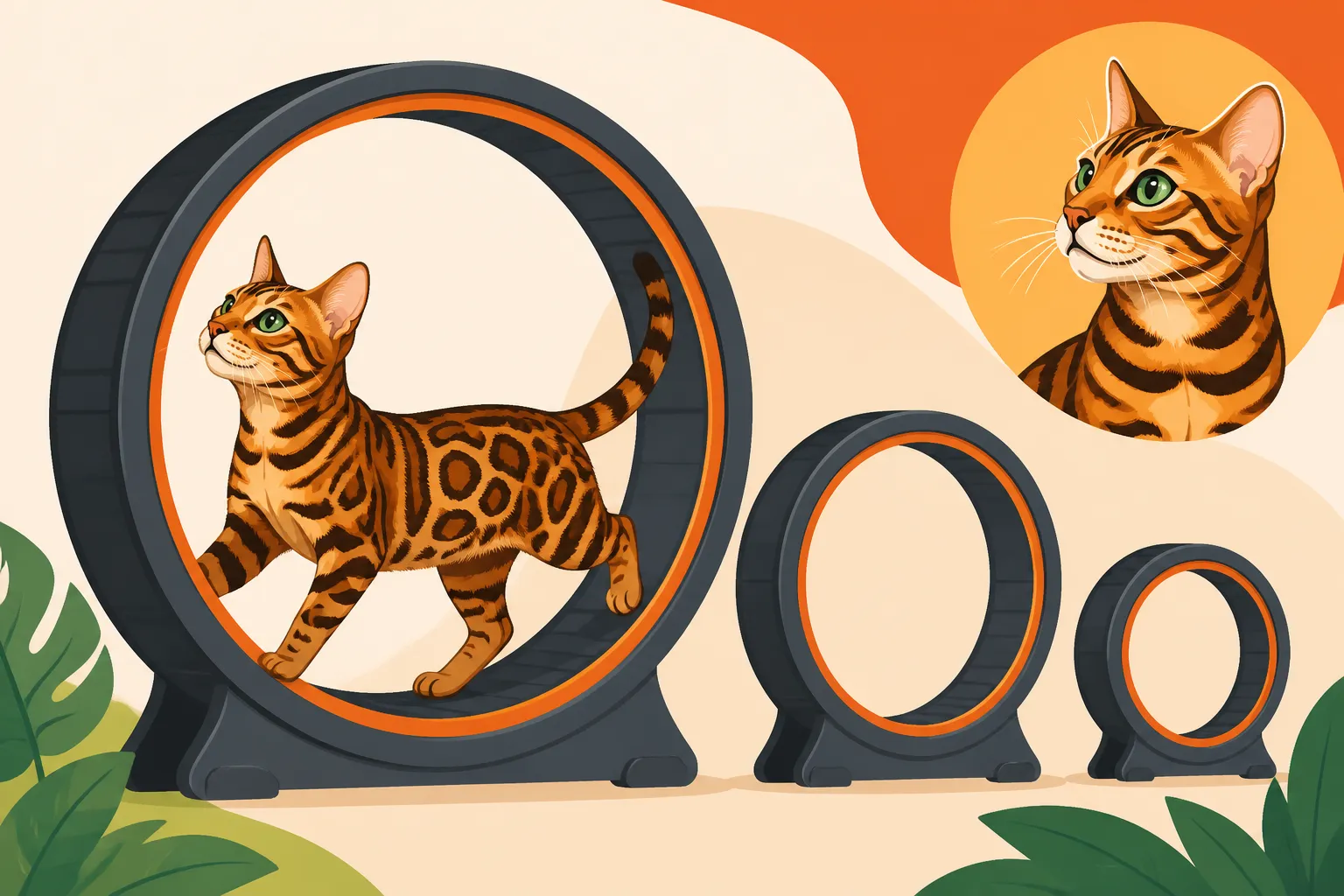
The diameter of a cat wheel refers to its overall measurement from one side to the other, passing through the center. This is the most crucial measurement for ensuring your Bengal can run with a straight back and natural gait. A general rule of thumb is that the wheel's diameter should be large enough that your cat can stand fully upright on the track, stretching their spine, without their back touching the top edge of the running surface.
For a Bengal cat, which is typically taller and longer-bodied than many domestic breeds, this usually means opting for a larger wheel. Many standard cat wheels might seem big enough, but if your Bengal has to visibly dip their head or arch their back to run, it's too small. The ideal diameter allows them to extend their body, head held naturally, as if they were running on flat ground. This prevents spinal strain and encourages them to use the wheel more frequently and vigorously, burning off all that excess energy that might otherwise lead to What a Bored Bengal Cat Destroys.
Why Track Width Matters for Comfort and Safety
While diameter ensures a proper stride length and spinal alignment, track width is all about comfort and stability during the run. The track width is the measurement of the actual running surface itself. A track that's too narrow can feel unstable for your Bengal, making them hesitant to use it, or worse, causing them to slip off or feel cramped. Remember, these are powerful, agile cats, and they need a solid, secure platform to truly unleash their speed.
A sufficient track width allows your Bengal to comfortably place both paws side-by-side, offering a stable and confident running experience. This is especially important as they accelerate or change pace, which Bengals are prone to do! A wider track also helps if your cat has a slightly wider stance when running or simply prefers more space. Look for wheels that offer a generous running surface, typically designed with larger breeds in mind, to ensure maximum comfort and safety for your energetic companion.
Standard Cat Wheel Sizes and What They Mean
Cat wheels come in various sizes, often marketed as "small," "medium," "large," or sometimes by specific diameter measurements. For a Bengal cat, you'll almost always be looking at the larger end of the spectrum. Let's break down typical sizes and what they might mean for your Bengal:
| Size Category | Typical Diameter Range (inches) | Typical Track Width (inches) | Best Suited For | Bengal Cat Suitability |
|---|---|---|---|---|
| Small | 24-30 | 6-8 | Kittens, small cats | Too small, causes arching |
| Medium | 30-36 | 8-10 | Average house cats | Likely too small, borderline for smaller females |
| Large | 36-48 | 10-12+ | Larger breeds, active cats | Generally ideal for most Bengals |
| Extra Large | 48+ | 12+ | Very large or multiple cats | Excellent for large males, ensures ample space |
As you can see, for most Bengals, a "large" or even "extra-large" wheel is usually the way to go. Brands like One Fast Cat and The Ferris Cat Wheel, often found on platforms like Amazon, typically offer models within these larger ranges, understanding the needs of more active and sizable breeds. Always check the specific dimensions provided by the manufacturer, rather than relying solely on vague size descriptors. You want to ensure the diameter gives your Bengal a straight back and the width provides a stable, comfortable run.
Choosing the Right Wheel Size for Your Individual Bengal
Even within the Bengal breed, there's variation. A smaller female might manage a wheel that a larger, stockier male would find cramped. Taking precise measurements and considering your cat's individual running style are crucial steps to making the best choice.
Measuring Your Bengal for the Perfect Fit
Before you click "add to cart" on Amazon or head to a specialty pet store, grab a tape measure and involve your Bengal (if they'll cooperate!). The most important measurement is your cat's shoulder height when they are standing naturally. This gives you a baseline for the minimum internal clearance needed. You want a wheel diameter that is at least 6-8 inches more than your Bengal's shoulder height. This extra space ensures they can extend their body and neck without hunching.
Next, measure their full body length from nose to the base of the tail. While this isn't a direct wheel measurement, it helps you visualize how much space they'll occupy when stretched out. Finally, observe your Bengal's gait. Do they run wide, or do they keep their paws relatively close? This can inform your decision on track width. Err on the side of larger dimensions when in doubt. A slightly too-large wheel is far safer and more comfortable than one that's too small.
Factors Beyond Body Length: Pace and Running Style
It's not just about static measurements; it's about dynamic movement. Some Bengals are sprinters, launching themselves into a full-speed run, while others prefer a steady jog. A cat that runs at high speeds will exert more force and need a very stable, wide track to feel secure. If your Bengal is known for their explosive energy and ability to How Long a Bengal Cat Runs on a Wheel with incredible intensity, then a more robust, wider wheel will be appreciated.
Also, consider their personality. Is your Bengal a graceful runner, or a bit of a clumsy daredevil? A more cautious cat might prefer the security of a wider track, even if they don't strictly "need" it based on their body size. The goal is to provide an environment that encourages them to use the wheel, and comfort plays a huge role in that. If they feel unstable or cramped, they simply won't use it, defeating the purpose.
Considering Multi-Cat Households and Future Growth
If you have more than one Bengal cat, or you're getting a kitten that will eventually grow into a magnificent adult, these factors need to be weighed. If you plan for multiple cats to use the wheel, even if not simultaneously, choosing a larger diameter and wider track will prevent arguments over space and ensure all your feline athletes can enjoy it comfortably. A wheel that accommodates your largest Bengal will usually work for smaller ones too, making it a sound long-term investment.
For kittens, remember they grow fast! What a Bengal Cat Weighs as a kitten is far less than their adult size. Purchasing a wheel based on their kitten dimensions would be a mistake. Always buy a wheel that will suit them as an adult, mature Bengal cat. They might look a bit small on it initially, but they'll quickly grow into it. This approach saves you from having to purchase a second, larger wheel down the line, and ensures they have a safe, appropriately sized exercise tool for their entire life.
Setting Up and Encouraging Use of Your Bengal's New Wheel
Once you've done your research and chosen the perfect-sized cat wheel, the next step is getting your Bengal to actually use it! This involves thoughtful placement, careful introduction, and consistent encouragement.
Placement and Stability Considerations
Where you put the wheel can make all the difference. Bengals are social creatures and often prefer to be where the action is, so placing the wheel in a common area like the living room or a spacious playroom is often more successful than tucking it away in a quiet corner. Ensure the floor is level and stable. Most quality cat wheels are quite heavy and designed to be stable, but it's always good to double-check. If it wobbles, your Bengal might be hesitant to get on it.
Consider the surrounding area. Give your Bengal ample space to jump on and off the wheel without bumping into furniture or walls. Also, think about noise. While modern cat wheels are designed to be relatively quiet, an active Bengal running at full tilt can still create some sound. Placing it away from bedrooms or sensitive areas can prevent disturbances, especially if your Bengal enjoys an early morning sprint. If you're building a What a Catio for a Bengal Cat Costs for them, a cat wheel can be a fantastic addition to their outdoor-safe space!
Tips for Introducing Your Bengal to the Wheel
Don't expect your Bengal to jump on and start running immediately. This is a new, potentially intimidating object. Patience and positive reinforcement are key.
- Initial Exploration: Let your Bengal investigate the wheel on their own terms. They'll sniff it, rub against it, and perhaps even paw at it. Don't force them.
- Lure with Treats or Toys: Use their favorite treats or a wand toy to gently lure them onto the wheel. Place treats on the track, encouraging them to walk a few steps. As they step, the wheel will move slightly.
- Short Sessions: Keep initial training sessions very short and positive. Even a few steps is a victory! Reward them generously with praise and treats.
- Clicker Training: If your Bengal is already How to Clicker Train a Bengal Cat, this is an excellent opportunity to use those skills. Click and treat for any interaction with the wheel, gradually shaping their behavior towards walking and then running.
- Consistency: Dedicate a few minutes each day to training. Some Bengals take to it immediately, others need more time. The key is to make it a fun, rewarding experience.
Maintaining the Wheel and Ensuring Longevity
Once your Bengal is a seasoned wheel-runner, a little maintenance goes a long way to ensuring their wheel remains safe and enjoyable for years. Regularly check the running surface for any wear and tear. If it's a carpeted surface, vacuum it periodically and check for loose threads that could snag paws. For smooth surfaces, a quick wipe-down with a pet-safe cleaner will keep it fresh.
Also, pay attention to the moving parts. While most cat wheels are built for durability, dust or cat hair can sometimes accumulate in the bearings or on the axle, potentially causing squeaks or stiffness. Most manufacturers provide instructions for simple cleaning or lubrication. A well-maintained wheel provides a smoother, quieter ride, encouraging your Bengal to keep burning those How Many Calories a Bengal Cat Burns and staying active. Investing in a good quality, appropriately sized wheel from a reputable brand (perhaps from a selection on Amazon with good reviews) is a long-term commitment to your Bengal's health and happiness.
Disclaimer
This article is for general informational purposes only and does not constitute professional advice. Laws, prices and regulations vary by location and change over time. Consult a qualified professional for guidance on your specific situation.