Whether an Early Generation Bengal Cat Sprays More
It's incredibly frustrating, isn't it? You bring home your beautiful, wild-looking Bengal cat, captivated by their exotic charm and playful nature, only to discover a pungent, unmistakable spray mark on your wall or sofa. The question that immediately springs to mind, especially if you've done your research, is whether this behavior is more prevalent in those captivating early generation Bengals, the ones still so close to their wild roots. It's a valid concern, and we're here to dive deep into why this might be the case and, more importantly, what you can do about it.
Understanding Early Generation Bengal Cats and Their Wild Roots
When we talk about "early generation" Bengal cats, we're really talking about a feline that carries a stronger genetic blueprint from its wild ancestor, the Asian Leopard Cat (ALC). This proximity to the wild isn't just about their stunning looks; it significantly influences their behavior, often in ways that surprise first-time Bengal owners.
What "Early Generation" Really Means for Your Bengal
The term "early generation" refers to F1, F2, and F3 Bengal cats. F1 means "Filial 1," the first generation offspring directly from a pairing between an Asian Leopard Cat and a domestic cat. An F2 is the offspring of an F1 and a domestic cat, and an F3 is the offspring of an F2 and a domestic cat. Each generation dilutes the wild blood just a little, but those first few generations are still incredibly close to their ALC heritage. This isn't just a number on a pedigree; it translates directly into a cat with more pronounced wild instincts. They often possess an intensity, energy, and territorial awareness that can be a far cry from your average domestic house cat. This genetic legacy means their responses to the world around them, including how they communicate, are often dialed up. It's why they tend to behave quite differently compared to their later-generation (SBT) cousins, who are generally considered fully domestic. If you've ever wondered How an Early Generation Bengal Cat Behaves Differently, this wild link is the core reason.
The Asian Leopard Cat's Influence on Marking Behavior
To truly understand why an early generation Bengal might be more prone to spraying, we need to look at their magnificent wild ancestor, the Asian Leopard Cat. What an Asian Leopard Cat Is Behind Every Bengal Cat is a creature of the wild, a solitary hunter in its natural habitat. For a wild cat, communication isn't through casual meows or friendly nudges; it's through scent. Scent marking is a crucial survival tool. It defines territory, advertises sexual availability, and warns off rivals without a face-to-face confrontation, which can be dangerous. An ALC might spray urine, rub scent glands, or scratch trees to leave behind a clear message: "This is my space." These are not behaviors of malice or "badness"; they are innate, hardwired instincts for survival and communication. When these powerful instincts are carried forward into the early generations of Bengal cats, they don't just disappear. They can manifest as a stronger urge to mark their territory and communicate through scent, even within a comfortable home environment. The domestic setting, which to us seems perfectly safe, might still trigger these ancient communication needs in a cat whose ancestors roamed jungles.
The Complex Reasons Behind Feline Spraying
Spraying isn't just a "naughty cat" behavior; it's a complex form of communication and often a sign that something is amiss in a cat's world. While early generation Bengals might have a predisposition, it's crucial to understand the universal triggers for spraying in any cat first.
Why Any Cat Might Spray: Beyond the Litter Box
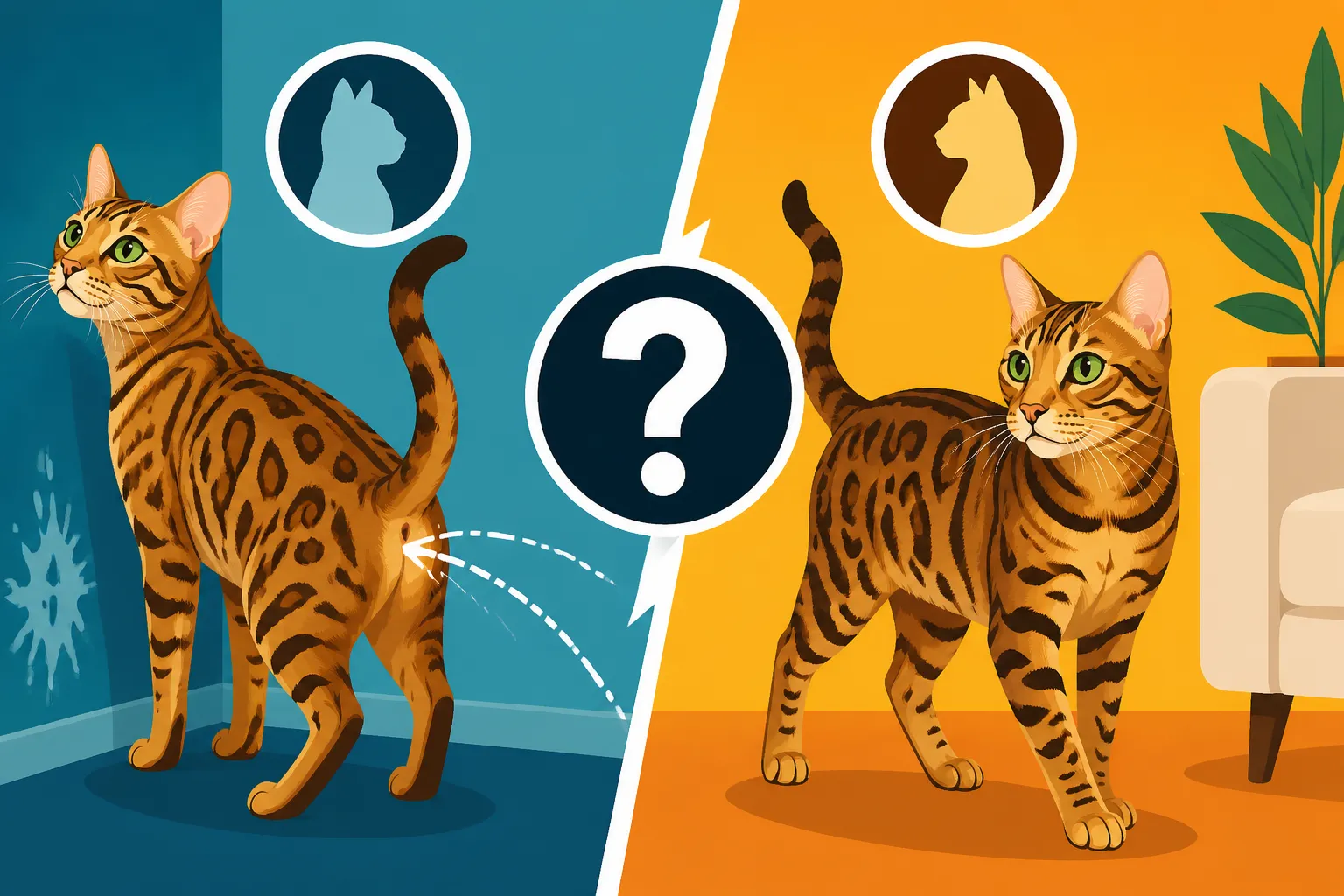
Let's clear something up right away: spraying is not the same as inappropriate urination. When a cat sprays, they typically back up to a vertical surface, lift their tail, and squirt a small amount of urine. It's usually a deliberate, often strong-smelling, mark rather than a full bladder emptying. Cats spray for a variety of reasons, none of which are about getting back at you or being spiteful. Instead, it's almost always a response to stress, insecurity, or a strong desire to communicate.
Consider these common scenarios for any cat:
- Territorial Disputes: A new cat in the neighborhood visible outside the window, a perceived threat from another pet in the home, or even a new piece of furniture changing the "map" of their territory.
- Insecurity or Anxiety: Moving to a new home, changes in routine, new people, loud noises, or simply feeling overwhelmed. A cat might spray to surround themselves with their own reassuring scent.
- Undetected Medical Issues: Sometimes, spraying can be a sign of underlying pain or discomfort. Urinary tract infections, bladder stones, or even arthritis can make using the litter box painful or difficult, leading a cat to seek other ways to eliminate or mark. This is why a vet visit is always the first step.
- Intact Status: Unneutered male cats, in particular, are almost guaranteed to spray. It's a primal way to advertise their presence to potential mates and ward off rival males. Intact females can also spray when in heat, though it's less common.
The frustration for owners is real. You work hard to keep your home clean and provide everything your cat needs, only to find these pungent reminders. It can feel like a personal affront, but understanding that it's a deep-seated instinct, not a personal attack, is the first step toward finding a solution.
How Early Generation Traits Can Amplify Spraying Instincts
Now, let's bring those early generation Bengal traits back into the picture. While any cat can spray, the wild heritage of an F1, F2, or F3 Bengal means these instincts can be amplified. Their natural tendencies toward heightened territoriality and strong communication through scent are simply closer to the surface.
Imagine this: a domestic shorthair might feel a mild annoyance at a new cat appearing outside the window. They might stare, hiss, or even redirect their aggression toward a housemate. An early generation Bengal, however, might perceive this as a significant territorial invasion. Their ancestral programming kicks in, urging them to clearly delineate their boundaries with scent. This isn't just a suggestion to them; it's an imperative. How Territorial a Bengal Cat Is can be a major factor here. Their internal alarm system for perceived threats to their domain is simply more sensitive and urgent.
Furthermore, these cats often have a more intense emotional and physical energy. This means they can be more easily stressed by changes in their environment or routine. A subtle shift that a later generation Bengal might barely register could be a major stressor for an F1 or F2, leading to spraying as a coping mechanism to "feel safe" by marking their surroundings with their own scent. It's their way of saying, "I'm here, this is mine, and I'm feeling a bit out of sorts."
Key Factors Increasing Spraying Risk in Early Generations
While their wild genetics play a significant role, specific circumstances and environmental factors can greatly increase the likelihood of an early generation Bengal cat spraying. These are often things we, as humans, can identify and address.
The Undeniable Impact of Unneutered Status
This is perhaps the single most impactful factor, especially for male Bengal cats of any generation, but particularly so for early generations. If you have an unneutered male F1, F2, or F3 Bengal, the chances of him spraying are astronomically high. It's not a matter of if, but when. Their hormones drive an intense, primal urge to mark territory and advertise their presence to potential mates, which means spraying urine. This isn't a behavior they can simply be trained out of; it's a biological imperative.
Even if an early generation male is kept strictly indoors, his instincts will still tell him to mark. He'll sense other cats outside, smell the world beyond his walls, and feel the powerful push of his hormones. Females, while less prone to spraying than intact males, can also spray when they are in heat to attract mates. The strong drive to reproduce, deeply embedded in their wild lineage, simply amplifies these behaviors. This is why discussions around Whether Neutering Quiets a Bengal Cat often emphasize the dramatic reduction in spraying behavior. It's the most effective preventative measure.
Environmental Stressors and Territorial Pressures
Early generation Bengal cats are generally more sensitive to their environment and territorial changes than many domestic breeds. What might seem like a minor disruption to you can be a significant source of stress and insecurity for them, leading directly to spraying.
Consider these scenarios:
- New Home or Major Changes: Moving house, bringing home a new baby, or even rearranging furniture can be deeply unsettling. An F1 or F2 Bengal might respond by marking new areas with their scent to reclaim them or feel more secure.
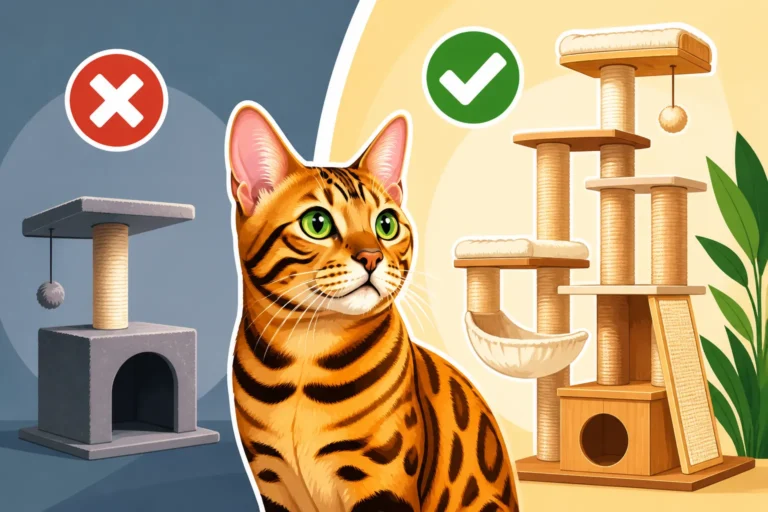
- Insufficient Resources or Space: Imagine living with insufficient personal space, especially for a cat wired to have a vast territory. If there aren't enough litter boxes (the general rule is one per cat plus one extra, scattered around the house), accessible vertical spaces, or quiet retreat spots, an early generation Bengal can feel profoundly insecure. This can lead to overt territorial marking. They need ample How Much Vertical Space a Bengal Cat Needs to feel safe and survey their domain.
- Outside Threats: If your Bengal can see or hear other cats, dogs, or even strange people frequently outside your windows, they might perceive this as a constant threat to their territory. They'll feel compelled to reinforce their boundaries indoors through spraying. This is particularly true if they feel they can't physically deter the "intruder."
These stressors, combined with their strong innate territoriality, create a perfect storm for spraying behavior. The cat isn't being "bad"; it's reacting to perceived threats and insecurities in the only way its wild programming knows how.
Social Dynamics with Other Animals and People
The social structure of a home, especially one with multiple pets, can be a huge contributing factor to spraying in early generation Bengals. Their wild ancestors are largely solitary, and while Bengals can integrate into family life, their social thresholds can be lower than other breeds.
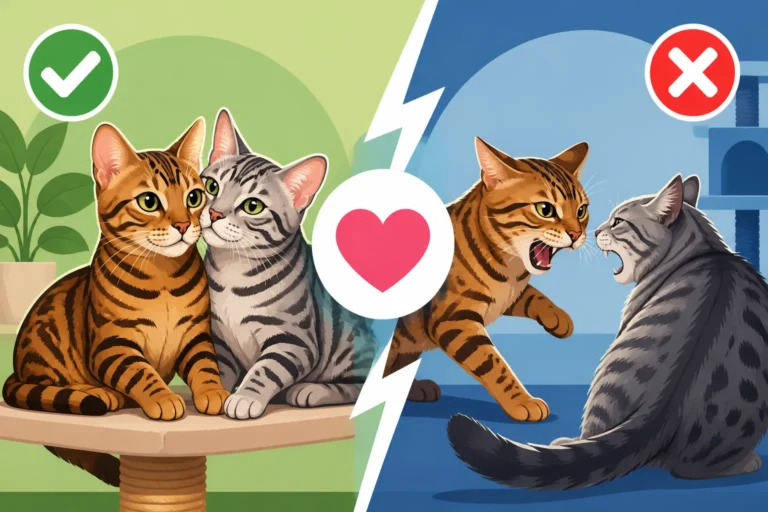
- Conflicts with Other Cats: Even subtle tensions between cats in a household can lead to spraying. If there's an unspoken hierarchy struggle, or one cat is bullying another, the less confident cat might spray to mark their territory as a form of self-assertion. For an early generation Bengal, this can be even more pronounced because their territorial instincts are so strong. A subtle stare from another cat might be interpreted as a direct challenge, requiring a clear, scent-based response.
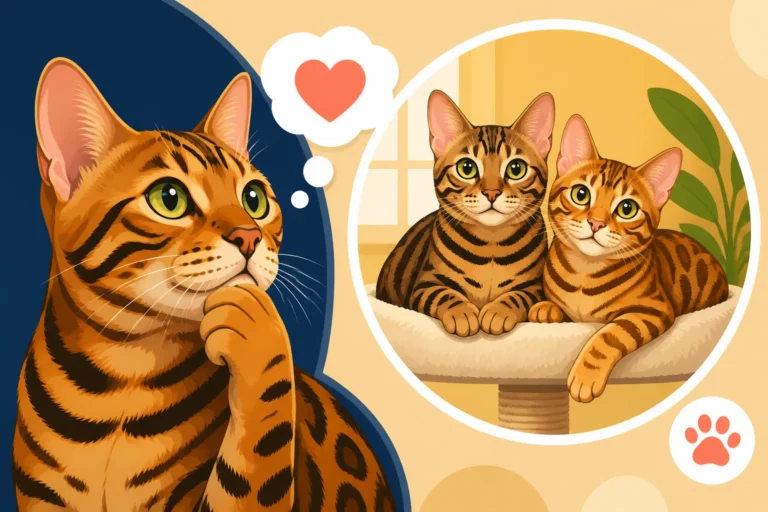
- Introduction of New Pets: Bringing a new dog or another cat into the home can be highly stressful. While many domestic cats adjust over time, an early generation Bengal might struggle more intensely with this perceived invasion. For advice on integrating, look into How a Bengal Cat Gets On With a Dog. They may spray to assert their existing claim on the territory before the newcomer can establish theirs.
- Human Interactions: While less common, certain human behaviors can also contribute to stress. Inconsistent routines, loud arguments, or even rough play can make an early generation Bengal feel insecure. If they don't feel entirely safe or understood, they might resort to spraying to create a comfort zone of their own scent.
Understanding these intricate social dynamics is key. What looks like "bad behavior" is actually a distressed cat communicating a profound sense of unease or territorial threat.
Practical Strategies to Minimize and Manage Spraying
Discovering your Bengal has sprayed can be disheartening, but there are numerous effective strategies you can implement to manage and often eliminate this behavior. It requires a multi-faceted approach, combining medical interventions, environmental adjustments, and sometimes, professional behavioral guidance.
The Crucial Step of Early Spay or Neuter
If your early generation Bengal cat is not spayed or neutered, this is unequivocally the most important and immediate step you can take to address spraying. For intact males, especially, spraying is a deeply ingrained, hormone-driven behavior that is nearly impossible to mitigate without sterilization. Neutering removes the primary hormonal drive that compels male cats to mark their territory and seek mates. While some cats who have been spraying for a long time might continue the habit due to learned behavior, the intensity and frequency will almost certainly decrease dramatically.
For females, while less common, spaying eliminates the hormonal fluctuations associated with heat cycles, which can also lead to spraying. It’s important to discuss the best timing for this procedure with your veterinarian, but generally, doing it as early as safely possible is ideal, especially if you want to prevent spraying from becoming a deeply ingrained habit. This decision doesn't just impact spraying; it contributes to a calmer, healthier cat overall and prevents unwanted litters. It's a foundational step in ensuring your Bengal is Whether an Early Generation Bengal Cat Is Housetrained in the true sense.
Creating an Enriched and Secure Environment
Once medical causes are ruled out and sterilization is addressed, focusing on your Bengal's environment is paramount. A cat that feels secure, stimulated, and has ample resources is far less likely to resort to spraying.
- Litter Box Logistics: This might seem basic, but it’s critical. Ensure you have enough litter boxes – the general rule is one per cat, plus one extra, placed in various, easily accessible locations around your home. For deep-digging Bengals, consider large, high-sided boxes to prevent litter scattering. Keep them scrupulously clean; Bengals are fastidious, and a dirty box can be a huge deterrent, leading them to find other "toilets."
- Odor Elimination: If your Bengal has already sprayed, cleaning is crucial. Regular household cleaners won't remove the potent pheromones in cat urine, which can actually encourage repeat marking. You need an enzymatic cleaner. Products available on Amazon are excellent for breaking down the urine at a molecular level, truly eliminating the scent rather than just masking it.
- Vertical Space and Enrichment: Remember that wild ancestry? Bengals thrive on being able to climb, explore, and survey their domain from high vantage points. Provide tall cat trees, wall-mounted shelves, and access to windows. This gives them a sense of security and control. For an active breed, ample How Much Enrichment a Bengal Cat Actually Needs is non-negotiable. Puzzle feeders, interactive toys (many great options are on Amazon), and regular, engaging play sessions can burn off excess energy and mental stimulation, reducing anxiety that could lead to spraying.
- Calming Aids: Consider using feline pheromone diffusers or collars, such as those made by Feliway (widely available on Amazon). These release synthetic pheromones that mimic a cat's natural calming scents, helping to reduce stress and anxiety in their environment. While not a magic bullet, they can provide a supportive backdrop to other behavioral modifications.
- Safe Outdoor Access: A catio (cat patio) can be a fantastic solution for active Bengals, especially those feeling frustrated by being solely indoors. A secure outdoor enclosure allows them to experience fresh air, sunshine, and watch wildlife safely, fulfilling some of those wild urges without compromising their safety or your home's integrity. It's often Why a Catio Is the Answer to a Bengal Cat for many Bengal owners seeking to provide optimal enrichment.
By proactively managing their environment, you’re speaking to their innate needs and helping them feel safe and content.
When to Seek Expert Help and Medical Advice
If spraying persists despite implementing the above strategies, it's time to dig deeper. Your first call should always be to your veterinarian.
- Veterinary Check-up: Even if you're sure it's behavioral, a full veterinary examination is essential. As mentioned, underlying medical conditions like urinary tract infections, kidney issues, or even pain from arthritis can cause changes in elimination behavior. Your vet can perform blood tests, urinalysis, and other diagnostics to rule out any physical ailments. Remember, Why a Bengal Cat Hides Pain is a common trait, and they won't always show obvious signs of discomfort.
- Certified Feline Behaviorist: If your vet confirms a clean bill of health, the next step is to consult a certified feline behaviorist. These professionals specialize in understanding cat communication and behavior patterns. They can assess your home environment, your cat's specific triggers, and help you develop a tailored behavior modification plan. They often have insights and techniques that go beyond general advice, crucial for the unique needs of early generation Bengals. They can help you identify subtle stressors you might be missing and teach you how to respond to your cat's communication more effectively.
- Medication (in severe cases): In some persistent or severe cases of anxiety-related spraying, a vet or behaviorist might recommend medication in conjunction with environmental and behavioral changes. This is typically a last resort, used to help reduce anxiety to a level where behavioral training can be more effective.
Dealing with spraying in an early generation Bengal can be a journey, but with patience, persistence, and the right approach, you can create a happy, scent-mark-free home for you and your magnificent feline companion.
Comparative Look at Spraying Factors
To help visualize the contributing factors to spraying behavior, especially when comparing early generation Bengals to later generations or standard domestic cats, here's a table summarizing key influences:
| Factor | Early Generation Bengal (F1-F3) | Later Generation Bengal (SBT, F4+) | Standard Domestic Cat (DSH/DMH) |
|---|---|---|---|
| Wild Ancestry Influence | High: Strong innate territorial and marking instincts. | Medium: Instincts present but generally more diluted. | Low: Instincts largely domesticated and less pronounced. |
| Intact Male Spraying | Extremely High Likelihood: Very powerful hormonal drive. | High Likelihood: Still a strong hormonal drive. | High Likelihood: Common in unneutered males across breeds. |
| Intact Female Spraying | Medium-High Likelihood: Can spray when in heat, instinct is strong. | Medium Likelihood: Less common, but possible when in heat. | Low-Medium Likelihood: Less common than males, but occurs. |
| Response to Stress/Change | Highly Sensitive: More prone to stress-related marking. | Moderately Sensitive: Can be stressed, but often more adaptable. | Varies by individual, but generally more adaptable. |
| Territorial Defense | Very Strong: Intense need to define and defend perceived territory. | Strong: Good awareness, but less intense aggression. | Varies, but typically less intense and physically demanding. |
| Need for Enrichment | Very High: Requires significant mental and physical stimulation. | High: Benefits greatly from enrichment. | Medium-High: Benefits from, but less prone to issues without, extreme enrichment. |
| Social Dynamics Impact | Highly Impacted: Can struggle with multi-cat/pet households. | Moderately Impacted: Generally adapts well if introduced slowly. | Varies by individual, often adapts well. |
| Resolution with Neutering | Excellent reduction in most cases. | Excellent reduction in most cases. | Excellent reduction in most cases. |
This table highlights that while many factors are universal to cats, the intensity of these factors, and thus the likelihood of spraying, can be significantly higher in early generation Bengal cats due to their closer genetic ties to the wild Asian Leopard Cat.
Disclaimer
This article is for general informational purposes only and does not constitute professional advice. Laws, prices and regulations vary by location and change over time. Consult a qualified professional for guidance on your specific situation.