How Much Vertical Space a Bengal Cat Needs
If you've ever found your Bengal cat perched precariously on top of your refrigerator, balancing on a narrow picture frame, or surveying their domain from the highest shelf of your bookcase, you know the struggle. It's not just a cute quirk; it's a deep-seated instinct that, if not properly addressed, can lead to endless frustration for you and a bored, potentially destructive cat. This guide will dive deep into why Bengal cats crave those lofty perches and, more importantly, exactly how much vertical space they truly need to be happy, healthy, and less prone to turning your home into their personal jungle gym.
Why Your Bengal Cat Demands Vertical Space
It’s easy to look at a regular housecat and think a comfy bed on the sofa is all they need. But a Bengal cat? Oh, they have different plans entirely. Their wild roots run deep, and those instincts demand an environment that satisfies their need to climb, explore, and survey.
The Instinct to Climb and Observe
Let's not forget that the Bengal cat has a wild ancestor, the Asian Leopard Cat, flowing through its veins, even if it's many generations back. These cats in the wild aren't lounging on the forest floor; they're high up in trees, on rocky outcrops, or within dense foliage, watching the world go by. This isn't just for fun; it's a matter of survival. Being elevated gives them a vantage point to spot prey, observe their territory, and, crucially, feel safe from potential predators or rivals.
Your Bengal cat carries this powerful instinct. When they scale your tallest furniture, they're not being naughty; they're simply fulfilling a primal urge. They want to see everything, to understand the dynamics of their indoor "jungle." Without adequate, designated vertical space, they’ll create their own, often at the expense of your curtains, shelving units, or treasured collectibles. It's not about defiance; it's about an unmet need. If they don't have safe, high places to retreat to, they can become stressed, feeling exposed and vulnerable, which can manifest in less desirable behaviors like spraying or aggression.
A Bengal Cat's Need for Exercise and Exploration
Bengal cats are renowned for their incredible energy levels. The Bengal Cat Is the Most Active Cat You Can Own is not an exaggeration. They don't just walk from point A to point B; they launch, pounce, bound, and climb. Vertical space isn't just for resting; it's a crucial part of their daily exercise routine and mental enrichment. Think of it as their indoor rock-climbing wall or a multi-story playground.
Climbing, jumping, and navigating different levels provide an intense physical workout that helps burn off that boundless energy. Without this outlet, a Bengal cat quickly becomes bored. And a bored Bengal cat? That's when you start seeing things like shredded furniture, knocked-over plants, and frantic midnight zoomies that leave you wondering if you accidentally adopted a small, spotted tornado. Engaging with vertical space also stimulates their minds. They strategize their climbs, plan their jumps, and explore new angles of their environment. This kind of environmental enrichment is vital for preventing behavioral issues and keeping your clever cat engaged. It helps them perform the natural behaviors they would in a wild setting, even if their "prey" is just a feather wand dangled from a high perch.
How Much Vertical Space Is "Enough" for a Bengal Cat?
Defining "enough" vertical space for a Bengal cat isn't a simple one-size-fits-all answer, but we can certainly set some realistic goals. It's about quality, quantity, and strategic placement.
Minimum Requirements vs. Ideal Environments
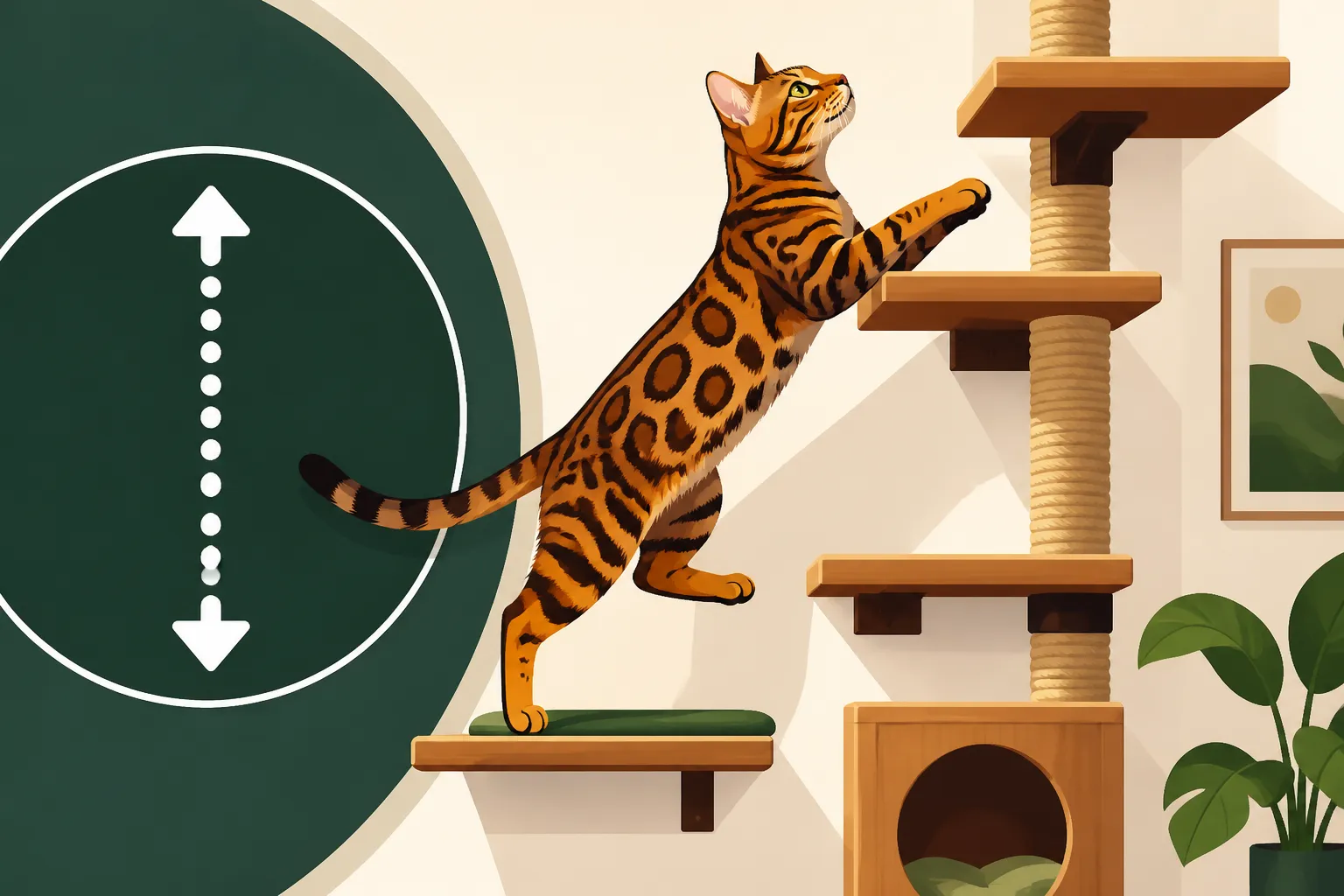
For many standard domestic cats, a single, moderately tall cat tree might suffice. For a Bengal cat, that's barely a starting point. A Bengal's minimum requirement for vertical space is typically one or two sturdy cat trees, at least 6 feet tall, ideally reaching close to the ceiling. These should have multiple platforms, scratching surfaces, and perhaps a cozy cubby. However, this is just the bare minimum to prevent significant behavioral issues.
An ideal environment for a Bengal cat, particularly in a home where they are the sole pet or share with other active felines, is a multi-layered, interconnected vertical landscape. Imagine a "vertical highway" or an arboreal pathway system around your home. This means integrating tall cat trees with wall-mounted shelves, secure window perches, and access to the tops of sturdy furniture like wardrobes or tall bookcases. The goal is to provide continuous, high-level pathways that allow your Bengal to traverse a significant portion of a room or even connect different rooms without touching the floor.
Think about providing at least three distinct high vantage points in their main living areas. One should be a "command center" — the highest point, offering a broad view. Others can be slightly lower, offering different perspectives or resting spots. The more options they have, the less likely they are to get into mischief by finding their own less-than-ideal perches. How Much Exercise a Bengal Cat Needs a Day often involves this kind of varied, multi-level movement.
Assessing Your Home's Current Vertical Potential
Before you start tearing down walls or ordering a custom-built cat complex, take a moment to look at your existing home with a Bengal cat's eyes. You might be surprised by the vertical potential already present. Do you have tall bookcases, sturdy wardrobes, or even kitchen cabinets that could be safely adapted?
When assessing, consider stability first and foremost. A Bengal cat is a powerful, muscular animal. They will launch themselves at these surfaces. A flimsy bookcase that wobbles when you touch it is a disaster waiting to happen. Everything needs to be securely anchored to the wall, especially if it's over 3 feet tall. Next, consider accessibility. Can your Bengal easily get up and down from these spots? They are incredible jumpers, but continuous, safe access points are important. Look for intermediary steps, like a smaller shelf or a side table, that can act as a launching pad or landing zone.
Also, think about the texture of the surfaces. Smooth, slippery shelves aren't ideal. Adding carpet scraps, sisal rope, or non-slip mats can make them much safer and more inviting. Lastly, don't forget about escape routes. A high perch is only good if your cat can also get down easily without feeling trapped or having to make a dangerous leap. Multiple pathways up and down, perhaps to another shelf or a cat tree, are key to making them feel truly secure in their vertical domain.
Practical Solutions for Creating Vertical Space
Now that we understand the "why" and "how much," let's talk about the "how." Creating this vertical paradise doesn't have to break the bank or require a professional contractor, though some solutions are more involved than others.
The Mighty Cat Tree: Not All Are Created Equal
When it comes to providing vertical space, the humble cat tree is often the first thing that comes to mind. But for a Bengal cat, you can't just pick up any old carpeted tower. Which Cat Tree a Bengal Cat Needs is a serious question. Standard cat trees, often designed for smaller, less active breeds, simply won't cut it. They're usually too short, too lightweight, and lack the robust construction needed to withstand a Bengal's enthusiastic launches and landings.
You need to look for cat trees that are:
- Tall: Aim for floor-to-ceiling models or those at least 6-7 feet high. The higher, the better, as long as it's stable.
- Sturdy: Heavy bases and thick support posts are non-negotiable. Look for models made with solid wood instead of particle board. If possible, choose one that can be anchored to the wall.
- Feature-Rich: Multiple large platforms, wide scratching posts (sisal rope is a favorite), and perhaps a spacious cubby for hiding are essential. Smaller platforms designed for dainty domestic cats will frustrate a Bengal trying to maneuver.
Many online retailers like Amazon offer a wide range of robust, tall cat trees that are more suited to the Bengal physique and energy level. Look for terms like "heavy duty" or "multi-level cat tree condo" in the descriptions. Don't skimp here; a cheap, wobbly cat tree will quickly be ignored, or worse, become a safety hazard.
DIY Shelves and Wall-Mounted Paths
For a truly integrated and space-saving solution, wall-mounted cat shelves and pathways are fantastic. These systems allow you to create custom climbing routes that utilize vertical wall space without eating up precious floor area. Plus, they look super cool and modern if done right! How to Build Shelves for a Bengal Cat offers specific guidance.
Here are some tips for implementing wall-mounted solutions:
- Security is Paramount: Use sturdy wall anchors and brackets. A Bengal hitting a shelf at full speed puts a lot of force on the mounting. Test each shelf's stability vigorously before letting your cat loose.
- Strategic Placement: Don't just place shelves randomly. Think about creating a "flow." Connect shelves to each other, to existing furniture, or to a tall cat tree. Provide options for going up, down, and across. Consider placing them near windows so your cat can enjoy a high vantage point for bird-watching.
- Varying Surfaces: Combine simple shelves with cat hammocks, bridges, or even clear acrylic "bubble" perches that allow your cat to feel like they're floating.
- Textured Surfaces: Smooth, varnished wood can be slippery. Add carpeting, sisal matting, or non-slip strips to the top of each shelf to give your Bengal better grip and prevent slips.
You can buy pre-made cat shelf kits from places like Amazon, or you can go the DIY route using strong wooden planks, L-brackets, and carpet remnants. Just remember to measure carefully and plan your layout to ensure safe and engaging pathways.
Rethinking Existing Furniture
Before you buy a single thing, consider how your existing furniture might be repurposed. Tall bookcases, entertainment centers, or even the tops of kitchen cabinets can become prime vertical real estate for your Bengal.
- Secure It: This is critical. Any tall furniture that your Bengal will climb must be anchored to the wall with anti-tip straps. A Bengal jumping off a top shelf can easily cause an unsecured bookcase to topple, leading to serious injury for your cat or even a human.
- Clear the Clutter: If you're using a bookcase, remove any fragile items, plants, or anything else you don't want scattered across the floor. This also ensures your cat has a clear, safe path.
- Add Access Points: Just like with wall shelves, think about how your Bengal will get up and down. Can you place a smaller piece of furniture next to the bookcase to act as a stepping stone? Or perhaps incorporate a sturdy step stool?
- Comfort and Grip: Add a non-slip mat or a soft cat bed to the top of a cabinet or bookcase to make it a more appealing lounging spot. This encourages them to use the designated space rather than your more precarious decor.
- Supervision: Especially at first, supervise your Bengal to ensure they are using the repurposed furniture safely. If they're struggling, adjust the access points. While they are amazing jumpers, How High a Bengal Cat Can Jump safely depends on a good landing.
Integrating Vertical Space with Overall Enrichment
Providing vertical space isn't just about giving your Bengal a place to climb; it's about enriching their entire environment and promoting a well-adjusted, happy cat.
Creating a Multi-Level Play and Rest Area
A true Bengal cat paradise isn't just about height; it's about integrating those high places into a comprehensive enrichment strategy. Vertical spaces should serve as both energetic play zones and serene resting spots. Imagine your cat darting up a cat tree, pouncing on a dangling toy, then settling into a cozy perch to watch the squirrels outside.
To maximize this, consider:
- Toy Placement: Don't just leave toys on the floor. Hang wand toys from high shelves, or place puzzle feeders on different platforms to encourage climbing and exploration. Which Puzzle Feeder Beats a Bengal Cat often involves vertical challenges. This transforms climbing into a mental and physical game, keeping them engaged for longer.
- Viewpoints: Position cat trees or wall shelves near windows. Bengal cats are incredibly stimulated by outdoor activity. A high perch overlooking the garden or even a busy street offers hours of entertainment and a sense of "hunting" without actually going outside.
- Sun Traps: Cats love warmth. If you have a sunny spot, consider putting a window perch or a shelf there. It becomes an irresistible napping spot after an energetic climb.
- Variety: Mix up the types of vertical spaces. A tall cat tree, a set of wall shelves, and access to a sturdy bookcase all offer different textures, heights, and experiences, catering to various moods and activity levels. This comprehensive approach is key to What a Bengal Cat Does All Day to keep them from getting bored.
Safety Considerations for High Climbers
While creating an adventurous vertical playground for your Bengal, safety should always be your top priority. These agile cats can still have accidents, and a fall from height can lead to serious injury.
- Anchoring, Anchoring, Anchoring: We can't stress this enough. Every single tall cat tree, bookcase, or wall shelf must be securely anchored to the wall. Use heavy-duty anti-tip kits or L-brackets. A Bengal’s powerful jumps and sudden movements can easily destabilize unsecured furniture.
- Landing Zones: Think about where your cat will land if they misjudge a jump or simply want to gracefully descend. Place soft rugs, pet beds, or even thick foam mats beneath frequently used jump-off points to cushion any falls.
- Clear Pathways: Ensure there are no sharp edges, exposed wires, or fragile items along their climbing paths or near their landing zones. What seems like a minor obstruction to you can be a major hazard for a fast-moving cat.
- Regular Inspections: Periodically check all vertical structures for wear and tear. Loose screws, wobbly platforms, frayed ropes on scratching posts, or damaged brackets need to be fixed immediately. A crumbling cat tree is an invitation to injury.
- No Unsupervised Access to Dangerous Areas: While you're creating safe vertical spaces, remember to secure areas you don't want them in, like high cabinets containing cleaning supplies or delicate heirlooms. Their climbing prowess means even seemingly out-of-reach spots are fair game to a determined Bengal. How to Keep a Bengal Cat Off the Counter involves redirecting that climbing energy to appropriate vertical outlets.
By carefully planning, installing, and maintaining your Bengal cat's vertical domain, you'll be providing an enriching, stimulating, and safe environment that truly caters to their unique needs and keeps them happier and healthier for years to come.
| Vertical Solution | Pros | Cons | Ideal Placement | Key Features for Bengal Cats |
|---|---|---|---|---|
| Floor-to-Ceiling Cat Tree | Max height, integrated scratching, stability | Large footprint, can be bulky, aesthetic | Living room, sunroom | Heavy base, wide platforms, sisal posts, secure wall anchoring option |
| Wall-Mounted Shelves | Customizable, saves floor space, modern look | Installation required, more permanent, less cushy | Hallways, near windows | Sturdy brackets, textured surfaces, varying heights, multi-step layout |
| Repurposed Bookcases | Cost-effective, utilizes existing furniture | Less stable (must anchor), may block items | Study, spare room | Anchored to wall, clear shelves, added non-slip mats/beds, easy access |
| Window Perches | Offers outdoor view, easy to install | Limited to window size, only one spot | Any window | Suction cup reliability (for smaller cats), sturdy frame for Bengals |
| Catio (Outdoor Enclosure) | Safe outdoor climbing, fresh air, vast space | Requires outdoor space, cost, building skills | Garden, patio, balcony | Multi-level platforms, ramps, secure mesh, weatherproof materials |
Disclaimer
This article is for general informational purposes only and does not constitute professional advice. Laws, prices and regulations vary by location and change over time. Consult a qualified professional for guidance on your specific situation.