How a Bengal Cat Hides Pain
It's incredibly frustrating when your beloved Bengal cat seems "off" but you can't quite pinpoint what's wrong. As masters of disguise, Bengal cats excel at hiding their pain, making it a real challenge for us, their devoted human companions, to know when they're truly hurting or unwell, often delaying crucial veterinary intervention. This comprehensive guide is here to help you unravel the subtle, often overlooked signs that your agile and energetic Bengal might be silently suffering, so you can provide them with the timely care they deserve.
The Instinctive Nature of Hiding Pain in Bengal Cats
One of the most challenging aspects of caring for a Bengal cat is their innate ability to mask discomfort. Unlike a dog that might whimper or limp overtly, a Bengal often gives little away, a trait deeply rooted in their wild ancestry.
Wild Ancestry and Survival Instincts
To truly understand why your Bengal cat hides pain so effectively, we need to look back at their lineage. The Bengal cat, with its striking leopard-like appearance, descends from the Asian Leopard Cat (ALC). In the wild, showing any sign of weakness, illness, or injury makes an animal vulnerable. Predators will target the weak, and rivals might seize an opportunity. This isn't just about avoiding a direct attack; it's about maintaining their place in the social hierarchy, securing resources, and ensuring their survival.
This deep-seated survival instinct hasn't been bred out of our domestic Bengal companions, even generations removed from their wild ancestors. They still possess that primal urge to appear strong and capable, even when they're experiencing significant pain. This means that a seemingly minor change in behavior, which might be dismissed in another breed, could be a critical indicator in a Bengal. It’s not that they don’t trust you; it’s an instinctual wiring that transcends their loving bond with you.
Why They Don't "Cry Out"
The common misconception is that a cat in pain will cry out, whine, or limp dramatically. While acute, severe pain can elicit such responses, it's far from the norm for a Bengal, especially with chronic or moderate pain. Imagine a persistent ache in your knee; you wouldn't necessarily be screaming, but you'd subtly shift your weight, avoid certain movements, or perhaps be a bit more irritable. That's often what we see in Bengals.
Their pain isn't always acute or sudden; it can be a slow, insidious worsening of a condition, leading to very gradual changes that are incredibly easy for even the most observant owner to miss. For a breed known for its boundless energy and playful nature, a slight decrease in activity might just look like a "lazy day," when in reality, it's a calculated effort to avoid movements that cause discomfort. This makes identifying pain particularly challenging in a naturally active and somewhat aloof breed, as their baseline activity is so high.
Subtle Behavioral Cues of Pain
Since obvious signs are rare, recognizing pain in your Bengal means becoming a detective, looking for shifts in their typical, vibrant behavior.
Changes in Activity and Play
A Bengal cat's defining characteristic is often its incredible energy and love for play. They are athletes, climbers, and tireless entertainers. When a Bengal is in pain, one of the first, yet often most subtle, signs you might notice is a reduction in their activity levels. This isn't just about sleeping more – though that can happen too. It's more about a decline in the intensity or duration of their usual play sessions.
For instance, your Bengal might suddenly refuse to jump as high as they used to, or they might completely avoid their favorite high-up perches and climbing structures. Perhaps they're less enthusiastic about chasing the wand toy, or their bursts of "zoomies" are shorter and less frequent. They might still engage, but their movements might be more cautious, stiff, or less fluid. If your normally tenacious hunter suddenly loses interest in a game, it's a huge red flag. For a Bengal, play is life. If they're not playing with their usual vigor, something is truly amiss. This is particularly important because The Twelve to Sixteen Years a Bengal Cat Gets are often filled with such active behavior.
Altered Grooming Habits
Grooming is a crucial part of a cat's daily routine, and changes here can be very telling. Bengals are meticulous about their pristine, pelt-like coats.
- Excessive Grooming: You might notice your Bengal obsessively licking or chewing a specific area of their body. This isn't just a quick tidy-up; it's prolonged, focused attention on one spot. This could indicate localized pain, itchiness, an injury, or even referred pain from an internal issue. They might be trying to soothe the area, or simply reacting to a sensation of discomfort.
- Reduced Grooming: Conversely, a Bengal in generalized pain, perhaps from arthritis or discomfort in their back, might find it difficult or painful to twist and reach all parts of their body. This can lead to a dull, unkempt, or matted coat, especially in hard-to-reach areas like their lower back or hindquarters. A pristine Bengal coat is a good indicator of overall well-being, so any decline in its condition should prompt investigation.
Changes in Social Interaction
Bengal cats are often quite social and bonded with their chosen family members, though they can be discerning. Changes in how they interact with you, other pets, or even their environment are significant.
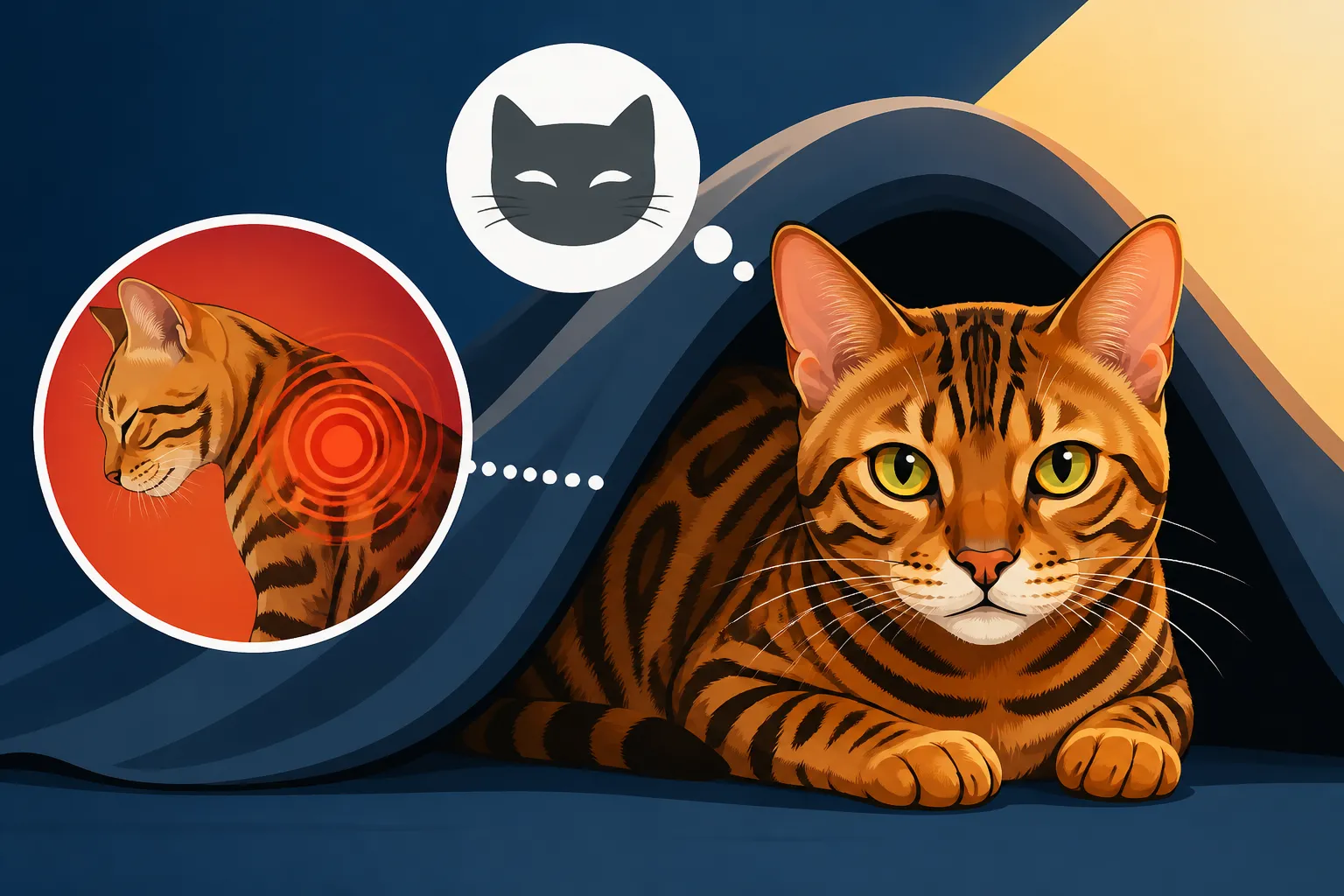
- Increased Reclusiveness: A painful cat often seeks solitude. Your normally social Bengal might start hiding more frequently, spending time in unusual, secluded spots under beds, in closets, or high up where they feel untouchable. They might actively avoid family members, retreating when approached, or no longer greeting you at the door with their usual enthusiasm.
- Increased Aggression or Irritability: Pain can make even the sweetest animal grumpy. If your Bengal suddenly snaps, hisses, or bats at you when you try to pet a certain area, or becomes easily agitated by routine interactions, it's a strong sign they're hurting. This is especially telling for a breed known for its playful and generally tolerant nature with its chosen humans. A Bengal who suddenly stops seeking out your company or shows uncharacteristic aggression is sending a clear message.
- Avoidance of Specific Interactions: They might avoid being picked up, or suddenly dislike being petted in certain areas where they once enjoyed it. Observing where they react can often give you a clue about the location of their pain.
Litter Box Habits and Appetite
Changes in elimination and eating patterns are often among the earliest indicators of an underlying health problem, including pain.
- Litter Box Changes: Pay close attention to your Bengal's litter box behavior. Are they going more or less frequently? Is the consistency of their stool different, perhaps showing signs of Chronic Diarrhea Is the Bengal Cat Complaint Nobody Warns About? Are they straining to urinate or defecate? Are they having "accidents" outside the box? These could indicate urinary tract infections, constipation, gastrointestinal pain, or even pain when posturing to use the litter box, such as with joint issues. Bladder Problems in a Bengal Cat can cause significant discomfort and changes in habits.
- Appetite Changes: Any shift in your Bengal's eating or drinking habits warrants attention. Are they eating less than usual, or perhaps refusing their favorite treats? Are they approaching their food bowl but then walking away without eating? Sometimes, they might even eat more if it's a stress response or a metabolic issue. Changes in water intake – drinking significantly more or less – can also be a sign of underlying health issues causing discomfort.
Physical Indicators and When to Act
Beyond behavioral shifts, there are subtle physical clues that your Bengal cat might be experiencing pain. These often require a closer look, sometimes when they are relaxed.
Posture, Movement, and Gait
Observing how your Bengal moves, sits, and stands can provide significant insights into their comfort levels. Their athletic build can sometimes mask issues, but careful observation will reveal shifts.
- Subtle Lameness or Stiffness: This isn't always an obvious limp where they're holding a paw up. It might manifest as a slight stiffness when they get up after a nap, or a reluctance to put full weight on a limb initially. You might notice them favoring one side, or having difficulty with movements that used to be effortless, like jumping onto a high shelf. Conditions like Patellar Luxation in a Bengal Cat can cause subtle changes in gait or intermittent lameness that can be hard to spot in such an agile cat.
- Hunched Posture or Guarded Movements: A Bengal in abdominal pain might adopt a hunched-back posture, or seem generally tense and unwilling to stretch out fully. They might tuck their tail tightly against their body, or move in a stiff, guarded manner, avoiding sudden twists or turns. They might also shift their weight repeatedly when resting, trying to find a comfortable position.
- Trembling or Shivering: Even in a warm environment, trembling or shivering can indicate pain, fear, or weakness. This might be localized to a specific limb or generalized throughout their body.
Eye, Ear, and Breathing Changes
The face and breathing patterns of your Bengal can offer crucial, albeit subtle, hints about their internal state.
- Eye Changes: Keep an eye on their eyes. Dilated pupils, squinting, or a dull, unfocused, or glazed-over gaze can all be signs of pain. They might also seem less alert or responsive to their surroundings. Sometimes, a third eyelid (nictitating membrane) showing more prominently than usual can be a general sign of illness or discomfort.
- Ear Position: Cats communicate a lot with their ears. While a Bengal's ears are naturally alert, if they are constantly flattened against their head, or held in an unusual, stiff position, it could signal pain or general malaise.
- Breathing Changes: This is one of the most critical physical indicators. Rapid, shallow breathing, open-mouth breathing (which is a definite emergency and requires immediate veterinary attention), or increased effort during respiration can all point to severe pain or underlying cardiac or respiratory issues. Pay attention to how their chest moves; if it looks like they're working hard to breathe, something is wrong. This is a very serious sign, as Signs a Bengal Cat Has Heart Disease or What HCM Does to a Bengal Cat's Heart often manifest with respiratory distress in later stages.
Vocalization Shifts
Bengal cats are famously vocal, known for their chirps, trills, and distinctive meows. While their chattiness is part of their charm, a change in their usual vocalization patterns is key to identifying pain. The Bengal Cat Voice Is a Demand, Not a Greeting, and if those demands change, it's worth noting.
- Softer or Subdued Meows: A painful Bengal might become quieter than usual, or their normally strong, insistent meows might become softer, weaker, or less frequent. It's as if they don't have the energy or inclination to vocalize with their usual gusto.
- Increased or Distressed Yowling: Conversely, some Bengals might vocalize more when in pain, but the nature of the sound changes. It might be a more frequent, distressed, or mournful yowling, especially if it's new and not related to attention-seeking or a demanding behavior you’ve come to expect.
- Sudden Silence: For a typically chatty Bengal, a sudden onset of silence is incredibly concerning. It's a stark deviation from their normal behavior and should prompt immediate investigation.
Proactive Pain Management and Veterinary Care
Understanding these subtle signs is the first step, but proactive care and a strong relationship with your veterinarian are paramount to managing pain in your Bengal.
Regular Vet Check-ups and Open Communication
The single most important thing you can do for your Bengal cat is to ensure they receive regular veterinary check-ups. These routine wellness exams, at least once a year for younger cats and more frequently for seniors, are crucial for early detection of health issues, including those that cause chronic pain. As your Bengal approaches The Age a Bengal Cat Is Considered Senior, regular check-ups become even more vital, as issues like arthritis or organ function decline can cause subtle discomfort. Caring for a Bengal Cat Past Ten often involves more frequent vet visits.
When you take your Bengal to the vet, don't hesitate to discuss any subtle changes you've observed, no matter how minor they seem to you. What might seem insignificant on its own could be a crucial piece of the puzzle for your veterinarian. Be prepared to talk about changes in activity, appetite, social interaction, and litter box habits. Providing a detailed history helps your vet connect the dots. If your Bengal needs a procedure, ensure you understand the importance of a thorough Whether a Bengal Cat Needs a Pre Surgery Workup to assess their overall health and minimize risks.
Home Environment Adjustments
Making adjustments to your home environment can significantly improve a painful Bengal's quality of life and encourage them to remain active within their comfort zone.
- Accessibility: If your Bengal is struggling with jumping, provide ramps or pet stairs to help them access their favorite high spots like windowsills, cat trees, or beds. This allows them to continue enjoying their preferred perches without exacerbating pain.
- Essential Resources: Ensure that food, water, and litter boxes are easily accessible and don't require difficult maneuvering. For a cat with joint pain, a low-sided litter box might be more comfortable. Consider multiple water sources, such as a water fountain, to encourage hydration. For a cat with vision impairment or severe mobility issues, knowing How a Blind Bengal Cat Finds the Litter Box by keeping it in a consistent, easily reachable spot is vital.
- Comfortable Resting Spots: Provide ample soft, comfortable bedding in quiet, warm areas where your Bengal can rest undisturbed. Heated beds can be particularly soothing for arthritic joints.
Unexpected veterinary bills for diagnostics and treatment of pain can be a significant financial burden. This is where pet insurance can be a lifesaver. Plans offered by providers like Healthy Paws can help cover a substantial portion of these costs, giving you the freedom to make medical decisions based on what's best for your Bengal, rather than being solely driven by cost. Having a reliable pet insurance policy from a company like Healthy Paws provides immense peace of mind.
Trusting Your Gut and Seeking Second Opinions
As a Bengal cat owner, you know your feline companion better than anyone else. You are attuned to their unique quirks, their energy levels, and their individual personality. If something feels "off" to you, even if you can't articulate exactly why, trust that instinct. Your gut feeling is often the earliest warning system you have.
Don't hesitate to advocate for your cat at the vet. If you're not satisfied with a diagnosis, or if your Bengal isn't improving as expected with treatment, it is always acceptable and often wise to seek a second opinion from another veterinarian or a specialist. Catching issues early can sometimes make all the difference in treatment outcomes and can genuinely impact How Long a Bengal Cat Lives on Average. Remember, the goal is always to ensure your Bengal lives the longest, healthiest, and most comfortable life possible. Having pet insurance, perhaps with Healthy Paws, can also make seeking those second opinions and more advanced diagnostics a more feasible option without immediate financial strain.
Disclaimer
This article is for general informational purposes only and does not constitute professional advice. Laws, prices and regulations vary by location and change over time. Consult a qualified professional for guidance on your specific situation.