Which Countries Ban New Bengal Cat Wild Crosses
A Bengal’s spotted coat can make its ancestry seem simple, but the law may treat a cat with a recent wild ancestor very differently from a fully domestic Bengal. The confusing part is that countries often regulate imports, ownership, or licensing rather than explicitly banning every new cross. This guide explains how to tell those rules apart and what to verify before breeding, buying, or moving.
What a ban on new Bengal wild crosses means
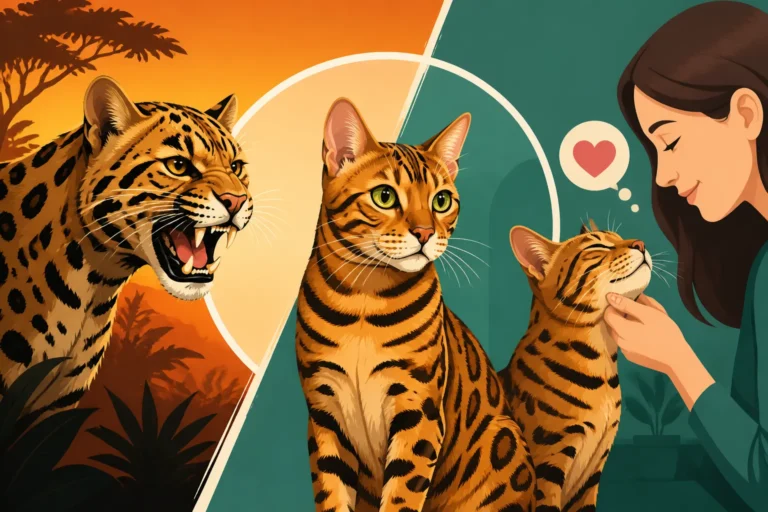
A Bengal cat’s history includes crosses between domestic cats and the Asian leopard cat. “New wild cross” generally means deliberately mating a domestic cat with a wild feline, or producing an early-generation hybrid. That is not the same legal question as whether someone may keep an established domestic Bengal.
The distinction matters because laws can apply to different activities. A country might prohibit importing an early-generation hybrid while allowing domestic Bengals bred locally. Another might allow ownership only with a license, or require cats to be several generations removed from a wild ancestor. So a headline that says “Bengals are banned” may conceal the details an owner actually needs.
A Bengal’s generation is not just a label
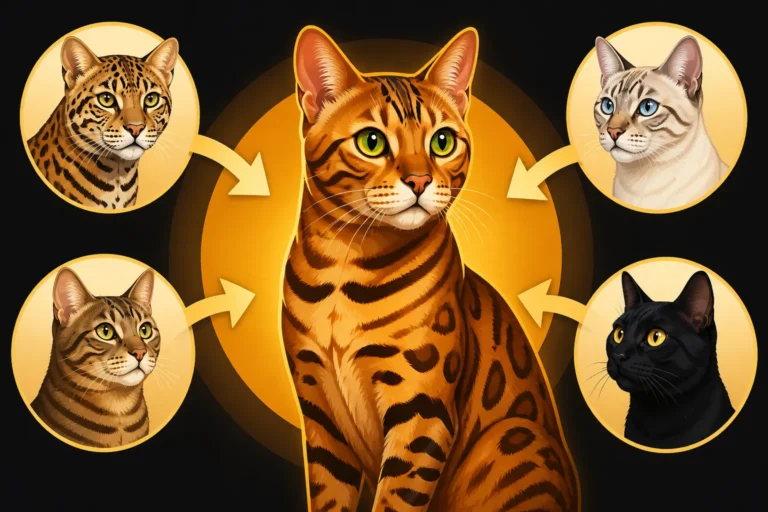
Breeders commonly use filial generation terms such as F1, F2, and F3 to describe how many generations a cat is removed from an Asian leopard cat. An F1 is a direct offspring of a wild cat and a domestic cat; later generations have more domestic ancestry in their recent family tree. The exact meaning and documentation can matter when an authority assesses a particular animal.
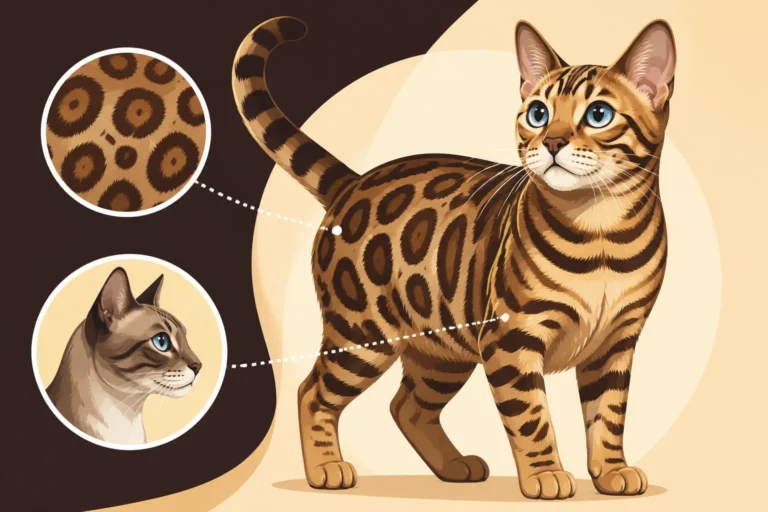
Once a Bengal meets the relevant registry definition for a domestic Bengal, it may be described as SBT. That label can be useful, but it should not be treated as automatic proof that every country will accept the cat or its paperwork. Learn more about How a Bengal Cat's Generation Is Counted, What F1 Means in a Bengal Cat, What F2 and F3 Mean in a Bengal Cat, and What SBT Means in a Bengal Cat.
A common source of frustration is that the paperwork people have on hand may not answer the legal question. A breeder’s description, a pedigree, a microchip record, and an import document each serve different purposes. If a law requires proof of generation, ask the relevant authority what evidence it accepts before relying on a verbal assurance.
A ban, an import restriction, and a license are different
A breeding ban targets the act of creating a new hybrid. An import restriction controls whether a cat can enter the country, often for biosecurity or wildlife-trade reasons. An ownership restriction concerns keeping the cat after it is already there. A licensing rule may allow an activity only if the owner meets specific requirements.
These rules can overlap, but they are not interchangeable. For example, a country could restrict the import of early-generation hybrids without prohibiting every domestic Bengal bred within its borders. Conversely, an animal might already be in a country but still require a permit because of its generation or classification.
The practical takeaway: ask the authority about the specific activity you plan to undertake. “Can I own a Bengal?” is not always the same question as “Can I import this cat?”, “Can I breed it?”, or “Can I take it across a border?”
Countries and the rules people often mistake for a ban
There is no single international list that neatly identifies every country that “bans new Bengal crosses.” National laws, regional rules, import policies, and local animal-keeping requirements can all affect the answer. The examples below show why it is safer to identify the type of restriction than to rely on a broad yes-or-no claim.
| Country or jurisdiction | Rule people may encounter | Why it is not automatically a blanket ban on all Bengals |
|---|---|---|
| United Kingdom | Licensing rules can apply to certain animals considered wild or hybrid, depending on their generation and legal classification | The question may concern early-generation animals, not every established domestic Bengal |
| Australia | Import and biosecurity requirements may restrict hybrid cats or require specific proof and eligibility | Import rules do not necessarily answer what local breeding or ownership rules allow |
| New Zealand | Import eligibility and biosecurity requirements need to be checked for the particular cat and its documentation | An import restriction is not the same as a universal prohibition on domestic Bengals |
| Norway and other European jurisdictions | Hybrid classification, generation, welfare, or permit rules may affect breeding or keeping | Requirements can depend on the animal’s ancestry and the national or local rule in force |
| United States and Canada | Rules may vary by state, province, territory, or municipality, especially for early generations | A national-level answer may not settle local ownership or breeding rules |
United Kingdom
In the UK, the key question can be whether an animal falls under rules for wild animals or hybrids, and whether a license is required. Generation and documentation may therefore matter. That is different from saying that every Bengal cat, regardless of ancestry, is prohibited.
If you are buying or moving a cat there, ask the relevant local authority what classification it applies to the individual animal. Confirm the generation threshold, the records needed to establish it, and whether the rule covers breeding as well as keeping. Do not assume that a breeder’s use of the word “domestic” settles the legal question.
Australia and New Zealand
Australia and New Zealand both require particular care around import rules and biosecurity. A person considering bringing a Bengal across either border should verify the current eligibility requirements for that exact cat, including any ancestry documentation or conditions. The fact that a cat is commonly kept as a pet elsewhere does not establish that it can be imported.
This distinction can be especially stressful for people relocating with a cat they have owned for years. Start with the relevant government import authority and ask about the cat’s breed description, pedigree, generation, microchip details, and required documents. If the rules are unclear, request a written answer rather than relying on a social-media post or a general statement from a seller.
Norway, Europe, and North America
In Norway and other European countries, rules may focus on hybrid status, animal welfare, or the distance from a wild ancestor. Requirements can vary by country, and local authorities may interpret documentation requirements differently. Do not assume that a rule in one European country applies across the region.
The same caution applies in the United States and Canada, where rules may be set at several levels of government. A Bengal that is permitted in one state, province, or city may face different requirements after a move. For a broader overview of restrictions, see Which Countries Restrict the Bengal Cat and Whether the Bengal Cat Is Banned in the UK.
How to check whether a new cross is allowed
If you are a breeder, buyer, or owner planning a move, treat legal verification as part of the decision—not as paperwork to sort out afterward. Rules may depend on the cat’s ancestry, the proposed mating, and where the activity takes place. A few careful questions can prevent a painful situation in which a planned litter, purchase, or relocation cannot proceed.
Identify the exact activity and location
Start by writing down what you intend to do: breed a domestic cat to a wild feline, keep an early-generation hybrid, buy an existing Bengal, import a cat, or move with one. Then identify the country and the specific state, province, region, or city involved. These details help an authority direct you to the rule that actually applies.
Ask the relevant wildlife, agriculture, animal welfare, customs, or local licensing office which rules cover that activity. When contacting an authority, be precise: “Does this rule prohibit breeding a domestic cat to an Asian leopard cat?” is more useful than “Are Bengals legal?” Ask whether the answer changes for an established domestic Bengal or for a cat several generations removed from a wild ancestor.
Gather ancestry and identity records
Before relying on a generation claim, gather the cat’s pedigree and any records that connect it to the animal being assessed. A registration document may describe lineage, but an authority may require additional documentation. Ask what format it accepts and whether records must be issued by a particular registry, breeder, or government agency.
Keep copies of documents together with identifying information such as the cat’s microchip number. If you are purchasing a kitten, ask the breeder to explain the claimed generation in writing and provide the available pedigree records before you pay a deposit. Guidance on the history behind these labels is available in Whether Bengal Cats Are Still Bred From Wild Cats and Whether New Wild Cross Into Bengal Cat Is Allowed.
Confirm rules before planning a litter
A breeder should check the legality of the mating itself, not only whether the resulting kittens could be sold or kept. Rules may distinguish between producing a hybrid, advertising one, transferring ownership, and importing or exporting it. A mating that seems permissible under a general pet-ownership rule may still be covered by a separate breeding restriction.
Ask the authority to clarify any conditions in writing, especially if the response depends on generation or registry status. Also ask whether rules apply to a planned litter, existing animals, or both. If the answer is uncertain, pause the breeding plan until the relevant agency can explain the requirement.
Why laws differ and what that means for Bengal owners
Countries do not regulate hybrid cats for one single reason. Some rules are designed to protect wildlife, others address biosecurity or animal welfare, and others define which animals require a permit. That is why one country’s policy cannot be used as a reliable shortcut for another’s.
Wildlife trade rules are not the same as a breeding ban
The Asian leopard cat is a wild species, and international rules may regulate trade in wild animals or their parts. But restrictions on trade do not automatically amount to a ban on breeding domestic Bengals. Importing a wild ancestor, exporting a hybrid, and breeding cats within a country can fall under separate rules.
If a breeder mentions an international convention or wildlife-trade document, ask which specific activity it regulates. A rule about moving an animal across a border may not decide whether a local mating is allowed. Likewise, permission to keep a cat does not necessarily authorize the import of a new animal or the creation of additional hybrids.
Welfare and practical management can shape regulation
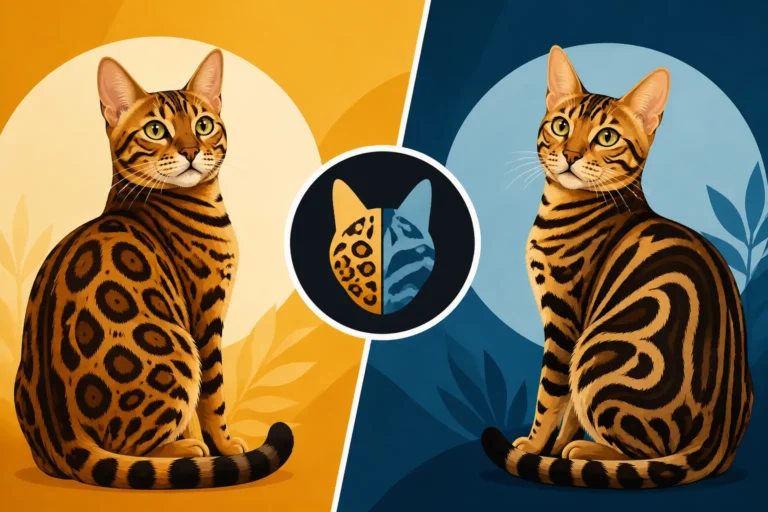
Early-generation hybrids may be treated differently from later domestic Bengals because authorities may be concerned about handling, containment, or whether the animal can be responsibly kept in a household. Such concerns are not resolved by appearance. A striking rosette pattern does not establish an animal’s generation, temperament, or legal status.
The ethical questions matter, too. Breeding a hybrid is not simply a way to produce a more unusual-looking pet; it involves decisions about the wild parent, the domestic parent, the offspring, and the homes prepared to care for them. For a deeper discussion, read Whether Breeding Hybrids Like the Bengal Cat Is Ethical. A responsible breeder should be able to discuss welfare and legal requirements openly rather than treating them as obstacles to get around.
Plan for a domestic cat’s everyday needs
Once you have confirmed that a particular cat can legally be kept where you live, shift attention to ordinary cat care: secure housing, veterinary care, food, litter, enrichment, and a plan for travel or future moves. For routine supplies, owners may browse retailers such as Chewy, while checking that products suit their cat and household. A store’s selection is not a substitute for veterinary advice or legal confirmation.
If you are preparing a home for a Bengal, think through practical details before the cat arrives. A sturdy carrier, safe vertical space, scratching surfaces, and a secure way to prevent escapes can make daily life easier. Owners comparing food or litter options—including on Chewy—should still make gradual changes and pay attention to the individual cat’s tolerance. A third-party retailer such as Chewy may help with ordinary shopping, but it cannot establish a cat’s generation or confirm that a cross is lawful.
Questions to ask before buying or breeding
A quick conversation can reveal whether a breeder understands the difference between a domestic Bengal and an early-generation hybrid. Ask for clear answers, supporting documents, and enough time to verify the details with the relevant authority. If someone discourages you from checking the law, treat that as a reason to slow down.
- What generation is the cat, and how is that determined? Ask for the pedigree or other documentation that supports the claim.
- Does the proposed activity involve a new wild cross? Be specific about the mating, not just the breed name.
- Which government office confirms the rule? Request the appropriate agency or licensing authority for the location.
- Does the rule cover breeding, ownership, import, or more than one of these? Get each part clarified separately.
- What documents will I need if I move or travel with the cat? Check both destination and transit requirements.
- Are there local rules beyond national requirements? Confirm with the relevant regional and municipal authorities.
If you are already planning a move or litter, do not rely on an online discussion that leaves out the cat’s generation and destination. Keep written responses and supporting records with the animal’s other documents. That extra step may feel tedious, but it is far easier than discovering after a purchase or mating that a different rule applies.
Disclaimer
This article is for general informational purposes only and does not constitute professional advice. Laws, prices and regulations vary by location and change over time. Consult a qualified professional for guidance on your specific situation.