Whether the Bengal Cat’s Wild Ancestor Can Be Tamed
A wild Asian leopard cat may become accustomed to people in carefully managed conditions, but that is not the same as becoming a domesticated pet. This distinction matters if you are curious about the Bengal cat’s ancestry or considering an early-generation hybrid. Here’s what taming can—and cannot—change, why wild instincts remain important, and what responsible cat ownership looks like instead.
What it means to tame an Asian leopard cat
Taming is not the same as domestication
Taming describes an individual animal learning to tolerate or accept people. A wild animal raised around humans might become less fearful of familiar caretakers, accept food from them, or allow some routine handling. Its response can depend on its temperament, early experiences, health, and surroundings.
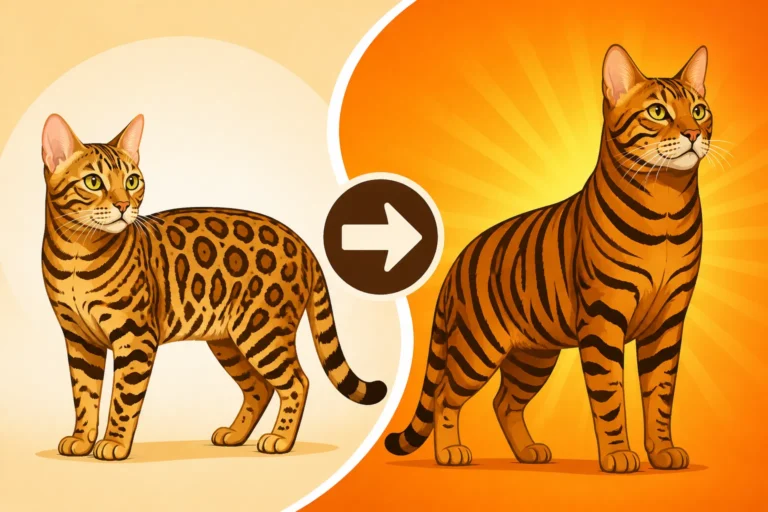
Domestication is a much longer process. It involves generations of animals reproducing under human care, with people selecting for traits that make them more suited to living alongside humans. Over time, inherited behavior can shift across a population. A wild animal that grows comfortable with one person has not gone through that process—and its offspring do not automatically become tame, either.
It’s an easy distinction to lose when a video shows a wild cat approaching a keeper or accepting a treat. That moment may show familiarity with a particular person and setting. It does not show how the cat would respond to a new home, unfamiliar visitors, a veterinary examination, or the stress of confinement.
A calm animal can still be a wild animal
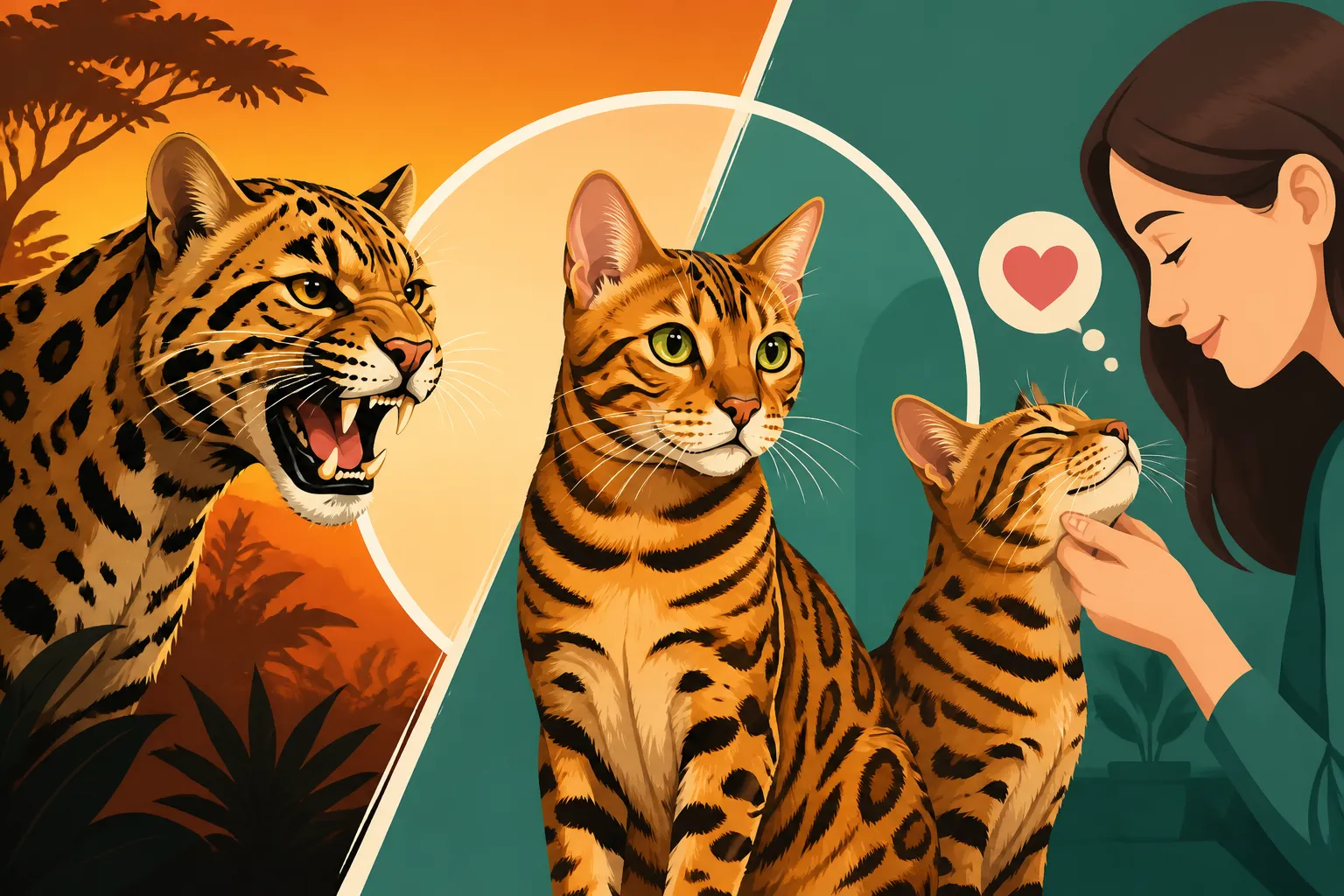
Taming does not erase the instincts that helped an animal survive in the wild. A cat may appear relaxed with a familiar caretaker yet remain wary of strangers, sensitive to sudden noise, or quick to react when frightened. A defensive scratch or bite is not a sign that the animal is “bad”; it can be a natural response to a situation it finds threatening.
Nor does apparent affection prove that an animal is suited to ordinary household life. People sometimes imagine that raising a wild kitten from a young age will make it behave like a domestic kitten. Early handling may influence how an individual responds to people, but it cannot guarantee a predictable adult temperament or remove the animal’s natural needs.
The practical problem is that those needs can be hard to meet in a home. A person may love cats and still be unprepared for an animal that is difficult to handle, unsettled by ordinary household activity, or unable to live safely around other pets. For an overview of how the wild ancestor fits into Bengal history, see What an Asian Leopard Cat Is Behind Every Bengal Cat.
How the Asian leopard cat’s natural behavior shapes its needs
A wild cat is adapted to a different life
The Asian leopard cat is a small wild feline found across parts of Asia. Like other wild animals, it has needs shaped by its natural environment and way of life. It is not simply a smaller version of a domestic cat that can be made suitable for a home with enough patience.
Wild animals can be alert, cautious, and responsive to changes around them. Those qualities help them find food and avoid danger, but can make ordinary home routines stressful. A busy household, a visitor entering the room, a dog approaching, or a trip in a carrier may be very different from the predictable contact an animal has learned to tolerate with a familiar caretaker.
Even a spacious enclosure does not make a wild animal domesticated. Appropriate care may require specialist knowledge, secure housing, suitable veterinary support, and careful attention to the animal’s welfare. The needs of an Asian leopard cat are not the same as those of a pet Bengal cat, despite the shared ancestry behind the breed.
Why human care cannot remove every welfare concern
The question is not only whether an animal can survive in captivity. It is whether its physical and behavioral needs can be met reliably throughout its life. A wild cat kept as a pet may face stress when its environment cannot provide the space, stimulation, retreat, or specialized care it needs. The owner may also face risks when the animal is frightened or difficult to manage.
Those challenges can become more serious as the animal matures. A young animal that seems manageable may become stronger and more assertive as an adult. A setup that worked in a quiet room may not be safe once the animal begins testing doors, reacting to other pets, or resisting routine handling. These are not problems that can always be solved by buying more toys or spending more time together.
Local rules add another layer. Laws about possessing wild animals or hybrids vary by location and may depend on the animal’s generation, origin, or permits. Before considering any animal with wild ancestry, check the rules that apply where you live and seek advice from qualified wildlife or veterinary professionals. A general explanation of the generation terminology is available in F1 to SBT: How a Bengal Cat's Generation Is Counted.
| Animal or category | What the label generally describes | What it does not guarantee |
|---|---|---|
| Asian leopard cat | A wild feline species | Suitability as a household pet |
| Tamed individual | A wild animal that has learned to tolerate or accept some human contact | Domestication, safety with all people, or comfort in a home |
| Early-generation Bengal hybrid | A cat with a recent Asian leopard cat ancestor | The temperament or care needs of a typical domestic Bengal |
| Later-generation Bengal | A cat several generations removed from the wild ancestor | A particular personality or a perfect fit for every household |
| SBT Bengal | A registry term used for established Bengal breeding lines | That the cat behaves exactly like every other domestic cat |
How the wild ancestor relates to the Bengal cat
A Bengal cat is not an Asian leopard cat
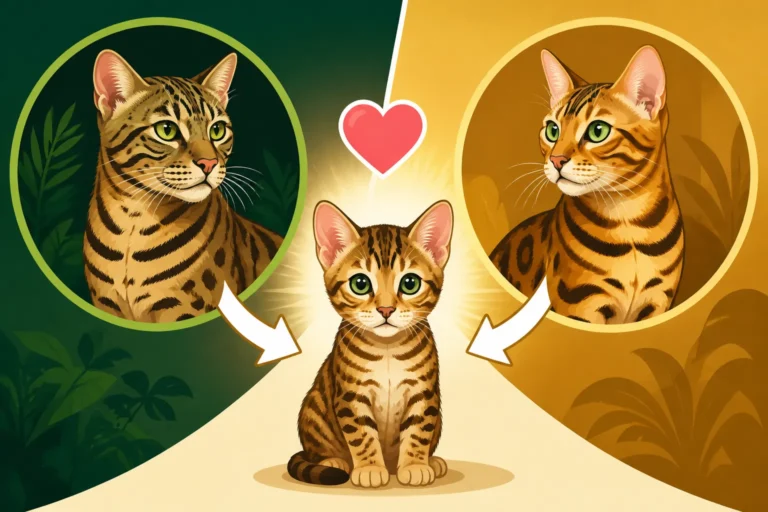
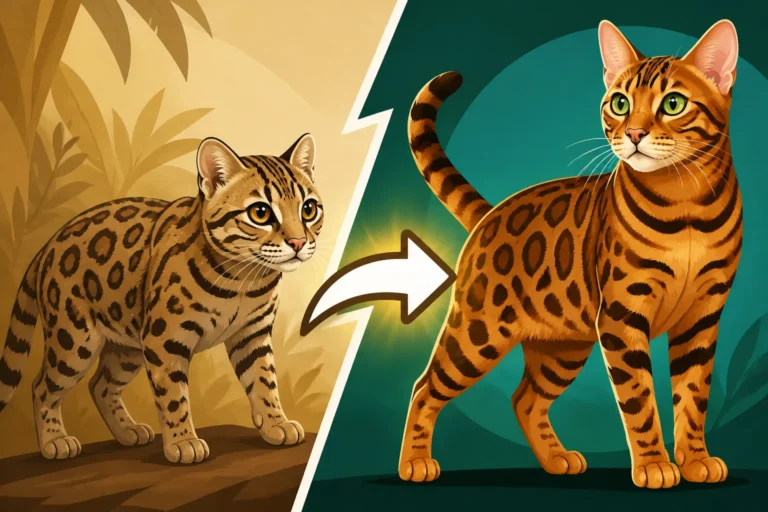
Bengal cats were developed through crosses involving domestic cats and the Asian leopard cat. That history explains the breed’s distinctive appearance, but it does not mean that a pet Bengal is a wild cat in disguise. The domestic Bengals people commonly encounter are several generations removed from the wild ancestor and have been bred within established lines.
Generation terms are useful, but they can confuse prospective owners. An early-generation hybrid is closer to the wild ancestor in its pedigree than a later-generation Bengal. That does not mean every cat of a given generation will act the same way. Individual temperament, socialization, health, and living conditions all matter.
If you are trying to understand whether the Bengal is considered a domestic breed, it helps to separate the breed’s origin from the day-to-day reality of a particular cat. The history is unusual; a domestic Bengal’s behavior and needs still have to be assessed as those of an individual companion animal. For more on the breed’s development, read Where the Bengal Cat Comes From and Whether Bengal Cats Are Still Bred From Wild Cats.
Generation and temperament are not a guarantee
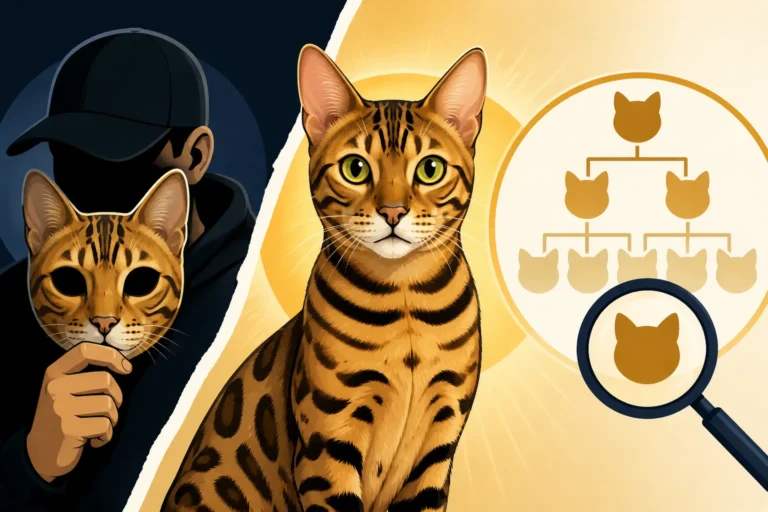
A pedigree can describe a cat’s ancestry, but it cannot tell you exactly how that cat will respond to every situation. Two cats from similar lines may have different confidence levels, activity needs, or comfort with handling. A breeder’s description can be useful, but it should be considered alongside the cat’s observed behavior and the care it will need in your household.
This matters especially when someone is drawn to a Bengal because it looks wild. Appearance does not tell you whether the animal will be content in a small apartment, tolerate being left alone, or get along with a resident pet. It is more useful to ask about the individual cat’s history, routine, socialization, and typical responses than to assume that its pattern predicts its personality.
A prospective owner can also ask what health and pedigree records are available, what the breeder means by the stated generation, and what support is offered if the placement becomes difficult. The article How an Early Generation Bengal Cat Behaves Differently discusses why early-generation cats should not be assumed to have the same needs as later-generation pets.
Responsible choices for people drawn to wild cats
Choose an established domestic cat rather than a wild animal
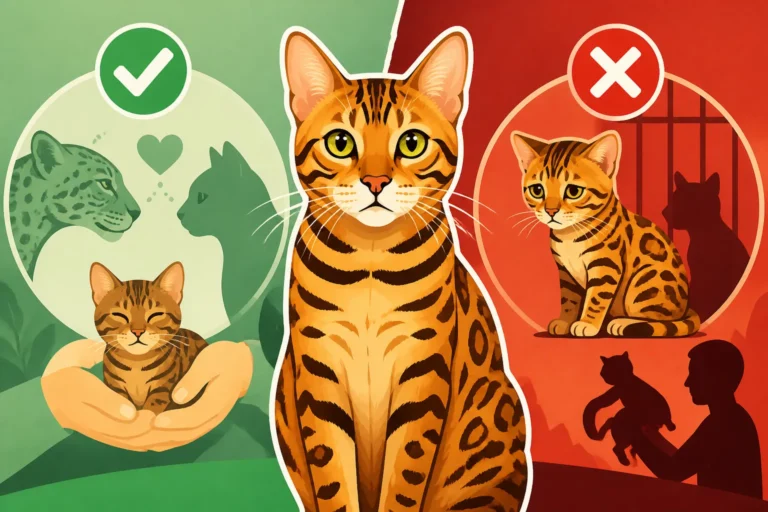
If what attracts you is the Bengal’s spotted coat, athletic build, or lively personality, focus on a domestic cat whose needs you can realistically meet. A responsible breeder or rescue organization should be able to discuss the cat’s temperament, health history, and care requirements without treating wildness as a selling point.
Before bringing home any cat, consider your everyday routine. Think about how much interactive play you can provide, whether your home has safe vertical space, how you will prevent escapes, and what will happen when you travel. Bengals can be energetic and curious, so planning enrichment and safe boundaries matters. The Bengal Cat Is the Most Active Cat You Can Own offers more on the breed’s activity needs.
For a domestic Bengal, practical preparation might include a secure carrier, durable scratching options, puzzle feeders, and a plan for gradual introductions to other pets. A retailer such as Chewy can be one place to compare everyday supplies, but equipment is only part of the preparation; time, supervision, and a suitable home matter just as much. If you need a starting point for selecting an appropriate setup, see How Much Enrichment a Bengal Cat Actually Needs.
Put welfare ahead of the appeal of wildness
Be cautious about anyone who promises that a wild animal will become completely tame if it is raised by hand, or who suggests that a wild-looking appearance guarantees a special bond. Those claims blur the difference between a wild animal’s tolerance of familiar people and the long-term suitability of a domestic companion.
If you encounter a wild feline that appears injured, abandoned, or in distress, avoid trying to keep or handle it yourself. Contact the appropriate local wildlife authority or a qualified wildlife rehabilitator for guidance. The right response depends on the animal and local rules; well-intentioned handling can create additional stress or put people and other animals at risk.
For a household pet, prioritize a cat whose needs match your circumstances, and make plans before adoption rather than after a problem emerges. Chewy may help you locate basics such as litter, food puzzles, or a sturdy carrier for a domestic cat, but a shopping list cannot make a wild animal suitable for home life. The most responsible decision is to admire the Asian leopard cat as a wild species and choose a domestic cat for companionship. If you are comparing options, Which Generation a Bengal Cat Breeder Works With and Whether a Bengal Cat Is Right for You can help you think through the fit.
Disclaimer
This article is for general informational purposes only and does not constitute professional advice. Laws, prices and regulations vary by location and change over time. Consult a qualified professional for guidance on your specific situation.