Why F1 to F3 Bengal Cats Are Rarely Sold as Pets
It’s a common dream to imagine sharing your home with a creature that looks like it just stepped out of the jungle, all wild beauty and grace. Many people fall in love with the striking appearance of Bengal cats, especially those magnificent early generations, the F1s, F2s, and F3s. But the truth is, while these cats are stunning, they come with a set of behaviors and needs that make them incredibly challenging, and often unsuitable, for typical pet homes. This guide will walk you through exactly why these early generation Bengal cats are rarely, if ever, sold as companion animals, exploring their unique temperaments, legal restrictions, and the immense commitment they require.
Understanding Bengal Cat Generations: The Closer to the Wild, the Wilder
To truly grasp why F1, F2, and F3 Bengal cats aren't your typical house pets, we first need to understand what those "F" numbers actually mean. It’s all about their lineage, how many generations removed they are from their wild ancestor, the Asian Leopard Cat (ALC). The closer to that wild bloodline, the more pronounced their wild instincts and behaviors tend to be. This isn't just a matter of looks; it deeply impacts their personality and suitability for a domestic environment.
The Asian Leopard Cat Connection
Every single Bengal cat, no matter how many generations removed, carries the genes of the Asian Leopard Cat. These are small, solitary wild felines native to parts of Asia, known for their stunning spotted coats, keen hunting instincts, and innate wariness of humans. They are not animals that can be "tamed" in the way a domestic cat can. They remain wild at heart, even if raised by people. The Bengal breed was originally developed by crossing these wild cats with domestic shorthairs, aiming to create a cat with the exotic look of the ALC but the loving temperament of a housecat. The process of achieving that domestic temperament takes time, and many generations of careful breeding. A Leopard Cat and a Housecat Made the First Bengal Cat gives a great overview of this fascinating origin story.
Filial Generations: F1, F2, F3 Explained
The "F" in F1, F2, F3 stands for "filial," referring to the generation. It's a direct count from the initial wild cross:
- F1 Bengal Cats: An F1 Bengal is the first filial generation, meaning one of its parents is an actual wild Asian Leopard Cat, and the other is a domestic cat (often a Bengal). This makes them 50% ALC by blood. They are essentially half-wild animals.
- F2 Bengal Cats: An F2 Bengal is the second filial generation. One of its parents is an F1 Bengal, and the other is typically another domestic Bengal. This means an F2 is roughly 25% ALC. While a step further from the wild, they still retain significant wild traits.
- F3 Bengal Cats: An F3 Bengal is the third filial generation. One of its parents is an F2 Bengal, and the other is usually a domestic Bengal. This puts them around 12.5% ALC. You might think this percentage sounds small, but the influence of those wild genes is still very strong and unpredictable.
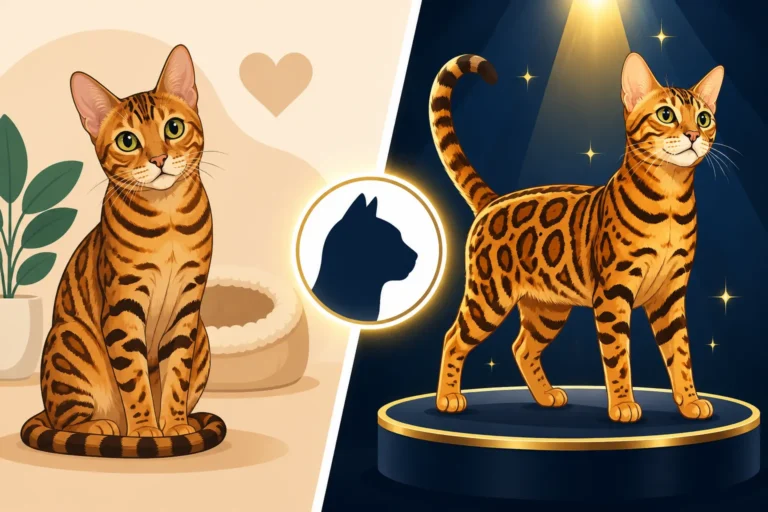
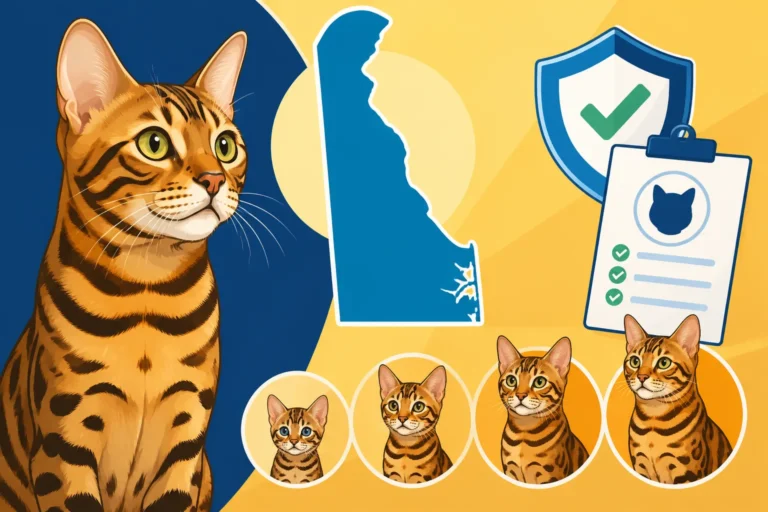
After the F3 generation, we typically move into what's known as an SBT Bengal, which stands for "Stud Book Tradition." An SBT Bengal cat is generally four generations or more removed from the ALC, where every cat in its four-generation pedigree is a Bengal cat. This is the point at which most breeders consider the cat to be reliably domesticated enough for pet ownership, and they are the only generations allowed to be shown in championship classes by most cat registries like TICA.
| Bengal Cat Generation | Wild Ancestry Percentage (Approx.) | Typical Parentage | Suitable as a Pet? |
|---|---|---|---|
| F1 | 50% Asian Leopard Cat | ALC x Domestic Cat | Almost Never |
| F2 | 25% Asian Leopard Cat | F1 x Domestic Cat | Extremely Rarely |
| F3 | 12.5% Asian Leopard Cat | F2 x Domestic Cat | Very Rarely |
| SBT (F4 and beyond) | < 6.25% Asian Leopard Cat | SBT x SBT | Yes, generally |
The reason for this distinction is profound. Each successive generation has been bred with an eye towards temperament, slowly diluting the intense wild instincts while retaining the exotic appearance. F1s, F2s, and F3s are fundamentally different animals to live with compared to an SBT Bengal.
The Unique Temperament of Early Generation Bengals
The primary reason F1 to F3 Bengal cats are rarely sold as pets boils down to their temperament. These cats are not just "more active" or "more vocal" than a typical domestic cat; their behaviors are driven by instincts that are deeply rooted in their wild heritage, instincts that simply aren't compatible with a relaxed home environment. When someone says an F1 acts "wild," they mean it literally.
Instinctual Drives and Behaviors
Imagine a tiny leopard living in your house. That's not far from the reality of an F1 Bengal. Their prey drive is incredibly intense. They are natural hunters, and this isn't something that can be trained out of them. They will actively hunt and kill small pets like hamsters, birds, or even smaller cats, and their attempts can be relentless and focused. This isn't aggression; it's pure instinct. They also tend to be highly territorial, often marking their space with urine or feces, even if neutered or spayed, a behavior that is hardwired. Their vocalizations are also quite different; rather than a gentle meow, you might hear hisses, growls, and chirps that are far more akin to a wild animal communicating. The Bengal Cat Voice Is a Demand, Not a Greeting elaborates on the unique ways these cats express themselves.
Furthermore, early generation Bengals often display a profound wariness of strangers and a need for extreme independence. They aren't typically lap cats. They may tolerate their primary caretaker but often hide from or outright avoid others. This intense independent streak means they require a handler who understands their need for space and respects their boundaries, which is a far cry from the affectionate, social nature many people expect from a pet cat. You won't find them curled up purring on your sofa with casual guests, and forcing interaction can lead to stress or even defensive reactions.
Training and Socialization Challenges
Attempting to "train" an F1, F2, or F3 Bengal cat in the traditional sense often proves futile because their actions are so instinctual. While an SBT Bengal can be clicker trained to do tricks and walk on a leash, an early generation often resists such attempts at domestication. They don't have the same drive to please or the inherent trust in humans that generations of domestic breeding have instilled in other cats. This makes things like leash training, which is possible with many SBT Bengals as discussed in A Bengal Cat Walks on a Leash, an incredibly difficult and often unsuccessful endeavor for early generations.
Their litter box habits can also be challenging. While an F4 or later generation Bengal typically takes to a litter box just like any other domestic cat, early generations may not. They might prefer to eliminate in specific areas outdoors, or even spray and mark indoors, regardless of a clean litter box. This isn't defiance; it's a hardwired instinct from their wild ancestors, who would rarely bury their waste. Coupled with their high energy levels and destructive tendencies when bored—think shredded furniture and ripped-up carpets, as detailed in What a Bored Bengal Cat Destroys—they demand an environment that is less like a typical home and more like a contained, enriched habitat. Trying to manage these behaviors in a standard household can be incredibly stressful for both the cat and the owner.
Legal and Practical Obstacles to Pet Ownership
Beyond temperament, there are significant legal and practical barriers that prevent F1 to F3 Bengal cats from being widely available or suitable as household pets. These aren't just minor inconveniences; they are serious considerations that impact everything from where you can live to how you care for your cat.
Ownership Restrictions and Permits
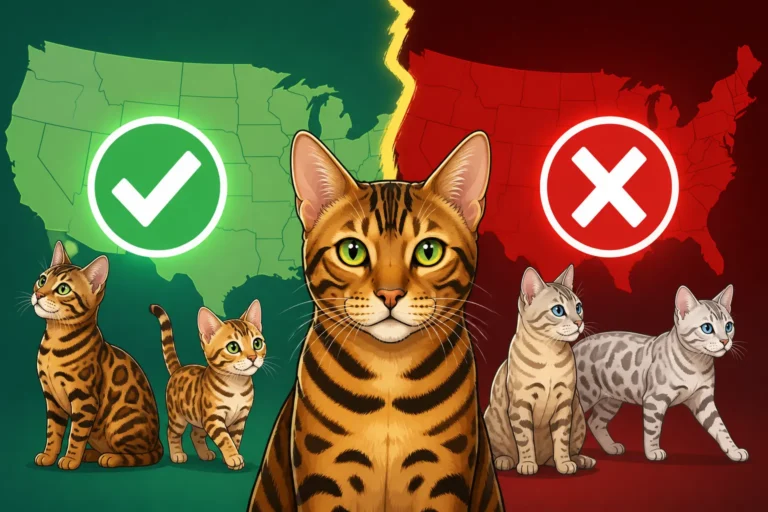
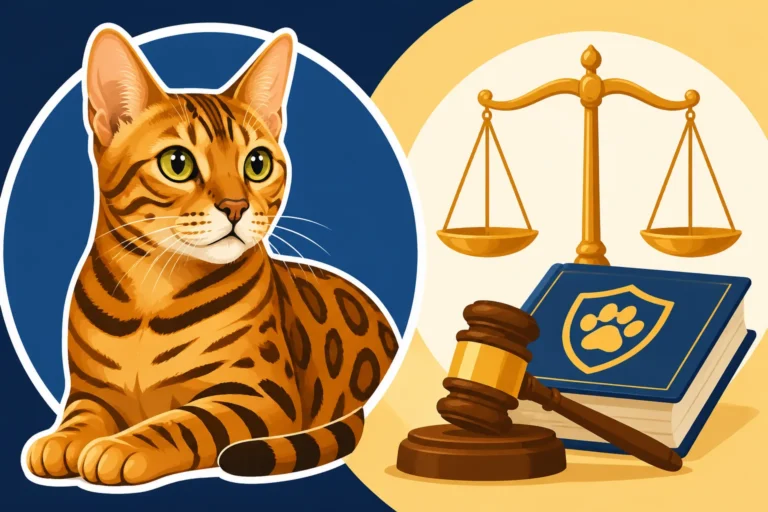
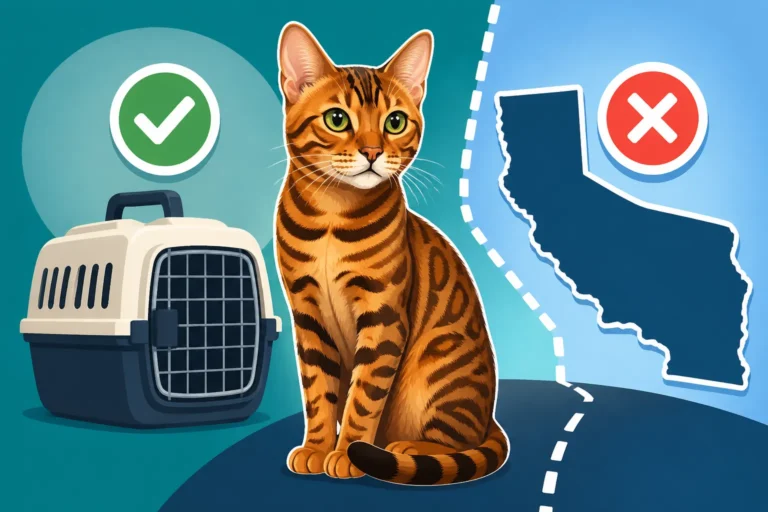
Many states, counties, and cities have strict laws regarding the ownership of hybrid cats, especially those with high percentages of wild blood. The line is often drawn right at the F4 generation. This means that F1, F2, and F3 Bengal cats are frequently classified as "wild animals" or "exotic hybrids," rather than domestic pets. Owning them might be outright illegal in your area, or require special permits, extensive insurance policies, and specific housing requirements that are almost impossible to meet in a standard residential setting. For example, some jurisdictions might require secure outdoor enclosures that resemble small zoos, complete with double-entry systems and reinforced walls, which are far beyond a typical backyard catio. Where a Bengal Cat Is Illegal in the United States highlights how common these restrictions are. You might even find yourself in a situation where moving across state lines with an early generation Bengal is a serious legal challenge, or even impossible.
These regulations aren't arbitrary; they are in place to protect public safety and the welfare of the animals. An F1 Bengal that escapes can pose a risk to local wildlife and may be difficult to recapture due to its wild instincts. Before even considering an early generation Bengal, one must conduct exhaustive research into local ordinances, often requiring direct communication with animal control or wildlife departments. The consequences of non-compliance can be severe, ranging from hefty fines to the confiscation of the animal.
Specialized Care and Environment
The daily care requirements for an F1, F2, or F3 Bengal cat are vastly different from those of a typical housecat. Their high energy and need for mental and physical stimulation are extreme. They can't just be given a few toys and left to their own devices. They need vast amounts of vertical space, sophisticated puzzle toys, and often dedicated outdoor enclosures like a robust catio to safely express their natural climbing and hunting behaviors. Why a Catio Is the Answer to a Bengal Cat explains why such an enclosure is essential for any Bengal, but for early generations, it's non-negotiable for their well-being and to prevent destructive behavior indoors.
Their dietary needs can also be more specialized, sometimes requiring a raw or whole prey diet to truly thrive, although many SBT Bengals do well on high-quality commercial foods. For example, fresh, human-grade cat food could be beneficial for meeting their protein requirements, but even that might not be enough for the most wild-leaning early generations. Their strong digestive systems, adapted for raw meat, sometimes react poorly to highly processed kibble. The High Protein Argument for a Bengal Cat explores why protein is so important for these active felines.
Vet care can also be more complex. Not all veterinarians are experienced with treating early generation hybrids, and their anesthetic requirements or reactions to certain medications can differ from fully domestic cats. Should any health issues arise, having a robust pet insurance plan like those offered by Healthy Paws can be a lifesaver, covering unexpected costs that could quickly escalate with specialized exotic animal care. Ultimately, the environment and care required are more akin to what one would provide for a small wild animal in a sanctuary than a typical household pet.
Why Breeders Focus on SBTs for Pets
Given all these challenges, it might seem puzzling why anyone would want to breed Bengals in the first place. The truth is, reputable Bengal breeders are not aiming to sell F1, F2, or F3 cats as household pets. Their entire breeding program is centered around moving away from those wild behaviors and producing SBT (Stud Book Traditional) Bengals that possess the exotic look without the difficult temperament.
The Journey to Domesticity
The goal of the Bengal breed, as envisioned by its founders, was always to create a cat that looked like a miniature leopard but had the affectionate, playful, and trainable nature of a domestic cat. This is a painstaking process that takes generations of selective breeding. Breeders carefully choose which cats to breed, not just for their stunning rosettes or glittery coats, but crucially for their temperament. They're looking for individuals that are confident, curious, playful, and tolerant of human interaction, while actively avoiding those that display excessive shyness, aggression, or marking behaviors. How Many Generations Before a Bengal Cat Is Fully Domestic explains this process in more detail.
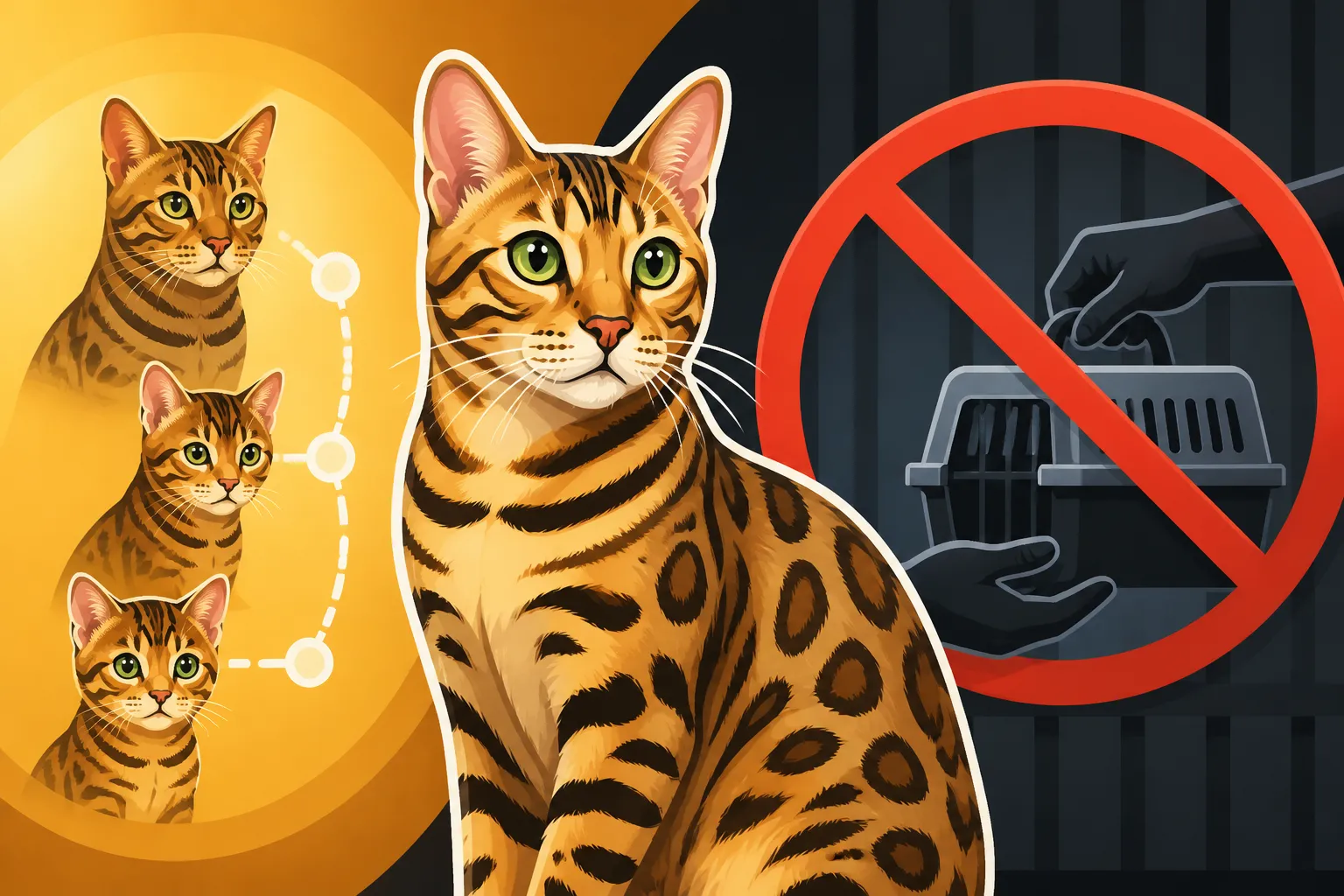
The early generations (F1s, F2s, F3s) are typically kept by experienced breeders who understand their unique needs, or by individuals with specialized facilities and extensive knowledge of exotic animal care. These cats are primarily used in breeding programs to introduce or maintain specific traits, particularly the striking wild appearance, but they are very rarely destined for pet homes. The vast majority of early generation males are also sterile, meaning they cannot reproduce, which further complicates breeding programs, as discussed in Why F1 to F3 Bengal Cat Males Cannot Breed. This further restricts their availability and suitability.
The Ideal Bengal Pet
The result of this dedicated breeding effort is the SBT Bengal cat. By the time a Bengal reaches the F4 generation and beyond (SBT), the wild instincts have largely been diluted, replaced by a much more predictable and manageable domestic temperament. These cats are still incredibly active, intelligent, and vocal, often retaining a love for water and a playful curiosity that sets them apart from many other breeds. They need plenty of enrichment, like high-quality toys from Chewy or engaging puzzle feeders, but they are generally affectionate, adaptable, and can thrive in a loving household.
SBT Bengals are the ones you see walking on leashes, fetching toys, and cuddling with their families. They are the cats that fulfill the dream of having a "miniature leopard" companion without the significant behavioral and legal hurdles of their early generation ancestors. While they still require a committed owner who can provide ample stimulation and interaction, their needs are well within the scope of a dedicated pet parent, unlike the F1-F3s, which truly demand a level of expertise and environment that most simply cannot offer.
Disclaimer
This article is for general informational purposes only and does not constitute professional advice. Laws, prices and regulations vary by location and change over time. Consult a qualified professional for guidance on your specific situation.