Whether an F4 Bengal Cat Costs Less Than an SBT
Navigating the world of Bengal cats can feel like deciphering a secret code, especially when you start looking into generations and what those "F-numbers" or "SBT" labels actually mean for your wallet. It's truly baffling when you're trying to figure out if an F4 Bengal cat is going to set you back more or less than an SBT, and the truth is, it's not always as straightforward as a simple "yes" or "no." This guide is here to untangle that confusion, helping you understand the nuances of Bengal cat generations and how they influence the price you might pay, so you can make an informed decision for your future feline friend.
Understanding Bengal Cat Generations and What 'SBT' Truly Means
When you start researching Bengal cats, you quickly run into terms like F1, F2, F3, F4, and SBT. These aren't just fancy designations; they tell a story about the cat's lineage and, crucially, how far removed it is from its wild ancestor, the Asian Leopard Cat (ALC). This proximity to the wild is a huge factor in temperament, legality, and ultimately, cost. It’s no wonder people get confused when trying to budget for their dream cat.
The Filial Generations: F1, F2, F3, and F4
The "F" stands for filial, and the number indicates how many generations a Bengal cat is from its wild Asian Leopard Cat ancestor.
An F1 Bengal cat is a first-generation hybrid, meaning one of its parents was a domestic cat and the other was a wild ALC. These cats are incredibly rare and usually have a much wilder temperament, demanding specialized care and environments. They often come with significant legal restrictions due to their close wild heritage.
An F2 Bengal cat has an ALC grandparent. So, one parent is an F1, and the other is a domestic Bengal or housecat. They are still quite wild in their instincts and behaviors, often requiring specific permits and experienced owners.
An F3 Bengal cat has an ALC great-grandparent. One of its parents is an F2. These cats are starting to show more domestic traits but can still be quite challenging. You might find them incredibly active and vocal, needing constant stimulation.
An F4 Bengal cat has an ALC great-great-grandparent, with an F3 parent. At this point, the cat is four generations removed from the wild. Generally, F4s are considered the first generation that consistently exhibits more domestic behaviors, making them suitable for some pet homes, though they still retain a strong athletic build and high energy levels. You'll often see them described as being on the cusp of full domestication. F1 to SBT: How a Bengal Cat's Generation Is Counted explains this lineage in more detail.
The Significance of SBT (Stud Book Traditional)
Then we have "SBT." This is where things get a bit clearer for pet owners. SBT stands for Stud Book Traditional, and it's a designation given to Bengal cats that are at least four generations (F4 or higher) removed from their wild ancestor, and have three generations of pure Bengal-to-Bengal breeding in their pedigree. This means an SBT Bengal cat's parents, grandparents, and great-grandparents were all registered Bengal cats, not an ALC or an early-generation hybrid cross.
The SBT designation is incredibly important because it signifies a consistent, predictable temperament and physical characteristics within the breed standard. These are the Bengals that are fully recognized by cat registries like TICA (The International Cat Association) for show and championship status. They are considered fully domestic, making them much more adaptable to typical family life compared to their earlier generation cousins. Understanding What SBT Means in a Bengal Cat is key to appreciating their role in the breed.
Why Generation Matters for Price and Legality
The generational difference isn't just a technicality; it profoundly impacts the cat's cost and, critically, whether you can legally own one. Earlier generations (F1-F3) are often much more expensive due to their rarity, the challenges in breeding them, and the specialized care required. They also come with a complex web of laws. Many states and cities have outright bans or require special permits for F1, F2, and F3 Bengals, due to their proximity to a wild animal. Even some landlords might have clauses specifically against these generations.
By the time you reach F4 and especially SBT, the legal landscape simplifies considerably. Most jurisdictions that have restrictions on Bengal cats will typically draw the line at F4, meaning SBT Bengals are generally legal to own in more places. Whether an SBT Bengal Cat Is Legal Everywhere is a common concern. This broader legality and more predictable temperament often make SBT Bengals the preferred choice for pet owners, but this doesn't automatically mean they are cheaper than an F4, as we'll explore next.
Comparing F4 and SBT Bengal Cats: Beyond the Numbers
When it comes to F4 versus SBT Bengal cats, it's not a simple case of one always being cheaper than the other. While SBT cats are generally considered "more domestic," their price is heavily influenced by quality and breeder intent. The difference between an F4 and an SBT often comes down to a blend of genetic distance, temperament predictability, and breed recognition.
Genetic Distance and Temperament
An F4 Bengal cat is still relatively close to its wild roots. While they are usually quite adaptable, they can sometimes exhibit more pronounced wild traits than an SBT. This might mean a higher intensity of energy, a stronger prey drive, or a more demanding personality that requires constant enrichment and interaction. They're still incredibly intelligent and playful, but you might notice them being a bit more vocal or less tolerant of changes in routine compared to some SBTs. They truly are at the critical juncture where the "wildness" begins to significantly temper, yet it’s still present in a way that some owners cherish, while others might find challenging. Why F4 Is the Line Between Wild and Domestic Bengal Cats really highlights this transitional stage.
SBT Bengal cats, being several generations removed from the ALC with a history of purely domestic Bengal breeding, offer a more consistent and generally more predictable temperament. They still possess that signature Bengal energy, intelligence, and vocal nature, but these traits are typically expressed within a more manageable domestic framework. For a first-time Bengal owner, or a family with children and other pets, an SBT often provides a smoother integration into the home. The domestic influence through consistent breeding means you’re more likely to get a cat whose behavior aligns with what you expect from a highly active, interactive, and friendly companion. This predictability is a significant part of their appeal.
Breed Recognition and Show Eligibility
This is where the SBT designation really shines for breeders and show enthusiasts. Only SBT Bengal cats are eligible for championship status in cat fancy associations like TICA. This means if a breeder wants to show their cats and earn titles, or contribute to the progression and recognition of the breed, they must be working with SBT lines. This strict requirement elevates the value of high-quality SBT Bengals. A champion-sired or champion-potential SBT kitten will naturally command a premium price because it embodies the pinnacle of breed standards and the investment of years of careful breeding.
F4 Bengals, while beautiful and often wonderful pets, cannot compete for championship titles. They exist in a bit of a limbo state; they're generally legal and more domestic than F1-F3s, but they don't quite have the full pedigree recognition that SBTs do. This can sometimes mean that if an F4 is pet-quality, its price might be less than a top-tier SBT. However, an F4 with exceptional markings or other desirable traits, sold as a pet, could still be quite costly, especially if from a reputable breeder.
The Price Spectrum: Where F4 and SBT Fall
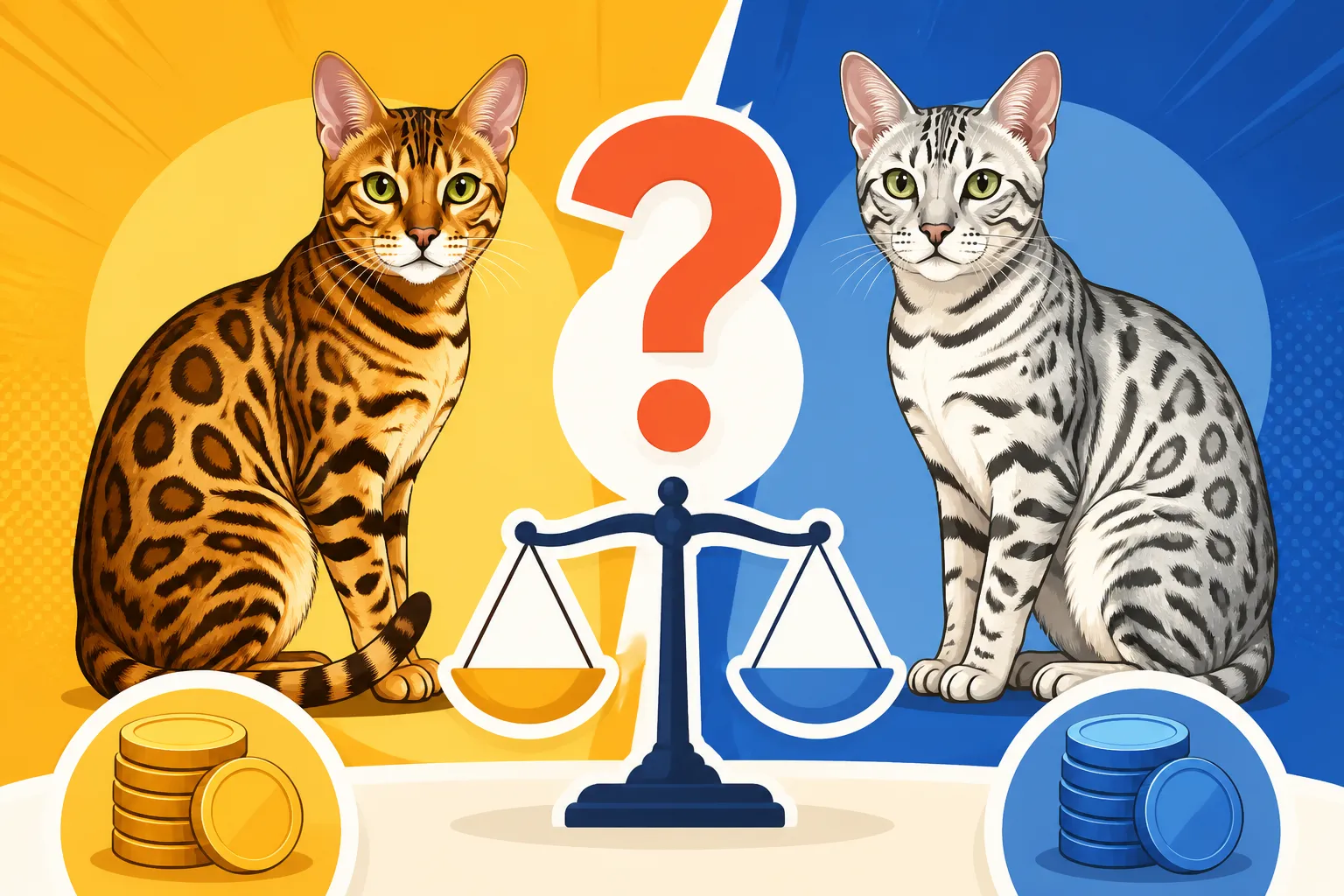
Now, to the core question: does an F4 Bengal cat cost less than an SBT? In many cases, a basic pet-quality SBT Bengal cat might cost a similar amount to, or even slightly more than, an F4 of comparable pet quality. The reason is the established predictability and full domestic status of the SBT. Breeders who consistently produce SBTs know they are offering a cat that aligns perfectly with domestic expectations and breed standards, which holds value.
However, the real price differentiation comes when you consider the "quality" within each generation. An F4 Bengal cat with exceptionally clear markings, beautiful rosettes, and a lovely temperament could certainly cost as much as, or more than, an SBT with less desirable traits, sold as a pet. Think of it this way: a "lower quality" SBT (perhaps one with less defined markings or a slightly less ideal "type" for show) might be priced lower to find a pet home quickly, whereas a truly stunning F4 could command a high price.
On the other hand, a top-tier show or breeder quality SBT Bengal cat, bred from champion lines, with impeccable conformation, stunning rosettes or marbling, and a sparkling personality, will almost always be significantly more expensive than even the highest quality F4. The investment in breeding such an animal, the health testing (like for What a Bengal Cat Breeder Should Have Tested), the showing costs, and the demand for superior genetics drive this price upward.
Here's a simplified comparison to illustrate the general differences, though remember, individual cat quality and breeder reputation always influence the final price:
| Feature | F4 Bengal Cat | SBT Bengal Cat |
|---|---|---|
| Genetic Link | 4th generation from ALC | 4th generation or more from ALC, plus 3 generations of Bengal-to-Bengal breeding |
| Temperament | Generally domestic, but may retain stronger "wilder" traits (energy, prey drive) | Consistently domestic, predictable temperament, aligns with breed standard |
| Show Eligibility | Not eligible for championship status in TICA | Fully eligible for championship status in TICA |
| Legality | Generally legal in most places, but some areas may still have restrictions | Widely legal as a domestic cat; fewer restrictions |
| Price (Pet) | Can be comparable to basic SBTs; exceptional F4s can be higher than lower SBTs | Generally comparable to F4s for basic pet quality; higher for exceptional show lines |
| Price (Show/Breed) | Not applicable for show; potential for breeding if registered, but limited value | Significantly higher for show-quality or breeding-rights cats due to pedigree |
Ultimately, while you might find a pet-quality F4 for a similar price to an entry-level pet SBT, if you're looking at the top end of the spectrum for conformation and pedigree, the SBT will almost certainly be the more expensive option.
Factors That Influence Bengal Cat Pricing (Beyond Generation)
It's easy to get fixated on the generation number, but many other crucial factors contribute to a Bengal cat's price tag. These elements are often more significant than the F4 vs. SBT debate for most pet owners, and understanding them will give you a much clearer picture of what you're paying for.
Quality of Pattern, Color, and Type
The Bengal cat is renowned for its stunning, wild-looking coat, and the quality of this coat is a huge price driver.
- Pattern: Highly sought-after patterns, especially clear, well-defined rosettes (like donut, paw-print, or arrowhead rosettes) are more expensive than single spots or less distinct patterns. Marbled Bengals, with their swirled patterns, are also popular, but usually rosetted cats command the highest prices. The contrast between the markings and the background color is also vital; a high-contrast coat is highly desirable. Rosetted Against Marbled: The Two Bengal Cat Patterns delves into these captivating variations.
- Color: While brown Bengals are the most common, certain color variations like "snow" (Seal Lynx Point, Seal Mink, Seal Sepia), silver, and charcoal can increase the price due to their rarity and unique aesthetic.
- Glitter: That shimmery, iridescent quality in a Bengal's coat, known as "glitter," is highly prized. Cats with exceptional glitter often come with a higher price tag.
- Type: This refers to how well the cat conforms to the overall breed standard – head shape, ear size, tail length, body musculature, and overall presence. A cat that embodies the ideal "wild look" while maintaining domestic characteristics will be more valuable.
A Bengal that ticks all these boxes – perfect rosettes, striking color, excellent glitter, and superb type – will always be more expensive, regardless of whether it's an F4 or an SBT pet.
Breeder Reputation and Health Testing
This is a non-negotiable factor that should influence price, and it's where you'll find a massive difference between backyard breeders and responsible, ethical ones. Reputable breeders invest significantly in their breeding program, and that investment is reflected in the kitten's price.
- Health Testing: Ethical breeders conduct extensive health testing on their breeding cats to ensure they are not passing on genetic diseases. This includes regular echocardiograms for HCM (HCM Is What Kills Bengal Cats Early), DNA tests for Pyruvate Kinase Deficiency in a Bengal Cat and PRA-b Blinds a Bengal Cat by Two and There Is a DNA Test, and fecal testing to rule out common Bengal gut issues like Tritrichomonas. These tests are expensive, but they are crucial for producing healthy kittens and give you peace of mind. A breeder who can provide clear health certificates for both parents is worth the higher price. What a Bengal Cat Breeder Should Have Tested is an excellent resource for knowing what to ask for.
- Care and Socialization: Responsible breeders provide excellent nutrition, veterinary care, and crucial early socialization for their kittens. They ensure kittens are raised in a clean, stimulating environment, handled regularly, and exposed to household sounds and experiences. This foundational care contributes to a well-adjusted, confident companion.
- Support and Guarantees: A good breeder offers ongoing support and health guarantees. They stand by their kittens and are there to answer questions long after you've taken your new family member home.
When you're comparing prices, remember that a "cheap" Bengal kitten often comes from a breeder cutting corners on health testing, nutrition, or socialization, which can lead to heartbreaking and costly issues down the line. It's truly a case of "you get what you pay for."
Pet vs. Breeder/Show Quality
The purpose for which a Bengal cat is sold drastically impacts its price.
- Pet Quality: A "pet quality" Bengal is a cat that, while still a fantastic companion, may have minor imperfections that prevent it from being ideal for the show ring or a breeding program. Perhaps its rosettes aren't perfectly aligned, its ears are a touch too large, or its profile isn't quite what the breed standard calls for. These cats are usually sold with a spay/neuter contract, meaning you agree to have them altered at the appropriate age. Pet prices are the lowest tier from a reputable breeder.
- Show Quality: A "show quality" Bengal is one that closely conforms to the breed standard and has the potential to do well in TICA shows. These cats are almost always SBTs. They are sold with a spay/neuter contract, but they command a higher price due to their exceptional aesthetics and conformation.
- Breeder Quality: A "breeder quality" Bengal is typically a top-tier animal with impeccable genetics, temperament, and health, sold with breeding rights. These are the most expensive Bengals, often costing several times more than a pet-quality kitten. Breeders pay this premium to acquire cats that will contribute positively to their breeding lines and help improve the breed.
So, when you see a price, always clarify if it's for a pet, show, or breeding cat, as this will explain a huge portion of the cost difference.
Making the Right Choice: F4, SBT, and Your Budget
Deciding between an F4 and an SBT Bengal cat, and then understanding the costs involved, can feel overwhelming. It’s not just about the initial purchase price; it’s about finding the right companion for your life and being prepared for the long haul.
Assessing Your Lifestyle and Expectations
Before you even look at prices, think deeply about what you're looking for in a cat and what your household can offer.
- Activity Level: Both F4s and SBTs are highly active and intelligent cats, but an F4 might have a slightly higher intensity or require even more specific enrichment. Are you prepared for a cat that needs multiple dedicated play sessions daily, interactive toys, puzzle feeders, and possibly even a cat wheel? How Much Enrichment a Bengal Cat Actually Needs is a good starting point for this self-assessment.
- Socialization Needs: Bengals thrive on interaction. Will your cat have plenty of company, either from you, another pet (though careful introduction is key), or a well-structured environment?
- Space: While a Bengal can adapt to apartment living, they absolutely need vertical space (tall cat trees, shelves) and ideally a safe outdoor enclosure like a catio to truly thrive.
- Patience and Training: Bengals are clever and can learn tricks, but they also test boundaries. Are you prepared for a smart cat that might try to open cabinets, turn on faucets, or "rearrange" your belongings? Their What a Bengal Cat's Temperament Is Really Like can be quite demanding.
If you’re a first-time cat owner or have a very busy, quiet household, an SBT might offer a more predictable and easier transition. If you’re experienced with high-energy breeds and prepared for a bit more "wild" charm, an F4 could be a fantastic fit.
The Importance of Transparency and Health Guarantees
No matter what generation you choose, always prioritize a transparent breeder who is open about their practices and provides comprehensive health guarantees. Don't be shy about asking questions!
- Ask for Proof of Health Testing: Request to see the health certificates for both parents (echocardiograms for HCM, DNA tests for PK deficiency and PRA-b). A reputable breeder will be happy to provide these.
- Review the Contract: Understand what the health guarantee covers, any return policies, and the requirements for spaying/neutering.
- Visit the Cattery (if possible): Observing the environment where the kittens are raised and interacting with the parents can tell you a lot about their health and temperament.
- Verify Registration: Ensure the kittens are registered with TICA, as this verifies their pedigree and generation. How to Find a Bengal Cat's Generation on Its Pedigree can guide you.
A breeder’s commitment to transparency and health is a far better indicator of a kitten's true value than just the initial price tag. Don't be tempted by suspiciously low prices, as they often hide future veterinary bills or behavioral problems.
Long-Term Costs and Considerations
The purchase price of your Bengal cat is just the beginning of your financial commitment. Bengal cats are an investment, and their unique needs mean ongoing costs can add up.
- Food: Bengal cats thrive on high-quality, high-protein food, which can be more expensive than generic cat food. Premium cat food options cater to specific dietary needs, and while the upfront cost might be higher, it can contribute to better health and fewer vet visits in the long run.
- Vet Care: Regular check-ups, vaccinations, and potential treatments for any health issues are part of pet ownership. Consider pet insurance from providers like Healthy Paws to help manage unexpected veterinary expenses, especially given some of the breed's predispositions.
- Enrichment and Toys: Bengals are notorious for destroying toys. You'll need durable, engaging toys, possibly a cat wheel, tall scratching posts, and plenty of vertical space. This ongoing expense is crucial for their mental and physical well-being.
- Litter and Supplies: Due to their size and activity, Bengals often require larger litter boxes and go through litter more quickly than average cats.
- Unexpected Expenses: Life happens. Be prepared for potential emergencies or specialized care as your Bengal ages. What a Bengal Cat Costs Over Its Lifetime gives a broader perspective on these financial commitments.
Whether you choose an F4 or an SBT, a Bengal cat is a lifelong commitment filled with joy, entertainment, and a bit of wild adventure. By carefully considering all the factors beyond just the generational number and initial price, you can ensure you bring home a healthy, happy cat that perfectly suits your life.
Disclaimer
This article is for general informational purposes only and does not constitute professional advice. Laws, prices and regulations vary by location and change over time. Consult a qualified professional for guidance on your specific situation.