Which Bengal Cat Generation Most States Draw the Line At
Oh, the world of Bengal cats! They're absolutely magnificent creatures, aren't they? But if you're looking to bring one of these spotted beauties into your home, you've probably already stumbled into the confusing maze of state and local laws. It's truly frustrating when you just want to understand if your dream cat is even legal where you live, and the information feels scattered and contradictory. This guide is here to clear up that confusion, explaining which Bengal cat generations most states typically draw the line at and what that means for you as a potential owner.
Understanding Bengal Cat Generations and Their Legal Significance
When we talk about Bengal cats, it's not just "a Bengal cat." There's a crucial distinction that often dictates their legality: their generation. This "F-number" system, or filial generation, tells you how many generations removed your cat is from its wild ancestor, the Asian Leopard Cat (ALC). It might sound like a technicality, but it's the very heart of most restrictions.
The Filial Generation System Explained
Let's break down what these F-numbers actually mean, because it's paramount to understanding why some Bengals are treated differently under the law.
- F1 Bengals: These are the very first cross, a direct offspring of an Asian Leopard Cat and a domestic cat. Imagine the incredible beauty and wild instincts! Because they are so close to their wild heritage, F1 Bengals are often quite large, strong-willed, and retain many of the behaviors of their ALC parent. They are the most restricted generation, legally speaking.
- F2 Bengals: An F2 Bengal is the result of breeding an F1 Bengal with a domestic cat. They are one step further removed from the ALC, typically making them a bit more domesticated than F1s, but still possessing a significant wild streak. They are still considered "early generation" and face similar, though sometimes slightly less stringent, legal hurdles.
- F3 Bengals: Bred from an F2 Bengal and a domestic cat, F3s are three generations removed from their wild ancestor. At this stage, you're starting to see a more "cat-like" temperament, but they can still be incredibly energetic and demanding, with a distinct wild appearance. Many states group F3s with F1s and F2s when it comes to restrictions.
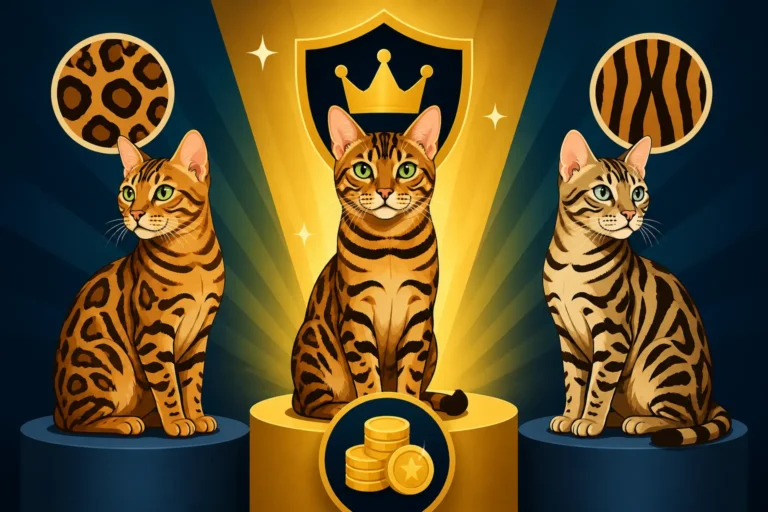
- F4 Bengals and Beyond (SBT): This is where most states differentiate. An F4 Bengal is four generations removed from the ALC. Cats from the F4 generation onwards, and typically the fifth generation and beyond, are usually considered "SBT" (Stud Book Tradition) Bengals. This means they are fully domestic in terms of their breeding lines, consistently breeding true to type with other Bengals. These are the Bengals you most commonly see as pets, and generally, they are recognized as domestic cats by most jurisdictions, making them much less likely to be restricted.
The legal system uses these generations as a rough gauge of how "wild" a Bengal cat might still be. The closer to the ALC, the more likely a jurisdiction is to classify them as a wild or hybrid animal, rather than a domestic pet. It’s an understandable concern from a public safety standpoint, but for hopeful owners, it creates a thicket of regulations. You can find more detail about this in How a Bengal Cat's Generation Is Counted.
Why Generation Matters for Legality
The reason these filial generations are so important for legal purposes boils down to perceived wildness. Early generation Bengals (F1-F3) are seen as having more pronounced wild traits, which can include:
- Behavioral Tendencies: Higher energy levels, stronger prey drives, a tendency to mark territory, and sometimes a more reserved or less overtly affectionate nature than a typical domestic cat.
- Physical Strength and Size: F1s, in particular, can be quite robust, leading to concerns about handling and potential harm, especially in a domestic setting.
- Difficulty in Containment: Their intelligence and agility can make them escape artists, posing a perceived threat to local wildlife or even neighboring pets.
Because of these factors, many states and cities classify early generation Bengals as "wild animals," "exotic pets," or "hybrid animals" that require special permits, extensive enclosures, or are outright banned. SBT Bengals, on the other hand, are generally considered domesticated enough to fall under typical pet ownership laws, just like a Siamese or a Persian.
The Legal Landscape: State vs. City Regulations
One of the biggest headaches for prospective Bengal cat owners is that the laws aren't uniform. It's not as simple as checking one national database. Rules can vary dramatically from state to state, and even within the same state, individual cities or counties might have their own, often stricter, ordinances. This patchwork approach is incredibly frustrating and catches many well-meaning people off guard.
State-Level Restrictions
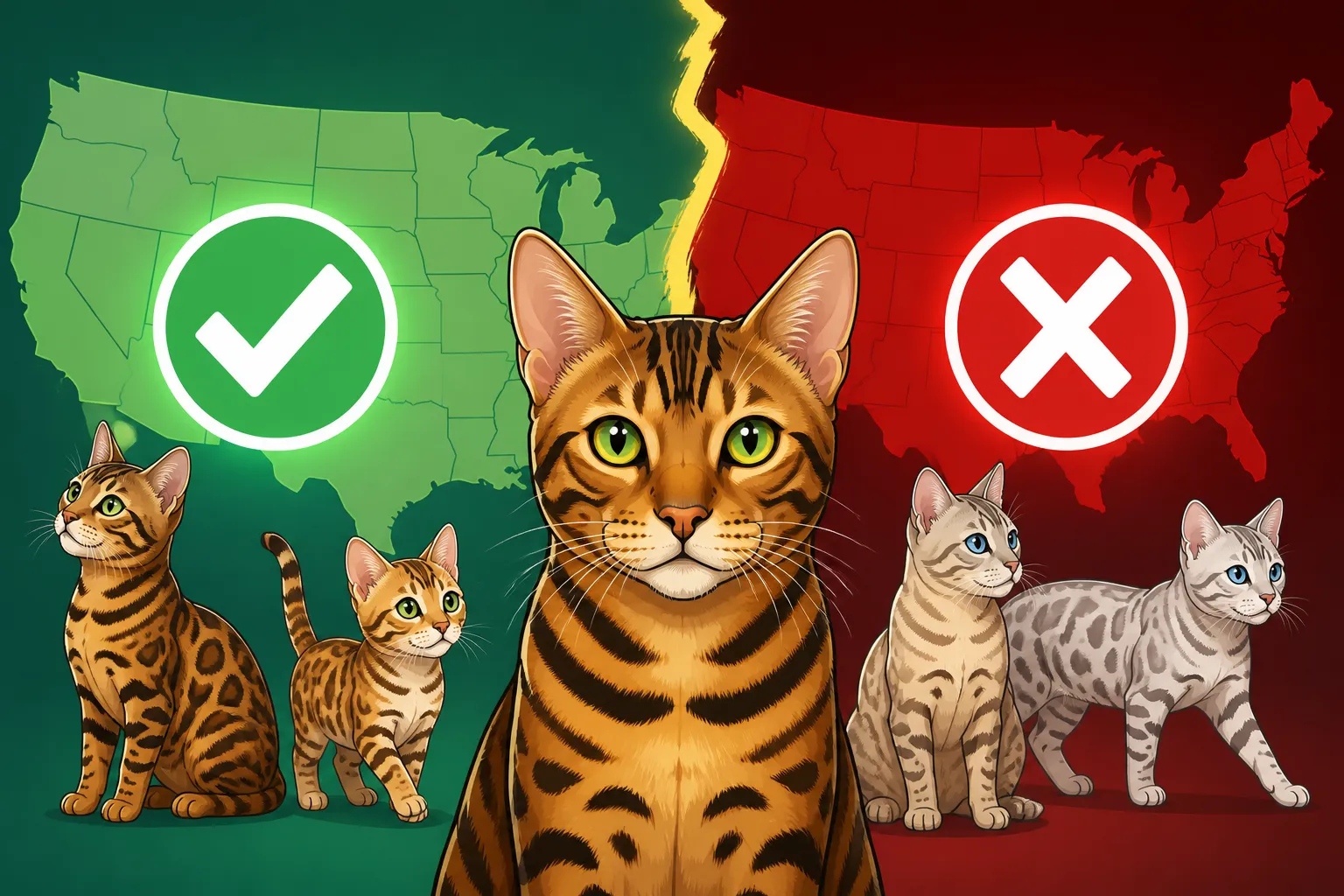
Most states that impose restrictions on Bengal cats tend to focus on the early generations. The common "line in the sand" for state law is often at the F4 generation. This means that:
- F1, F2, F3 Bengals are often regulated: Many states consider these cats to be hybrids that require special permits, specific caging requirements, or are completely prohibited. For example, some states might require you to prove you have an escape-proof enclosure that meets certain square footage and height requirements, or demand a special license and annual inspection. These aren't just minor inconveniences; they are significant legal and financial obligations.
- F4 and SBT Bengals are usually permitted: For the most part, once a Bengal cat reaches the F4 generation and is recognized as an SBT, it falls under the same category as other domestic cat breeds. This means you typically won't need special permits at the state level. These are the generations that most breeders sell to pet homes, precisely because they are widely accepted. Which Bengal Cat Generation Most States Draw the Line At delves into this in more detail.
It's a huge relief for many to learn that an SBT Bengal is usually fine, but it underscores the importance of knowing your cat's exact generation and having proof of it, like registration papers from an organization such as TICA.
City and County Ordinances
Now, here's where it gets even trickier. Even if your state allows a certain Bengal cat generation, your city or county might have its own rules that are more restrictive. It's not uncommon for a state to permit F4+ Bengals, but for a specific city within that state to ban all Bengal cats outright, regardless of generation. This can be a huge shock if you've only checked state laws.
For example, a state might permit F4 and later generations, but a city within that state could have an ordinance that defines "hybrid cat" broadly to include any cat with wild cat ancestry, effectively banning all Bengal cats. New York State might allow certain generations, but Why New York City Bans Every Bengal Cat. It's a real minefield, and it's why due diligence is absolutely critical. You might think you're clear, only to find a local rule that suddenly makes your beloved pet illegal. This is a common point of frustration for many owners.
Common State Restrictions on Bengal Cats
Let's talk about the specific ways states typically restrict Bengal cats, and what you might encounter. Remember, this isn't exhaustive, and laws can change, so always double-check with your local authorities.
Outright Bans
Some states have a blanket ban on all "hybrid cats" or "exotic felines," which can, depending on their definition, include all generations of Bengal cats. These states often define a hybrid as any animal with a wild parentage, regardless of how many generations removed. This is the most straightforward, albeit most disappointing, scenario for hopeful owners.
Example Scenario:
Imagine you live in a state with an outright ban on hybrid cats. You fall in love with a beautiful F4 Bengal kitten from a breeder in a neighboring state where F4s are legal. You might assume since it's an F4, it's considered domestic everywhere. However, if your state defines any percentage of wild ancestry as making a cat a "hybrid," then your F4 Bengal is just as illegal as an F1. This is why understanding the exact wording of the law is so important.
Permit Requirements
More commonly, states don't ban early generation Bengals entirely but require extensive permitting. These permits are not just a piece of paper; they often come with significant responsibilities and inspections.
What Permit Requirements Might Entail:
- Application Fees: These can range from moderate to substantial, often annual.
- Facility Inspections: Authorities might need to inspect your home or property to ensure you have suitable, escape-proof caging and conditions. This could mean a substantial investment in a secure catio or other specialized enclosures.
- Proof of Veterinary Care: You might need to show documentation of regular vet check-ups and vaccinations. Even for routine care, ensuring your Bengal stays healthy is paramount. Providers like Healthy Paws can help with the financial burden of unexpected vet visits, but maintaining general health is your responsibility.
- Liability Insurance: Some jurisdictions require owners of exotic or hybrid animals to carry specific liability insurance policies to cover potential damages or injuries.
- Microchipping and Identification: Mandatory microchipping is common to ensure proper identification in case of escape.
These requirements can be incredibly daunting and costly, often leading people to realize that owning an early generation Bengal is far more involved than they initially anticipated. The intent is to ensure the cats are kept safely and responsibly, but the burden on the owner is substantial. What Permit an Early Generation Bengal Cat Needs offers more details on this.
The "Line in the Sand": F4 and SBT Status
As mentioned, the F4 generation is often the pivotal point. Most states and reputable cat registries like TICA (The International Cat Association) consider an F4 or later generation Bengal to be a "SBT" (Stud Book Tradition) Bengal, which means they are recognized as a domestic breed.
Why F4 is Often the Threshold:
By the F4 generation, the genetic contribution of the Asian Leopard Cat is significantly diluted, and the cats are expected to consistently exhibit domestic behaviors. They are still incredibly active, intelligent, and vocal, but without the extreme wild instincts that concern regulators with F1-F3 generations. This makes them much more suitable for typical pet homes and much less likely to trigger legal restrictions.
Here's a quick overview of common state approaches:
| Bengal Cat Generation | Common State Treatment | Typical City Treatment |
|---|---|---|
| F1 (First Generation) | Banned or highly restricted (permits, special caging) | Often banned outright |
| F2 (Second Generation) | Banned or highly restricted (permits, special caging) | Often banned outright |
| F3 (Third Generation) | Often restricted (permits, special caging) | Can be banned or highly restricted |
| F4 and later (SBT) | Generally considered domestic; few state-level restrictions | Can still be banned or restricted by specific cities |
Note: This table is for general understanding. Always verify specific laws for your location.
Navigating the Rules and Ensuring Compliance
It's clear that the legal landscape for Bengal cats can be complex. But don't despair! With careful research and responsible planning, you can navigate these waters successfully. The key is to be proactive and thorough.
Researching Your Local Laws
This cannot be stressed enough: do your homework. Don't rely on anecdotes or general internet searches. You need to consult official sources.
- Start with your State's Wildlife or Animal Control Department: Look for their official website. Search for regulations concerning "hybrid cats," "exotic animals," "wild cats," or "Bengal cats." Read the definitions carefully. Pay attention to how they classify generations.
- Check Your City and County Ordinances: This step is absolutely crucial. Visit your city or county clerk's website, or contact their animal services department. Many people get tripped up here, as local laws can override or add to state laws. Look for "animal control ordinances," "pet laws," or "exotic animal regulations."
- Contact a Reputable Bengal Breeder in Your Area: While not a legal source, a good breeder will be intimately familiar with the local laws affecting Bengal cats and can often provide valuable insights and direct you to the correct resources. They can also explain How to Prove Your Bengal Cat's Generation with proper documentation.
Remember, laws can change, so even if you think you know the rules, a quick check before making a commitment is always a good idea.
Proving Your Bengal Cat's Generation
If you're bringing home an F4 or SBT Bengal, which is generally legal, you need to be able to prove its generation. This isn't just for your peace of mind; it's what animal control or other authorities will ask for if there's ever a question.
Key Documentation:
- TICA Registration Papers: The International Cat Association (TICA) is the primary registry for Bengal cats. Their papers will clearly state the filial generation (F1, F2, F3, SBT). A reputable breeder will provide these to you. This is your gold standard for proof.
- Pedigree: A multi-generation pedigree chart from your breeder will also show the lineage and confirm the generation.
- Purchase Contract: Your contract with the breeder should also specify the cat's generation.
Never, ever purchase a Bengal cat without proper registration papers that clearly state its generation. A breeder who cannot or will not provide this documentation is a huge red flag and should be avoided at all costs. This is one of the foundational pieces of information you need to operate within the law.
Responsible Ownership Beyond Legality
Even if your Bengal cat is legally permitted in your area, responsible ownership goes far beyond simply checking a box. Bengal cats are incredibly active, intelligent, and unique. They require a significant commitment in terms of time, enrichment, and care.
- Enrichment and Exercise: These cats need a lot of mental and physical stimulation. Think cat wheels, puzzle feeders, climbing structures, and consistent playtime. Companies like Chewy offer a vast array of enrichment toys and tools that are perfect for keeping a high-energy Bengal engaged.
- Diet: Many Bengal owners opt for high-quality, high-protein diets to fuel their active lifestyles. Some even explore raw feeding or specialized nutrition. Discussing these options with your vet is always a good idea.
- Veterinary Care: Regular veterinary check-ups are essential for any pet. Be prepared for routine costs, and consider pet insurance providers like Healthy Paws for those unexpected illnesses or accidents. Knowing you have support for potential vet bills, especially for an active breed, can bring immense peace of mind. What a Bengal Cat Costs Over Its Lifetime covers this in more detail.
Being a responsible owner means not just adhering to the letter of the law, but also understanding and meeting the profound needs of these extraordinary animals. It's a journey, but a deeply rewarding one for the right person.
Disclaimer
This article is for general informational purposes only and does not constitute professional advice. Laws, prices and regulations vary by location and change over time. Consult a qualified professional for guidance on your specific situation.