What an F Number on a Bengal Cat Means Legally
When you're captivated by the striking beauty and energetic personality of a Bengal cat, it's easy to get lost in the excitement. But quickly, you’ll encounter terms like "F1," "F2," or "SBT," and it can feel like you've stumbled into a secret code. These "F numbers" aren't just pedigree jargon; they are critical indicators of your Bengal cat's direct lineage to its wild ancestors, and more importantly, they carry significant legal implications that can determine whether you can even own one where you live. This guide will demystify the F number system and clarify its legal ramifications for prospective and current Bengal cat owners.
Decoding the Filial Generations of Bengal Cats
The "F" in an F number stands for "filial," which simply means "of a son or daughter." In the context of Bengal cats, it refers to how many generations removed a cat is from its wild ancestor, the Asian Leopard Cat (ALC). This lineage is crucial because it indicates the percentage of wild blood in the cat, which directly influences both its temperament and, surprisingly often, its legality.
The Wild Ancestry and Early Generations (F1-F3)
The journey of the Bengal cat began with a cross between a domestic cat and an Asian Leopard Cat. This very first generation is known as F1. An F1 Bengal cat has one domestic parent and one wild ALC parent. This means an F1 is essentially 50% wild, and as you might expect, they retain many characteristics of their wild parent. Their appearance is often more striking, and their temperament can be far less predictable than a typical domestic cat. They might be shyer, more prone to spraying, and have intense predatory instincts. How Much Wild DNA an F1 Bengal Cat Has
Subsequent generations are produced by breeding an F1 Bengal with a domestic cat or another Bengal. An F2 Bengal cat is the offspring of an F1 Bengal and a domestic cat (or another Bengal, though less common for F2). This makes an F2 approximately 25% Asian Leopard Cat. While a step removed, F2s still often display strong wild traits, including high energy, a powerful prey drive, and a tendency towards independent behavior. They are not lap cats by any stretch of the imagination and require an owner who understands and can manage their unique needs. How Much Wild DNA an F2 Bengal Cat Has
An F3 Bengal cat is the offspring of an F2 Bengal and a domestic cat (or another Bengal), making them roughly 12.5% ALC. Even at this stage, while generally more docile than their F1 and F2 ancestors, F3s can still exhibit significant wild characteristics. They are often incredibly active, vocal, and intelligent, demanding a great deal of engagement and environmental enrichment. For potential owners, it’s vital to understand that the earlier generations, F1 to F3, are considered "early generation" Bengals and typically behave quite differently from the fully domesticated cats most people are used to. These early generations are also known for male sterility, with most F1 to F3 males being unable to reproduce. How Much Wild DNA an F3 Bengal Cat Has and Why F1 to F3 Bengal Cat Males Cannot Breed.
The Shift to Domesticity (F4 and SBT)
The F4 generation is typically seen as the turning point for Bengal cats regarding temperament and domestication. An F4 Bengal cat is produced by breeding an F3 Bengal with a domestic cat (or another Bengal). At this point, the percentage of Asian Leopard Cat blood is around 6.25% or less. While still retaining the stunning wild look, F4s are generally considered reliably domestic in temperament, making them much more suitable as household pets. They are usually more affectionate, amenable to training, and integrate better into family life, though they still possess that characteristic high energy and intelligence. How Much Wild DNA an F4 Bengal Cat Has
Beyond F4, Bengal cats are referred to as SBT, which stands for "Stud Book Tradition." An SBT Bengal cat is at least four generations removed from its wild ancestor. This means both parents, grandparents, and great-grandparents were all Bengals. SBT Bengals are considered fully domestic by cat registries like The International Cat Association (TICA) and are eligible to be shown in championship classes. They retain the exotic appearance, including the striking patterns and glittering coats, but with a consistently domestic temperament. This makes them the most common type of Bengal cat available as pets and generally the easiest to integrate into a typical home environment. What SBT Stands For in a Bengal Cat and Which Generation TICA Registers as a Bengal Cat. The further removed a Bengal cat is from its wild ancestor, the more predictable its behavior will be, aligning more closely with that of a typical domestic cat, albeit a very active and vocal one.
The Legal Landscape: Why F Numbers Dictate Ownership Rights
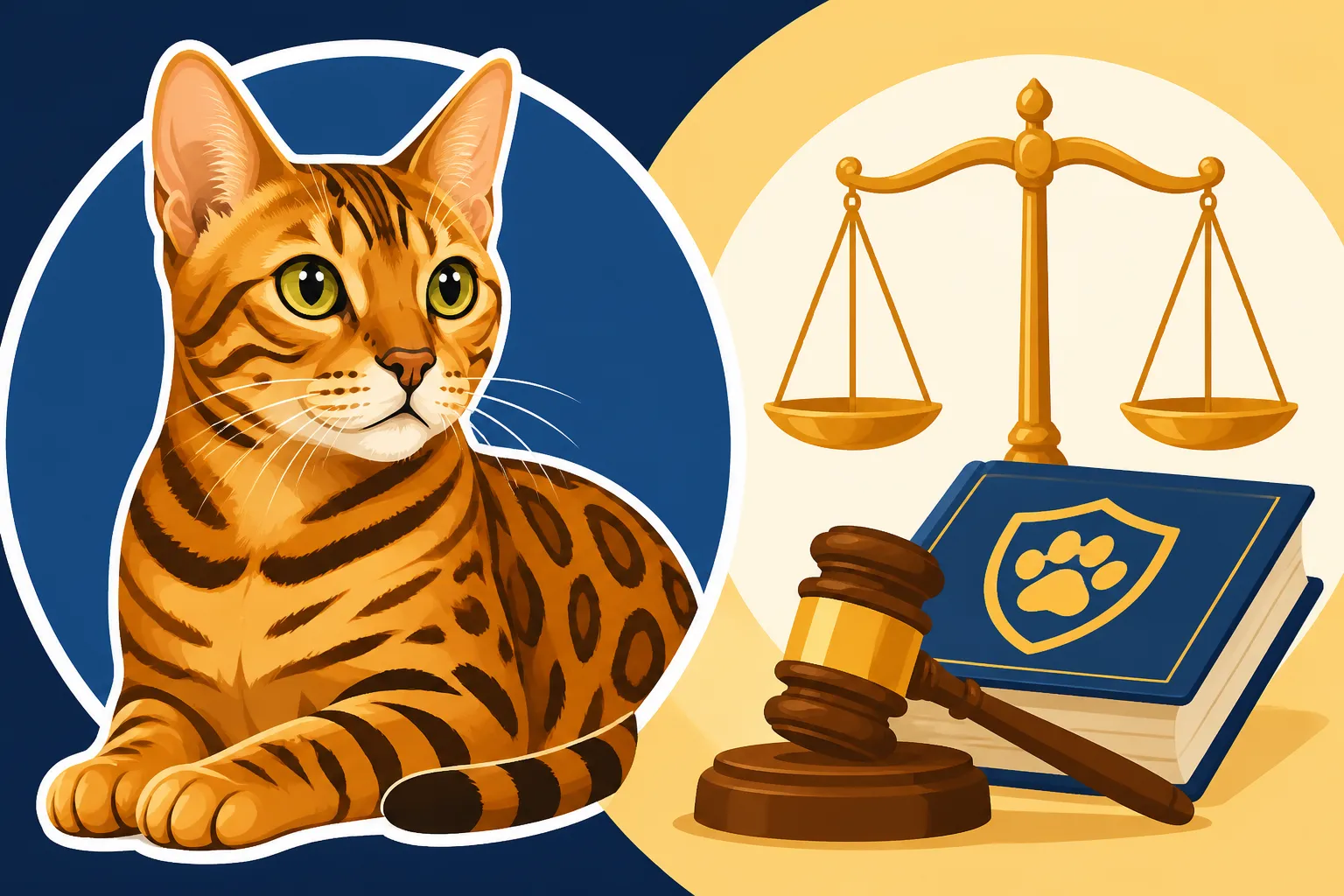
Now we get to the really important part for anyone considering a Bengal cat: the legal implications of those F numbers. Because early generation Bengals retain more of their wild instincts and physical characteristics, many jurisdictions classify them differently than fully domestic cats. This can lead to outright bans, strict permit requirements, or specific housing regulations. It's not just about the breed; it's about the proximity to the wild.
State and City-Specific Restrictions
The legal status of Bengal cats varies dramatically from one place to another. What might be perfectly legal in one state could be completely banned in a neighboring county or even a specific city within that state. The general trend is that F1, F2, and sometimes F3 Bengal cats are often restricted or outright banned due to their close lineage to the Asian Leopard Cat, which some perceive as a wild animal, not a domestic pet.
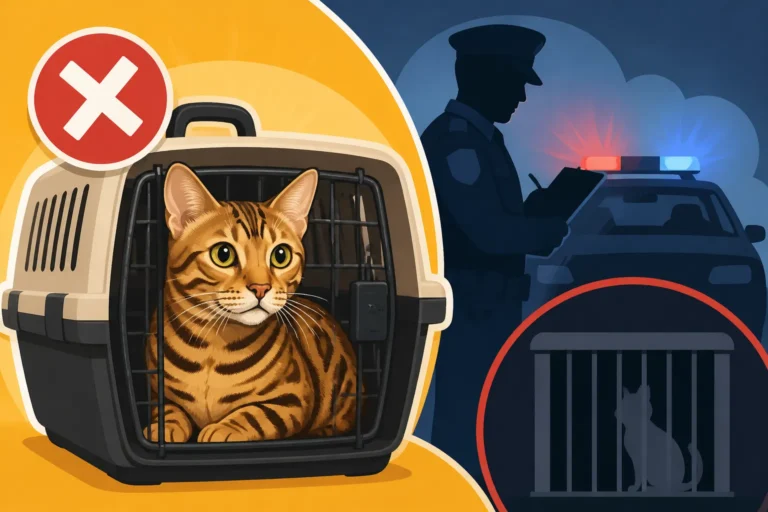
For example, while some states might allow F4 and SBT Bengals without issue, they may place severe restrictions on F1, F2, and F3 generations, classifying them as "hybrid" or "wild" animals. This means you could potentially face fines, confiscation of your cat, or even criminal charges if you own an early generation Bengal in an area where it's prohibited. It's not just states; many cities have their own specific ordinances that can be even stricter than state law. A state might permit F4 and above, but a city within that state might ban all Bengals, regardless of generation, considering them to be a restricted breed. Which States Restrict Early Generation Bengal Cats and Which Cities Ban the Bengal Cat are excellent resources to begin your research. For instance, New York State has certain allowances, but New York City famously bans all Bengal cats. Why New York City Bans Every Bengal Cat This discrepancy highlights why local research is paramount.
When considering a Bengal cat, especially an early generation one, it's absolutely crucial to not only check your state's laws but also your county and city ordinances. These rules are often complex and can be buried deep within municipal codes regarding exotic or hybrid animals. Some insurance companies, like Healthy Paws, might also have policies that differentiate between generations, so it's wise to check their coverage if you're considering an early generation Bengal, as specific types of animals might not be covered for certain conditions or incidents.
Permits, Prohibitions, and Proof of Generation
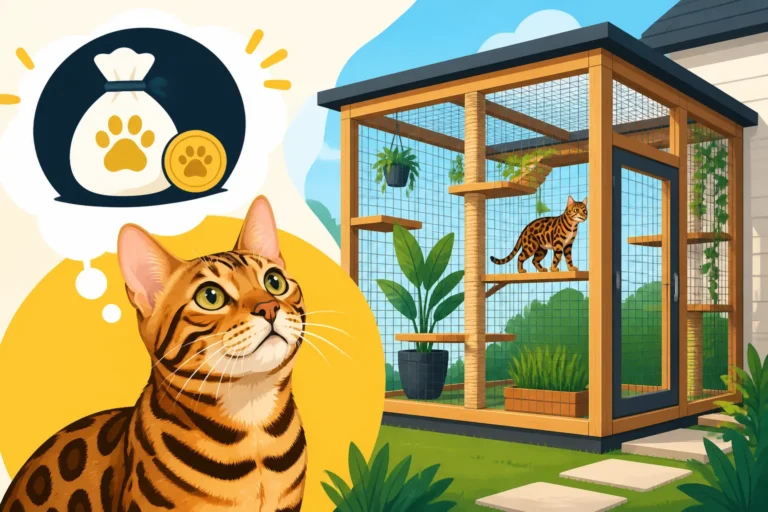
If you live in an area that allows early generation Bengal cats, you might still need to jump through some hoops. Many jurisdictions require special permits for F1, F2, or F3 Bengals. These permits often come with fees and necessitate proving that you have appropriate housing conditions, such as a secure enclosure, to prevent escape and ensure public safety. You may also need to register your cat annually and provide documentation of its generation.
Proving your Bengal cat's generation is another critical aspect. Breeders should provide official pedigree papers from a reputable registry like TICA (The International Cat Association). These papers clearly list the cat's lineage and generation number. Without this official documentation, you might struggle to prove your cat's legal status if questioned by authorities. How to Prove Your Bengal Cat's Generation and Whether a Registration Paper Proves a Bengal Cat's Generation delve deeper into the specifics of this documentation. If a breeder cannot or will not provide clear, verifiable pedigree papers, that should be a significant red flag, especially if you're looking at an early generation cat.
It's also worth noting that some laws might use different terminology, referring to "wild cat hybrids" or "non-domesticated felines." Understanding that your Bengal, especially an F1 or F2, falls under these categories in some legal texts is essential. The legal definition often hinges on how many generations separate the cat from its wild ancestor, making the "F number" the key legal identifier.
Practicalities for Bengal Cat Owners and Prospective Owners
Understanding the legal landscape surrounding Bengal cat F numbers isn't just an academic exercise; it has very real, daily implications for ownership. From where you can live to how you might need to equip your home, the generation of your Bengal cat can dictate much of your experience.
Researching Your Local Laws
The first and most important practical step for any prospective Bengal cat owner is thorough research into local laws. Do not rely solely on what a breeder tells you, or on general information found online. Laws can change, and interpretations can vary. You must verify the rules for your specific address. This means contacting your city's animal control department, your county clerk's office, or even your state's wildlife or agricultural department. When you call, be specific: ask about "hybrid cats," "Bengal cats," and explicitly mention the F generations (F1, F2, F3, F4, SBT) to ensure you get accurate information. Many jurisdictions draw the line at F4, considering SBT Bengals to be fully domestic. How to Read Your City Code for a Bengal Cat and How to Check Your State's Bengal Cat Law provide excellent starting points for this crucial investigation.
It's not just about initial ownership either. What if you move? Laws vary by state, county, and city. An F1 Bengal that was legal where you used to live might become illegal overnight if you cross a state or even a county line. This could force you into a heartbreaking situation where you have to rehome your beloved pet or face legal penalties. Always research the laws of any new potential residence before you commit to a move with a Bengal cat, especially an early generation one.
The Impact on Breeder Choices and Pet Ownership
Your understanding of F numbers and their legal implications will heavily influence your choice of breeder and the type of Bengal cat you can responsibly own. Ethical breeders will always be upfront about the generation of their kittens and will never knowingly sell an early generation Bengal into an area where it's illegal. They should also provide full TICA or other reputable registry pedigrees that clearly show the lineage. If a breeder seems cagey about providing papers or discussing the legalities, consider it a major red flag. Always get a clear contract that specifies the generation. What a Bengal Cat Contract Restricts is a good article to review before finalizing a purchase.
For most pet owners, an SBT Bengal cat (F4 and beyond) is the most straightforward and legally safe option. These cats are generally classified as domestic and are legal in most places where regular house cats are allowed. They offer the stunning wild look without the legal or behavioral complexities that can come with earlier generations. If you’re truly set on an early generation Bengal (F1-F3), you need to be prepared for the stringent legal requirements, the potential difficulty in finding an appropriate breeder, and the commitment to a unique and demanding personality. These are not impulse purchases.
Beyond legalities, the F number influences daily care. While all Bengals are high-energy, early generations might need even more specialized enrichment, housing, and food. For example, some owners choose to feed their Bengals specialized fresh diets for their high energy needs, though always consult with your vet. Regardless of generation, all Bengals thrive on interaction and plenty of space to climb and play, which you can easily find at places like Chewy.
| Generation | Approximate ALC DNA | Common Legal Status | Typical Temperament |
|---|---|---|---|
| F1 | 50% | Often Banned/Highly Restricted | Very Wild, Shy, Intense Prey Drive, Demanding |
| F2 | 25% | Restricted, Requires Permits | Wild Traits, High Energy, Can be Reserved |
| F3 | 12.5% | Restricted in Some Areas, May Need Permits | Still Active, Vocal, More Social than F1/F2 |
| F4 | 6.25% | Generally Domestic, Fewer Restrictions | Domesticated, High Energy, Intelligent, Affectionate |
| SBT | < 6.25% | Considered Domestic, Widely Legal | Fully Domestic, Energetic, Playful, Sociable |
In conclusion, the "F number" on a Bengal cat is far more than a simple pedigree detail; it's a legal classification that dictates your ability to own one, shapes its potential temperament, and impacts the responsibilities you take on as an owner. Understanding these distinctions is fundamental to making an informed, responsible decision about bringing one of these magnificent felines into your life. Always do your homework, verify local laws, and choose a reputable breeder who prioritizes the health and legal placement of their kittens.
Disclaimer
This article is for general informational purposes only and does not constitute professional advice. Laws, prices and regulations vary by location and change over time. Consult a qualified professional for guidance on your specific situation.