Why a Bengal Cat’s Coat Lies So Flat
One of the first things you notice when you run your hand over a Bengal cat isn't just the incredible pattern, but the feel of their coat. It's not like petting your average housecat; it's startlingly smooth, almost like velvet, and lies incredibly flat against their muscular body. This distinctive texture often leaves new owners wondering why it's so different and what makes it feel so unique. This guide will delve into the fascinating reasons behind the Bengal cat's characteristic flat-lying coat, exploring its wild ancestry, genetic traits, and how it impacts their care.
Understanding the Bengal Cat's Unique Coat Structure
The Bengal cat's coat is a marvel, truly unlike most other domestic breeds. People often describe it as feeling like a "pelt" rather than traditional fur, and that's not just a poetic description; there's a biological basis for it. The reason it lies so flat is deeply rooted in the breed's origins, directly connecting back to its wild ancestor.
The Asian Leopard Cat's Influence on Coat Texture
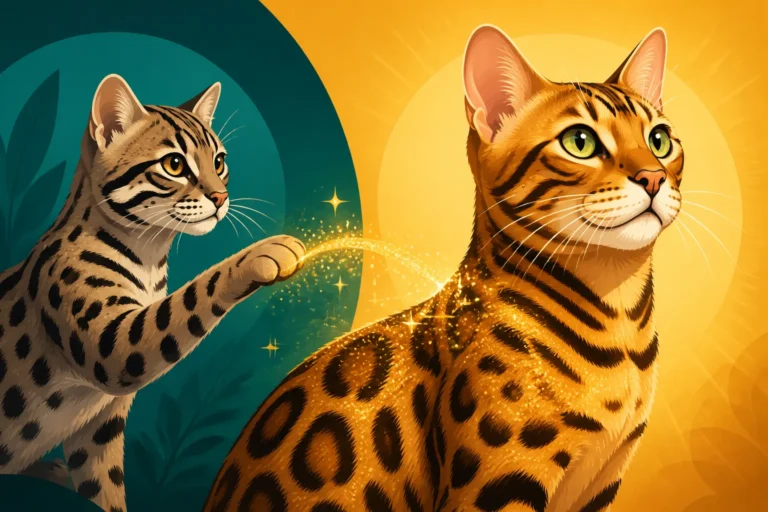
To understand why a Bengal's coat feels the way it does, we have to look to the Asian Leopard Cat (ALC), the wild feline from which the Bengal breed originates. These beautiful wild cats are native to Southeast Asia and are built for efficiency in their natural habitat. Their coats are short, dense, and lie incredibly close to their bodies. This isn't just for aesthetics; it's a practical adaptation. A sleek, flat coat helps them navigate dense undergrowth with less snagging, provides camouflage, and offers some protection against the elements without being bulky.
When the Asian Leopard Cat was first bred with domestic cats to create the Bengal, this distinctive coat characteristic was one of the traits that breeders actively sought to preserve. The "pelted" feel and the way the hairs lie flat are direct genetic inheritances from the ALC. It's a hallmark of the breed, giving them that exotic, miniature-leopard appearance that makes them so captivating. Imagine a wild cat moving silently through tall grasses; a fluffy, long-haired coat would be a hindrance. The Bengal's coat retains that functional sleekness, even generations removed from their wild ancestors. You can learn more about this unique texture in A Bengal Cat's Coat Is a Pelt, Not Fur.
The Role of the Undercoat in a Bengal's Sleek Appearance
Most domestic cats, especially those adapted to cooler climates or bred for fluffiness, possess a thick, insulating undercoat beneath their guard hairs. This undercoat is responsible for much of the volume and softness we associate with a typical housecat's fur. It's what makes them feel plush and contributes to seasonal shedding "tumbleweeds" around your home.
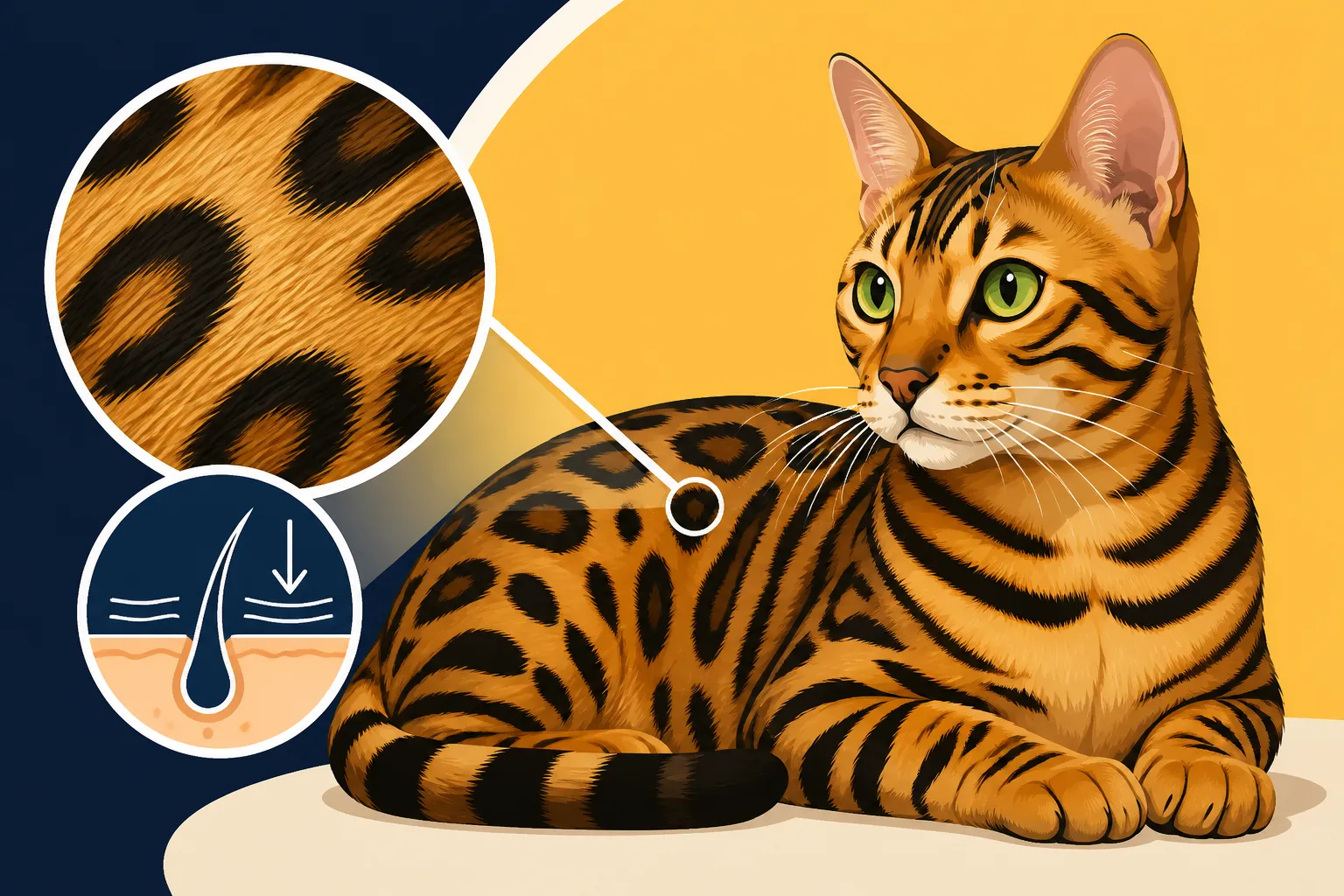
Bengal cats, however, generally have a significantly reduced, or even sparse, undercoat. This lack of a dense insulating layer is a key factor in why their outer guard hairs lie so flat and close to their skin. Without the voluminous undercoat pushing them outwards, the individual hairs simply don't have the lift to stand away from the body. This minimal undercoat is another direct inheritance from the Asian Leopard Cat, which evolved in warmer climates where a heavy undercoat would be a disadvantage. It's why when you pet a Bengal, you feel the smooth, almost silken texture of the guard hairs directly, rather than sinking into a cushion of fluff. This unique characteristic is also why many people believe a Bengal cat is easier on allergies, though it's important to remember that no cat is truly hypoallergenic. For more on this, you might explore Why a Bengal Cat's Coat Is Shorter Than a Housecat's.
The Science Behind the 'Pelted' Feel
Beyond the influence of their wild lineage and the reduced undercoat, there are specific anatomical and genetic factors at play that contribute to the Bengal's famously flat-lying and luxurious coat. It's a combination of how each hair is constructed and certain genetic markers that truly define this breed's signature look and feel.
Hair Shaft Anatomy and How it Affects Lying Flat
When you examine a Bengal cat's hair under a microscope (or even just feel it closely with your fingers), you'll notice it's typically finer and has a smoother cuticle layer compared to many other domestic breeds. The cuticle is the outermost layer of the hair shaft, made up of overlapping scales. In many cats, these scales might be more pronounced, leading to a slightly coarser feel and a greater tendency for hairs to interlock and create volume.
For Bengals, the hair shafts are designed to lie flat. Think of it like a perfectly groomed human hairstyle versus one that's been backcombed for volume. The individual hairs are relatively straight and have a natural inclination to follow the contours of the body. There's less natural crimp or curl that would cause them to stand outwards. This structural integrity, combined with their minimal undercoat, ensures that the sleek, "painted-on" appearance is maintained. The hair shafts themselves are designed for efficiency and a streamlined profile, allowing the coat to glide rather than poof. It’s part of Why a Bengal Cat's Coat Feels Like Silk.
The Impact of the Glitter Gene (or Lack Thereof)
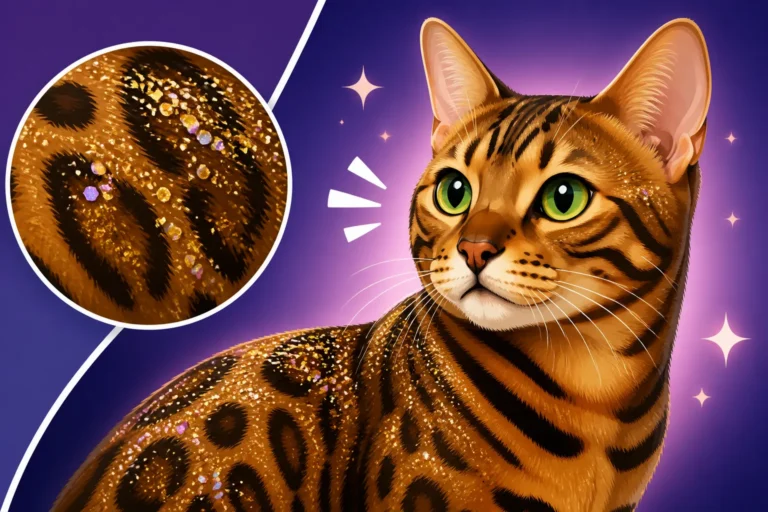
Beyond just lying flat, many Bengal cats possess another stunning trait that enhances their coat's unique appearance: "glitter." This isn't literal glitter, of course, but a genetic characteristic that causes the individual hair shafts to be hollow and translucent, particularly at the tips. When light hits these translucent tips, it reflects back with an incredible shimmer, giving the coat a glistening, iridescent quality. This is especially noticeable in natural sunlight.
While the glitter gene primarily affects the visual luminescence of the coat, it also subtly contributes to the overall sleekness and flat-lying nature. Hairs that are fine and possess this translucent quality tend to be less bulky and more inclined to lie smooth against the body. They don't have the same opaque density that can create a more substantial, lifted appearance in other breeds. Not every Bengal cat has glitter, and the intensity can vary, but when present, it adds another layer to that wild, polished aesthetic, making the coat appear even more refined and smooth. What the Glitter Gene Does to a Bengal Cat explains this phenomenon in more detail.
Practical Implications for Care and Grooming
The distinct characteristics of a Bengal cat's coat—its sleekness, minimal undercoat, and fine hair shafts—don't just contribute to their stunning appearance; they also have significant practical implications for their day-to-day care and grooming needs. In many ways, their unique coat makes them surprisingly low-maintenance in the grooming department, which is a welcome surprise for many owners.
Minimal Shedding and Grooming Needs
One of the most appreciated aspects of a Bengal's coat by their human companions is its minimal shedding. Because they have such a sparse undercoat, there's simply less loose hair to fall out. While no cat is truly shed-free, Bengal cats definitely rank among the lower shedding breeds. This means less cat hair on your furniture, clothes, and floors, which is a huge plus for cleanliness-conscious owners. It’s a definite perk for those who are tired of perpetually lint-rolling their dark clothes!
Due to this minimal shedding and the fact that their short, fine hairs lie flat, Bengal cats also require very little grooming from their owners. Unlike long-haired breeds that need daily brushing to prevent mats and tangles, a Bengal typically only needs an occasional brush to help distribute natural oils and remove any loose hairs. A quick once-over with a rubber grooming mitt or a soft bristle brush once a week is usually more than sufficient. You might pick one up from Amazon or even find specialized brushes on Chewy that your Bengal tolerates well. This hands-off approach to grooming allows you more time to enjoy their playful antics and less time battling fur. For more on this, check out How Little a Bengal Cat Sheds for a Shorthair.
Maintaining Coat Health and Luster
While a Bengal's coat is naturally low-maintenance, there are still ways to ensure it maintains its incredible health and luster. A healthy coat is often a reflection of a healthy cat, and nutrition plays a huge role here. Ensuring your Bengal receives a high-quality diet rich in protein and essential fatty acids is paramount. Look for cat foods with real meat as the first ingredient, and consider options that include omega-3 and omega-6 fatty acids, which are fantastic for skin and coat health.
Hydration is also critical. Bengal cats are famously drawn to water, often playing in sinks or drinking from running taps. Providing fresh, circulating water in a fountain can encourage them to drink more, which is beneficial for their skin and coat, as well as their overall urinary health. Regular veterinary check-ups are also important to catch any underlying health issues that might manifest in a dull or unhealthy coat. A Bengal with a truly healthy coat will have that signature sleekness and shimmer, feeling cool and smooth to the touch, and will continue to look like a miniature wild cat for years to come.
Common Misconceptions and What to Expect
The unique appearance of the Bengal cat's coat can sometimes lead to questions or misunderstandings. Owners might wonder if certain coat characteristics are normal, or if a deviation from the perfectly flat, glittery pelt means something is amiss. It's important to differentiate between typical breed variations and potential signs of health concerns.
Is a Flat Coat a Sign of Health?
Generally speaking, a healthy Bengal cat will exhibit the characteristic flat-lying, sleek coat. It's a hallmark of the breed and often reflects good overall health, proper nutrition, and appropriate care. A coat that is shiny, smooth, and lies close to the body typically indicates that your cat is well-hydrated, on a balanced diet, and free from significant skin issues or internal parasites. Think of it as a natural indicator of their vitality.
However, a coat that suddenly loses its luster, becomes greasy, matted, or starts to stand away from the body in an unusual way could be a red flag. While Bengal coats are robust, changes in texture or appearance can sometimes point to underlying health problems. For instance, a dull, dry, or excessively flaky coat might suggest nutritional deficiencies, dehydration, or skin conditions. If you notice a significant change in your Bengal's coat, especially if accompanied by other symptoms like lethargy, changes in appetite, or excessive scratching, it's always best to consult your veterinarian. They can help determine if the coat change is simply a natural variation, like the "fuzzies" that Bengal kittens go through, or a symptom of something more serious.
When a Bengal's Coat Might Not Lie Flat
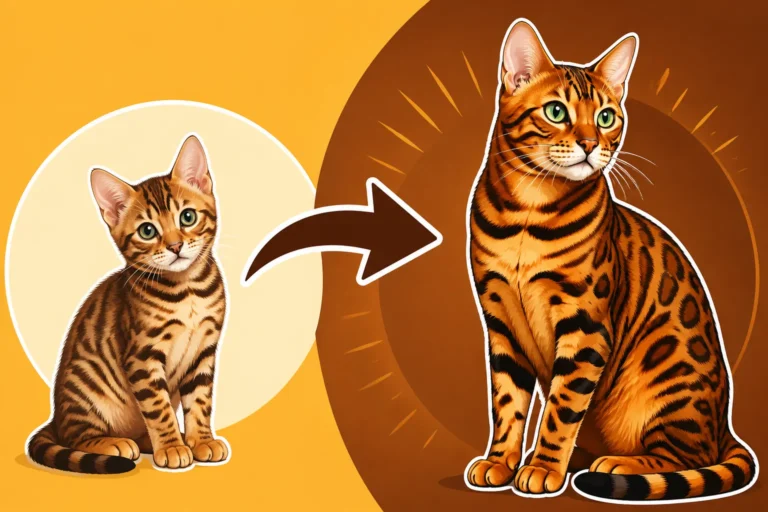
While the ideal Bengal coat lies flat and feels like a pelt, there can be natural variations and temporary phases where it might not appear perfectly so. One common phenomenon, particularly in Bengal kittens, is called "fuzzies." This is a stage where the kitten's coat becomes longer, duller, and somewhat less distinct in pattern, almost obscuring their rosettes or marbling. During this time, the coat might also appear less flat and a bit more fluffy. This is a normal part of development, thought to be a form of camouflage inherited from their wild ancestors, helping them blend into their surroundings in the wild. The fuzzies typically clear between 4 to 8 months of age, revealing the adult coat with its distinct flat lie and vibrant pattern.
Other factors can also temporarily affect the coat's appearance. A Bengal who is under stress, unwell, or has recently been bathed might have a coat that doesn't lie as perfectly flat as usual. Excessive grooming or self-licking due to anxiety or allergies can also disrupt the natural lie of the coat. Furthermore, the intensity of the "glitter" and the exact texture can vary between individual cats, even within the same litter, based on their specific genetics. A cat without the strong glitter gene might have a coat that's still wonderfully sleek but simply lacks that iridescent shimmer. It’s all part of the fascinating diversity within the breed. For insights into their general health, you might look at What a Bengal Cat Breeder Should Have Tested.
Here's a quick comparison of Bengal cat coats versus typical domestic short-haired coats:
| Feature | Bengal Cat Coat | Typical Domestic Short-Hair Cat Coat |
|---|---|---|
| Feel | Smooth, sleek, 'pelt-like' | Soft, fluffy, varied |
| Undercoat | Minimal to sparse | Moderate to thick, insulating |
| Hair Shafts | Fine, often translucent | Varied thickness, opaque |
| Lying Flat | Very close to the body | Often stands away from the body |
| Shedding Level | Low | Moderate |
| Grooming Need | Minimal (occasional brush) | Moderate (regular brushing) |
| Glitter Gene | Often present, causes shimmer | Absent |
This table highlights why your Bengal's coat feels so distinct, truly setting them apart from other breeds. Understanding these characteristics not only satisfies your curiosity but also helps you appreciate the unique beauty and heritage of your Bengal companion.
Disclaimer
This article is for general informational purposes only and does not constitute professional advice. Laws, prices and regulations vary by location and change over time. Consult a qualified professional for guidance on your specific situation.