Whether an F1 Bengal Cat Can Be Shown
An F1 Bengal can look every bit as striking as a show cat, but appearance alone does not determine whether it can enter a breed class. The answer depends on the cat registry, its generation and registration status, and the specific class offered at a show. This guide explains what F1 means, where eligibility usually stops, and what to check before entering.
What F1 means for Bengal cat show eligibility
An F1 Bengal is a first-generation hybrid
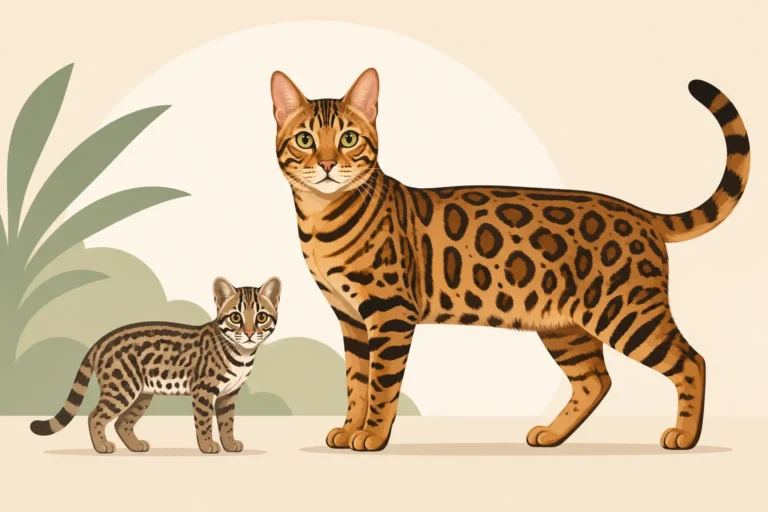
An F1 Bengal is the first-generation offspring of an Asian leopard cat and a domestic cat. That makes it different from the later-generation Bengals most people encounter as household pets. The “F” number describes ancestry; it is not a show-quality grade, a measure of temperament, or a guarantee that a cat meets a breed standard.
If the generation terminology is unfamiliar, F1 to SBT: How a Bengal Cat's Generation Is Counted explains how the labels relate to a pedigree. It is also useful to understand What F1 Means in a Bengal Cat before discussing show rules with a breeder or registry. People sometimes use “Bengal” loosely to describe any spotted cat with a wild-looking coat, but show eligibility usually depends on documented ancestry and formal registration, not appearance alone.
F1 cats may have behavior, handling, and care needs that differ from those of later-generation Bengals. An animal that is confident at home may still find a noisy show hall, unfamiliar people, and a busy grooming area stressful. How an Early Generation Bengal Cat Behaves Differently offers more context about why generation matters beyond a cat’s markings.
A later generation does not automatically mean show eligibility
F2 and F3 cats are further removed from the Asian leopard cat, but they are still early-generation Bengals. Read What F2 and F3 Mean in a Bengal Cat for a clearer picture of those labels. Moving down the generation number alone does not necessarily make a cat eligible for a recognized Bengal breed class.
One key term is SBT, commonly used for Bengals with several generations of Bengal-to-Bengal breeding behind them. The exact registration criteria belong to the registry, so pedigree details and the association’s rules matter. What SBT Means in a Bengal Cat explains the term, while Which Generation TICA Registers as a Bengal Cat is a useful companion when checking TICA-specific registration questions.
The practical point is that “F1 Bengal” and “showable Bengal” are not interchangeable descriptions. A cat may be legally owned, registered in some capacity, and cherished as a companion without being eligible to compete in the standard Bengal championship classes.
Can an F1 Bengal enter a cat show
Breed-class eligibility is generally the main obstacle
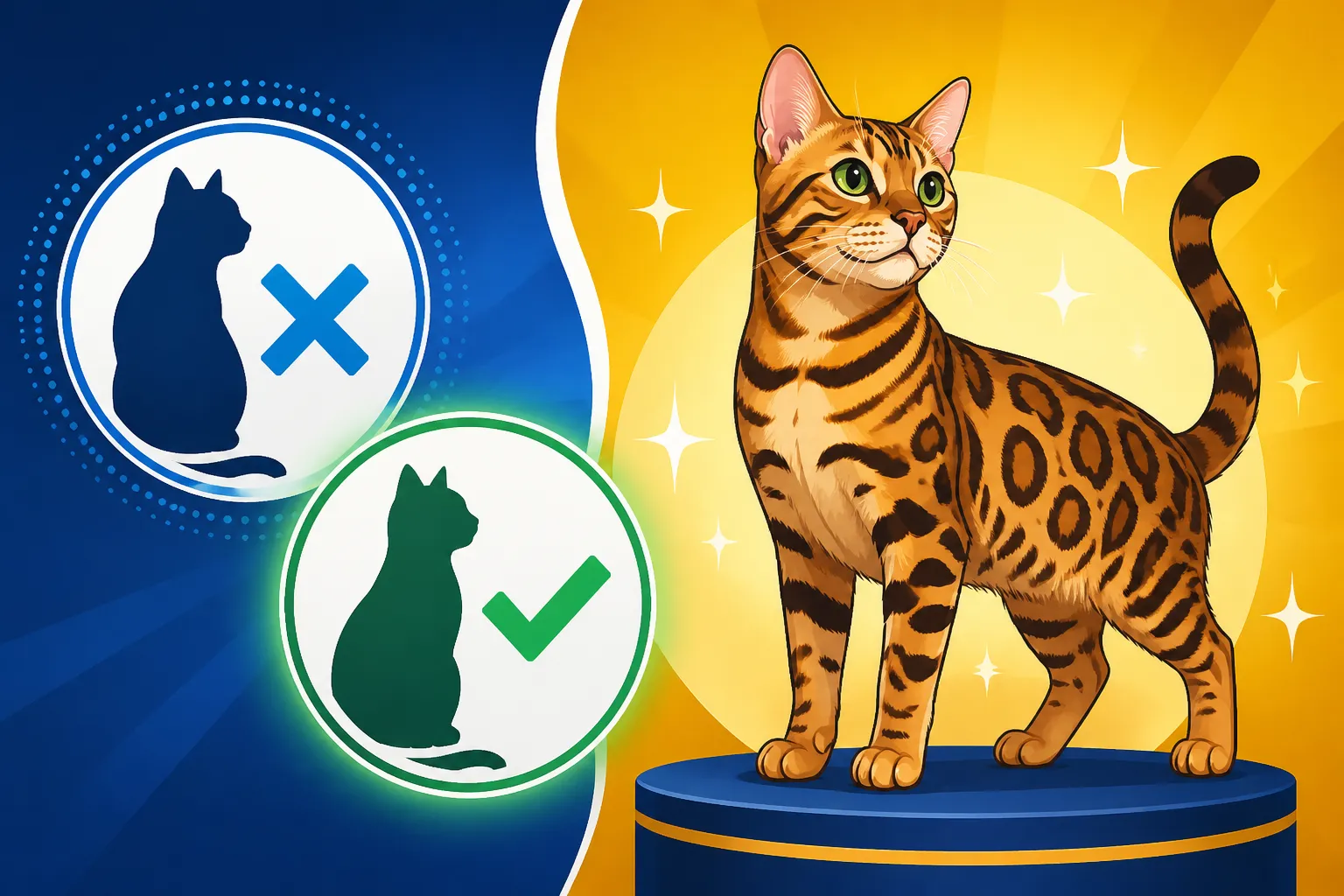
For a conventional Bengal breed competition, an F1 is generally not eligible to compete as a standard Bengal championship cat. Breed classes are intended for cats that meet the association’s registration and pedigree requirements for that recognized breed. An F1’s direct Asian leopard cat ancestry typically places it outside those ordinary breed-class requirements.
That does not mean every show association uses identical rules or terminology. Different registries can have different breed books, entry categories, and policies for early-generation hybrids. A cat might be registered or recorded in a way that does not qualify it for breed competition. Before making plans, ask the association and the specific show about the cat’s exact generation and registration status.
| Show option | What it usually means for an F1 Bengal | What to confirm |
|---|---|---|
| Bengal championship or breed class | Generally not eligible under standard breed requirements | Whether the association requires SBT status or other pedigree criteria |
| Household pet class | Could be an option at some shows, subject to local rules | Whether registered early-generation cats qualify and whether alteration is required |
| Exhibition or special class | May be offered occasionally, but is not guaranteed | Whether the show has a class that accepts early-generation hybrids |
| Informal or educational display | Possible only if the event invites or permits it | Handling, public-contact, health, and transport requirements |
The table is a starting point, not a substitute for the show’s current entry rules. Even if a cat appears to fit a class description, the show manager may need to review registration documents or clarify whether the cat’s ancestry is allowed.
Household pet classes are not an automatic workaround
Owners often wonder whether an F1 can simply enter a household pet class instead. That may be possible in some settings, but it should never be assumed. Household pet eligibility can depend on whether the cat is registered as a breed, whether it has been altered, the show association’s rules, and the class structure at that particular event.
When you contact the show, give the complete details rather than asking only, “Can my Bengal enter?” Say that the cat is an F1, explain what paperwork you have, and ask which classes—if any—are open to that status. If the answer is unclear, request the relevant rule or ask the entry clerk to confirm in writing before you pay an entry fee or arrange travel.
It is also worth distinguishing between being present at a show and competing. Some events may allow visitors to bring a cat only under specific circumstances, while others restrict the show hall to entered cats. Never assume that an F1 can attend as a spectator animal; crowded halls can be overwhelming, and event policies may prohibit it.
How to check the rules before entering
Start with the registry and the show manager
First, identify which association is running the show. A registry’s breed-recognition policy and a specific event’s entry rules are related, but they are not always the same document. Ask whether an F1 Bengal is eligible for any competition class and whether the answer changes if the cat has a registration number, pedigree, or altered status.
Next, gather the paperwork before you ask. Useful details include the cat’s pedigree, registration documents, date of birth, generation, and any breeder-provided records describing its ancestry. If the generation is unclear, ask the breeder to explain the pedigree rather than relying on a sales listing or a verbal description.
A breeder who works with early generations may be familiar with the cat’s lineage, but the show association makes the final decision about its own event. The article Which Generation a Bengal Cat Breeder Works With can help you frame questions about breeding generations and documentation. If a breeder says an F1 can compete, ask which association and which class they mean.
Ask specific questions instead of relying on a general answer
A useful email or phone call should make it easy for the show office to give a definite response. Include the cat’s generation and registration details, then ask:
- Is an F1 Bengal eligible for any class at this show?
- Is it excluded from the Bengal breed class, or from all competitive classes?
- Can it enter a household pet class, and does it need to be altered?
- What paperwork must accompany the entry?
- Are there any health, vaccination, or transport requirements for the event?
This approach prevents a frustrating last-minute surprise. For example, an owner might hear that “Bengals are shown” and assume that includes an F1, only to learn after preparing the cat that the answer refers to later-generation, registered Bengals. Pinning down the class name and entry conditions avoids that misunderstanding.
Keep the response and any rule reference with your show paperwork. Rules can differ between associations and events, and a quick verbal answer may not capture a detail such as registration status or class restrictions. If the show office cannot confirm eligibility, do not enter until it can.
If an F1 cannot compete in breed classes
A cat can be beautiful without being a show-class Bengal
Show eligibility is an administrative and pedigree question, not a verdict on a cat’s worth. An F1 may have a dramatic coat, strong personality, and devoted owner while still being ineligible for the ordinary Bengal breed ring. Conversely, a later-generation Bengal that meets registration requirements is not guaranteed to win; judges assess the cat against a defined standard, and competition is separate from whether it qualifies to enter.
This distinction can be disappointing if you have pictured walking your cat into the ring. It may help to think of showing as one possible activity rather than the only way to celebrate the cat. You can enjoy training, enrichment, photography, or a breed education event that explicitly welcomes early-generation cats. Do check event policies and your cat’s comfort before taking it into a public setting.
F1 cats may also need extra thought around handling and unfamiliar environments. A cat that becomes tense when restrained or distressed by strangers should not be pushed into a show setting simply because an entry option exists. The animal’s welfare and ability to cope matter more than getting a rosette.
Prepare for handling and travel only if the event is suitable
If the show confirms an eligible class, spend time making the carrier, gentle handling, and short periods in unfamiliar rooms feel routine well ahead of the event. Avoid turning grooming into a wrestling match. A short, calm practice session is better than trying to teach the cat to tolerate every part of show preparation on the morning of departure.
For basic coat and nail care, use products your cat already tolerates rather than experimenting right before an event. A retailer such as Chewy may be one place owners look for routine grooming supplies, but a show’s entry rules and advice from a veterinary professional should guide decisions about care. Keep sessions brief, reward calm behavior, and stop if the cat is showing clear signs of fear or agitation.
Travel planning deserves the same care. Confirm whether the venue has a quiet area, what carrier rules apply, and whether the cat can leave the hall if it becomes overwhelmed. Chewy may also be a convenient source for familiar travel basics, but bringing the cat’s usual bedding, water, and a secure carrier is more important than buying new gear. Do not use calming products or medication without veterinary guidance.
A second mention of Chewy should not be mistaken for a show endorsement: a retailer can help with everyday supplies, but it cannot determine whether a cat is eligible to compete. For that, rely on the registry and show manager. If the event does not offer a suitable class, skipping it is a perfectly reasonable choice.
Disclaimer
This article is for general informational purposes only and does not constitute professional advice. Laws, prices and regulations vary by location and change over time. Consult a qualified professional for guidance on your specific situation.