How Much a Female Bengal Cat Weighs
A female Bengal can look surprisingly lean beside a fluffy house cat, even when she is at a healthy weight. That makes it easy to worry that she is too small—or to miss gradual weight gain under a sleek, muscular frame. This guide explains typical adult weights, what affects them, how to assess body condition, and when a change deserves a vet’s attention.
Typical weight for a female Bengal cat
The usual adult range
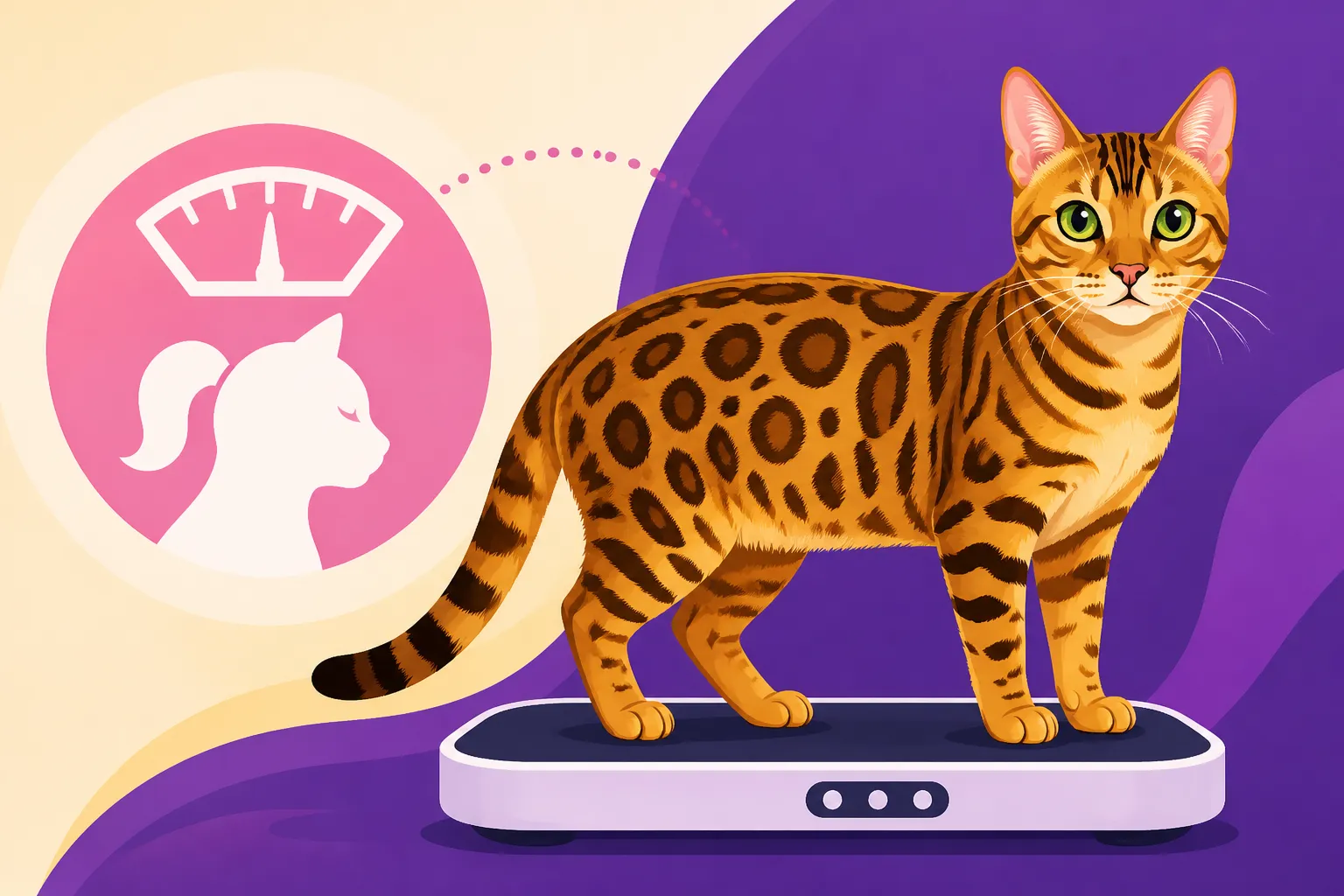
Many adult female Bengal cats weigh around 8 to 12 pounds, or roughly 3.6 to 5.4 kilograms. That is a useful general range, not a pass-or-fail standard. A petite female may be healthy below it, while a larger-framed, muscular cat may weigh more and still have a trim body shape.
Bengals tend to have a strong, athletic build, but the breed’s appearance can be misleading. A sleek coat does not add much visual bulk, and a cat with defined shoulders and thighs may feel denser than her outline suggests. Two healthy females can therefore look and weigh quite differently.
It helps to compare your cat with herself over time rather than judging her against a single number online. If she has always been small, eats normally, stays energetic, and has a stable weight and body condition, her build may simply be her own. For broader breed context, see What a Bengal Cat Weighs and How Big a Bengal Cat Gets.
Why the number is only a starting point
Weight depends on more than breed and sex. Frame size, muscle, age, activity, reproductive status, and individual genetics all play a part. A slim, active young adult may weigh less than a broad-framed cat who gets less exercise, even if both are healthy.
A scale cannot tell muscle from fat. For example, a female Bengal who climbs, sprints, and plays regularly may have sturdy hindquarters and weigh more than a less active cat of similar height. Conversely, a cat can be within the typical weight range but carry too much fat for her frame.
The practical question is not simply, “Is she within the range?” It is, “Does this weight fit her frame, and is her condition stable?” Your vet can help establish an individual target using her history and a hands-on exam. The article How to Tell Muscle From Fat on a Bengal Cat explains why body shape and feel matter alongside the scale.
| What you notice | What it may mean | A sensible next step |
|---|---|---|
| Stable weight, visible waist, ribs easy to feel under a light covering | Often consistent with a lean body condition | Keep tracking at routine wellness visits |
| Weight rising gradually and waist becoming less visible | Possible excess weight gain | Review portions, treats, activity, and feeding routine |
| Weight falling without an intentional diet change | Could reflect illness, dental discomfort, stress, or another issue | Contact your veterinarian |
| A number outside the typical range but a healthy, stable body shape | May reflect individual frame or muscle | Ask your vet to assess her body condition rather than changing food based on the number alone |
How age and life stage affect a female Bengal’s weight
Kittens and adolescents need different expectations
An adult weight range should not be used to judge a growing kitten. Bengal kittens change quickly, and their proportions can look a little awkward as they grow into their legs and body. A healthy kitten’s weight is best interpreted using age, growth pattern, appetite, and veterinary checks—not by comparing her with an adult cat.
During adolescence, a Bengal may appear long and lean before she fills out. That can be especially noticeable in an energetic kitten who spends the day running, climbing, and investigating everything in reach. It does not automatically mean she needs extra food. A steady growth pattern and good overall condition are more useful clues than one weigh-in.
Your vet can track growth and advise whether her food and portions suit her age and needs. If you want to understand when growth usually settles, see When a Bengal Cat Reaches Full Size. Keep kitten and adult feeding guidance separate; the calorie needs of a growing cat are not the same as those of a mature female.
Spaying, adulthood, and later life
After spaying, some cats need fewer calories than before, and appetite or activity may shift. That does not mean every spayed female will gain weight. It does mean it is worth watching her body condition and portions after the procedure, rather than assuming her old feeding amount will always remain right.
Adult Bengals can also change gradually as their activity patterns change. A cat who used to chase toys for long stretches may become less active with age, while her appetite stays enthusiastic. Weight gain may happen so slowly that it is hard to spot day to day. A regular weigh-in and occasional body-condition check make that pattern easier to notice.
Older cats can lose muscle as well as gain or lose fat, so a change in weight should not be dismissed as “just getting older.” A visible dip in the back or thighs, a suddenly prominent spine, or a change in appetite is worth discussing with a vet. Routine checkups offer a chance to compare today’s condition with previous visits, not just to record a number.
How to tell whether your Bengal is at a healthy weight
Use body shape and touch as well as the scale
Look at your cat from above when she is standing naturally. Many cats at a healthy condition have a noticeable waist behind the ribs. From the side, the abdomen may tuck up slightly rather than hanging in a straight line. These are general observations, not a substitute for an individual veterinary assessment.
Next, gently feel along her ribs. You should generally be able to feel them beneath a light layer of tissue without pressing hard, but they should not feel sharply exposed. A thick covering that makes the ribs difficult to find can suggest excess body fat. If her spine, hips, or ribs suddenly become much more prominent, that can be a reason to check in with your vet.
Bengals are active cats, but activity alone does not guarantee a healthy weight. A cat can have vigorous play sessions and still consume more energy than she uses. On the other hand, a naturally lean cat may be healthy without looking like the breed photos you see online. The important thing is to assess her whole body, her usual habits, and changes over time. You can read more in Why a Female Bengal Cat Stays Leaner and How Easily a Bengal Cat Becomes Overweight.
Weigh her consistently at home
A home scale can help you spot a trend, especially if your cat is comfortable being handled. Weigh her under similar conditions each time—for example, at a similar time of day and before a meal if that is easy to manage. Record the date and result in a notebook or phone, and avoid reacting to a tiny difference between individual readings.
If she will not stand on a scale, weigh yourself while holding her, then weigh yourself alone and subtract the two readings. This method is less precise, particularly with a small cat or a scale that fluctuates, but it can still help show a broad trend. A dedicated pet scale may be easier for frequent tracking; if you are comparing options through a retailer such as Chewy, look for a stable platform and a display that is easy to read while the cat is on it.
The goal is not to weigh her every day or put her on a diet based on one number. For many households, occasional checks between veterinary visits are enough, unless a vet has asked you to monitor more often. If weighing becomes a wrestling match, stop and ask your clinic whether they can help track her weight during visits. A calm, repeatable measurement is more useful than a stressful one.
What to do if her weight changes
If she is gaining weight
Start by checking the pattern rather than making a drastic change. Review how much food she receives, whether several people are giving her treats, and whether she can reach another pet’s bowl. Small extras can be easy to overlook: a few bites from a child’s plate, treats during training, or a second helping after a noisy request.
Check the feeding guidance on the food packaging, but treat it as a starting point rather than a personalized prescription. Food labels and product details can be reviewed when shopping through places such as Chewy, but your vet is better placed to help set a target based on your cat’s body condition, age, and health. Avoid sharply cutting portions or switching foods without a plan, particularly if she has a medical condition or is still growing.
Pair sensible portions with activity that fits a Bengal’s energy and personality. Short interactive play sessions, climbing opportunities, and food puzzles can encourage movement and make meals more engaging. The aim is a gradual, maintainable change—not a crash diet. For a careful approach, see How to Slim an Overweight Bengal Cat.
If she is losing weight or seems unwell
Unplanned weight loss deserves attention even if your cat still seems lively. Cats can hide discomfort, and changes in weight may accompany dental problems, digestive issues, metabolic illness, stress, or other health concerns. A reduced appetite, increased thirst, vomiting, diarrhea, unusual tiredness, or a change in litter-box habits makes it especially important to call your vet.
Do not wait for her to fall below a particular number before asking for help. A steady decline from her normal weight can matter even when she remains within the broad adult range. Bring your weight log, notes about appetite and activity, and any changes in food or household routine to the appointment. Those details can help the vet decide what to check.
If the change is sudden, pronounced, or paired with difficulty breathing, collapse, marked weakness, or inability to eat, seek urgent veterinary care. For routine monitoring and prevention, How Often a Bengal Cat Needs a Wellness Exam covers why consistent checkups help catch changes before they become harder to explain.
Disclaimer
This article is for general informational purposes only and does not constitute professional advice. Laws, prices and regulations vary by location and change over time. Consult a qualified professional for guidance on your specific situation.