Which Generation a Bengal Cat Breeder Works With
Choosing a Bengal breeder can get confusing when one advertises F1 kittens and another says SBT, as if those labels tell you which cat is best. They describe different places in a family tree, not a simple quality ranking. This guide explains which generations breeders work with, what the labels mean, and what to ask before deciding whether a kitten suits your home.
What a Bengal breeder means by generation
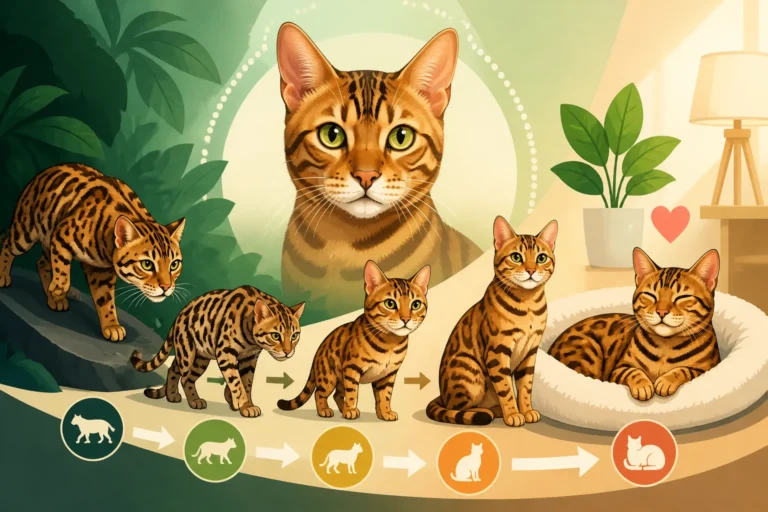
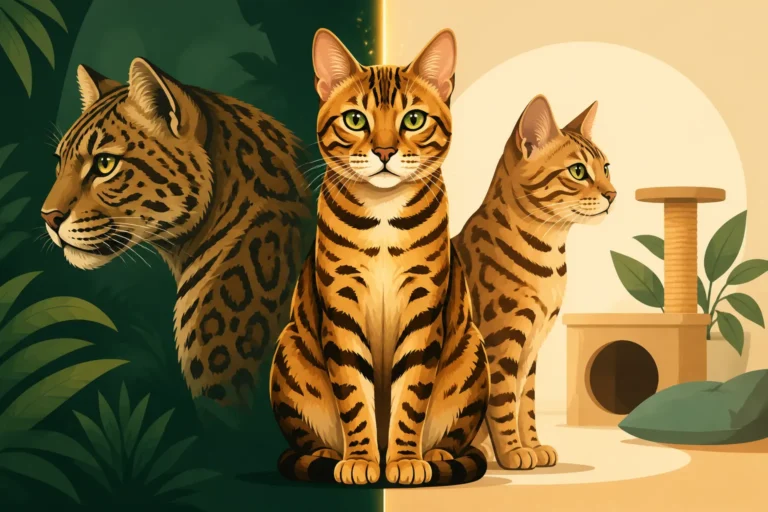
A Bengal’s generation describes how many steps separate the cat from an Asian leopard cat, the wild species involved in the breed’s early development. The label is useful, but it does not tell you everything about a particular cat’s temperament, health, or suitability as a pet.
F1, F2, and F3 Bengal cats
An F1 Bengal is the first-generation offspring of an Asian leopard cat and a domestic cat. An F2 is one generation farther from the wild ancestor, and an F3 is farther again. The “F” stands for filial generation: the number tracks a cat’s place in a line of descent, rather than its age or quality.
Breeders who work with F1, F2, or F3 cats are dealing with early-generation Bengals. These cats can differ from typical domestic Bengals in behavior and care needs, and local rules may treat them differently. A breeder working with early generations may also have a very different program from one producing companion kittens from established domestic Bengal lines.
Male fertility is another important distinction. Males in the early generations are generally sterile, while females may be fertile. This affects breeding plans and helps explain why a breeder’s program can involve several generations of cats. For more background, see What F1 Means in a Bengal Cat and What F2 and F3 Mean in a Bengal Cat.
What SBT means in a breeder’s program
SBT stands for Stud Book Tradition. In common Bengal registration terminology, it refers to cats with multiple generations of Bengal-to-Bengal breeding behind them, rather than a recent Asian leopard cat cross. SBT Bengals are the kind most people encounter as companion pets.
If a breeder says they work with SBT Bengals, ask how that term applies to the kitten’s pedigree and registration. A label on its own is not a substitute for reviewing the family tree and the breeder’s records. The terms F4 and SBT are related in many discussions, but they should not be treated as interchangeable without checking the pedigree and the registry’s definitions.
A breeder may work only with SBT cats, or may have an established program that includes more than one generation. Neither statement automatically means the breeder is better or worse. The meaningful questions are whether the cats are responsibly housed and bred, whether the breeder is transparent about lineage and health, and whether the kittens are being raised for homes like yours. For a fuller explanation, see What SBT Means in a Bengal Cat and F1 to SBT: How a Bengal Cat's Generation Is Counted.
| Breeder’s generation label | What it generally describes | What to clarify |
|---|---|---|
| F1 | First-generation offspring of an Asian leopard cat and a domestic cat | Local rules, care needs, pedigree, and whether this cat suits a pet home |
| F2 | A second-generation descendant | How the generation is documented and what the breeder expects from buyers |
| F3 | A third-generation descendant | Registration status, temperament, and applicable ownership rules |
| SBT | A Bengal with multiple generations of Bengal-to-Bengal breeding in its recorded ancestry | The registry definition, pedigree details, and health information |
The table is a starting point, not a replacement for documents. A breeder should be able to explain what the label means for the specific kitten and show you how it is supported.
Which generations Bengal breeders commonly work with
Most people looking for a household companion are comparing breeders who work with established domestic Bengal lines, often SBT cats. Some breeders may also work with early-generation cats, but that is a more specialized choice and calls for additional thought about behavior, legal requirements, and the breeder’s experience.
Why many pet breeders focus on SBT Bengals
A breeder focused on SBT Bengals is working with cats farther removed from the original wild cross. For prospective owners, that usually makes SBT the more straightforward starting point: the breeder can discuss the kitten within an established domestic Bengal program and help you assess whether its needs fit your household.
That does not mean every SBT kitten will have the same personality. One may be an energetic climber who insists on investigating every cupboard; another may be more reserved with visitors. Ask how the breeder evaluates temperament, what the kitten has experienced in the home, and how the breeder matches kittens to families. A generation label cannot replace those conversations.
Some breeders may describe their work as several generations of Bengal breeding without using SBT prominently in their advertising. Ask for the exact registration and pedigree information rather than assuming the wording means one particular thing. Which Bengal Cat Generation Suits a Family can help you think through the broader question of matching a generation to your plans.
Why a breeder might work with early generations
A breeder may work with F1, F2, or F3 cats as part of a specific breeding program, but that does not make those cats an automatic fit for a typical first-time cat owner. Early-generation Bengals can present different behavior and management considerations, and the breeder should be able to discuss those candidly rather than leaning on the novelty of the label.
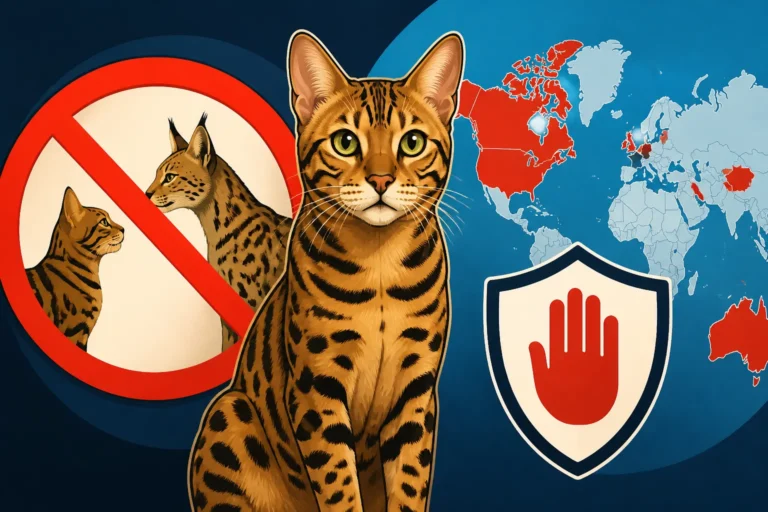
Before considering an early-generation cat, check the rules that apply where you live. Restrictions can depend on the generation and may be set at state, county, or city level. If you rent, also review your lease and speak with your landlord before making a commitment. Do not assume that a cat is permitted just because a breeder can sell or transport it.
Ask why the breeder is producing or placing that generation, what kind of home they consider appropriate, and what support they provide after placement. A responsible breeder should be comfortable discussing the practical demands—not just the cat’s appearance or ancestry. For more on the breeding implications, read Why F1 to F3 Bengal Cat Males Cannot Breed.
How to assess a breeder’s generation claims
Generation claims are most useful when they are backed by clear records. If you are new to pedigrees, it is reasonable to ask the breeder to explain them in plain language. You should not have to decode unfamiliar abbreviations or accept a verbal assurance in place of documentation.
Ask to see the pedigree and registration details
Ask which generation the kitten is, how the breeder determined it, and what registry records are available. A pedigree should help you trace the kitten’s recorded ancestry. The breeder should be willing to walk you through the relevant generations and explain any terminology you do not understand.
Keep the kitten’s own records separate from general descriptions of the cattery. A breeder may work with several generations, but the individual kitten still has its own lineage and registration details. If the breeder gives you a broad answer such as “mostly domestic” or “many generations back,” ask what that means on paper.
You can prepare by learning how to read the documents before you visit or place a deposit. The article How to Find a Bengal Cat's Generation on Its Pedigree is a useful companion when you are comparing claims from different breeders.
Separate generation from health and temperament
Generation is not a health certificate. It does not tell you whether a kitten’s parents have received appropriate screening, whether the kitten has had veterinary care, or whether the breeder is attentive to inherited conditions. Ask what health testing has been done, which results apply to the parents, and what records you will receive.
Also ask about temperament and early socialization. How does the kitten respond to handling, ordinary household sounds, and new people? What does the breeder know about the parents’ behavior? A thoughtful breeder will talk about individual differences and will ask questions about your home, daily routine, and experience with active cats.
A breeder who answers clearly and provides relevant documentation makes it easier to make an informed choice. Use Which Health Results a Bengal Cat Breeder Must Show to help build a separate health-focused checklist; generation and health are related parts of breeder research, but one does not stand in for the other.
Questions to ask before choosing a Bengal breeder
A useful conversation should leave you with a clearer picture of both the kitten and the breeder’s approach. If an answer is vague, you can ask a follow-up without feeling difficult. You are making a long-term commitment, and careful questions are part of responsible planning.
Questions about lineage and the breeding program
Start with direct questions: “Which generation is this kitten?” “Can you show me the pedigree?” “What does that generation label mean in this registry?” Then ask whether the breeder works exclusively with that generation or has cats from other generations in the program.
It is also reasonable to ask why the breeder chose that breeding approach and what kind of homes they consider suitable for their kittens. Listen for concrete, calm explanations. A responsible breeder should not pressure you to decide quickly or dismiss concerns about care, registration, or local rules.
Confirm what documents will accompany the kitten and when you will receive them. Ask whether the breeder has a written contract and what it says about health records, return arrangements, and the buyer’s responsibilities. Take time to read it before agreeing.
Questions about bringing the kitten home
Ask what the kitten currently eats, what litter it uses, and how its routine is structured. A sudden switch in food or litter can add avoidable stress during a move, so it helps to have familiar supplies ready. If the breeder’s exact food is available through a retailer such as Chewy, check the product label and availability before ordering; do not assume a similar-looking formula is identical.
If you are preparing a shopping list, Chewy may be one place to check for the familiar food or litter the breeder recommends, alongside local pet stores. Ask the breeder first, then compare the exact product name and ingredients rather than choosing by brand alone. For a transition, you can also ask whether the breeder recommends bringing a small amount of the kitten’s current food home.
If you use Chewy or another retailer to restock, keep the breeder’s written feeding instructions handy and make changes gradually unless your veterinarian advises otherwise. Chewy is a retailer, not a substitute for the breeder’s care guidance or veterinary advice. The most important point is continuity: understand the kitten’s current routine before changing it.
Finally, discuss the breeder’s availability after the kitten goes home. A good breeder should be willing to answer reasonable questions as the kitten settles in and should be honest about whether your home and expectations seem like a good match. The right generation is the one you can legally and responsibly care for, with a breeder whose records, explanations, and priorities stand up to careful questions.
Disclaimer
This article is for general informational purposes only and does not constitute professional advice. Laws, prices and regulations vary by location and change over time. Consult a qualified professional for guidance on your specific situation.