Which Generation TICA Registers as a Bengal Cat
A Bengal’s F-number can make a pedigree look straightforward, but it does not tell the whole story about TICA registration or show eligibility. The key distinction is between having a Bengal recorded in TICA’s system and qualifying for the regular Bengal championship class. This guide explains how generation, pedigree, and SBT status fit together—and what to ask a breeder before relying on a label.
What TICA registration means for a Bengal
Registration and championship eligibility are different
TICA registration is a record of a cat’s breed and ancestry. It is not automatically a statement that the cat can compete in every show class, nor does a registration paper by itself explain how far back a wild ancestor appears in the pedigree.
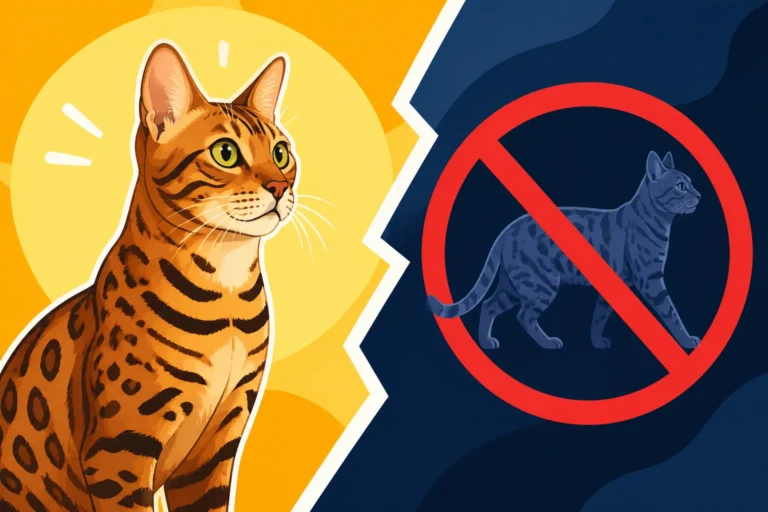
For Bengals, the important dividing line is usually SBT, or Stud Book Tradition. Bengals with SBT status are the ones generally eligible for the regular Bengal championship class. Earlier-generation cats may appear in registry records or be described by their generation, but that does not make them SBT or automatically make them eligible for championship competition.
This difference matters when a seller says, “The kitten is TICA registered.” That phrase may tell you that the cat has registration paperwork, but it does not answer whether the cat is F1, F3, F4, or SBT. Ask for the actual pedigree and the registration details rather than treating “registered” as a complete description.
The short answer on which generation qualifies
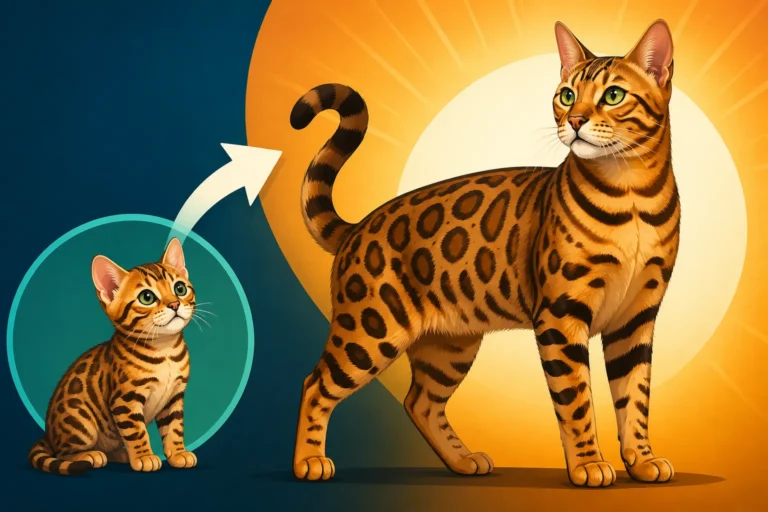
As a general guide, a Bengal usually needs to be at least four generations removed from the Asian leopard cat and have the required Bengal-to-Bengal ancestry to qualify as SBT. This is why people often say an F4 or later Bengal can be eligible for the regular championship class.
But an F-number on its own is not a guarantee of SBT status. The cat’s pedigree matters, including the ancestry and breed of the cats in the generations TICA uses to determine its status. In other words, “F4” and “SBT” are related terms, but they are not interchangeable shortcuts.
| Term | What it generally describes | What it does not prove by itself |
|---|---|---|
| F1, F2, F3, or F4 | A cat’s filial generation relative to an Asian leopard cat ancestor | That the cat is SBT or eligible for championship competition |
| SBT | A pedigree designation based on Bengal ancestry over the required generations | That every document or sales description has been interpreted correctly |
| TICA registered | A cat recorded in TICA’s registry under its registration details | That the cat is eligible for every TICA show class |
| Championship eligible | Eligibility for the applicable championship class under TICA rules | A guarantee of show quality, health, or breeding suitability |
When the decision matters—especially for showing, breeding, or confirming what you are buying—check the pedigree and the registry’s current rules. A breeder’s verbal explanation can be helpful, but it should match the paperwork.
How Bengal generations are counted
What the F-number tells you
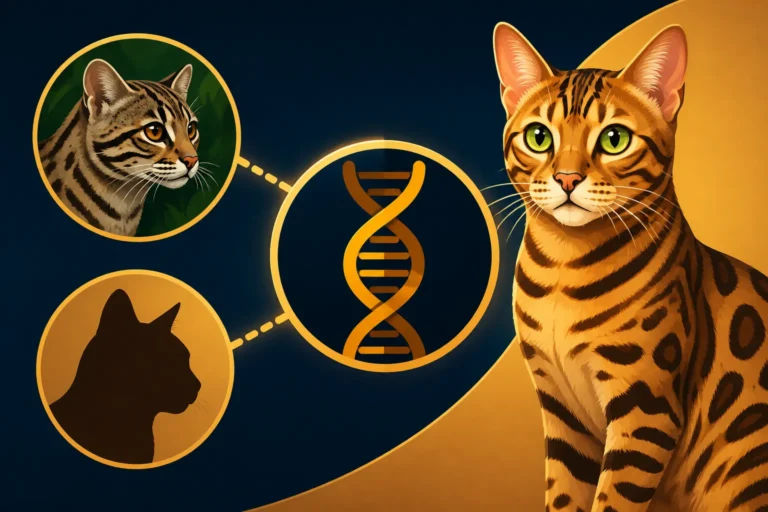
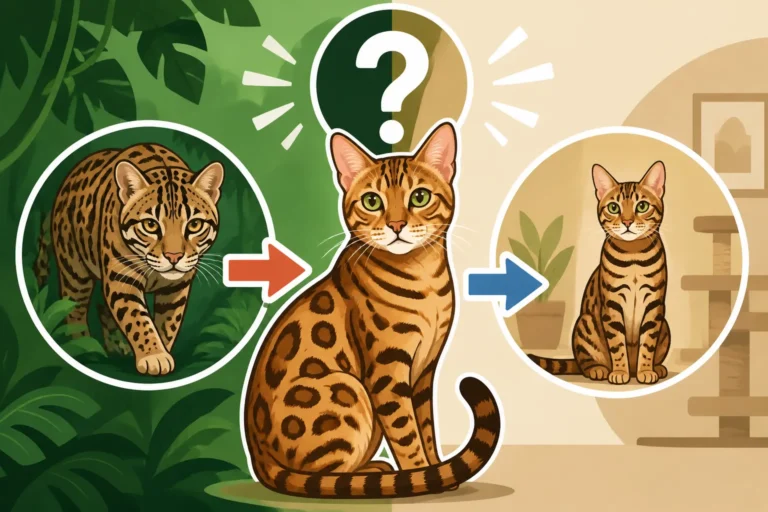
The F-number, or filial generation, describes how many generations a cat is from an Asian leopard cat ancestor in its lineage. An F1 Bengal is the direct offspring of an Asian leopard cat and a domestic cat. F2 cats are one generation further removed, followed by F3 and later generations.
The number is useful because early generations can differ substantially from the later-generation Bengals most people picture as household pets. However, it is not a simple measure of temperament, appearance, or how “wild” an individual cat will act. A generation label describes ancestry; it does not predict every part of a cat’s personality or needs.
If you are unsure how breeders use the terms, What F1 Means in a Bengal Cat and What F2 and F3 Mean in a Bengal Cat explain the early-generation labels in more detail. For the wider background, How a Bengal Cat's Generation Is Counted walks through how generation is understood from a pedigree.
Why F4 does not always mean SBT
It is tempting to assume that every cat described as F4 has automatically met the SBT requirement. In practice, the generation number and the formal registry designation answer related but different questions. The F-number points to distance from the wild ancestor; SBT reflects the relevant Bengal ancestry recorded in the pedigree.
A pedigree can include details that are easy to miss when someone gives only a generation number. The cat may be described informally as “F4,” while the paperwork uses a different registry designation or shows ancestry that affects eligibility. This is one reason to ask for the pedigree itself and not rely on a social-media listing, a sales contract summary, or a kitten’s appearance.
For a closer explanation of the registry term, see What SBT Means in a Bengal Cat. If you are looking at a particular cat, How to Find a Bengal Cat's Generation on Its Pedigree can help you understand what information to look for. If anything is unclear, ask the breeder to explain the relevant entries and confirm the registration status with TICA.
What early-generation status means in practice
Early-generation cats and show classes
Early-generation Bengals are not the same thing as SBT Bengals. A cat can be identified as a Bengal by its ancestry and still fall outside the regular Bengal championship class. So if a breeder says a cat is “registered with TICA,” follow up with a more specific question: “Is this cat SBT, and is it eligible for the regular Bengal championship class?”
Showing is only one reason the distinction matters. A buyer may be comparing a later-generation companion cat with an early-generation hybrid and assume they are interchangeable because both are called Bengals. They are not necessarily alike in their needs, ancestry, or suitability for a particular home. The generation should be part of a broader conversation about the individual cat, not just a badge of status.
If showing is your main concern, Whether an F1 Bengal Cat Can Be Shown is a useful companion topic. Keep in mind that show eligibility and a cat’s quality as a companion are separate matters: a cat can be a cherished pet without being eligible for a championship class.
Generation is not a personality guarantee
An F-number cannot tell you exactly how a cat will behave in a home. Socialization, individual temperament, the breeder’s practices, the cat’s experiences, and its environment all play a role. Still, generation can be relevant when you are assessing what kind of Bengal you are considering, because early-generation hybrids may be subject to different rules and may have needs that are not the same as those of later-generation domestic Bengals.
If you are choosing a pet, make the conversation practical. Ask how the kitten has been raised, what its parents are like, how it handles ordinary household routines, and what support the breeder provides after adoption. A careful breeder should be willing to explain the cat’s ancestry without suggesting that a lower F-number automatically makes it a better pet.
For broader context about which generations breeders typically work with, see Which Generation a Bengal Cat Breeder Works With. It can help you understand why an F-number may appear in a breeding discussion even when the kitten is being offered as a companion animal.
How to verify a Bengal’s TICA status
Ask for the paperwork, not just the label
Before putting down a deposit or making plans to show a cat, request the registration details and the pedigree. Check that the paperwork belongs to the kitten you are considering, and ask the breeder to identify the cat’s generation and whether it is SBT. If the breeder uses terms like “TICA Bengal,” “champion line,” or “show quality,” ask what each phrase means in this specific case.
A useful, low-pressure message might be: “Could you share the kitten’s TICA registration information and explain whether the pedigree identifies it as SBT?” That question is direct without being confrontational. A responsible breeder should be able to walk you through the documents or tell you how to confirm the information with the registry.
If the answer is vague—“They’re all registered,” for example—ask for clarification before assuming that all kittens have the same status. A litter can have individual paperwork and ancestry details that matter, and a sales description is not a substitute for the actual record.
Use a simple verification checklist
When reviewing a Bengal’s generation and registration, work through these steps:
- Ask for the pedigree and registration details. Do not rely only on a listing or verbal description.
- Confirm the cat’s generation. Ask what the F-number is based on and which ancestor it refers to.
- Ask whether the cat is SBT. This is more informative than asking only whether it is “registered.”
- Clarify the reason you need the information. Show eligibility, breeding plans, and pet ownership may call for different questions.
- Check unclear details with TICA. If the paperwork and the breeder’s explanation do not seem to match, seek confirmation from the registry before making a decision.
This approach is especially helpful if you have inherited paperwork, are buying an adult Bengal, or are considering a rescue cat whose history is incomplete. A cat’s appearance cannot reliably establish its generation. For more on the limits of registration documents, see Whether a Registration Paper Proves a Bengal Cat's Generation.
The practical takeaway is simple: TICA registration and TICA championship eligibility are not the same thing. SBT status—and the pedigree behind it—is the detail to confirm when you need to know whether a Bengal qualifies for the regular championship class. For a pet, generation is still useful background, but it should be considered alongside temperament, health, and the cat’s individual needs.
Disclaimer
This article is for general informational purposes only and does not constitute professional advice. Laws, prices and regulations vary by location and change over time. Consult a qualified professional for guidance on your specific situation.