How a Bengal Cat Differs From a Savannah
It’s easy to get lost in the dazzling patterns and athletic builds of the more exotic-looking domestic cat breeds, and none are quite so striking as the Bengal and the Savannah. Many people, understandably, see a beautiful spotted cat and lump them all into the same category, or wonder if they’re just different names for similar hybrids. But these two magnificent breeds, while both sharing a wild ancestry, are distinct creatures with their own unique histories, traits, and needs. This guide will help you understand the fundamental differences between Bengal cats and Savannah cats, from their wild roots to their everyday care, so you can truly appreciate what makes each one special.
Ancestry and Origins: The Wild Heart of Each Breed
When you look at a Bengal or a Savannah, that undeniable "wild" look isn't just a coincidence; it's a direct result of their unique origins. Both breeds are considered hybrid cats, meaning they were created by crossing a domestic cat with a wild feline species. However, the specific wild cat involved is where their paths diverge significantly, shaping everything from their appearance to their temperament.
The Bengal Cat's Asian Leopard Cat Heritage
The Bengal cat descends from the beautiful and elusive Asian Leopard Cat (ALC), a small wild feline native to Southeast Asia. This foundational cross was first made in the 1960s by Jean Mill, who sought to create a domestic cat with the stunning rosetted coat of the ALC, but with the gentle temperament of a housecat. The motivation behind these early crosses wasn't purely aesthetic; interestingly, some of the very first hybrids were part of a scientific study at Loma Linda University, investigating the ALC's natural immunity to feline leukemia.
The journey from wild ALC to the beloved Bengal pet was a long one, involving careful breeding over several generations to dilute the wild instincts while retaining that captivating appearance. What makes a Bengal truly unique is not just the spots, but the specific qualities inherited from the ALC – the short, soft "pelt-like" coat that often feels like silk, the larger hind legs that give them their athletic leap, and of course, those famous rosettes. A Leopard Cat and a Housecat Made the First Bengal Cat explains more about this fascinating beginning. It’s a testament to dedicated breeders that we now have these truly domesticated wild-looking cats.
The Savannah Cat's Serval Ancestry
On the other side of the hybrid coin, we have the Savannah cat, whose wild ancestor is the magnificent African Serval. The Serval is a medium-sized wild cat known for its exceptionally long legs, large ears, and stunning spotted coat. The first documented cross between a Serval and a domestic cat occurred in the early 1980s, a bit later than the Bengal's origins. This initial breeding was done by Judee Frank, and the resulting kitten, named Savannah, gave the breed its name.
The Serval's distinct physical characteristics—its immense height, slender build, and prominent ears—are very evident in early generation Savannahs. Unlike the ALC, which is smaller and more compact, the Serval is a true ground hunter of the African plains, and these traits have been passed down. The goal with Savannahs was similar to Bengals: to create a domestic companion with a wild aesthetic. However, due to the Serval's significantly larger size and different wild instincts, the journey to domestication has taken a slightly different path, particularly in the earlier generations. The influence of What an Asian Leopard Cat Is Behind Every Bengal Cat versus the Serval means a fundamentally different starting point for these two breeds.
Generational Lines: F1, F2, F3, and SBT Distinctions
Understanding the "filial" (F) generation numbers is absolutely crucial when discussing both Bengal and Savannah cats, as it directly indicates how far removed a cat is from its wild ancestor. While both breeds use this system, the implications and accepted standards vary, especially regarding temperament, size, and even legality.
Defining Bengal Generations: From F1 to SBT
For Bengal cats, the F-number denotes the number of generations from the Asian Leopard Cat.
- F1 Bengals are a direct cross between an ALC and a domestic cat. These are the closest to the wild and often exhibit more wild traits, behaviors, and a more challenging temperament, requiring very specific care.
- F2 Bengals have an ALC grandparent.
- F3 Bengals have an ALC great-grandparent.
- F4 Bengals have an ALC great-great-grandparent.
- SBT (Stud Book Tradition) Bengals are generally F4 and beyond. These are considered fully domestic and are the generation eligible for championship showing with The International Cat Association (TICA). They must have at least three generations of Bengal-to-Bengal breeding behind them.
The transition from F1 to SBT represents a significant shift in temperament and predictability. While an F1 Bengal can be incredibly challenging, an SBT Bengal is generally a well-adjusted, affectionate, and playful companion. It's important to remember that male Bengals in the F1 to F3 generations are typically sterile, which impacted the early development of the breed. F1 to SBT: How a Bengal Cat's Generation Is Counted delves into the specifics of this system for Bengals.
Savannah Generations: A Different Scale of Wildness
Savannah cats also follow the F-number system, indicating generations from the Serval. However, due to the Serval's larger size and different temperament compared to the ALC, the early generations of Savannahs tend to be more overtly wild, larger, and can be more demanding than their Bengal counterparts.
- F1 Savannahs are a direct cross between a Serval and a domestic cat. These are often much larger than F1 Bengals, can be very tall, and retain a significant portion of their wild instincts. They often require specialized housing, experienced owners, and may not be suitable for all family environments.
- F2 and F3 Savannahs similarly have Serval grandparents and great-grandparents, respectively. They progressively become more domesticated but still tend to be larger and more energetic than comparable generation Bengals.
- SBT Savannahs are also typically F4 and beyond, and are considered fully domestic. Like Bengals, they are eligible for championship status with TICA.
The impact of generation on a Savannah cat's size and behavior can be quite dramatic, perhaps even more so than with Bengals. An F1 Savannah might be mistaken for a small wild cat, while an SBT Savannah is distinctly a domestic companion, albeit still usually quite large and active. How a Bengal Cat's Generation Is Counted provides good context for how this numerical system applies to both, highlighting the core concept while acknowledging the differing impacts of their respective wild ancestors.
| Feature | Bengal Cat | Savannah Cat |
|---|---|---|
| Wild Ancestor | Asian Leopard Cat (ALC) | African Serval |
| Typical Size | Medium (8-15 lbs) | Large to Very Large (12-25+ lbs, F1s can be more) |
| Body Build | Muscular, sleek, athletic, often longer hind legs | Tall, lean, graceful, extremely long legs |
| Head Shape | Small, proportionate, rounded, medium ears | Small proportionate to body, very large, tall ears |
| Eye Color | Green, gold, aqua (Snows often blue) | Green, gold, brown (Snows often blue) |
| Coat Pattern | Spotted (rosettes preferred), marbled | Solid black spots on tawny/silver/smoke/black |
| Vocalization | Chirps, chuffs, growls, some meows, can be loud | Chirps, hisses, meows, often louder and more varied |
| Water Affinity | Strong, often loves playing in water | Strong, often enjoys water activities |
| Legality | Varies by F-generation and location, generally F4+/SBT legal | Varies widely, F1/F2 often restricted or illegal |
| Temperament | High energy, playful, intelligent, affectionate | Very high energy, curious, dog-like, independent |
Physical Prowess: Size, Structure, and Signature Spots
Beyond their shared wild ancestry, the physical differences between Bengal and Savannah cats are often the most striking and immediately noticeable. While both are undeniably stunning, a closer look reveals distinct characteristics that set them apart.
The Sleek, Muscular Bengal
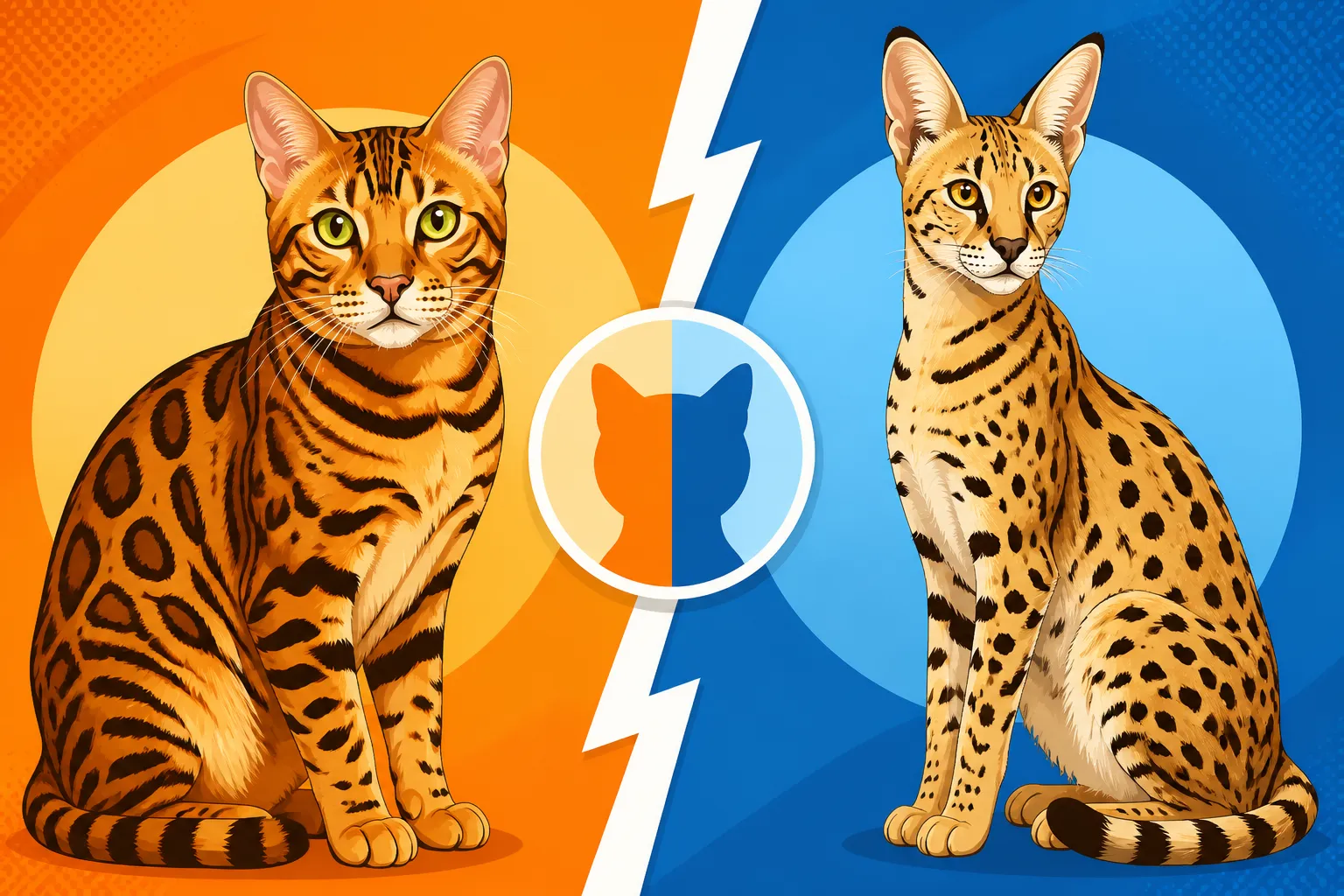
Bengal cats are celebrated for their sleek, muscular bodies and their almost perpetually "ready-to-pounce" appearance. They are typically a medium-sized cat breed, with males often weighing between 10 to 15 pounds and females slightly less. Don't let their size fool you, though; they are incredibly strong and athletic for their build. Their bodies are long and lean, with hind legs often slightly longer than their front, contributing to their impressive jumping ability.
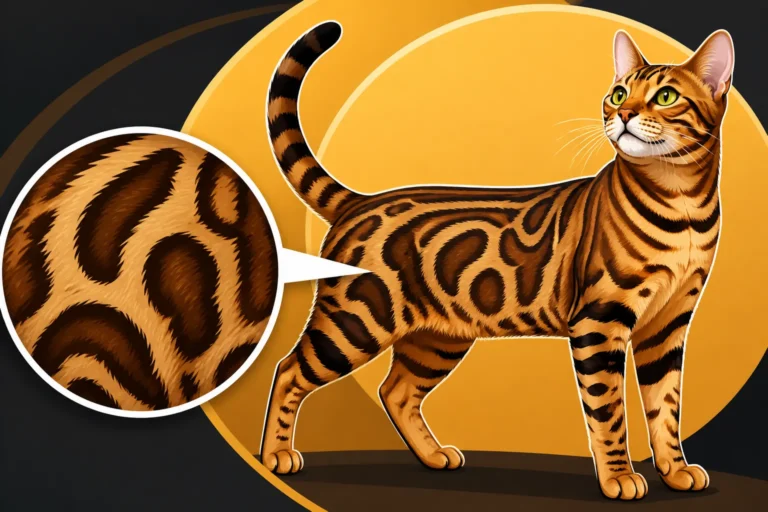
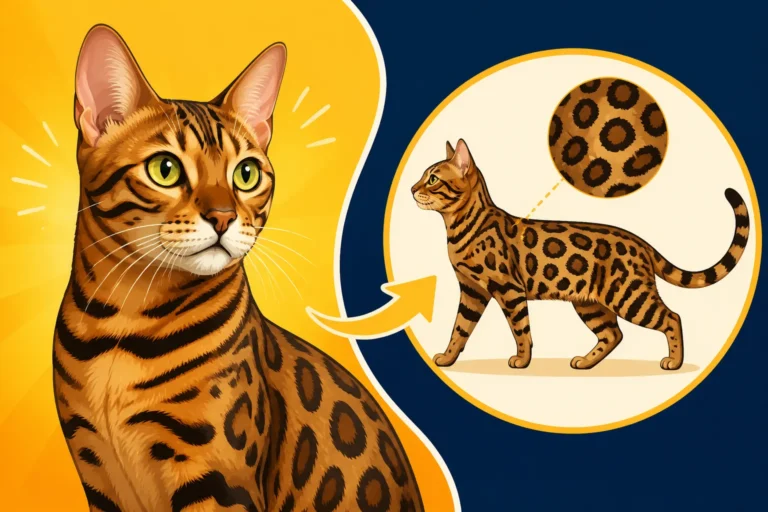
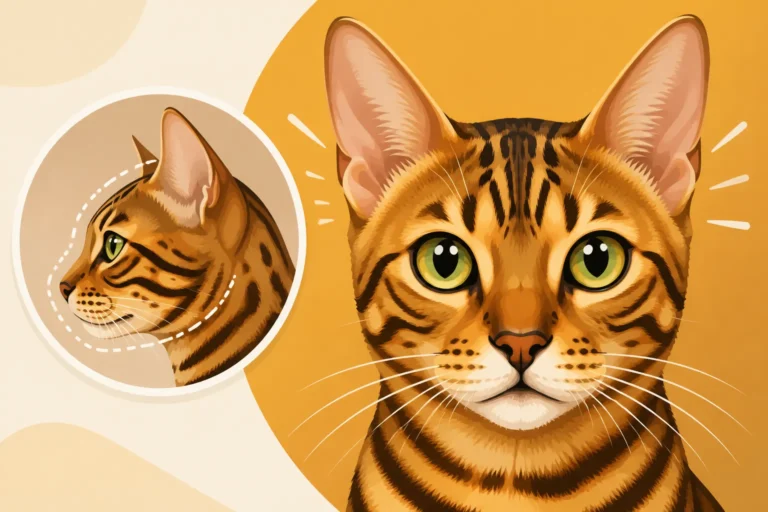
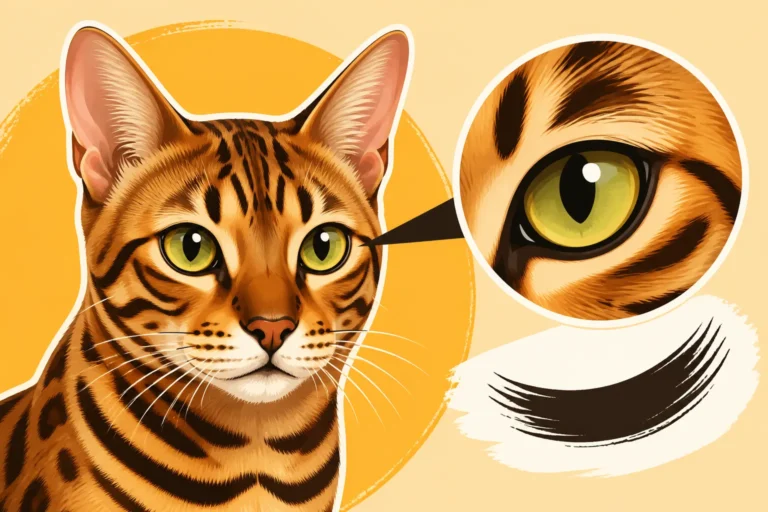
Their heads are relatively small and rounded, with medium-sized ears set high. The eyes are usually large and expressive, often in shades of green or gold, though snow Bengals can have striking blue eyes. The coat is the Bengal's crowning glory: it’s short, dense, and has a unique "pelt-like" feel, often described as incredibly soft, like satin or silk. This texture, combined with the famous "glitter" gene that makes their fur shimmer, is distinct. Most notably, Bengal patterns are either spotted, with rosettes being highly prized, or marbled. These rosettes can be arrowhead, paw-print, or donut shapes, creating an incredibly rich and varied visual tapestry. A Bengal Cat's Coat Is a Pelt, Not Fur provides more detail on this unique characteristic.
The Tall, Graceful Savannah
Savannah cats, by contrast, are known for their extraordinary height and lanky, graceful build. They are consistently one of the tallest domestic cat breeds, and their size can be quite intimidating. F1 and F2 Savannahs, in particular, can be very large, with males reaching weights of 20-25 pounds or more and standing impressively tall. Even later generation Savannahs tend to be larger than most Bengals. Their legs are remarkably long, giving them an elegant, deer-like appearance, and they possess a high, arched back.
Their heads are smaller in proportion to their bodies than a Bengal's, with notably large, tall ears that are rounded at the tips and set high on the head, often sporting "ocelli" (light-colored spots on the back of the ears that resemble eyes, a trait found in many wild felines). Their eyes are typically gold, green, or brown, and like Bengals, blue eyes are seen in snow variations. The Savannah coat is usually spotted, with bold, dark spots sharply contrasting against a lighter background (tawny, silver, smoke, or black). Unlike the varied rosettes of Bengals, Savannah spots are typically solid, round, or oval. They also have a shorter, harsher coat texture compared to the Bengal's soft pelt.
Temperament and Lifestyle: Beyond the Wild Looks
While both breeds share a wild heritage and are recognized for their energetic personalities, their temperaments and ideal lifestyles stem from their distinct ancestors, leading to noticeable differences in how they interact with their environment and their human companions.
The Engaging and Playful Bengal
Bengal cats are famously energetic, intelligent, and endlessly curious. They thrive on interaction and can form incredibly strong bonds with their families, often described as "dog-like" in their devotion. However, this isn't a couch potato cat by any stretch! Bengals require a significant amount of mental and physical stimulation to prevent boredom and destructive behaviors. They love to climb, jump to impressive heights, and explore every nook and cranny of their home. The Bengal Cat Is the Most Active Cat You Can Own is not an exaggeration.
Vocalization in Bengals is often characterized by a range of unique sounds, from chirps and chuffs (often reserved for communicating with their owners) to more traditional meows and even guttural growls during play. They are notorious for their love of water; don't be surprised to find a Bengal playing in the sink, watching you shower, or even joining you in the bathtub. Their intelligence means they can be clicker trained to perform tricks, walk on a leash, and play fetch. While generally good with children and other pets, their high energy means they need appropriate introductions and supervision. A bored Bengal can become a mischievous one, finding ways to open cabinets or get into places you thought were secure.
The Agile and Adventurous Savannah
Savannah cats, particularly the early generations, tend to have an even higher energy level and a more independent streak than Bengals. Their Serval heritage contributes to their incredible agility, ability to jump to astonishing heights from a standing start, and their instinctual curiosity about their surroundings. They are very active and require substantial space and enrichment to prevent them from becoming destructive. While they can be affectionate, especially with their chosen human, they might not be as overtly cuddly as some Bengals, preferring to be near you rather than on your lap.
Vocalization in Savannahs can be quite varied and loud, including chirps, hisses, and distinct meows that some describe as "chatty." Like Bengals, they also have a strong affinity for water and may enjoy playing in it. Their intelligence is remarkable, often leading them to figure out complex puzzles, open doors, and explore high shelves. Savannahs are often described as having a strong "dog-like" personality, enjoying leash walks and following their owners around. However, their size and higher energy demands mean they might be better suited to experienced cat owners who can provide ample vertical space, outdoor enclosures (catios), and consistent engagement. While a Bengal needs enrichment, a Savannah's need for How Much Enrichment a Bengal Cat Actually Needs is often amplified.
Ownership Considerations: Care, Legality, and Costs
Bringing any pet into your home requires careful thought, but with hybrid breeds like Bengals and Savannahs, there are additional layers of consideration regarding their specific care needs, the legalities of ownership, and the financial commitment involved.
Caring for Your Bengal: Diet, Grooming, and Housing
Bengal cats, despite their wild appearance, are largely similar to other domestic cats in their basic care. However, their high energy levels and sometimes sensitive digestive systems mean their diet often requires attention. Many Bengal owners opt for high-quality, high-protein foods, sometimes favoring wet food over dry to ensure adequate hydration. Some breeders and owners even advocate for a raw diet, believing it aligns more closely with their wild ancestry. Feeding a Bengal Cat Four Generations From a Wild Ancestor explores these dietary considerations in depth. When seeking out these specialized food options or even just durable, engaging toys for their active nature, online stores like Chewy can be a fantastic resource, offering a wide selection that caters to specific breed needs.
Grooming a Bengal is surprisingly easy. Their short, pelt-like coat sheds minimally and rarely mats, requiring little more than an occasional brush to remove loose hairs. A Bengal Cat Needs Almost No Grooming due to these coat characteristics. Housing needs to accommodate their activity; plenty of vertical space, tall cat trees, and interactive toys are essential. Many Bengal owners find that a secure outdoor enclosure, or "catio," is invaluable for providing safe outdoor stimulation.
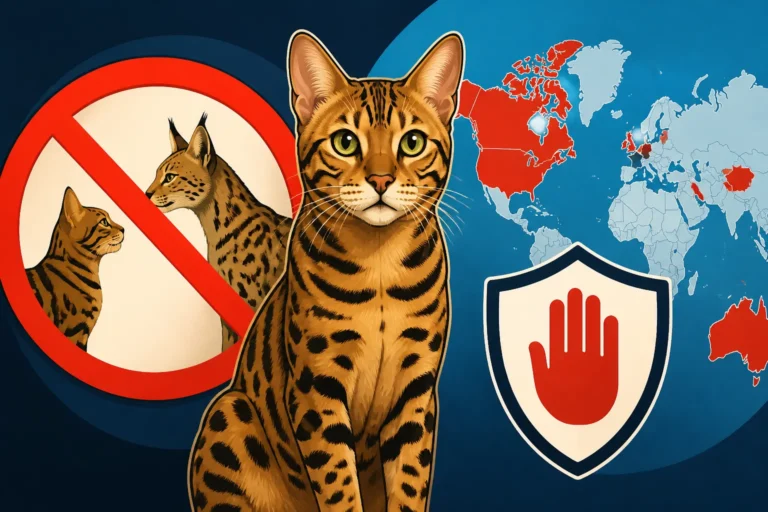
Legally, SBT Bengals (F4 and beyond) are generally legal to own in most places within the United States, with few restrictions. However, F1, F2, and F3 Bengals are often subject to stricter laws, sometimes requiring permits, or being outright banned in certain states, counties, or cities due to their closer proximity to their wild ancestor. Where a Bengal Cat Is Illegal in the United States highlights these varied regulations. The initial cost to purchase a Bengal cat can vary widely, but generally, an SBT pet quality Bengal can be a significant investment, with prices increasing for earlier generations or show quality animals.
Savannah Cat Care: Advanced Needs and Bigger Commitments
Savannah cats, especially the early generations, typically demand more specialized care than Bengals. Their diet, like Bengals, often leans towards high-protein, sometimes raw, to support their robust metabolism and large size. Given their dietary needs and tendency to be particular, finding the right food can sometimes be a challenge, and comprehensive pet supply retailers like Chewy can be a big help in exploring options that work.
Grooming is fairly straightforward due to their short coats, similar to Bengals. However, their housing needs are often significantly greater. Due to their size, jumping ability, and inherent athleticism, Savannahs require immense amounts of vertical space and very secure environments. Large, robust catios are almost a necessity for many Savannah owners, as these cats can be escape artists and are not suited for unsupervised outdoor roaming. Indoor spaces need to be thoroughly "cat-proofed," as they can easily access high shelves, open cabinets, and explore areas other cats wouldn't.
The legal landscape for Savannah cats is much more complex and restrictive than for Bengals, particularly for F1, F2, and F3 generations. Because of their larger size and closer lineage to the Serval, many states and cities classify early generation Savannahs as wild animals, requiring special permits or banning them entirely. Even later generation SBT Savannahs can face restrictions in some areas. Checking local and state laws is absolutely imperative before considering a Savannah. The cost of a Savannah cat is generally higher than a Bengal, especially for earlier generations, which can command some of the highest prices in the domestic cat world. What a Bengal Cat Costs to Buy in 2026 (keeping in mind current figures should be checked directly) gives an idea of the scale, but Savannahs often exceed those figures, particularly for F1s.
Ultimately, while both the Bengal and Savannah cat offer the allure of a wild aesthetic in a domestic companion, they are distinctly different animals. The Bengal, with its Asian Leopard Cat lineage, is a vibrant, engaging, and relatively manageable high-energy cat for many dedicated owners. The Savannah, stemming from the African Serval, brings a greater scale, heightened energy, and often more specialized care and legal considerations. Understanding these core differences is the first step in deciding which of these magnificent creatures might be the right fit for your home and lifestyle.
Disclaimer
This article is for general informational purposes only and does not constitute professional advice. Laws, prices and regulations vary by location and change over time. Consult a qualified professional for guidance on your specific situation.