Whether a Breeder Can Fake a Bengal Cat’s Generation
A breeder can misstate or even fabricate a Bengal cat’s generation, and a kitten’s wild-looking coat cannot confirm its ancestry. The safest approach is to check the pedigree and registration details with the registry named on the paperwork, then compare those records with the breeder’s claims. This guide explains what generation labels mean, what documents can establish, and how to spot inconsistencies before you commit.
What a Bengal cat’s generation label means
F numbers describe ancestry, not appearance
A Bengal’s generation label refers to its place in a pedigree descending from the Asian leopard cat and domestic cats. F1 means the first filial generation from that original cross; later F numbers indicate further generations down the line. The label is not a measurement of how wild a cat looks, behaves, or “feels” to live with.
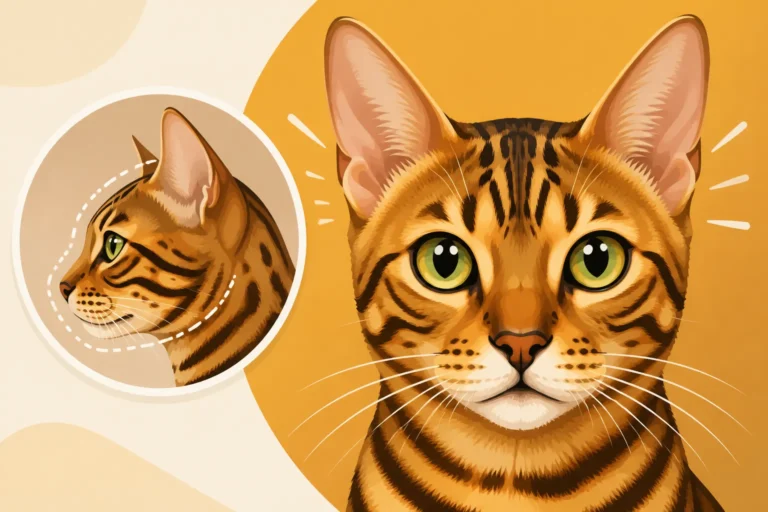
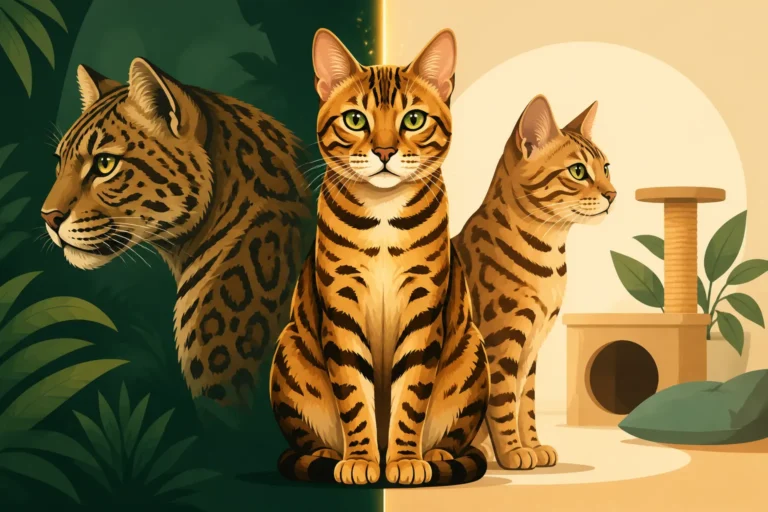
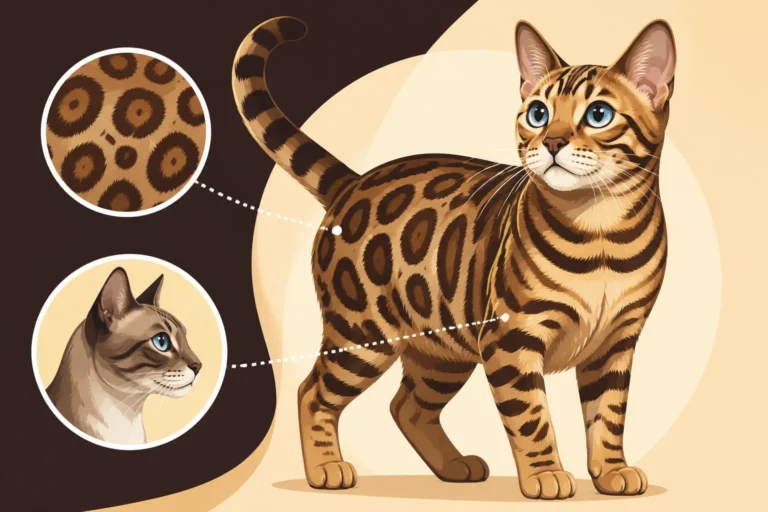
That distinction matters because two kittens with similar spotted coats may have very different pedigrees. A domestic Bengal several generations removed from the Asian leopard cat might look especially dramatic, while a cat from an earlier generation might not match someone’s mental picture of a wild-looking hybrid. Appearance alone is not a reliable way to check the number. For a fuller explanation, see How a Bengal Cat's Generation Is Counted and What SBT Means in a Bengal Cat.
A breeder should be able to explain how the generation was counted and show the pedigree that supports it. If the explanation is vague—“she’s basically an F3” or “the parents look wild, so she must be early generation”—ask for the actual records. A label based on looks or sales language is not the same as a documented pedigree designation.
SBT and early-generation claims are not interchangeable
You may also see the term SBT on Bengal paperwork. It describes a registry’s pedigree classification, and its meaning is tied to that registry’s rules. It is not simply another way to say “high generation,” nor does it mean a cat has a particular percentage of wild ancestry.
Breeders sometimes use “generation” loosely in conversation, so ask exactly what they mean. Do they mean an F number in the pedigree? A registry classification? Or are they describing the cat’s general appearance? Those answers are not interchangeable. A clear breeder will separate official pedigree terminology from informal descriptions.
If a seller claims that a kitten is both an early-generation Bengal and an SBT Bengal, pause and ask them to explain the wording against the pedigree and the relevant registry’s definitions. The records may clarify the claim, or they may reveal that the seller is using terms imprecisely. Either way, it is reasonable to ask before placing a deposit.
Can a breeder fake a Bengal cat’s generation
A seller can make a false claim, but records can be checked
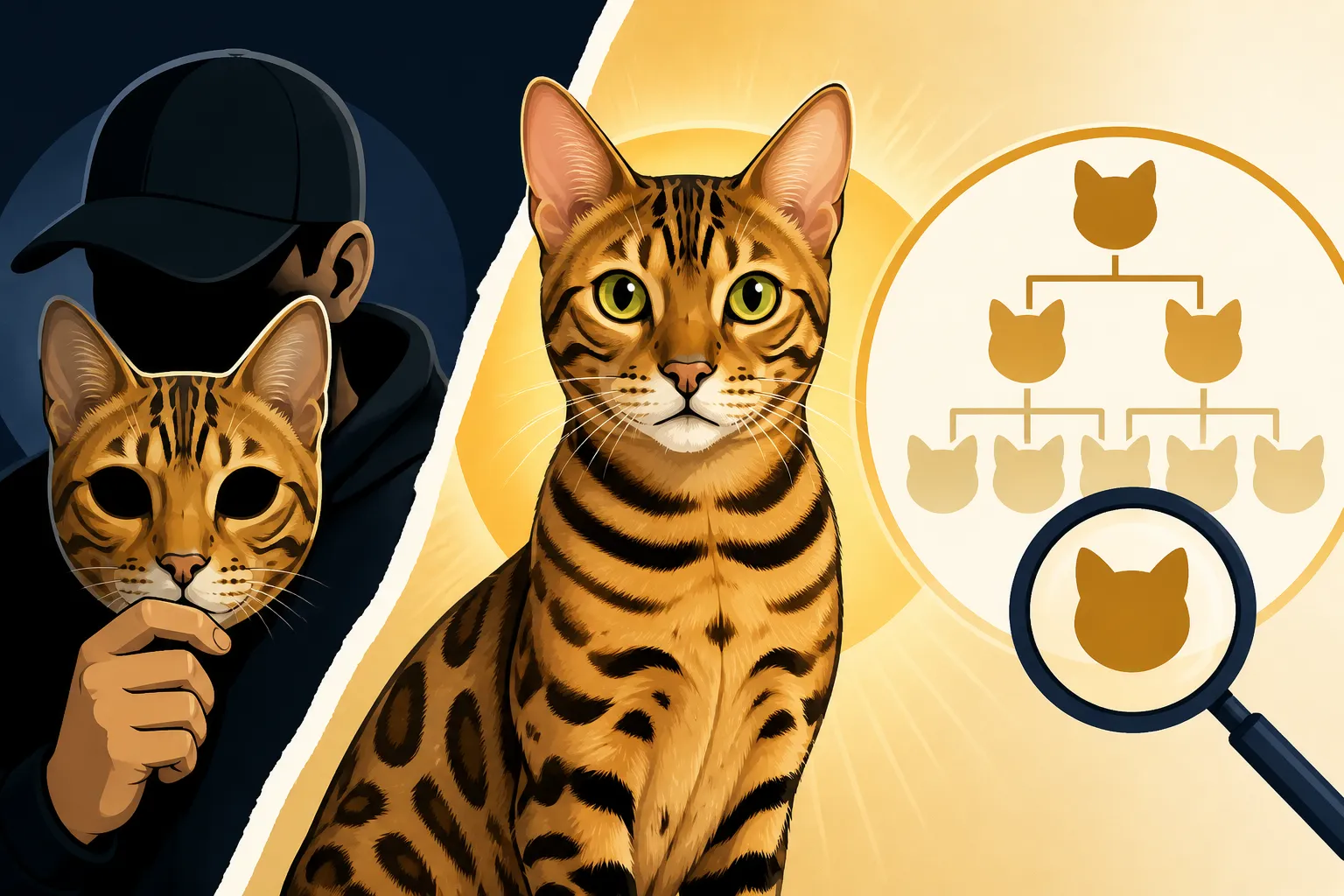
Yes, a breeder or seller can misrepresent a kitten’s generation. That could mean an innocent mistake, careless use of terminology, or an intentional attempt to make a kitten sound rarer or more valuable. A polished certificate or a confident explanation does not, by itself, prove the claim is accurate.
The key is to verify the pedigree independently. Start with the registry named on the papers, not a phone number or email address supplied only by the seller. Contact the registry through its own official channels and ask what information it can confirm about the cat, its registered parents, and the litter. Have the breeder’s registered cattery name, the parents’ registered names, and any registration or litter numbers ready.
This does not mean every breeder who cannot produce a document instantly is dishonest. Records can be delayed, a kitten may not yet be registered, or a seller may need time to locate the paperwork. But a seller should be willing to explain the situation, provide the relevant details, and allow you to verify the information before you make a final decision.
Registration papers are useful, but not self-authenticating
Registration paperwork can provide a traceable record of a cat’s identity and ancestry, but a piece of paper is not automatically proof just because it has a logo or looks official. Check that the kitten’s name, date of birth, parents, breeder, and registration details match across the documents. Look for inconsistencies in spellings, dates, or parent names, and ask the registry whether the information can be confirmed.
A pedigree should show the ancestry needed to support the breeder’s generation claim. If the paperwork lists only the kitten’s name and breed without the family history, ask for the full pedigree or an explanation of what that document does and does not establish. This is where How to Find a Bengal Cat's Generation on Its Pedigree can help you understand what details to look for. You can also read Whether a Registration Paper Proves a Bengal Cat's Generation for a closer look at the limits of registration documents.
A DNA test is not a substitute for a documented pedigree. Tests may answer specific questions about inherited traits or health variants, but a general DNA result should not be treated as a definitive wild-ancestry percentage or a generation certificate. If a seller says a DNA test proves the kitten is F2 or F3, ask which test they mean, what it actually reports, and how that result connects to the registry pedigree. See Whether a DNA Test Shows a Bengal Cat's Wild Percentage for more on that distinction.
| What the seller provides | What it may help establish | What to verify |
|---|---|---|
| Full pedigree | Recorded ancestry across generations | Parent names, lineage, registry details, and whether the pedigree supports the claimed label |
| Registration certificate | Registration of an individual cat | Whether the registry can confirm the details and whether the certificate includes ancestry |
| Litter registration details | The litter’s registered identity | Whether the kitten belongs to that litter and whether the named parents match |
| DNA test result | The specific traits or variants included in that test | What the test measures; do not assume it proves a generation number |
| Photos or videos | The kitten’s appearance and living conditions | These cannot establish pedigree or generation |
How to verify a breeder’s generation claim
Ask for the evidence before paying a deposit
A good first step is to ask the breeder for the kitten’s registered name, both parents’ registered names, the registry involved, and a copy of the pedigree or relevant registration paperwork. You can then compare the claim with what the records show. If the kitten has not yet been registered, ask what documentation is available now and when the completed paperwork will be provided.
Keep the conversation practical and calm. For example: “You described this kitten as F4. Could you show me the pedigree and explain how you counted that generation?” A responsible breeder should be able to answer without making you feel unreasonable for asking. If you are unsure what else to ask, Which Questions to Ask a Bengal Cat Breeder offers a useful checklist for the wider conversation.
Be careful if the seller pressures you to send money before answering basic questions, says verification is unnecessary, or insists that the kitten’s coat proves its generation. Other warning signs include paperwork with mismatched names, a refusal to identify the registry, or a claim that the documents will only be available after you have paid in full. None of these signs alone proves fraud, but together they are a strong reason to slow down.
Contact the registry and compare the complete story
Use the registry’s independently located contact details and ask what it can confirm. The registry may have limits on what it can disclose, but it can tell you how to authenticate paperwork or submit a verification request. Do not rely only on screenshots, cropped documents, or forwarded messages if the registry offers a more direct way to check the record.
Compare the answers with the breeder’s account. Do the parents’ names match? Does the litter date make sense? Does the pedigree support the generation being advertised? If the breeder says the kitten is a particular F number but the provided pedigree appears to show something else, ask for clarification in writing. A straightforward correction is different from changing explanations or dismissing the discrepancy.
If the generation matters because of local ownership rules, verify the legal requirements separately. Laws may distinguish between early-generation hybrids and later-generation domestic cats, and rules can vary by state or city. A breeder’s label is not a legal determination. Check with the relevant local authority and review How to Check Your State's Bengal Cat Law before bringing a cat home. For context on why early-generation claims may carry practical complications, see Why F1 to F3 Bengal Cats Are Rarely Sold as Pets.
What to do when the paperwork is missing or the claim seems wrong
Decide whether the gap is explainable or a deal-breaker
Some paperwork gaps have ordinary explanations. A kitten may be too young for final registration, the breeder may be waiting for a registry to process documents, or a seller may have an older pedigree stored under a different name. Ask for a specific explanation, what evidence is available now, and what will be supplied later. Put any promise about documentation in the written purchase agreement.
The harder situation is when the seller cannot provide the parents’ registered names, gives conflicting generation descriptions, or refuses independent verification. If the seller says, “Trust me, I’ve bred Bengals for years,” that experience may be relevant, but it does not replace records. You are entitled to make the decision based on evidence rather than urgency or reassurance.
If the paperwork ultimately does not support the advertised generation, decide whether you still want the kitten under an accurate description and revised terms. Some buyers may be happy to adopt a Bengal whose exact generation is uncertain; others may need clear documentation for legal, breeding, or personal reasons. The important thing is not to pay or sign based on a claim that remains unverified.
Keep identity, health, and household preparation separate
Generation paperwork answers a lineage question. It does not, on its own, establish that a kitten is healthy, well socialized, or a good fit for your home. Ask separately about veterinary records, vaccination and parasite care, the kitten’s diet, temperament, and the breeder’s return or support policy. A kitten can have verified ancestry and still require careful health and behavior consideration.
Likewise, a dramatic-looking spotted cat is not necessarily a registered Bengal. If you are evaluating a rescue or an unregistered cat, treat breed identity and generation as unconfirmed unless reliable records support them. The appearance question is explored in Whether a Spotted Domestic Shorthair Is a Bengal Cat. It is kinder and more realistic to focus on the individual cat’s needs than to assign a precise generation based on coat pattern.
Once you have verified the breeder and decided to proceed, prepare for the kitten’s transition separately from the paperwork process. Ask what food and litter the kitten currently uses, then keep those familiar at first while you settle in. If you need to arrange basic supplies, a retailer such as Chewy may be one option for finding familiar food or household essentials; a supply receipt, however, has no bearing on pedigree verification. Keeping the breeder’s records, veterinary documents, and purchase agreement together will make it easier to refer back to the facts later.
Disclaimer
This article is for general informational purposes only and does not constitute professional advice. Laws, prices and regulations vary by location and change over time. Consult a qualified professional for guidance on your specific situation.