Which Rosette Type Judges Prefer in a Bengal Cat
A Bengal can have striking rosettes and still not be the pattern a judge favors most in the ring. That’s because there is no single rosette shape that automatically wins. Judges assess the whole coat pattern, including contrast, clarity, spacing, and how the markings flow across the body. This guide explains what those qualities mean and how to look at rosettes more confidently.
There Is No Single Winning Rosette Shape
A common question from Bengal fans is whether judges prefer donut rosettes, paw-print rosettes, or arrowhead rosettes. In practice, a shape alone is not a reliable shortcut to predicting a show result. A rosette is judged as part of the cat’s overall pattern and in relation to the breed standard used at that show.
That distinction matters when you’re comparing two beautiful cats. One may have large, dramatic markings, while another has smaller but more clearly defined rosettes and stronger contrast. The judges are not simply counting spots or choosing the most eye-catching individual marking; they are assessing how well the pattern works across the cat’s coat.
What judges are looking at
Bengal standards generally reward a coat with clear, distinct markings and strong contrast between the pattern and the background color. Rosettes should read as markings with definition rather than as vague, blended spots. The full pattern matters too: judges look at how markings are distributed across the body, not just at the most impressive patch on a shoulder or flank.
The way those markings flow is part of the impression. A coat may look balanced and visually connected when you see the cat moving, but less impressive when the markings appear crowded, muddy, or disconnected. A judge views the cat from multiple angles, so a strong pattern needs to hold together across the sides, back, and other visible areas.
The exact written standard depends on the registry and show. For a closer look at how the breed’s overall appearance is described, see What a Bengal Cat Standard Asks For and What a Bengal Cat Looks Like by the Standard. These help put individual rosette shapes in context: pattern is one part of a broader evaluation.
Rosette shape is only one part of pattern quality
A rosette’s outline can be appealing, but shape does not tell you everything about its quality. A neat, well-defined marking may stand out more than a larger one with fuzzy edges or weak contrast. The same type of rosette can look very different from one cat to another depending on how distinct its outline is and how it sits against the coat’s background.
That is why a cat with a particular rosette style is not automatically more show-worthy than one with another style. Even a dramatic rosette can lose visual impact if its colors blend into the background, its edges are unclear, or the coat pattern as a whole looks crowded. Judges evaluate the result on the cat, rather than awarding points simply for a named shape.
If you’re looking at a kitten, remember that its coat can change as it grows. The pattern may look softer during a stage when kitten fuzzies affect the coat’s appearance. A careful comparison takes age and coat development into account, rather than treating one early photograph as a final verdict.
Judges evaluate the cat, not just a close-up
A close-up photograph can make a rosette look spectacular while hiding how the pattern appears across the body. A show judge sees the cat as a whole and may observe its coat while it stands, turns, or moves. Overall impression includes more than a single marking: the coat’s definition and pattern flow need to be considered together with the cat’s other breed characteristics.
This is one reason online debates about the “best” rosette type can be misleading. A photo may show only one angle, and lighting can change how much contrast appears between the markings and the ground color. A cat’s actual coat may look different under show lighting or when seen in motion.
When comparing patterns, look at the entire cat from more than one angle. If you want to understand the basic distinction between the breed’s two main pattern families, Rosetted Against Marbled: The Two Bengal Cat Patterns offers useful context. A rosetted coat and a marbled coat are different pattern types, so judging one by the visual qualities of the other can lead to confusion.
How the Main Rosette Types Differ
Bengal enthusiasts often use familiar names for rosette shapes. These labels are useful for describing what you see, but they are not a ranking system. A particular shape can be attractive without being a guarantee of higher show quality.
The boundaries between types may not always look perfectly clear. Markings vary across a single cat’s body, and one cat may have rosettes that do not all look identical. Instead of trying to label every marking precisely, start by noticing whether the rosettes are distinct, visible, and part of a coherent overall pattern.
Donut rosettes
A donut rosette has a more enclosed appearance, with a darker outline surrounding a lighter center. The name describes the general visual effect; it does not mean every marking will form a perfect circle. Some may be irregular or elongated, and their appearance depends on the shape and color of the surrounding markings.
A well-defined donut rosette can look striking because the outline and center create a clear contrast. But the shape alone does not make a coat superior. If the outline is indistinct or the inner and outer colors blend together, the rosette may have less visual definition than a less symmetrical marking with stronger contrast.
The key question is how clearly the marking reads on the cat’s coat. For a more focused description of this shape, see What a Donut Rosette Is on a Bengal Cat. It is helpful to treat the name as a visual description, not as a promise about how judges will rank the cat.
Paw-print and arrowhead rosettes
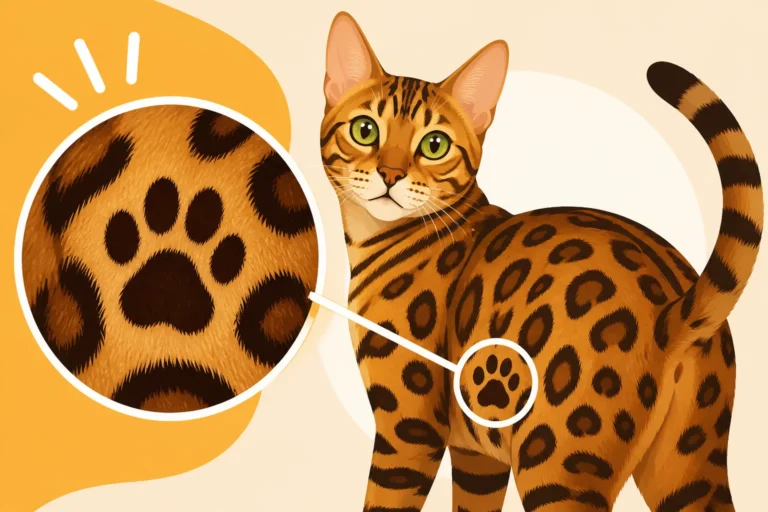
Paw-print rosettes generally look like a darker outline that remains open or incomplete, with dark spots or shapes along part of the edge. Arrowhead rosettes tend to have a pointed or triangular impression. Both can contribute to a lively, varied coat pattern, particularly when their markings are distinct against the background.
Neither type automatically outranks a donut rosette. A clear arrowhead shape may be memorable, but a judge still considers its definition and how it fits into the full coat. Likewise, paw-print markings can be attractive, but their visual effect depends on contrast and the surrounding pattern.
Names can also be used a little differently by different observers. Two people may look at the same irregular marking and describe it in different ways. That is normal; the practical issue is less about agreeing on a label and more about assessing whether the coat looks clear, well-marked, and visually cohesive.
Clouded rosettes and mixed patterns
Some rosettes appear larger or more irregular, and people may describe them as clouded. A broad marking can create an impressive look, but size is not the same as clarity. If the pattern looks smudged or the rosette edges are hard to distinguish, the marking may not have the crisp effect that people often admire in a show coat.
A Bengal’s coat does not need to contain identical markings everywhere to look harmonious. Variation is part of a natural-looking pattern. What matters is whether the rosettes and other markings work together rather than making the coat seem cluttered or indistinct.
For this reason, it is more useful to compare coat qualities than to make a simple list of rosette shapes from “best” to “worst.” Distinct markings, visible contrast, and a pleasing distribution can matter more than whether a particular rosette looks like a donut, paw print, arrowhead, or cloud.
How to Assess a Bengal Rosette Pattern
You don’t need to be a breeder or show judge to notice meaningful differences in a Bengal’s coat. A simple, consistent viewing approach can help you compare patterns without getting stuck on terminology. It also makes it easier to separate a striking photograph from a coat that looks strong from several angles.
Try to assess the cat in ordinary, even lighting if possible. Harsh flash, deep shadows, and heavy editing can make markings look more dramatic—or less clear—than they are in person. If you are evaluating a kitten, be especially cautious about judging its mature pattern from a single snapshot.
Check contrast and definition first
Start by asking whether you can easily distinguish the markings from the background color. Strong contrast helps the pattern stand out. Then look at the edges: do the rosettes appear defined, or do they blend into the surrounding coat?
Next, notice whether the coat still looks clear when you step back. A close-up may show attractive detail, but a pattern that reads well across the side of the cat is easier to appreciate as a whole. Look at both sides when possible, since one particularly photogenic flank may not tell the full story.
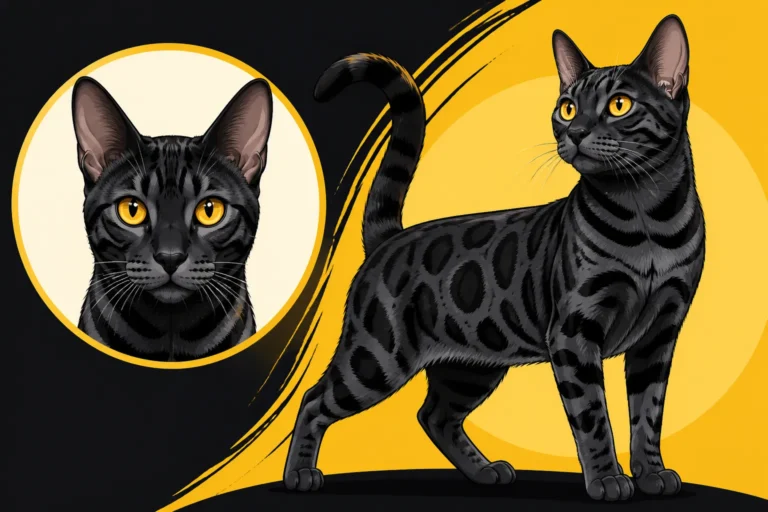
Finally, remember that color and lighting affect what you see. A silver Bengal, for instance, will not look exactly like a brown Bengal, and the same rosette outline may create a different visual effect on different background colors. If you want to learn how people describe individual markings, What a Rosette Is on a Bengal Cat is a useful starting point.
Look at spacing and flow across the body
Notice whether the pattern seems crowded or scattered. Markings that are too close together can be harder to distinguish individually, while widely separated spots may create a different overall impression. This is not a request for identical spacing across the coat; it is a way to judge whether the pattern looks intentional and readable when viewed as a whole.
Look at how the markings sit along the cat’s side and back. Some patterns appear to flow more horizontally, while others may look more irregular. Rather than searching for perfect uniformity, ask whether the coat has a clear visual rhythm and whether the rosettes remain distinct as your eye moves across the body.
You can also compare the coat while the cat is standing and moving. A curled-up cat or a tightly cropped photo can hide how the pattern connects across the body. In a show setting, judges have the opportunity to see the coat from more than one position, so a useful home assessment should do the same.
Keep health and coat care in perspective
A polished coat can make markings easier to see, but grooming does not create a better genetic pattern. Bengals usually need relatively little coat maintenance compared with some longhaired breeds. A clean, healthy coat and calm handling are more useful than trying to alter the appearance of the markings with products or excessive bathing.
For everyday care, use supplies suited to your cat and follow sensible grooming habits. If you need routine items such as a comb, nail trimmer, or treats to make handling more comfortable, Chewy is one place owners may look for basic cat supplies; choose products based on your cat’s needs, not on a promise that they will improve its rosettes. A treat can help reward a calm grooming session, but it cannot change coat pattern or show quality.
Some owners use Chewy to find a familiar carrier or grooming tool before travel to a show or veterinary visit. Whatever the source, introduce the carrier and handling routine gradually at home. A relaxed cat is easier to examine, but comfort and welfare should always come before trying to make a cat perform for a particular look.
What This Means If You Are Choosing a Bengal
If you are selecting a Bengal kitten or comparing adult cats, it is understandable to be drawn to the most dramatic rosettes. The coat is one of the breed’s most recognizable features. Still, choosing by rosette type alone can leave you with an incomplete picture of the cat you are bringing home.
A show prospect, a pet, and a cat admired for its pattern may be evaluated with different priorities. If you are buying from a breeder, ask how the breeder describes the kitten’s coat and what they mean by terms such as “donut” or “clouded.” Then look at the kitten and its parents in context, rather than relying only on promotional photos.
Questions to ask a breeder or exhibitor
Ask whether the cat’s pattern is expected to change as it matures. Kitten coats can look different from adult coats, and developmental changes may soften the appearance of the pattern for a time. A responsible answer should explain what is known and what is still uncertain, rather than promising a precise adult appearance from a very young kitten.
You can also ask which registry’s standard the breeder or exhibitor is using when they talk about show quality. Standards and judging practices are not interchangeable in every detail. Understanding the reference point makes comments about contrast, rosette definition, or pattern flow more meaningful.
If a breeder focuses exclusively on a fashionable rosette label, ask broader questions too: What does the coat look like across the body? How does the cat behave? What health information is available? A striking pattern is enjoyable, but it should not distract from the temperament, care, and responsible breeding considerations that matter throughout the cat’s life.
Do not confuse show preference with market value
A rosette style that catches a buyer’s eye may be marketed as especially desirable, but that does not mean every judge will prefer it or that every cat with that style will place well. Show results depend on the entire cat and the standard being applied. A coat’s visual appeal, an individual judge’s evaluation, and a kitten’s price are related only in complicated ways—not through a simple rule that one rosette type is always best.
If you are choosing a pet, the most important question is whether the cat is a good fit for your home. Pattern can be a lovely bonus, but it does not tell you whether a Bengal’s energy level suits your schedule or whether you are prepared to provide the enrichment the breed needs. What People Get Wrong About the Bengal Cat is worth reading if the coat’s wild appearance is making you wonder what day-to-day life with one is actually like.
For a broader discussion of how pattern preference and buyer expectations can differ, see Which Bengal Cat Pattern Holds Value Best. Market interest is not the same as a judging rule, and neither should be treated as a substitute for looking carefully at the individual animal.
A practical comparison table
| What to look at | A stronger visual impression | A possible concern |
|---|---|---|
| Contrast | Markings stand apart clearly from the background | Pattern and background blend together |
| Definition | Rosette edges are easy to distinguish | Markings look fuzzy or indistinct |
| Spacing | The pattern is readable across the body | Markings look crowded or visually disconnected |
| Flow | The coat looks cohesive from several angles | One area looks striking but the overall pattern does not hold together |
| Shape | The rosettes have an appealing outline | A particular shape is being treated as a guarantee of show quality |
| Viewing conditions | The coat looks clear in ordinary lighting and in motion | The impression depends on one close-up or dramatic lighting |
The most useful answer to “Which rosette type do judges prefer?” is that judges assess the quality and overall effect of the coat, not a winning label. Donut, paw-print, arrowhead, and clouded rosettes can all be attractive. The difference comes down to how clearly the markings show, how they contrast with the background, and how the full pattern works on the cat.
Disclaimer
This article is for general informational purposes only and does not constitute professional advice. Laws, prices and regulations vary by location and change over time. Consult a qualified professional for guidance on your specific situation.