Which Bengal Cat Colors the Registries Do Not Accept
A Bengal kitten advertised as blue, charcoal, or “rare white” can leave a prospective owner wondering whether the color is genuinely unusual, simply a breeder’s description, or outside a cat registry’s accepted standard. The answer depends on the registry and on whether the label describes coat color, pattern, or both. This guide explains how to tell the difference and what to ask before relying on a color claim.
What a registry means by an accepted Bengal color
Cat registries set breed standards that describe the colors and patterns eligible for recognition or competition. Those standards are not a complete inventory of every coat shade a Bengal might inherit. A cat may be a Bengal and have a striking appearance even if its color is not recognized in a particular registry’s standard.
It also helps to separate three ideas that are often blurred in breeder listings: a cat’s breed, its registration, and its show eligibility. Registration records a cat within a registry’s system. Show eligibility depends on the rules for that registry and the specific class. A color being unaccepted for competition does not, by itself, prove that a cat is not a Bengal.
Colors and patterns are separate parts of the standard
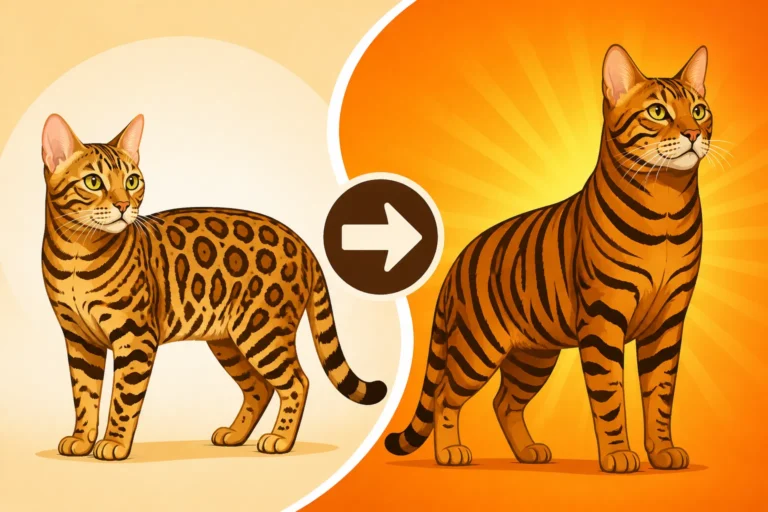
Color describes the underlying tones of the coat, such as brown, silver, or a pointed snow variety. Pattern describes how markings appear on top of that color: a Bengal may have spots, rosettes, or a marbled pattern. A cat can have a color that is recognized but a pattern that does not match the standard—or the reverse.
That distinction matters when a listing calls a cat “charcoal,” “rosetted,” or “snow.” Charcoal is often used to describe a particular appearance or pattern influence, while snow refers to a group of color varieties. Neither label alone tells you whether a cat meets every requirement of a show standard. For a broader overview of the breed’s recognized shades, see Which Colors a Bengal Cat Comes In.
Recognition depends on the registry
There is no single worldwide rulebook used by every cat registry. TICA, CFA, FIFe, and other organizations each maintain their own standards, and their accepted color terms and show classifications can differ. A color that is treated as a recognized variety by one organization may be listed differently, placed in another category, or not accepted for competition by another.
So “not accepted” needs a little context. Does the breeder mean a color is not eligible for a particular show? Not recognized by a named registry? Or simply less common than the colors they usually breed? Ask which organization they mean and request the relevant registration or pedigree information. For an overview of the standards that shape a Bengal’s appearance, What a Bengal Cat Looks Like by the Standard is a useful companion topic.
Bengal colors that may be outside a registry’s standard
Some color claims are easy to misread because a shade can occur in domestic cats without being an accepted Bengal show color. Other terms refer to appearance rather than to a formally recognized color category. The key is not to treat every unusual label as a standard color name.
A breeder’s use of a word does not automatically mean the color is registered under that name. If the distinction matters to you—especially if you hope to show the cat or are assessing a breeding program—check the exact registry standard rather than relying on an advertisement.
Blue and other dilute colors
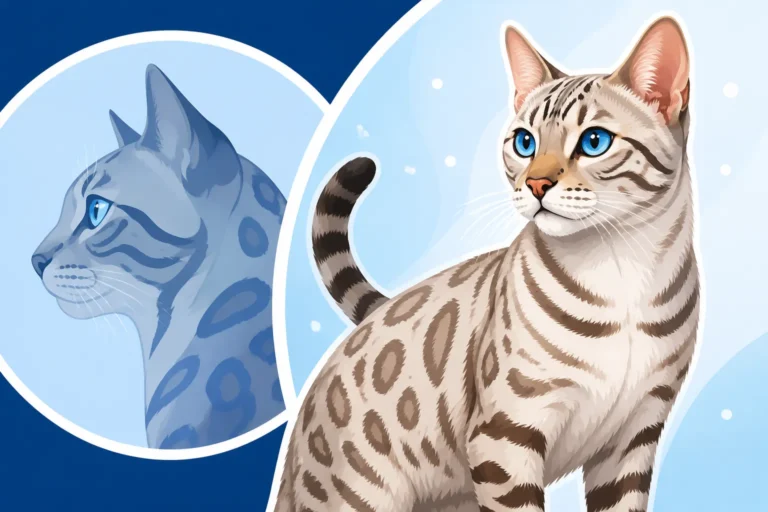
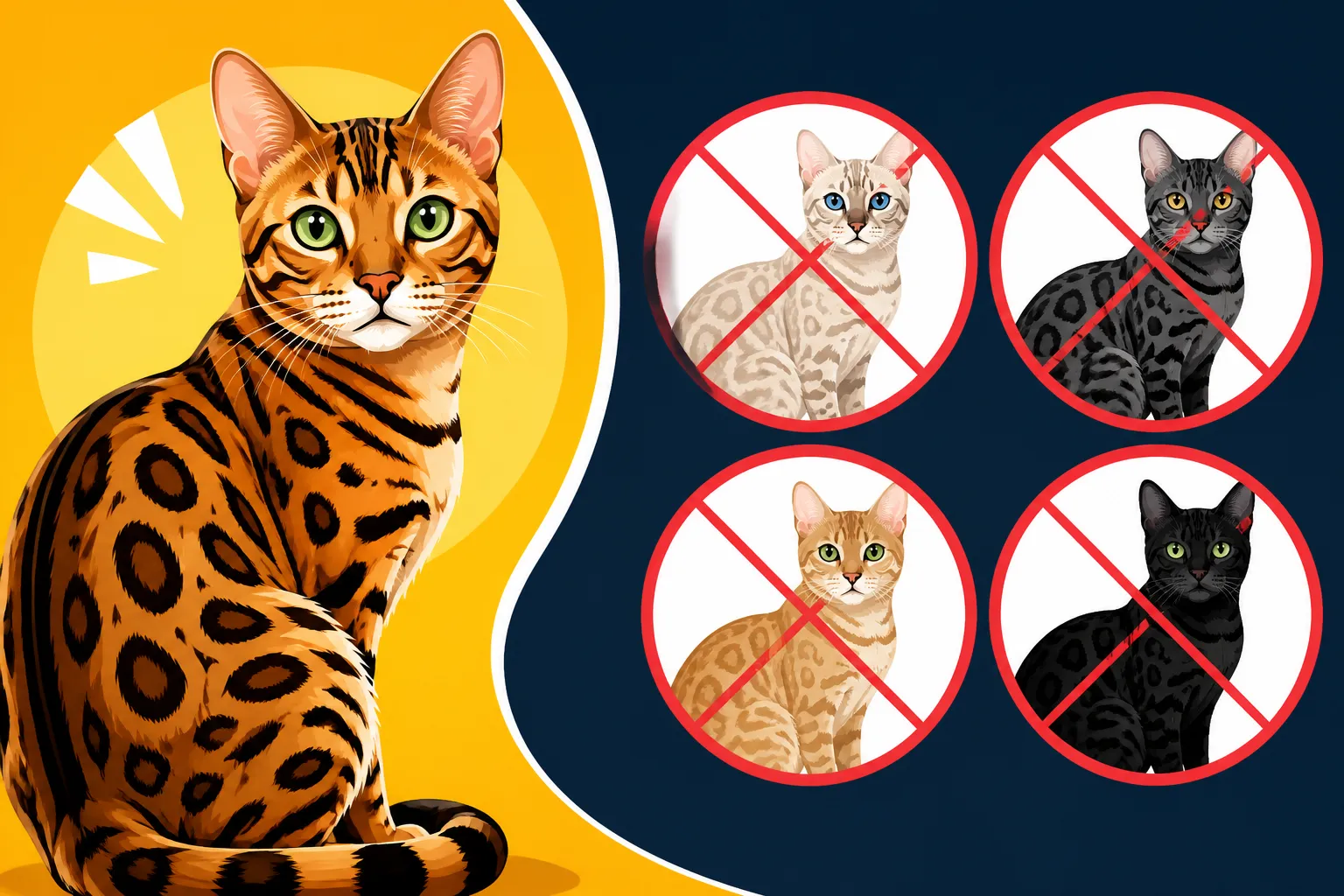
Blue is a dilute coat color that can give a cat a cool gray or bluish cast. Whether blue Bengals are accepted for show purposes depends on the registry’s rules. Some organizations may recognize or classify it differently from the most familiar brown and snow varieties; others may not accept it in the same way as standard show colors. Avoid assuming that “blue Bengal” means the same thing in every registration system.
If a breeder advertises a blue kitten, ask what registry the parents are registered with and whether the kitten’s color can be recorded under that registry’s rules. Then distinguish the answer to “Can this cat be registered?” from “Can this cat compete in the standard color classes?” Those are related, but they are not always identical questions. For more detail on the shade itself, see What a Blue Bengal Cat Is.
Chocolate, lilac, cinnamon, and fawn
Chocolate, lilac, cinnamon, and fawn are color terms used in cat breeding, but they are not automatically accepted Bengal show colors. A listing that uses one of these labels may be describing a rare-looking coat, a nonstandard variety, or a color based on a breeder’s own terminology. It does not, on its own, establish official recognition.
If a seller describes a Bengal as one of these colors, ask for the name of the registry and the color recorded in the kitten’s paperwork. If the answer is only “the registry accepts it” without naming the organization or showing relevant documentation, pause before treating that claim as confirmed. A careful breeder should be comfortable explaining the difference between a marketing description and an official color classification.
Solid white and solid black descriptions
A Bengal’s markings and contrast are central to its familiar appearance. A cat described as “solid white” may not be a standard Bengal color variety, and “solid black Bengal” may be used informally for a very dark or melanistic-looking cat rather than as a universally accepted show color. The important question is whether the cat’s appearance and paperwork fit the rules of the particular registry.
A dark Bengal may still show patterning that is difficult to see in ordinary light. That is different from assuming the cat is a standard solid-black show variety. Likewise, a pale coat should not be confused with a snow Bengal, which is a recognized color group in some standards and is not simply a white cat. What a Snow Bengal Cat Is explains why that distinction matters.
| Description in an ad | What it may refer to | What to verify |
|---|---|---|
| Blue | A dilute gray-toned coat | Whether the named registry accepts or classifies it for the purpose you care about |
| Chocolate, lilac, cinnamon, or fawn | A color description that may fall outside standard Bengal show colors | The official color recorded in the pedigree or registration paperwork |
| Solid white | A pale appearance, not necessarily a standard Bengal color variety | Whether the cat’s description matches the registry’s terminology |
| Solid black | A very dark appearance or informal label for a melanistic-looking cat | Whether the registry recognizes the color and how it records the pattern |
| Charcoal | A description of a particular Bengal appearance, sometimes discussed separately from base color | Whether it is treated as a color, pattern feature, or modifier in that registry |
| Snow | A recognized Bengal color group in some standards, with named varieties | Which snow variety is recorded and whether the cat’s documents match |
Why breeders use color names differently
Color vocabulary can be confusing even when nobody is trying to mislead you. A breeder may use a familiar shorthand because buyers recognize it, while a registry uses a more precise label. A kitten’s coat can also change in appearance as it matures, so an early description may be less definitive than the eventual adult coat.
That makes documentation and clear questions more useful than arguments over a single word. If you are comparing kittens, ask the breeder to explain what the term means in their program and how it relates to the cat’s registration.
Charcoal is not always a simple color category
“Charcoal” is a common term for a Bengal with a darker facial mask, cape-like shading, or other distinctive contrast. Depending on the standard and the way the term is being used, it may describe an appearance or a pattern-related feature rather than a standalone base color in the same sense as brown or silver.
Ask the breeder whether “charcoal” appears as the registered color on the kitten’s paperwork, or whether it is a descriptive label they use when discussing the coat. Those answers can both be reasonable, but they are not interchangeable. A color label in an advertisement should not be treated as proof of registration status or show eligibility.
Silver and melanistic appearances need precise descriptions
Silver is a recognized color group in some Bengal standards, but the precise labels and combinations used can vary. The word “silver” alone may not tell you how the markings are classified or what color appears in the registration record. If you want to understand the distinction between a silver coat and the pattern laid over it, What a Silver Bengal Cat Is offers more background.
A melanistic-looking Bengal may appear exceptionally dark, with markings that are subtle or visible only in certain light. “Melanistic” is a useful description of appearance, but it should not be assumed to mean that every registry treats it as an accepted show color. Ask for the registry’s terminology and, if relevant, look at the kitten under natural light rather than relying only on edited photographs. See What a Melanistic Bengal Cat Is for more on that appearance.
Marketing language is not the same as paperwork
Words such as “rare,” “exclusive,” or “unregistered color” can sound persuasive, but they do not answer practical questions about a kitten’s lineage or status. A nonstandard color may still be an honest description of the cat, while a dramatic marketing term can also obscure the fact that the color is not accepted by the registry a buyer has in mind.
A reliable conversation should include the name of the registry, the parents’ registration details, and a clear explanation of how the kitten will be recorded. If you are also evaluating a breeder’s broader practices, Which Bengal Cat Generation Suits a Family and Whether a DNA Test Confirms a Bengal Cat can help separate useful documentation from claims that sound more conclusive than they are.
How to check a Bengal’s color status before you buy
The most useful next step is to identify what you need the information for. A pet owner may simply want to understand a kitten’s coat, while a prospective exhibitor needs to know whether the cat qualifies under a particular show standard. Someone considering breeding needs an even more careful review of registration, pedigree, and health information.
A color label alone cannot answer all of those questions. Ask for specific records, then compare them with the rules of the registry that matters to you.
Ask the breeder clear, specific questions
Rather than asking only, “Is this color accepted?”, try asking:
- Which registry are the kitten and its parents registered with?
- What color and pattern are recorded on the paperwork?
- Is the kitten eligible for registration, show competition, both, or neither under that registry’s rules?
- Is the advertised color name an official registry term or a description used by the cattery?
- Can I review the parents’ registration details and the kitten’s documentation?
These questions help keep the conversation grounded. A breeder who explains that a color is a descriptive term but not a recognized show variety is giving you a more useful answer than someone who relies on “rare color” as a substitute for paperwork. For related questions about coat categories and appearance, Every Bengal Cat Color the Registries Accept is also worth reading.
Match the answer to your goal
If you want a companion and do not plan to enter shows, a color outside a registry’s show standard may not affect your day-to-day relationship with the cat. It can still be important to understand what the paperwork says, particularly if the seller is making claims about registration or pedigree.
If you intend to show the cat, check the current rules of the specific organization and show class before making a decision. If you are considering breeding, do not treat color recognition as a substitute for assessing health, temperament, pedigree, or responsible breeding practices. The same cat can be a much-loved pet while not being eligible for a particular show category.
Treat color as appearance, not a health guarantee
A color name does not tell you whether a Bengal is healthy, well-socialized, or responsibly bred. Nor does an unusual shade by itself make a kitten more valuable or more suitable for a particular home. Focus on the breeder’s transparency, the kitten’s care and behavior, and the information you can verify in its records.
Even ordinary care should follow the cat’s needs rather than marketing around its coat. A brown, silver, blue, or snow Bengal does not need a special diet simply because of color. If you are shopping for everyday supplies, retailers such as Chewy may offer food, litter, and grooming items, but product selection should be based on the cat’s health and preferences—not a “rare color” label. Chewy listings and packaging can be useful places to compare products, while the breeder or veterinarian is a better source for questions about the cat’s records or care. At Chewy, as elsewhere, a coat-related product description should not be mistaken for proof of a registry color classification.
The simple rule is to name the registry, name the color on the paperwork, and clarify whether you mean registration or show eligibility. Once those details are clear, an unfamiliar coat label becomes much easier to interpret—and much less likely to distract from the things that matter most when choosing a Bengal.
Disclaimer
This article is for general informational purposes only and does not constitute professional advice. Laws, prices and regulations vary by location and change over time. Consult a qualified professional for guidance on your specific situation.