The Age a Bengal Cat Is Fully Blind From PRA-b
It’s truly heartbreaking to watch a vibrant, energetic Bengal cat gradually lose its sight, especially when you know it's due to a progressive genetic condition. The thought of your playful companion navigating a world that's becoming increasingly dark is a deep worry for many Bengal owners. This guide aims to shed light on Progressive Retinal Atrophy subtype b (PRA-b), detailing the typical timeline of vision loss and, crucially, when a Bengal cat might become completely blind from this inherited disease.
The Insidious Nature of PRA-b and Initial Vision Loss
Progressive Retinal Atrophy subtype b, or PRA-b, isn't something that strikes suddenly. It's a slow, relentless degeneration of the photoreceptor cells in a Bengal cat's eyes – the rods and cones that are responsible for detecting light and color. For owners, this often means a subtle, creeping change rather than an overnight loss of vision, making it hard to pinpoint exactly when the journey toward blindness began. Understanding this process is the first step in preparing and supporting your feline friend.
What is PRA-b and How it Affects Vision
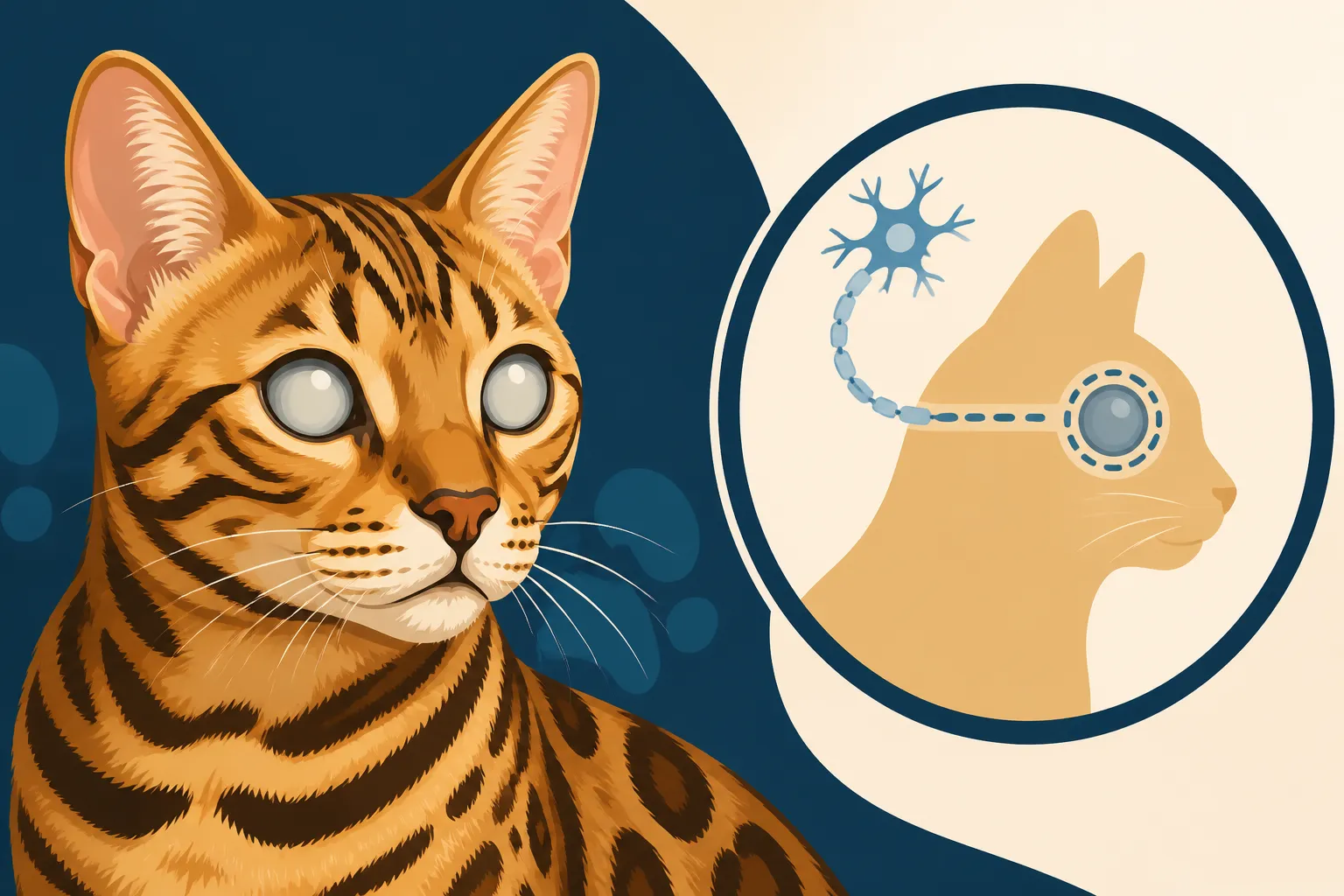
At its core, PRA-b is a genetic disorder, specifically linked to a mutation in the CEP290 gene that is unique to the Bengal cat breed. This particular mutation causes the photoreceptor cells in the retina to gradually die off. Think of the retina as the "film" in a camera; if the film starts to degrade, the images it captures become blurry, dark, and eventually disappear altogether. The process typically starts with the rod cells, which are responsible for vision in low light. This is why the first noticeable symptom is almost always night blindness. Your agile Bengal, usually so confident leaping in dim corridors, might start bumping into furniture after dusk or hesitate to navigate familiar spaces without ample light. Over time, the cone cells, which handle bright light and color perception, also begin to fail. This leads to a more general loss of vision, even in well-lit environments. You can learn more about exactly What PRA-b Does to a Bengal Cat's Sight.
Recognizing the Early, Subtle Signs of Impairment
Spotting the initial signs of PRA-b can be tricky because cats are masters at compensating for physical changes. They have incredibly keen senses of hearing and smell, which they will rely on more heavily as their vision deteriorates. However, if you know what to look for, you might catch the subtle clues. One of the earliest indicators, as mentioned, is an increasing clumsiness in low-light conditions. Your Bengal, usually so graceful, might become hesitant to jump down from a cat tree in the evening or misjudge distances when playing with toys in dim rooms. You might also notice their pupils appearing more dilated than usual, even in normal light, as their eyes try to gather every last bit of available light. Sometimes, owners report their cats becoming more clingy or vocal, especially when they feel disoriented or unsure of their surroundings. This isn't just an aging process; it's a specific symptom that their world is literally dimming. For a kitten, the signs can be even harder to discern, but understanding How Early a Bengal Cat Kitten's Retina Starts to Degenerate can help owners and breeders be vigilant.
The Journey to Complete Blindness in Bengal Cats
The progression of PRA-b to full blindness isn't a single event but a gradual journey. While the general pattern of vision loss is similar among affected Bengal cats, the speed and exact age of complete blindness can vary significantly from one individual to another. It's a spectrum, not a fixed point, which can be frustrating for owners seeking clear answers.
The Typical Progression Timeline for PRA-b
While individual variation exists, a Bengal cat affected by PRA-b typically experiences night blindness first, often becoming noticeable to owners between the ages of one and two years old. This initial phase might last for several months, or even a year or two, during which their daytime vision remains relatively good. As the disease progresses, usually by the age of two to three years, the degeneration starts to impact their daytime vision as well. This is when you'll begin to see them bumping into objects in familiar, well-lit rooms, or struggling to follow moving toys.
By the time a Bengal cat is between three and five years old, many will have reached a stage where they are functionally blind. This means they can no longer distinguish shapes or navigate their environment effectively using sight, even if they might still perceive some light or shadow. Full, absolute blindness, where there is no light perception whatsoever, often occurs by five to seven years of age, though some cats may become completely blind earlier, as early as two years old. This is why the diagnosis of PRA-b Blinds a Bengal Cat by Two and There Is a DNA Test can be so devastating, yet also empowering for owners to prepare.
Here’s a general overview of the progression:
| Age Range (Approximate) | Vision Stage | Behavioral Observations |
|---|---|---|
| 1-2 Years | Night Blindness | Hesitation in dim light, bumping into furniture after dark, pupils dilated. |
| 2-3 Years | Progressive Daytime Impairment | Clumsiness in familiar, well-lit spaces, difficulty tracking fast objects. |
| 3-5 Years | Functional Blindness | Navigates primarily by memory, hearing, and smell; bumps into new objects. |
| 5-7+ Years | Full Blindness | No light perception; relies entirely on other senses for navigation. |
Factors Influencing the Speed of Blindness
It's important to remember that the timeline above is a general guide. Not every Bengal cat with PRA-b will follow this schedule precisely. Several factors can influence how quickly the vision loss progresses. The specific genetic variant or severity of the mutation can play a role. Some cats might have a more aggressive form of the disease, leading to faster degeneration, while others might experience a slower, more drawn-out process. Environmental factors, though less significant than genetics, might also have a minor impact, such as overall health and nutrition, or exposure to excessive bright light without adequate retinal protection.
The key takeaway is that every Bengal cat is an individual. While one might become fully blind by two or three years old, another might retain some very limited light perception well into its senior years. This variability makes it crucial for owners to monitor their cat's vision closely and work with their veterinarian to assess the progression and provide appropriate support. Understanding the specific Which Gene Causes PRA-b in a Bengal Cat can sometimes offer insights, though the outcome still varies.
Nurturing a Fully Blind Bengal Cat for a Fulfilling Life
Discovering your beloved Bengal is losing its sight, or has already gone completely blind, can be devastating. You might worry about their quality of life, their safety, and how they’ll cope without their primary sense. But here's the good news: cats are incredibly adaptable creatures. With your support and a few mindful adjustments, a blind Bengal cat can absolutely lead a happy, enriched, and adventurous life, even if those adventures are now experienced differently. Many owners find their blind Bengals remain playful and affectionate.
Adapting Your Home to Support Your Cat's New Reality
The transition to a visually impaired life is made much smoother with thoughtful adjustments to their living environment. The golden rule here is consistency. Once your cat is blind, moving furniture around becomes incredibly disorienting and potentially dangerous. Try to keep pathways clear and familiar.
Start by creating a "safe zone" for your cat. This might be a specific room or a corner of your living space where their food bowls, water fountain, litter box, and favorite bed are always located. Cats rely heavily on scent, so having these essential items consistently in the same spots, perhaps with a distinct mat or rug underneath each, can help them locate things more easily. You might even use different textures of rugs to create "scent paths" or tactile cues.
Vertical space is still important for Bengals, even blind ones, as they love to climb. However, ensure any climbing structures, like cat trees, are stable and have clear, consistent routes up and down. You might consider adding soft landings around them, just in case of a misstep. For instance, putting a large, soft pet bed or a thick rug at the base of their favorite climbing spot can offer a sense of security. Additionally, block off any potential hazards, like open stairwells or fireplaces, with pet gates. Thinking about How to Rearrange a Home for a Blind Bengal Cat can be a proactive step.
When it comes to toys, focus on those that engage their other senses. Crinkly balls, toys filled with catnip, or puzzle feeders that dispense treats when manipulated are excellent choices. Interactive play with wand toys that make noise will still be a highlight of their day. You'll be amazed at how well a blind Bengal can "hunt" and play once they learn to rely on their hearing. Many pet parents find that even with the added considerations, a Bengal cat with PRA-b still enjoys a wonderful, full existence, proving that Whether a Bengal Cat With PRA-b Lives a Normal Life is often a resounding yes.
Maintaining Quality of Life and Well-being
Beyond physical adjustments, emotional support is paramount. Your blind Bengal might need more reassurance, especially in new or unfamiliar situations. Talk to them often, using your voice to guide them and let them know where you are. Maintain a consistent daily routine for feeding, playtime, and cuddle sessions, as predictability provides comfort and reduces anxiety.
Grooming might become a more hands-on affair as they can't see to preen themselves quite as effectively. Gentle brushing can also be a wonderful bonding experience. Don't forget their mental enrichment; puzzle toys, scent games (like hiding treats for them to find), and even leash training in a safe, familiar environment can keep their minds sharp and engaged.
Regular vet check-ups are still crucial, even if their PRA-b is irreversible. Your veterinarian can help monitor for any other health issues and ensure your cat is comfortable. When considering the ongoing costs associated with veterinary care for a blind cat, including potential regular check-ups or managing any secondary issues that might arise, exploring pet insurance options can be a smart move. Providers like Healthy Paws offer coverage that can help offset unexpected expenses, giving you peace of mind that you can provide the best care without financial strain. It’s comforting to know that despite the vision loss, How a Blind Bengal Cat Copes is often with remarkable grace and resilience, especially with a loving human companion.
Genetic Responsibility and Proactive Veterinary Care
While the journey of living with a blind Bengal can be fulfilling, prevention is always better than cure. For PRA-b, prevention lies squarely in the hands of responsible breeders and informed prospective owners. Genetic testing has revolutionized our ability to identify carriers and affected cats, drastically reducing the incidence of this heartbreaking condition.
The Importance of Genetic Testing and Ethical Breeding
The advent of DNA testing for PRA-b has been a game-changer for the Bengal breed. A simple cheek swab can determine if a cat is clear, a carrier, or affected by the PRA-b gene mutation. This information is vital for ethical breeding practices. Reputable breeders will rigorously test all their breeding cats and make sure that at least one parent of any pairing is clear of the PRA-b gene. This ensures that no kitten produced will be genetically affected by the disease. An affected kitten is born when both parents are carriers of the gene. You can understand more about How the Bengal Cat PRA-b DNA Test Works and how accessible it has become.
Prospective Bengal owners should always ask to see the genetic test results for both parents of any kitten they are considering. A responsible breeder will be transparent and proud to share these documents, often providing results from reputable labs. If a breeder is hesitant or claims testing isn't necessary, it's a significant red flag. By choosing a kitten from genetically tested parents, you drastically reduce the risk of bringing home a Bengal cat destined for blindness from PRA-b. This diligence helps ensure that the Bengal cat breed continues to thrive with fewer genetic health issues. Knowing What Percentage of Bengal Cats Carry PRA-b also highlights the importance of universal testing.
Partnering with Your Vet for Long-term Support
Even with genetic testing, ongoing veterinary care is essential for any Bengal cat, especially one affected by PRA-b. While there's currently no cure or treatment to reverse the effects of PRA-b, regular veterinary check-ups allow your vet to monitor your cat's overall health and catch any secondary issues early. Your vet can confirm a diagnosis through an eye exam that might show retinal changes, even before clinical signs are obvious. An ophthalmologist, a veterinary eye specialist, can also perform more detailed examinations.
If your Bengal is diagnosed with PRA-b, your vet can offer advice on managing the condition, including tips for home adaptation and enrichment to maintain their quality of life. They can also discuss potential pain management if any discomfort arises from other age-related conditions, or simply ensure your cat is comfortable and happy. Having a strong relationship with your vet is invaluable for navigating the unique challenges of a visually impaired pet. When planning for the potential long-term care needs of a cat with a progressive condition like PRA-b, it’s always wise to consider pet health insurance. Many owners find that policies, such as those offered by Healthy Paws, provide a financial safety net, allowing them to make healthcare decisions based on their cat's needs rather than cost. These policies can cover a wide range of veterinary services, from routine check-ups to specialized treatments, ensuring your Bengal receives the best possible care throughout its life.
Disclaimer
This article is for general informational purposes only and does not constitute professional advice. Laws, prices and regulations vary by location and change over time. Consult a qualified professional for guidance on your specific situation.