What Percentage of Bengal Cats Carry PRA-b
It's a heartbreaking reality for many Bengal cat owners to discover their beloved feline companion might be at risk for a serious genetic condition, or worse, that a kitten they've just brought home could develop debilitating health issues later on. One of the most talked-about concerns in the Bengal community is PRA-b, or Progressive Retinal Atrophy. This guide aims to pull back the curtain on how common PRA-b carriers truly are in Bengal cats, what that means for both breeders and pet owners, and how we can all work together to minimize its impact.
Unpacking Progressive Retinal Atrophy (PRA-b) in Bengal Cats
Progressive Retinal Atrophy (PRA-b) isn't just a scary-sounding term; it's a real and significant health challenge that can deeply affect a Bengal cat's quality of life. For anyone considering or already owning one of these magnificent creatures, understanding PRA-b is absolutely essential. It’s not just about preventing blindness, but about ensuring a full, happy life for our adventurous companions.
What PRA-b Actually Does to Their Sight
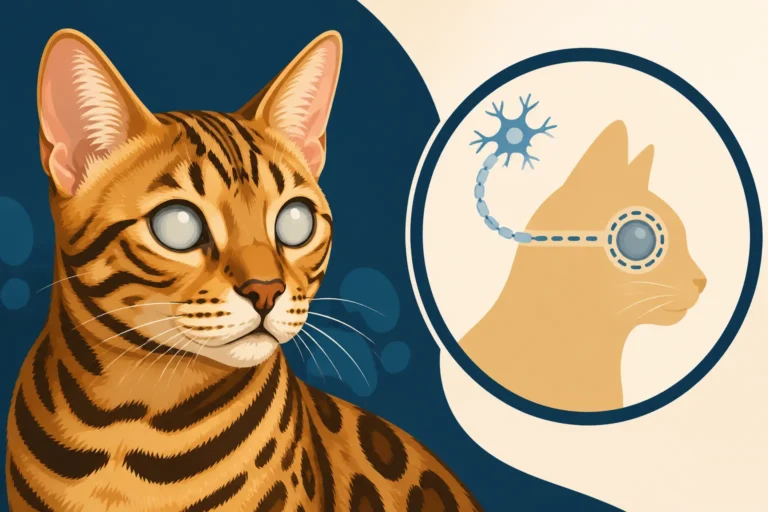
Imagine gradually losing your ability to see, starting with your night vision, then slowly, inexorably, your daytime sight fades until you're completely blind. That's the devastating journey for a Bengal cat afflicted with PRA-b. This condition targets the photoreceptor cells in the retina, the light-sensitive tissue at the back of the eye. Initially, the rods, responsible for low-light vision, begin to degenerate. This means your energetic Bengal, usually so agile in the dimmest light, might start bumping into things after dusk or becoming more hesitant in poorly lit rooms. It’s a subtle change at first, easily dismissed as a quirk or a momentary lapse, but it's often the first tell-tale sign.
As the disease progresses, the cones, which handle bright light and color vision, also start to degrade. This leads to a more pronounced loss of sight, even during the day. The cat's pupils might become permanently dilated as their eyes try to gather every speck of available light, giving them a wide-eyed, almost surprised look. The timeline for this degeneration can vary, but typically, affected Bengal cats will show signs of night blindness in their early years and often become completely blind by the age of two or three. It's a rapid decline that leaves both the cat and its human family reeling. The guide on PRA-b Blinds a Bengal Cat by Two and There Is a DNA Test goes into more detail about this process.
The Specific Genetic Mechanism at Play
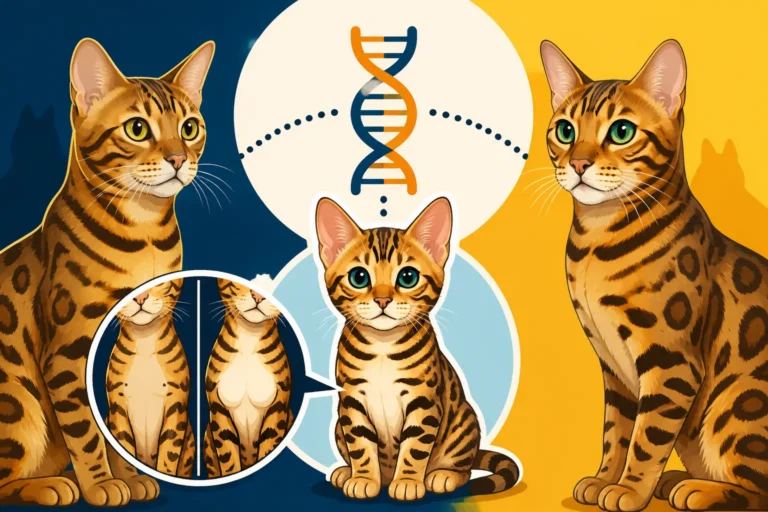
So, why do some Bengal cats develop PRA-b while others don't, even if their parents are related? The answer lies in genetics. PRA-b is an autosomal recessive inherited disorder. What this means in plain language is that a cat needs to inherit two copies of the faulty gene – one from each parent – to actually develop the disease and go blind. If a cat inherits only one copy of the faulty gene and one normal copy, they become what we call a "carrier."
A carrier Bengal cat is perfectly healthy. They will never develop PRA-b themselves, nor will their vision be affected. This is why the term "carrier" can be so confusing and sometimes overlooked; these cats seem completely normal. However, the crucial point is that they carry the potential to pass that faulty gene onto their offspring. If two carrier Bengal cats are bred together, there's a 25% chance with each kitten that it will inherit two copies of the faulty gene and thus be affected by PRA-b. There's also a 50% chance it will be a carrier like its parents, and a 25% chance it will inherit two normal genes and be completely clear. Understanding How Two Carriers Produce a Blind Bengal Cat is vital for breeders. The specific gene responsible for PRA-b in Bengal cats, as detailed in Which Gene Causes PRA-b in a Bengal Cat, is a unique mutation to the breed, making breed-specific testing essential.
How Widespread are PRA-b Carriers Among Bengal Cats?
This is the million-dollar question for many prospective Bengal owners and diligent breeders. Knowing the actual prevalence of carriers helps us understand the risk and the importance of screening. It's a number that has been significantly influenced by the advent of reliable genetic testing.
Current Statistics and Early Estimates
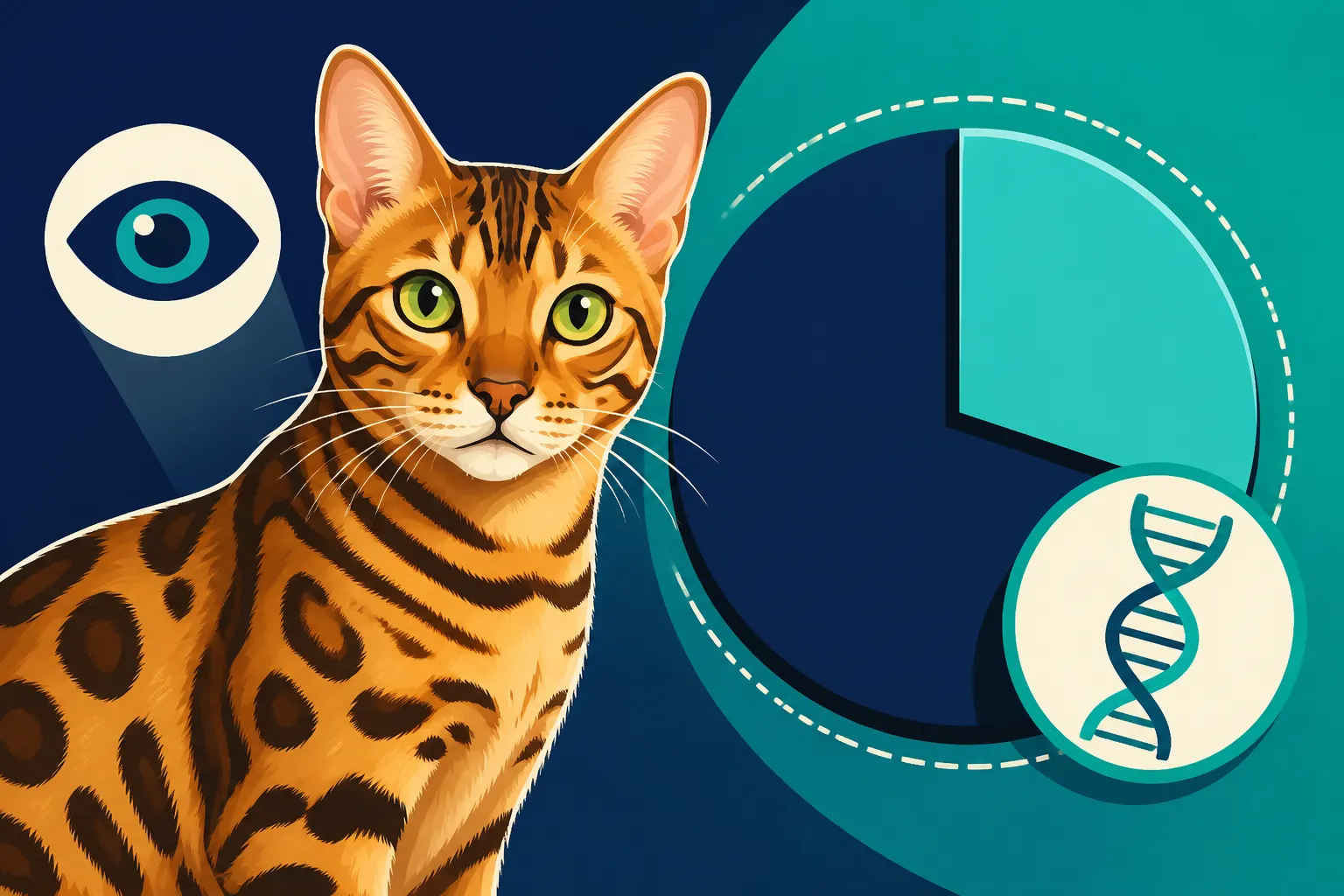
Before the widespread availability of DNA testing for PRA-b, the prevalence of carriers in the Bengal cat population was a significant concern. Early estimates, based on observed cases of blindness and subsequent genetic studies, suggested that as many as 20-25% of Bengal cats could be carriers of the PRA-b gene. This means that a substantial portion of the breed's gene pool harbored this recessive trait, quietly passing it down through generations without any outward signs.
Think about that for a moment: if one in four or five Bengals was a carrier, and many breeders weren't testing, the chances of two carriers being inadvertently bred together were quite high. This led to a distressing number of kittens being born blind, causing immense heartache for new owners and ethical dilemmas for breeders. These figures were a wake-up call for the Bengal community, highlighting the urgent need for a systematic approach to genetic health. While some lines and specific catteries might have had higher or lower rates, these general estimates underscored the pervasive nature of the gene within the overall breed.
Thankfully, with widespread genetic testing and responsible breeding practices, the percentage of unidentified carriers in reputable breeding programs has dramatically decreased. Breeders who consistently test their cats can now confidently produce kittens that are "clear by parentage," meaning neither parent is a carrier, or at least one parent is clear, ensuring no affected kittens are born. However, the legacy of those early carrier rates means that vigilance is still paramount, and the gene is still present in the broader population. The journey to fully understand What PRA-b Does to a Bengal Cat's Sight is ongoing.
The Role of DNA Testing in Determining Carrier Rates
The game-changer for managing PRA-b in Bengal cats was the development of a specific DNA test. This simple, non-invasive test allows breeders and owners to definitively determine a cat's genetic status: is it clear, a carrier, or affected? This is absolutely foundational for reducing the incidence of the disease.
The process for How the Bengal Cat PRA-b DNA Test Works is quite straightforward. Typically, a veterinarian or the breeder takes a buccal swab – a simple brush of the inside of the cat's cheek – to collect DNA. This sample is then sent to a specialized genetic testing laboratory. Labs like Optigen or UC Davis Veterinary Genetics Laboratory (which is Which Lab Runs the Bengal Cat PRA-b Test) are often used, and they analyze the DNA for the specific mutation associated with Bengal cat PRA-b. The results clearly state whether the cat is:
- N/N (Normal/Clear): The cat does not carry any copies of the mutated gene and cannot pass PRA-b on.
- N/PRA-b (Carrier): The cat carries one copy of the mutated gene but will not develop the disease. It can, however, pass the gene to its offspring.
- PRA-b/PRA-b (Affected): The cat has two copies of the mutated gene and will develop PRA-b, leading to blindness.
By routinely testing all breeding cats, breeders can make informed decisions. They can avoid breeding two carriers together, thereby guaranteeing that no affected kittens will be born. This proactive approach has been instrumental in systematically lowering the carrier rate within responsible catteries. It's a testament to the power of science and the dedication of ethical breeders that the original high percentage of carriers is no longer the norm in well-managed lines. This allows for a much healthier future for the breed, making pet insurance providers like Healthy Paws happy too, as it reduces the likelihood of claims for this specific condition.
Navigating Carrier Status: Impact on Cats and Breeding
Discovering a Bengal cat is a PRA-b carrier can bring mixed emotions. On one hand, there's relief that the cat itself won't go blind. On the other, if it's a breeding animal, there are important decisions to be made. This status has significant implications for both the individual cat and the broader breeding program.
When a Carrier Cat Stays Healthy
This is perhaps the most important distinction to grasp: a Bengal cat that is a PRA-b carrier (N/PRA-b) will never develop the disease itself. Its vision will remain completely normal throughout its life. It has one healthy copy of the gene, and that's enough to ensure its retina functions perfectly. This means you don't need to worry about any special care or concerns for a carrier pet cat regarding their eyesight. They will be just as agile, playful, and visually keen as any other Bengal.
The only real "impact" of carrier status on a pet Bengal is if you were to consider breeding them, which for most pet owners, isn't the case. If you have a pet Bengal cat that happens to be a carrier, you can rest easy knowing their health and quality of life won't be compromised by PRA-b. They'll continue to explore their surroundings, chase toys, and scale cat trees with their usual boundless energy, as detailed in Whether a PRA-b Carrier Bengal Cat Loses Sight. It’s truly a relief for owners to understand that their beloved companion isn't destined for blindness just because they carry the gene.
Ethical Breeding Practices with Carriers
For breeders, however, carrier status requires careful consideration and responsible decision-making. The goal of any ethical breeder is to improve the health of the breed and ensure that no kittens suffer from preventable genetic diseases. When a breeding cat tests as a PRA-b carrier, it doesn't automatically mean they should be removed from a breeding program. Sometimes, a carrier cat possesses other exceptional qualities – temperament, type, or lineage – that make them valuable to the breed's overall genetic diversity.
The key is strategic pairing. An ethical breeder will only ever breed a carrier cat with a cat that has tested as completely clear (N/N) for PRA-b. This pairing guarantees that no affected kittens will be born. Every kitten from such a pairing will either be clear (N/N) or a carrier (N/PRA-b), but none will be affected (PRA-b/PRA-b). This allows valuable carrier cats to contribute their positive traits to the gene pool while safely managing the PRA-b risk.
A responsible breeder will meticulously track these genetic results and will always be transparent about the genetic status of their breeding animals and the kittens they produce. They'll have a clear understanding of Whether Two PRA-b Carrier Bengal Cats Should Be Bred and how to do so responsibly. They might choose to keep offspring from carrier X clear pairings and test them to identify new carriers, then continue the cycle of breeding carriers only to clear cats. This careful management slowly dilutes the presence of the faulty gene in the population over generations without sacrificing important genetic diversity.
Owner Responsibility and Proactive Testing
Even if you're not a breeder, your awareness and actions as a Bengal cat owner play a crucial role in the broader health of the breed. When you're looking for a Bengal kitten, it's your right – and frankly, your responsibility – to ask about the health testing performed on the parents. A reputable breeder will have DNA test results for PRA-b readily available for both the sire and dam. They should be able to show you documentation confirming that at least one parent is clear, ensuring your kitten won't be affected.
For pet owners, understanding Whether a Pet Bengal Cat Needs PRA-b Testing is often a question that comes up. If you've purchased your Bengal from an ethical breeder who provided clear genetic test results for the parents, then your pet cat generally doesn't need to be tested for PRA-b unless you plan to breed them (which is typically against pet contracts anyway). However, if you've adopted a Bengal with an unknown history, or if you're simply curious, a DNA test can provide peace of mind regarding their genetic status. It's a small investment for valuable information.
Furthermore, considering pet health insurance from companies like Healthy Paws can offer a safety net for unforeseen health issues, though it's important to understand policy specifics regarding pre-existing or congenital conditions. While PRA-b is preventable with proper breeding, other conditions can still arise. Ultimately, being an informed and proactive owner strengthens the overall health and well-being of the Bengal cat breed.
Strategies for a PRA-b-Free Bengal Future
The journey to ensure fewer Bengal cats are affected by PRA-b is a collaborative effort involving breeders, veterinarians, and owners. It's about proactive measures, informed choices, and a commitment to the breed's long-term health.
Asking the Right Questions to Your Breeder
When you're searching for your Bengal kitten, the conversations you have with potential breeders are just as important as the adorable kitten photos. Don't be shy about asking direct questions about genetic health screening. A good breeder will welcome your inquiries and will be eager to share their extensive health protocols. You should specifically ask:
- "Have the parents of this litter been DNA tested for PRA-b?"
- "Can I see copies of the genetic test results for both the dam and sire?"
- "What are the PRA-b statuses of the parents (Clear, Carrier, Affected)?"
A truly reputable breeder will not only confirm that testing has been done but will also be able to provide verifiable documentation. This might come directly from the testing lab or through pedigree databases that record genetic health statuses. They should confidently declare their breeding pair status to ensure that the kittens are either clear or, at most, carriers (if one parent was a carrier and the other clear). The post What a Bengal Cat Breeder Should Have Tested outlines the full spectrum of essential health screenings, with PRA-b being a cornerstone. It’s also crucial that you understand Whether a Breeder Must Show a Bengal Cat's PRA-b Result – the answer is yes, if they are transparent and ethical.
Supporting the Breed's Genetic Health Efforts
The Bengal cat community, including various breed clubs and registries like The International Cat Association (TICA), is continually working to promote responsible breeding practices and reduce the incidence of genetic diseases. This includes encouraging breeders to utilize available DNA tests and to make informed decisions about their breeding stock. By choosing to purchase a kitten from a breeder who actively participates in these health programs and prioritizes genetic screening, you are directly supporting these vital efforts.
This commitment to health helps to ensure that the beautiful traits we adore in Bengal cats are passed down without the burden of preventable genetic ailments. It’s a long-term investment in the breed's vitality and ensures that future generations of Bengal cats can enjoy a full lifespan, free from the shadow of early blindness. Even considering pet insurance plans like those from Healthy Paws can contribute to this culture of care, as their policies often incentivize preventative health measures and responsible ownership. Ultimately, every informed decision by a Bengal enthusiast contributes to a healthier, happier future for these incredible felines.
Summarizing PRA-b Carrier Status
| Status for PRA-b (Progressive Retinal Atrophy) | Genetic Make-up | Vision Outcome | Breeding Implications (Ethical) |
|---|---|---|---|
| Clear (N/N) | Two normal genes | Normal vision | Can be bred to Clear or Carrier cats without producing affected kittens. |
| Carrier (N/PRA-b) | One normal, one mutated gene | Normal vision | Can only be bred to Clear (N/N) cats. Will never produce affected kittens with a clear mate. |
| Affected (PRA-b/PRA-b) | Two mutated genes | Will go blind | Should never be bred. |
This table highlights the importance of genetic testing and careful breeding practices to prevent the birth of affected kittens and gradually reduce the prevalence of the PRA-b gene in the Bengal cat population. Early detection and responsible breeding are key to maintaining the health of the breed.
Disclaimer
The information provided in this article is for general informational and educational purposes only and is not a substitute for professional veterinary advice. Always consult with a qualified veterinarian or animal healthcare provider for any questions or concerns regarding your Bengal cat's health, diagnosis, or treatment.