Which Bengal Cat Generations Georgia Permits
It’s incredibly common to feel overwhelmed and uncertain when considering bringing a Bengal cat into your home, especially when you start digging into the nuances of state and local laws. Many aspiring owners are drawn to their wild beauty and spirited personalities but then hit a roadblock wondering if they’re even allowed to own one where they live, or which specific generation is permissible. This guide is here to untangle the complexities surrounding Bengal cat ownership in the state of Georgia, helping you understand which generations are typically permitted and what steps you need to take to ensure you're a responsible, law-abiding Bengal parent.
Understanding Bengal Cat Generations
Before we dive into Georgia’s specific rules, it’s absolutely essential to grasp what those "F-numbers" and acronyms like "SBT" actually mean. This isn't just bureaucratic jargon; it's the core of understanding Bengal cat legality and temperament. Without this foundational knowledge, you might accidentally fall in love with a kitten that's simply not legal for you to own, or one that has needs far beyond what you expected.
What the F-Number Actually Means
When you see a Bengal cat described as F1, F2, F3, F4, or beyond, that "F" stands for "filial generation," and the number indicates how many generations removed the cat is from its wild ancestor, the Asian Leopard Cat (ALC). The ALC is a small, wild feline native to Southeast Asia, and its striking coat pattern and lithe build are what make the Bengal so unique.
- F1 Bengals: These are the first filial generation, meaning one parent is a purebred Asian Leopard Cat, and the other is a domestic Bengal cat (or another domestic breed, historically). F1 Bengals are 50% wild in their genetic makeup. They tend to be larger, can be more aloof, and often retain many wild instincts. They might not be as eager to use a litter box consistently or interact with humans in a typical domestic cat way. Their needs are incredibly specialized, often requiring outdoor enclosures and a very experienced owner.
- F2 Bengals: These cats have an F1 parent and a domestic Bengal parent. They are approximately 25% ALC. While a step closer to domestication, F2s still exhibit strong wild traits. They are typically very active, vocal, and intelligent, often forming strong bonds with a single person but can be wary of strangers.
- F3 Bengals: An F3 Bengal has an F2 parent and a domestic Bengal parent, making them about 12.5% ALC. At this stage, they are generally more predictable in temperament than F1s or F2s, but they still carry a significant amount of the wild instinct and energy. They often demand a lot of attention and enrichment.
The lower the F-number, the closer the cat is to its wild ancestor, and generally, the more challenging they are to integrate into a typical household. This is precisely why many states and municipalities have restrictions on these early generations. For a deeper dive into the lineage, you can read How a Bengal Cat's Generation Is Counted.
The Critical SBT Distinction
The term "SBT" is absolutely crucial when discussing the legality and domesticity of Bengal cats. SBT stands for "Stud Book Traditional," and it marks the point at which a Bengal cat is considered fully domesticated and breed-true.
An SBT Bengal is typically an F4 or later generation Bengal cat whose lineage can be traced back at least three generations to only other Bengals (or approved outcrosses in the distant past, but primarily Bengal to Bengal). This means an SBT Bengal has an F3 or later parent and two fully Bengal parents of their own. They are considered fully domestic cats, eligible for showing in cat fancy associations like TICA (The International Cat Association).
Why is this distinction so important? Because an SBT Bengal, being four or more generations removed from their wild ancestor, typically behaves much like any other highly active, intelligent domestic cat. They are reliably litter-trained, socially adaptable, and generally suitable for family life with appropriate enrichment. Most states and cities that permit Bengal cats without special licenses or permits specifically allow SBT Bengals, drawing a clear line at this generation. Understanding What SBT Means in a Bengal Cat is key for any prospective owner.
Georgia's Specific Regulations for Bengal Cats
Now that we've laid the groundwork for understanding Bengal cat generations, let's talk about what this means if you live in the Peach State. Navigating animal welfare laws can feel like wading through treacle, but generally, Georgia has a clear stance on hybrids like the Bengal.
The Legal Landscape in Georgia
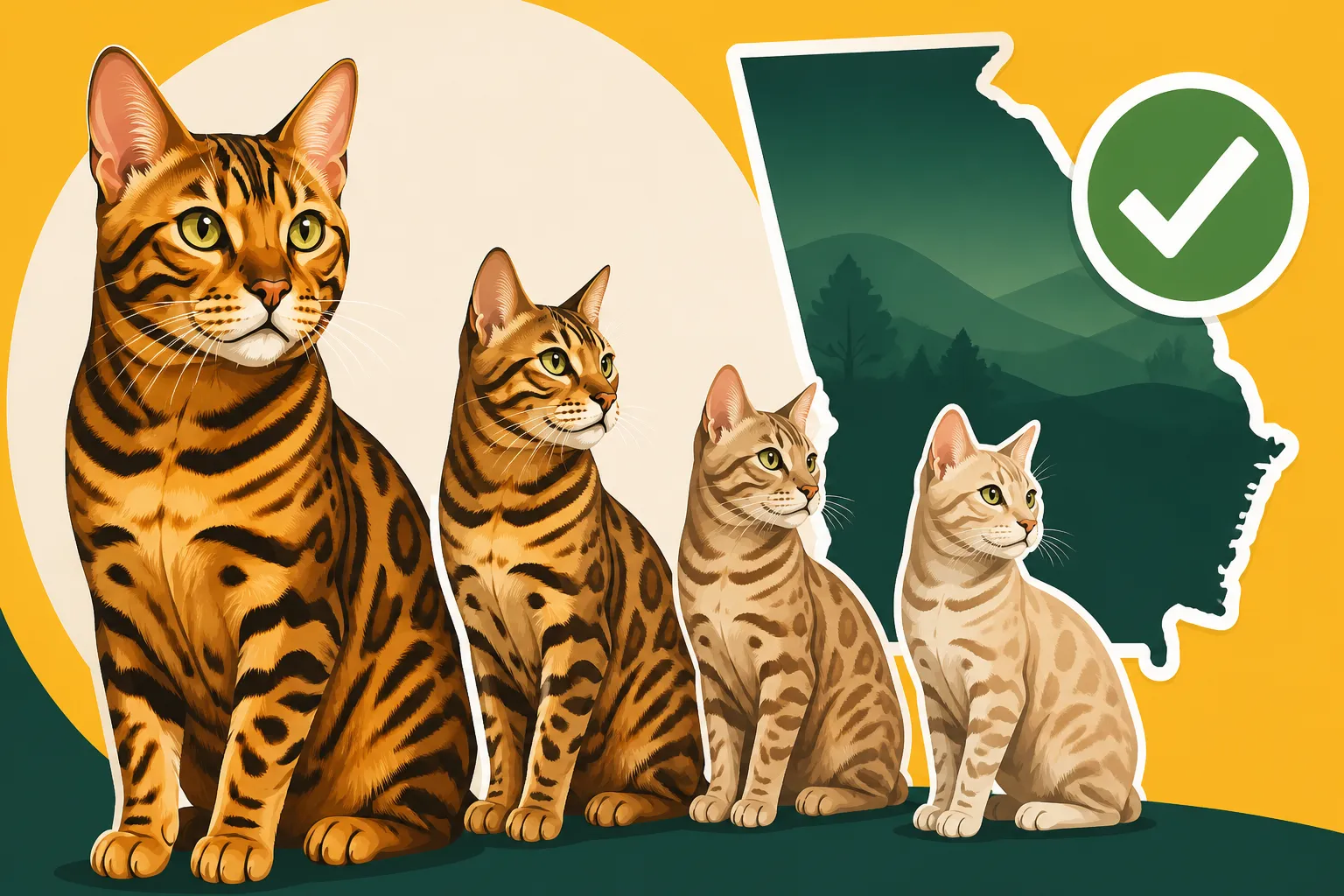
Good news for Bengal enthusiasts in Georgia: the state generally permits the ownership of later generation Bengal cats, specifically those categorized as SBT (F4 and beyond), without requiring special permits at the state level. This aligns with many other states that recognize SBT Bengals as domesticated animals, much like any other breed of house cat.
However, the legal landscape for early generation Bengals (F1, F2, and F3) is significantly different. In Georgia, these early generations are typically classified as "wild animals" or "hybrid animals" that either require a special permit for ownership or are outright prohibited for private individuals. The intention behind these restrictions is to ensure that animals with a significant percentage of wild blood, and therefore potentially unpredictable behaviors, are not kept by owners unprepared for their unique needs, or allowed to pose a risk to public safety or local ecosystems.
It's vital to remember that while Georgia generally allows SBT Bengals, this doesn't automatically mean there are no local variations. Just because the state gives the green light doesn't mean your specific county or city might not have its own ordinances, which we'll discuss next. For further clarification on how an F number impacts legal ownership, consider reading What an F Number on a Bengal Cat Means Legally.
How to Verify Your Bengal's Generation in Georgia
When acquiring a Bengal cat, especially to ensure legal compliance in Georgia, verifying its generation is paramount. You can't just take a breeder's word for it, nor should you assume based on appearance alone. Here's how to properly confirm your Bengal's generation:
- Pedigree Papers: A reputable breeder will provide official pedigree papers. These documents trace your cat's ancestry, listing parents, grandparents, and so forth, often indicating their F-generation. Look for papers from recognized cat registries like The International Cat Association (TICA). TICA is the primary registry for Bengal cats and explicitly records their generations. A cat registered as SBT will have that designation on its pedigree.
- Breeder Documentation: Beyond the pedigree, a responsible breeder will also have health testing results for the parents (for conditions like HCM and PRA-b) and might even show you their own TICA breeder registration. They should be transparent about their breeding program and happy to answer all your questions. Never purchase a Bengal without seeing comprehensive documentation.
- DNA Testing (Supplemental): While official registration papers are the primary legal proof, DNA tests can offer supplemental information about a cat's genetic makeup, including its wild ancestry markers. While less common for routine proof of generation for an SBT, for earlier generations or in cases of uncertainty, some labs can analyze markers that confirm the presence of ALC genes. However, for legal purposes in Georgia, official registration through TICA or another recognized registry is usually the gold standard. To understand more about proving lineage, check out How to Prove Your Bengal Cat's Generation.
Always insist on seeing these documents before committing to a purchase. A breeder who is hesitant or unable to provide proper paperwork for their Bengals, particularly concerning their generation, is a red flag and should prompt you to walk away.
Navigating Ownership: Permits and Practicalities in Georgia
So, you've confirmed that an SBT Bengal is likely permissible where you are in Georgia, and you're ready to find your furry friend. Fantastic! But the journey doesn't end there. Responsible ownership involves understanding potential local hurdles and making ethical choices about where your cat comes from.
Potential Local Ordinances to Consider
This is where it gets a little trickier. Even if the state of Georgia permits SBT Bengal cats, individual counties or cities can impose their own, more restrictive ordinances. What's allowed in Atlanta might be different from what's allowed in Savannah, or even in a smaller county like Dawson. These local laws might include:
- Specific Breed Bans or Restrictions: Some municipalities might have general "exotic pet" ordinances that, depending on their wording, could inadvertently affect even SBT Bengals. While rare for SBTs, it's not impossible.
- Permit Requirements: A city might require a permit for any cat over a certain weight, or a specific type of animal, which could theoretically include a large Bengal.
- Containment Requirements: Strict laws on outdoor access, requiring secure catios or leash-only excursions, are common for highly active breeds like Bengals. Even if not specifically targeting Bengals, these are important to consider.
- Number of Animals: Some cities limit the number of pets you can own, which could affect your plans if you already have other animals.
Your Action Step: Before you even start looking at kittens, contact your local animal control department or county clerk's office. Specifically ask about regulations concerning "hybrid cats" or "Bengal cats" and ensure you understand what applies to your specific address. Don't be shy; it's better to ask upfront than face legal issues down the line. Reading How to Read Your City Code for a Bengal Cat can provide helpful guidance on this process.
Finding a Reputable Breeder or Rescue in Georgia
Once you understand the legalities, the next step is finding your Bengal. This is arguably the most critical decision, impacting your cat's health, temperament, and your peace of mind.
-
Reputable Breeders: Look for breeders who are TICA registered and actively involved in showing their cats. This indicates a commitment to the breed standard and ethical practices. They should:
- Health Test: Provide proof of health screenings for their breeding cats, including echocardiograms for HCM and DNA tests for PRA-b and PK Deficiency. This is non-negotiable. Why a Bengal Cat Breeder Must Show an Echo, Not a Gene Test is a critical read here.
- Show Their Home/Cattery: Be transparent about their facilities, ideally allowing you to visit (or offering virtual tours if distance is an issue) to see the conditions the kittens are raised in.
- Socialize Kittens: Ensure their kittens are well-socialized, used to household noises, and handled regularly.
- Provide Contracts and Guarantees: Offer a written contract that outlines health guarantees, spay/neuter agreements for pet kittens, and return policies.
- Educate You: Be a resource for you, answering all your questions about the breed, care, and legalities. They should be asking you questions too, to ensure their kittens are going to good homes.
- Pricing: Expect a Bengal cat from a reputable breeder to come with a significant price tag. This reflects the investment in health testing, quality care, and genetic lineage. For an idea of the costs involved, you can reference What a Bengal Cat Costs to Buy in 2026 and What the DNA Panel a Bengal Cat Breeder Runs Costs, keeping in mind that actual figures vary and should be checked with breeders directly.
-
Bengal Cat Rescues: Don't overlook the incredible option of adopting from a rescue organization! Many dedicated Bengal rescues exist across the country, sometimes even within Georgia or neighboring states. These cats often come from owners who underestimated their needs, or from situations where they needed a new home. Rescues typically:
- Vet Care: Ensure all cats are fully vetted, spayed/neutered, vaccinated, and microchipped before adoption.
- Temperament Assessment: Have a thorough understanding of each cat's personality and needs, helping to match them with the right family.
- Provide History: Offer as much background information as possible about the cat's previous life and generation.
- Adoption Fees: Charge an adoption fee that helps cover their costs, which is often significantly less than purchasing from a breeder. This can be a wonderful, ethical way to bring a Bengal into your home.
Whether you choose a breeder or a rescue, doing your due diligence is essential.
Beyond Legality: Responsible Bengal Cat Ownership in Georgia
Securing an F4+ SBT Bengal and ensuring it's legal in your Georgian locale is just the first step. Owning one of these magnificent cats is a commitment to providing an environment that caters to their unique needs. Bengals aren't just pretty faces; they are intelligent, active, and can be quite demanding.
Essential Care Considerations
Bengals are often described as "dog-like" in their energy and need for interaction. They thrive on engagement and can become destructive or vocal if bored.
- Enrichment is Key: Your Bengal will require significant mental and physical stimulation every single day. This means multiple play sessions with interactive toys, puzzle feeders, and plenty of vertical space for climbing. You'll find yourself browsing sites like Chewy for endless supplies of durable toys that can withstand a Bengal's enthusiastic play. Consider varied options to prevent boredom. How Much Enrichment a Bengal Cat Actually Needs gives excellent insights into their requirements.
- Dietary Needs: Bengals, like all cats, are obligate carnivores. Many owners find that a high-quality, high-protein diet (often wet food, raw, or a combination) best suits their energetic metabolism and can sometimes help with their famously sensitive digestive systems. Some owners even explore fresh food options, which can sometimes agree better with a sensitive Bengal stomach. Chronic diarrhea is a common complaint among Bengal owners, as detailed in Chronic Diarrhea Is the Bengal Cat Complaint Nobody Warns About, making diet a crucial component of their care.
- Veterinary Care: Regular vet check-ups are important. Bengals, while generally healthy, can be predisposed to certain genetic conditions such as HCM (Hypertrophic Cardiomyopathy) and PRA-b (Progressive Retinal Atrophy). For peace of mind, especially with a breed that can have certain predispositions, exploring pet insurance options like those offered by Healthy Paws can be a smart move, helping to offset the cost of unexpected medical bills or ongoing care. Don't forget their average lifespan is often between The Twelve to Sixteen Years a Bengal Cat Gets, so you're in for a long-term commitment.
Preparing Your Home for a Bengal
Your home isn't just a place for a Bengal; it's their playground and kingdom. Preparing it thoughtfully will prevent many headaches down the road.
- Vertical Space: Bengals love to climb! Investing in tall, sturdy cat trees (the cheap ones won't last) or installing cat shelves and perches will provide them with essential vertical territory. This satisfies their natural instinct to observe from above and burn off energy.
- Water Fascination: Be prepared for a cat that loves water. Bengals are known for playing in sinks, drinking from faucets, and even joining you in the shower. Secure valuables in bathrooms and consider a pet water fountain that can withstand their curiosity.
- Cat-Proofing: Their intelligence means they can open cabinets, doors, and drawers. Child-proof latches might become Bengal-proof latches in your home! Secure anything dangerous or valuable.
- Outdoor Access (Safe Options): While Bengal cats love the outdoors, free-roaming is highly discouraged due to risks from traffic, predators, and potential harm to local wildlife. A secure outdoor enclosure, often called a "catio," is an excellent solution. It allows them to enjoy fresh air and sunshine safely. You can learn more about this in A Bengal Cat Needs a Catio and What a Catio for a Bengal Cat Costs. Leash training is another option, turning walks into adventures. A Bengal Cat Walks on a Leash provides great starting points.
Bringing a Bengal cat into your life in Georgia can be an incredibly rewarding experience. By understanding the legal requirements, responsibly sourcing your cat, and committing to their unique care needs, you'll ensure a happy, healthy, and legally compliant life together.
Disclaimer
This article is for general informational purposes only and does not constitute professional advice. Laws, prices and regulations vary by location and change over time. Consult a qualified professional for guidance on your specific situation.