How to Read Your City Code for a Bengal Cat
You’ve just welcomed a stunning Bengal cat into your home, or perhaps you're deep in research, dreaming of those wild spots and playful antics. But then a little voice in the back of your head pipes up: "Is my Bengal even allowed here?" It's a question far too many new and prospective Bengal owners grapple with, often discovering too late that local regulations can be a minefield. The frustration is real – you've done your homework on the breed, picked a reputable breeder, and prepared your home, only to realize there's another layer of bureaucracy. This guide is here to cut through the confusion, helping you understand how to navigate and interpret your city's specific animal ordinances regarding Bengal cats, ensuring both you and your feline friend stay safely on the right side of the law.
Why Local Ordinances Matter More Than You Think for Bengal Cats
It's easy to assume that if a Bengal cat is legal in your state, it's legal everywhere. Oh, if only it were that simple! The reality is a patchwork quilt of regulations that can vary dramatically from one county to another, or even from one city to the next within the same state. This isn't just a minor inconvenience; getting it wrong can lead to heartbreak and significant financial strain.
The Layered Legal Landscape: State vs. City Rules
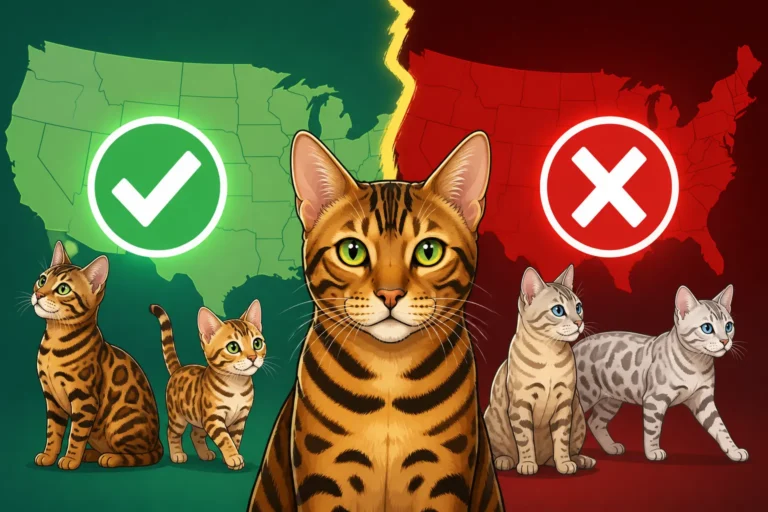
Think of it like this: your state might set a broad guideline, perhaps saying that all Bengal cats from the F4 generation and beyond (SBT) are considered domestic and legal. That sounds great, right? But then your city council, in its infinite wisdom, might decide that any cat with wild ancestry, regardless of generation, falls under a stricter "exotic" or "hybrid" animal ordinance. Or, it might ban all hybrid cats outright. This is precisely where the trouble starts, and it's why understanding Where a Bengal Cat Is Illegal in the United States becomes such a crucial first step.
The distinction between state and local laws can feel like a moving target, especially for a breed like the Bengal, which carries the unique legacy of its Asian Leopard Cat ancestor. A state law might allow for Bengal cats without any permit, while a specific city in that state might require a special permit, an annual fee, or even outright prohibit certain generations. For example, some states allow all generations, but individual cities within those states might have blanket bans on anything considered "hybrid." It's not uncommon for these local ordinances to be far more restrictive than state-level laws, often due to concerns about perceived wild behavior, safety, or just a general misunderstanding of the breed. This layered approach is a huge source of anxiety for Bengal owners who often discover these nuances only after they've fallen in love with their new kitten.
The Hidden Costs of Non-Compliance
Nobody wants to imagine their beloved pet being taken away, but that's a very real and devastating consequence of not understanding and adhering to local animal ordinances. If your Bengal cat is deemed illegal in your jurisdiction, the penalties can range from hefty fines to forced surrender or even confiscation. Imagine the emotional toll of having your companion removed from your home, not because you've neglected them, but because of a legal technicality you weren't aware of. What Happens to a Confiscated Bengal Cat is a scenario no owner should ever have to face.
Beyond the immediate emotional impact, there are significant financial repercussions. Fines can quickly accumulate, and if your cat is confiscated, you might incur costs for impoundment, boarding, and legal fees to try and fight the order or find a new home for your cat. In some cases, authorities might even mandate specific modifications to your property, like building secure outdoor enclosures, which can be incredibly expensive. Even if you've done your best to ensure your cat is healthy and well-fed with quality products you order from somewhere like Chewy, these unexpected legal battles can drain your resources and cause immense stress for both you and your cat. It truly underscores why a proactive approach to understanding your local code is not just good practice, but absolutely essential for responsible Bengal cat ownership.
Deciphering the Jargon: Key Terms to Look For in City Code
City codes and ordinances aren't exactly known for their riveting prose or easy-to-understand language. They're often filled with legalistic jargon that can make even the most straightforward regulations seem like a riddle wrapped in an enigma. When it comes to Bengal cats, this becomes even more complex due to their unique hybrid status. Knowing what terms to look for and what they typically mean can save you a world of headache.
Understanding "Hybrid" and "Wild Cat" Definitions
The single most critical piece of information to uncover in your city's code is how it defines "hybrid" animals or "wild cats." This is where many Bengal owners get caught out. Some ordinances use a broad stroke, defining any animal with any wild genetic material within a certain number of generations as "wild" or "exotic." Others will specifically list breeds. For a Bengal cat, the "filial generation" or "F-number" is paramount. An F1 Bengal is a first-generation cross from an Asian Leopard Cat and a domestic cat. An F4 Bengal is four generations removed from the wild ancestor. Many cities draw the line at F4 or SBT (Stud Book Traditional) generations, considering them domestic. However, some localities are far stricter, often lumping F1, F2, and F3 generations (and sometimes even F4) into the same category as truly wild animals.
Always look for phrases like "hybrid cat," "wild cat," "exotic feline," or "domestic animal" definitions. Pay close attention to any mention of "generations" or "filial generations" and where the cutoff lies. This is where What an F Number on a Bengal Cat Means Legally truly comes into play. If the code defines "hybrid" broadly without specific generation cutoffs, it might apply to any Bengal cat, regardless of how many generations removed it is from the Asian Leopard Cat. This ambiguity can be incredibly frustrating, and it's precisely why a thorough investigation is needed.
Permits, Licenses, and Registration Requirements
Even if your Bengal cat is legal in your area, your city might require specific permits, licenses, or registration for certain breeds or types of animals, including hybrid cats. This isn't just about an annual dog license; these can be special permits specifically for exotic or hybrid animals. Look for sections detailing "animal control," "animal licensing," "special permits for exotic animals," or "dangerous animal registration."
These requirements might involve annual fees, inspections of your property to ensure adequate containment, or even proof of specific insurance. Sometimes, the city might require you to provide documentation of your Bengal's generation, like a pedigree from a reputable cat registry. This is where understanding What Permit an Early Generation Bengal Cat Needs becomes absolutely vital, as early generations often have more stringent requirements. Missing these registration steps, even if your cat is otherwise legal, can still lead to fines or other penalties. Don't assume that because your cat is legal, there are no administrative hurdles.
Housing and Containment Specifics
Beyond basic legality and permits, city codes often include stipulations about how specific animals must be housed and contained. For Bengal cats, this can be particularly relevant given their active nature and love for exploring. You might find clauses about:
- Indoor-only requirements: Some cities might explicitly state that hybrid cats must be kept indoors at all times, or only allowed outside in secure, escape-proof enclosures.
- Outdoor enclosure specifications: If outdoor access is permitted, there might be detailed requirements for catios or runs, specifying minimum dimensions, material strength, roof coverage, and locking mechanisms.
- Escape prevention: General clauses about preventing animals from running at large could be enforced more strictly for Bengals due to their perceived "wild" characteristics.
- Nuisance clauses: Regulations against excessive noise (though Bengal meows are distinct, they can be vocal!) or property damage could also be applied.
These containment rules are often designed with genuinely exotic or dangerous animals in mind, but they can sometimes sweep in Bengal cats, especially the earlier generations. If you’re considering building a secure outdoor space, like a catio, to give your Bengal some fresh air, make sure to cross-reference any city code requirements with your plans. Proper containment ensures your cat’s safety and prevents any neighbor complaints that could trigger an animal control investigation.
Your Step-by-Step Guide to Navigating Your City's Animal Ordinances
Facing a wall of legal text can feel daunting, but breaking it down into manageable steps can make the process much less intimidating. You don't need a law degree to protect your Bengal; you just need a methodical approach.
Starting Your Search: Where to Look Online and Offline
The first hurdle is finding the actual city code. Most modern municipalities have their ordinances available online. Start with your city's official website. Look for sections labeled "City Clerk," "Ordinances," "Municipal Code," "Laws," or "Animal Control." Often, there will be a search bar where you can input keywords like "cat," "feline," "hybrid," "wild animal," or "exotic pet."
If your city doesn't have a user-friendly online portal, don't despair. You can always visit your city hall or county clerk's office in person. They typically have public access to all municipal codes and staff who can direct you to the relevant sections. Sometimes, a quick phone call to the animal control department directly can also yield helpful information, though always follow up any verbal advice with a look at the actual written code. Remember, it's about being thorough to avoid any surprises down the line. It's often helpful to also check How to Check Your State's Bengal Cat Law as a baseline before diving into the local specifics.
Reading the Code Like a Pro (Without Being a Lawyer)
Once you've got the code in front of you, whether on screen or in print, here's how to tackle it without feeling overwhelmed:
- Start Broad, Then Narrow Down: Begin by looking at general animal control sections. These will usually cover all pets. Then, search for specific terms like "hybrid," "wild," "exotic," or even "felid" (the scientific family for cats).
- Pay Attention to Definitions: Legal documents often include a "Definitions" section right at the beginning. This is critical. Does "wild animal" explicitly include or exclude domestic hybrids? Is "domestic cat" defined in a way that includes all Bengal generations, or only SBTs? This is where Why the Generation Number Decides Whether You Can Own a Bengal Cat truly gets its teeth.
- Look for Prohibitions and Restrictions: Clearly identifiable sections will often state what is prohibited. Search for words like "unlawful," "prohibited," "forbidden," or "restricted." These are your red flags.
- Identify Permit and Licensing Requirements: If ownership is allowed but restricted, there will be sections detailing how to obtain permits, what fees are involved, and any conditions (like property inspections or insurance).
- Don't Skim Numbers and Roman Numerals: Legal documents are highly structured. One small subsection can contain a critical piece of information. Read headings and subheadings carefully to understand the hierarchy of rules.
- Highlight Key Phrases: As you read, highlight or make notes of anything directly relevant to Bengal cats, hybrids, or even just cats in general, especially if it seems ambiguous.
It's a tedious process, but it’s a necessary one. You're building a defense for your cat and yourself against future misunderstandings.
When to Call for Clarification
After you've done your best to read and understand the city code, you might still have questions – and that's perfectly normal! Legal language is designed to be precise, but it's not always designed to be easily understandable by the layperson. This is when it's appropriate to reach out to city officials for clarification.
Your best contacts are usually:
- The City Animal Control Department: They are the ones who enforce these laws day-to-day, and they can often clarify how specific ordinances apply to Bengal cats in your area.
- The City Clerk's Office: They maintain the official records of all ordinances and can often direct you to the correct language or specific sections.
- Your City Council Representative: While they may not know the specifics of every ordinance, they can guide you to the right department or even help advocate for clarification if the code is truly ambiguous.
When you call, be polite, state your question clearly, and refer to specific sections of the code if you can. For example, “I'm looking at Section X.Y.Z of the municipal code regarding hybrid animals, and I have a question about whether F4 Bengal cats fall under this definition.” Document everything: the date and time of your call, the name of the person you spoke with, and their exact advice. This creates a paper trail that can be invaluable if any issues arise later. You might need to provide How to Prove Your Bengal Cat's Generation to them, so be prepared. By taking these steps, you demonstrate due diligence and protect your beloved Bengal from legal complications, ensuring they can enjoy their high-quality diet and home without worry.
| Aspect | State Law (General) | City/County Ordinance (Specific) |
|---|---|---|
| Scope of Application | Broad, statewide guidelines | Detailed, localized rules within a specific municipality/county |
| Hybrid Definitions | May define F4/SBT as domestic, or set broad terms | Often more restrictive, may ban certain generations or all hybrids |
| Permits & Licensing | May have no state-level specific permit required | Can require special permits, annual fees, inspections for hybrids |
| Containment Rules | General animal welfare and leash laws | May include specific requirements for outdoor enclosures, indoor-only rules |
| Enforcement Body | State agencies (e.g., Fish & Wildlife) | Local Animal Control, Police Department |
| Best Practice for Owners | Understand state law as a baseline | Always check and adhere to city/county code first |
Ultimately, your Bengal cat is a part of your family, and taking the time to understand your local regulations is an act of responsible pet ownership. It might seem like a lot of hoops to jump through, but the peace of mind knowing you've done everything to legally protect your companion is absolutely worth it. By being diligent and informed, you ensure a safe and happy life for your spotted friend, free from the stress of potential legal challenges.
Disclaimer
This article is for general informational purposes only and does not constitute professional advice. Laws, prices and regulations vary by location and change over time. Consult a qualified professional for guidance on your specific situation.